Utilizing the pseudo-labeling algorithm with large-scale unlabeled data becomes crucial for semi-supervised domain adaptation in speaker verification tasks. In this paper, we propose a novel pseudo-labeling method named Multi-objective Progressive Clustering (MoPC), specifically designed for semi-supervised domain adaptation. Firstly, we utilize limited labeled data from the target domain to derive domain-specific descriptors based on multiple distinct objectives, namely within-graph denoising, intra-class denoising and inter-class denoising. Then, the Infomap algorithm is adopted for embedding clustering, and the descriptors are leveraged to further refine the target domain’s pseudo-labels. Moreover, to further improve the quality of pseudo labels, we introduce the subcenter-purification and progressive-merging strategy for label denoising. Our proposed MoPC method achieves 4.95% EER and ranked the 1 st place on the evaluation set of VoxSRC 2023 track 3. We also conduct additional experiments on the FFSVC dataset and yield promising results.
This paper aims to build a multi-speaker expressive TTS system, synthesizing a target speaker's speech with multiple styles and emotions. To this end, we propose a novel contrastive learning-based TTS approach to transfer style and emotion across speakers. Specifically, contrastive learning from different levels, i.e. utterance and category level, is leveraged to extract the disentangled style, emotion, and speaker representations from speech for style and emotion transfer. Furthermore, a semi-supervised training strategy is introduced to improve the data utilization efficiency by involving multi-domain data, including style-labeled data, emotion-labeled data, and abundant unlabeled data. To achieve expressive speech with diverse styles and emotions for a target speaker, the learned disentangled representations are integrated into an improved VITS model. Experiments on multi-domain data demonstrate the effectiveness of the proposed method.
In this paper, we introduce a large-scale and high-quality audiovisual speaker verification dataset, named VoxBlink. We propose an innovative and robust automatic audio-visual data mining pipeline to curate this dataset, which contains 1.45M utterances from 38K speakers. Due to the inherent nature of automated data collection, introducing noisy data is inevitable. Therefore, we also utilize a multi-modal purification step to generate a cleaner version of the VoxBlink, named VoxBlink-clean, comprising 18K identities and 1.02M utterances. In contrast to the VoxCeleb, the VoxBlink sources from short videos of ordinary users, and the covered scenarios can better align with real-life situations. To our best knowledge, the VoxBlink dataset is one of the largest publicly available speaker verification datasets. Leveraging the VoxCeleb and VoxBlink-clean datasets together, we employ diverse speaker verification models with multiple architectural backbones to conduct comprehensive evaluations on the VoxCeleb test sets. Experimental results indicate a substantial enhancement in performance—ranging from 12% to 30% relatively—across various backbone architectures upon incorporating the VoxBlink-clean into the training process. The details of the dataset can be found on $\color{Fuchsia} {{\text{Site}}}$.
Language models (LMs) have recently shown superior performances in various speech generation tasks, demonstrating their powerful ability for semantic context modeling. Given the intrinsic similarity between speech generation and speech enhancement, harnessing semantic information is advantageous for speech enhancement tasks. In light of this, we propose SELM, a novel speech enhancement paradigm that integrates discrete tokens and leverages language models. SELM comprises three stages: encoding, modeling, and decoding. We transform continuous waveform signals into discrete tokens using pre-trained self-supervised learning (SSL) models and a k-means tokenizer. Language models then capture comprehensive contextual information within these tokens. Finally, a de-tokenizer and HiFi-GAN restore them into enhanced speech. Experimental results demonstrate that SELM achieves comparable performance in objective metrics and superior subjective perception results. Our demos are available 1 .
This paper describes the DKU-MSXF submission to track 4 of the VoxCeleb Speaker Recognition Challenge 2023 (VoxSRC-23). Our system pipeline contains voice activity detection, clustering-based diarization, overlapped speech detection, and target-speaker voice activity detection, where each procedure has a fused output from 3 sub-models. Finally, we fuse different clustering-based and TSVAD-based diarization systems using DOVER-Lap and achieve the 4.30% diarization error rate (DER), which ranks first place on track 4 of the challenge leaderboard.
Recent approaches have demonstrated the effectiveness of Vision Transformer (ViT) with attention mechanisms for domain generalization of Face Anti-Spoofing (FAS). However, current attention algorithms highlight all the salient objects (e.g., background objects, hair, glasses), which results in the feature learned by the model containing face-irrelevant noisy information. Inspired by existing Vision-language works, we propose the VL-FAS to extract more generalized and cleaner discriminative features. Specifically, we leverage fine-grained natural language descriptions of the face region to act as a task-oriented teacher, directing the model’s attention towards the face region through top-down attention regulation. Furthermore, to enhance the domain generalization ability of the model, we propose a Sample-Level Vision-Text optimization module (SLVT). SLVT uses sample-level image-text pairs for contrastive learning, allowing the visual coder to comprehend the intrinsic semantics of each image sample, thereby reducing the dependence on domain information. Extensive experiments show that our approach significantly outperforms the state-of-the-art and improves the performance of the ViT by about twice.
A ReID-based multi-object tracking (MOT) network with adjacent frame enhancement is proposed, which is constructed with center-based detection network. To enrich the ReID features, our method treats the adjacent frame as data augmentation of the current frame, implicitly uses the network to achieve data alignment for each object at different frames, and then uses the aligned adjacent features to enhance the ReID. In the training phase, the method adds a location prediction branch to guide the network to learn the feature correspondence of the same object in two frames. In the inference phase, our method uses historical tracking to construct a heatmap of interest of the adjacent frame to inform the network of the locations of all objects in adjacent frames, then the network autonomously mines the features of each object in these two frames. Our approach performs better in MOT challenges than the existing multi-object tracking network.
Previous Sign Language Translation (SLT) methods achieve superior performance by relying on gloss annotations. However, labeling high-quality glosses is a labor-intensive task, which limits the further development of SLT. Although some approaches work towards gloss-free SLT through jointly training the visual encoder and translation network, these efforts still suffer from poor performance and inefficient use of the powerful Large Language Model (LLM). Most seriously, we find that directly introducing LLM into SLT will lead to insufficient learning of visual representations as LLM dominates the learning curve. To address these problems, we propose Factorized Learning assisted with Large Language Model (FLa-LLM) for gloss-free SLT. Concretely, we factorize the training process into two stages. In the visual initialing stage, we employ a lightweight translation model after the visual encoder to pre-train the visual encoder. In the LLM fine-tuning stage, we freeze the acquired knowledge in the visual encoder and integrate it with a pre-trained LLM to inspire the LLM's translation potential. This factorized training strategy proves to be highly effective as evidenced by significant improvements achieved across three SLT datasets which are all conducted under the gloss-free setting.
Semi-supervised learning (SSL), which leverages limited labeled data and a large amount of unlabeled data for model training, has been widely studied to mitigate the requirement for expensive and time-consuming annotations. Recently proposed methods have achieved promising yet unstable results, which presume that initial samples are randomly selected and labeled. For improving the fluctuated performance while saving annotation overhead, effective prior labeling for SSL on the source cluttered unlabeled dataset is challenging but significant. In this paper, we propose a novel criterion and a distribution balance strategy to automatically achieve targeted labeling without access to the test set and any labels. Comprehensive experiments are conducted on commonly-used datasets to demonstrate the effectiveness of our method. Furthermore, targeted labeling is orthogonal to existing framework-centric SSL methods and can achieve state-of-the-art performance.
Recently, DeepFake videos have developed rapidly, causing new security issues in society. Due to the rough spatiotemporal view, existing video-based detection methods struggle to capture fine-grained spatiotemporal information, resulting in limited generalization ability. In addition, although the transformer has achieved great success in the past few years, the application of transformer on deepfake video detection still needs to be studied. To solve this problem, in this paper, we propose a novel Multiple Spatiotemporal Views Transformer (MSVT) with Local Spatiotemporal View (LSV) and Global Spatiotemporal View (GSV), to mine more detailed spatiotemporal information. Firstly, for establishing the LSV, different from existing works that sparsely sample a single frame to build the input sequence, we employ the local-consecutive temporal view to capture vital dynamic inconsistency. Furthermore, the extracted frame features within each group are fed to the temporal transformer followed by the feature fusion module, to generate group-level spatiotemporal features. Then, we further establish Global Spatiotemporal View (GSV) by feeding all the frame features within the whole video to the temporal transformer followed by the feature fusion module. Finally, we propose a novel global-local transformer (GLT) to effectively integrate these multi-level features for mining more subtle and comprehensive features. Extensive experiments on six large datasets demonstrate that our MSVT outperforms state-of-the-art detection methods.
It is widely acknowledged that discriminative representation for speaker verification can be extracted from verbal speech. However, how much speaker information that non-verbal vocalization carries is still a puzzle. This paper explores speaker verification based on the most ubiquitous form of non-verbal voice, laughter. First, we use a semi-automatic pipeline to collect a new Haha-Pod dataset from open-source podcast media. The dataset contains over 240 speakers’ laughter clips with corresponding high-quality verbal speech. Second, we propose a Two-Stage Teacher-Student (2S-TS) framework to minimize the within-speaker embedding distance between verbal and non-verbal (laughter) signals. Considering Haha-Pod as a test set, two trial sets (S2L-Eval) are designed to verify the speaker’s identity through laugh sounds. Experimental results demonstrate that our method can significantly improve the performance of the S2L-Eval test set with only a minor degradation on the VoxCeleb1 test set. The resources for the Haha-Pod dataset can be found at https://github.com/nevermoreLin/HahaPod.
End-to-end automatic speech recognition (ASR) usually suffers from performance degradation when applied to a new domain due to domain shift. Unsupervised domain adaptation (UDA) aims to improve the performance on the unlabeled target domain by transferring knowledge from the source to the target domain. To improve transferability, existing UDA approaches mainly focus on matching the distributions of the source and target domains globally and/or locally, while ignoring the model discriminability. In this paper, we propose a novel UDA approach for ASR via inter-domain MAtching and intra-domain DIscrimination (MADI), which improves the model transferability by fine-grained inter-domain matching and discriminability by intra-domain contrastive discrimination simultaneously. Evaluations on the Libri-Adapt dataset demonstrate the effectiveness of our approach. MADI reduces the relative word error rate (WER) on cross-device and cross-environment ASR by 17.7% and 22.8%, respectively.
Text-based visual question answering (TextVQA), which answers a visual question by considering both vi-sual contents and scene texts, has attracted increasing attention recently. Most existing methods employ an optical character recognition (OCR) module as a pre-processor to read texts, then combine it with a visual question answering (VQA) framework. However, inaccurate OCR results may lead to cumulative er-ror propagation, and the correlation between text reading and text-based reasoning is not fully exploited. In this work, we integrate OCR into the flow of TextVQA, targeting the mutual reinforcement of OCR and VQA tasks. Specifically, a visually enhanced text embedding module is proposed to predict semantic fea-tures from the visual information of texts, by which texts can be reasonably understood even without accurate recognition. Further, two elaborate schemes are developed to leverage contextual information in VQA to modify OCR results. The first scheme is a reading modification module that adaptively selects the answer results according to the contexts. Second, we propose an efficient end-to-end text reading and reasoning network, where the downstream VQA signal contributes to the optimization of text reading. Extensive experiments show that our method outperforms existing alternatives in terms of accuracy and robustness, whether ground truth OCR annotations are used or not. (c) 2023 Elsevier Ltd. All rights reserved.
This paper describes the NPU-MSXF system for the IWSLT 2023 speech-to-speech translation (S2ST) task which aims to translate from English speech of multi-source to Chinese speech. The system is built in a cascaded manner consisting of automatic speech recognition (ASR), machine translation (MT), and text-to-speech (TTS). We make tremendous efforts to handle the challenging multi-source input. Specifically, to improve the robustness to multi-source speech input, we adopt various data augmentation strategies and a ROVER-based score fusion on multiple ASR model outputs. To better handle the noisy ASR transcripts, we introduce a three-stage fine-tuning strategy to improve translation accuracy. Finally, we build a TTS model with high naturalness and sound quality, which leverages a two-stage framework, using network bottleneck features as a robust intermediate representation for speaker timbre and linguistic content disentanglement. Based on the two-stage framework, pre-trained speaker embedding is leveraged as a condition to transfer the speaker timbre in the source English speech to the translated Chinese speech. Experimental results show that our system has high translation accuracy, speech naturalness, sound quality, and speaker similarity. Moreover, it shows good robustness to multi-source data.
ICD coding is designed to assign the disease codes to electronic health records (EHRs) upon discharge, which is crucial for billing and clinical statistics. In an attempt to improve the effectiveness and efficiency of manual coding, many methods have been proposed to automatically predict ICD codes from clinical notes. However, most previous works ignore the decisive information contained in structured medical data in EHRs, which is hard to be captured from the noisy clinical notes. In this paper, we propose a Tree-enhanced Multimodal Attention Network (TreeMAN) to fuse tabular features and textual features into multimodal representations by enhancing the text representations with tree-based features via the attention mechanism. Tree-based features are constructed according to decision trees learned from structured multimodal medical data, which capture the decisive information about ICD coding. We can apply the same multi-label classifier from previous text models to the multimodal representations to predict ICD codes. Experiments on two MIMIC datasets show that our method outperforms prior state-of-the-art ICD coding approaches. The code is available at https://github.com/liu-zichen/TreeMAN.
Semi-supervised object detection (SSOD) is a significant application of Semi-supervised learning to further improve object detectors but suffers more seriously from confirmation bias and error accumulation caused by the classes imbalance. Existing SSOD approaches have attempted to address this issue but fails to consider dynamically changed detection difficulties of different classes for detectors. In this paper, we propose adaptively focus-aware confidence, which treats object classes differently. Predictions generated from the teacher and student models are stored in a memory dictionary, and the differences between them are utilized to adaptively perceive learning statuses. Based on this, confidence thresholds are flexibly assigned and adjusted for different classes. Extensive experiments are conducted on MS-COCO benchmark dataset with multiple protocols and our SSOD framework out-performs the state-of-the-art competitors by a large margin.
This paper aims to build an expressive TTS system for multi-speakers, synthesizing a target speaker's speech with multiple styles and emotions. To this end, we propose a novel contrastive learning-based TTS approach to transfer style and emotion across speakers. Specifically, we construct positive-negative sample pairs at both utterance and category (such as emotion-happy or style-poet or speaker A) levels and leverage contrastive learning to better extract disentangled style, emotion, and speaker representations from speech. Furthermore, we introduce a semi-supervised training strategy to the proposed approach to effectively leverage multi-domain data, including style-labeled data, emotion-labeled data, and unlabeled data. We integrate the learned representations into an improved VITS model, enabling it to synthesize expressive speech with diverse styles and emotions for a target speaker. Experiments on multi-domain data demonstrate the good design of our model.
Recently, generative Text-based visual question answering (TextVQA) methods, which are often based on language models, have exhibited impressive results and drawn increasing attention. However, due to the inconsistencies in both input forms and optimization objectives, the power of pretrained language models is not fully explored, resulting in the need for large amounts of training data. In this work, we rethink the characteristics of the TextVQA task and find that scene text is indeed a special kind of language embedded in images. To this end, we propose a text-centered generative framework FITB (stands for Filling In The Blank), in which multimodal information is mainly represented in textual form and rationale-augmented prompting is involved. Specifically, an infilling-based prompt strategy is utilized to formulate TextVQA as a novel problem of filling in the blank with proper scene text according to the language context. Furthermore, aiming to prevent the model from language bias overfitting, we design a rough answer grounding module to provide visual rationales for promoting multimodal reasoning. Extensive experiments verify the superiority of FITB in both fully-supervised and zero-shot/few-shot settings. Notably, even with a saving of about 64M data, FITB surpasses the state-of-the-art method by 3.00% and 1.99% on TextVQA and ST-VQA datasets, respectively.
Multimodal knowledge graph completion (MKGC) aims to predict missing entities in MKGs. Previous works usually share relation representation across modalities. This results in mutual interference between modalities during training, since for a pair of entities, the relation from one modality probably contradicts that from another modality. Furthermore, making a unified prediction based on the shared relation representation treats the input in different modalities equally, while their importance to the MKGC task should be different. In this paper, we propose MoSE, a Modality Split representation learning and Ensemble inference framework for MKGC. Specifically, in the training phase, we learn modality-split relation embeddings for each modality instead of a single modality-shared one, which alleviates the modality interference. Based on these embeddings, in the inference phase, we first make modality-split predictions and then exploit various ensemble methods to combine the predictions with different weights, which models the modality importance dynamically. Experimental results on three KG datasets show that MoSE outperforms state-of-the-art MKGC methods. Codes are available at https://github.com/OreOZhao/MoSE4MKGC.
Despite the great progress of Visual Question Answering (VQA), current VQA models heavily rely on the superficial correlation between the question type and its corresponding frequent answers (i.e., language priors) to make predictions, without really understanding the input. In this work, we define the training instances with the same question type but different answers as \textit{superficially similar instances}, and attribute the language priors to the confusion of VQA model on such instances. To solve this problem, we propose a novel training framework that explicitly encourages the VQA model to distinguish between the superficially similar instances. Specifically, for each training instance, we first construct a set that contains its superficially similar counterparts. Then we exploit the proposed distinguishing module to increase the distance between the instance and its counterparts in the answer space. In this way, the VQA model is forced to further focus on the other parts of the input beyond the question type, which helps to overcome the language priors. Experimental results show that our method achieves the state-of-the-art performance on VQA-CP v2. Codes are available at \href{https://github.com/wyk-nku/Distinguishing-VQA.git}{Distinguishing-VQA}.
 Ning Jiang合作论文数19
 Yuke Lin合作论文数4
 Xiaoyi Qin合作论文数Sun Yat-sen University4
 Xiaojie Yuan (袁晓洁)合作论文数Database and Information System Lab, College of Computer Science, Nankai University4
 Ming Li (李明)合作论文数School of Artificial Intelligence, The Chinese University of Hong Kong, Shenzhen4
 Lei Xie (谢磊)合作论文数Audio, Speech and Language Processing Lab, School of Computer Science, Northwestern Polytechnical University4Fen Xia合作论文数3Xinfa Zhu合作论文数3Yi Lei合作论文数3
 Ying Zhang (张莹)合作论文数College of Computer Science, Nankai University3
 Tian-Yang Dong (董天阳)合作论文数College of Computer Science and Technology, Zhejiang University of Technology3
 Yu Zhao合作论文数College of Computer Science, Nankai University2Ze Li合作论文数2Yuke Li合作论文数2
 Yike Wu (吴一可)合作论文数School of Information and Communication, Nankai University2Gangyan Zeng合作论文数Communication University of China2Yongchun Lü合作论文数2
 Quan Lu (陆全)合作论文数Security Department, Alibaba Group2
 Jun Wan (万军)合作论文数University of Chinese Academy of Sciences;National Laboratory of Pattern Recognition, Institute of Automation, Chinese Academy of Sciences2
 Haiwei Zhang (张海威)合作论文数College of Computer Science, Nankai University;College of Cyber Science, Nankai University2
 Hui Zhu (朱辉)合作论文数School of Cyber Engineering, Xidian University2
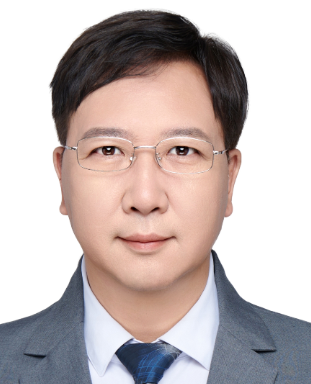 Weiping Wang (王伟平)合作论文数Institute of Information Engineering, Chinese Academy of Sciences;University of Chinese Academy of Sciences2
 Yu Zhou (周宇)合作论文数College of Computer Science, Nankai University2Xiaofang Zhao (赵晓芳)合作论文数2
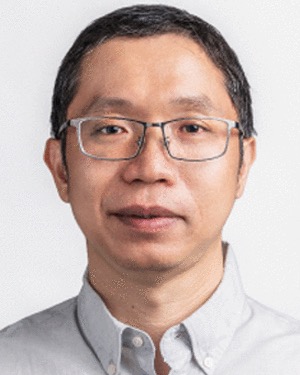 Shiwan Zhao (赵石顽)合作论文数Nankai University2Haiyang Wu合作论文数1Shuqian Lv合作论文数1Hao Fang合作论文数MAIS, Institute of Automation, Chinese Academy of Sciences1Wenyuan Ying合作论文数1Zichen Liu合作论文数1Peikun Chen合作论文数1
 Bo Fang (方波)合作论文数Video, Image, and Sound Analysis Lab, City University of Hong Kong;Baidu VIS1
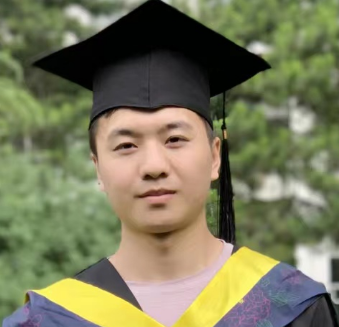 Benjia Zhou合作论文数Faculty of Information Technology, Macau University of Science and Technology1Linxi Yang合作论文数1Yuanjun Lv合作论文数1Zihan Zhang合作论文数1Xunyi Zhou合作论文数1Jiamin Wu合作论文数1
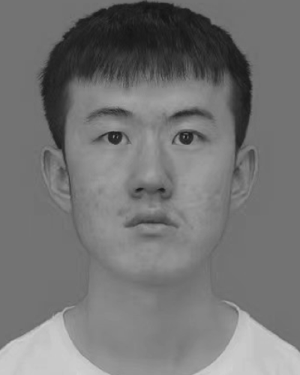 Hongyu Zhao合作论文数1
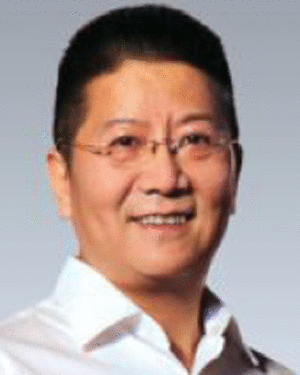 Yong Qin合作论文数1Kun Wei合作论文数1Yiming Jiang合作论文数1
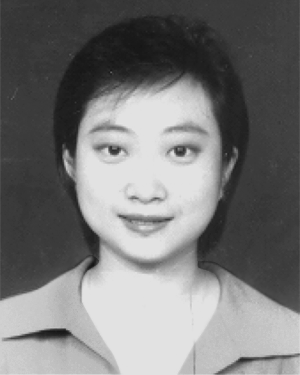 Yuan Zhang合作论文数1
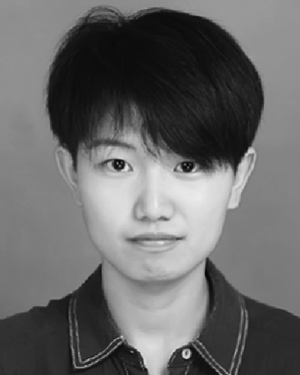 Yang Yu合作论文数1
 Qijie Bai合作论文数Tianjin Key Laboratory of Network and Data Security Technology, College of Computer Science, Nankai University1Yongmao Zhang合作论文数Sch Comp Sci, Northwestern Polytech Univ1Baohang Zhou (周宝航)合作论文数College of Computer Science, Nankai University;TBI Center, Nankai University1
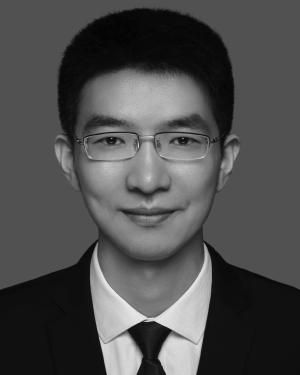 Jiatian Pi合作论文数1
 Kehui Song合作论文数1




