Automatic Speech Recognition (ASR) aims to convert human speech content into corresponding text. In conversational scenarios, effectively utilizing context can enhance its accuracy. Large Language Models' (LLMs) exceptional long-context understanding and reasoning abilities enable LLM-based ASR (LLM-ASR) to leverage historical context for recognizing conversational speech, which has a high degree of contextual relevance. However, existing conversational LLM-ASR methods use a fixed number of preceding utterances or the entire conversation history as context, resulting in significant ASR confusion and computational costs due to massive irrelevant and redundant information. This paper proposes a multi-modal retrieval-and-selection method named MARS that augments conversational LLM-ASR by enabling it to retrieve and select the most relevant acoustic and textual historical context for the current utterance. Specifically, multi-modal retrieval obtains a set of candidate historical contexts, each exhibiting high acoustic or textual similarity to the current utterance. Multi-modal selection calculates the acoustic and textual similarities for each retrieved candidate historical context and, by employing our proposed near-ideal ranking method to consider both similarities, selects the best historical context. Evaluations on the Interspeech 2025 Multilingual Conversational Speech Language Model Challenge dataset show that the LLM-ASR, when trained on only 1.5K hours of data and equipped with the MARS, outperforms the state-of-the-art top-ranking system trained on 179K hours of data.
Contextual information is crucial for automatic speech recognition (ASR). Effective utilization of contextual information can improve the accuracy of ASR systems. To improve the model's ability to capture this information, we propose a novel ASR framework called SEQ-former, emphasizing simplicity, efficiency, and quickness. We incorporate a Prediction Decoder Network and a Shared Prediction Decoder Network to enhance contextual capabilities. To further increase efficiency, we use intermediate CTC and CTC Spike Reduce Methods to guide attention masks and reduce redundant peaks. Our approach demonstrates state-of-the-art performance on the AiShell-1 dataset, improves decoding efficiency, and delivers competitive results on LibriSpeech. Additionally, it optimizes 6.3% over 11,000 hours of private data compared to Efficient Conformer.
This paper describes the NPU-MSXF system for the IWSLT 2023 speech-to-speech translation (S2ST) task which aims to translate from English speech of multi-source to Chinese speech. The system is built in a cascaded manner consisting of automatic speech recognition (ASR), machine translation (MT), and text-to-speech (TTS). We make tremendous efforts to handle the challenging multi-source input. Specifically, to improve the robustness to multi-source speech input, we adopt various data augmentation strategies and a ROVER-based score fusion on multiple ASR model outputs. To better handle the noisy ASR transcripts, we introduce a three-stage fine-tuning strategy to improve translation accuracy. Finally, we build a TTS model with high naturalness and sound quality, which leverages a two-stage framework, using network bottleneck features as a robust intermediate representation for speaker timbre and linguistic content disentanglement. Based on the two-stage framework, pre-trained speaker embedding is leveraged as a condition to transfer the speaker timbre in the source English speech to the translated Chinese speech. Experimental results show that our system has high translation accuracy, speech naturalness, sound quality, and speaker similarity. Moreover, it shows good robustness to multi-source data.
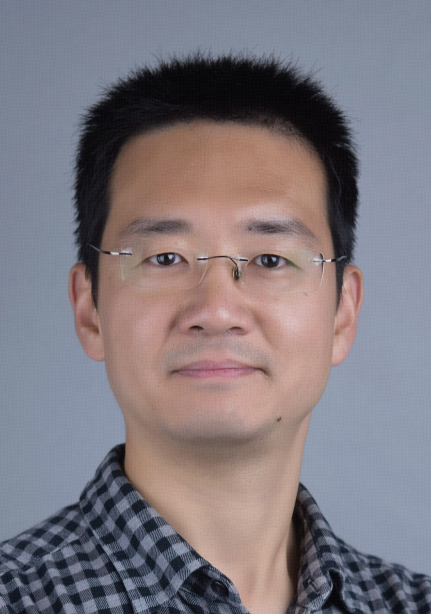 Lei Xie (谢磊)合作论文数Audio, Speech and Language Processing Lab, School of Computer Science, Northwestern Polytechnical University3
 Ning Jiang合作论文数2
 Bingshen Mu合作论文数Audio, Speech and Language Processing Group, School of Computer Science,;Northwestern Polytechnical University1
 Min Liu合作论文数1Peikun Chen合作论文数1
 Guoqing Zhao合作论文数1Yongmao Zhang合作论文数Sch Comp Sci, Northwestern Polytech Univ1Yi Lei合作论文数1
 Quan Lu (陆全)合作论文数Security Department, Alibaba Group1
 Kun Song合作论文数Mohamed Bin Zayed University of Artificial Intelligence1
 Hongfei Xue (薛鸿飞)合作论文数Department of Computer Science, College of Computing and Informatics, University of North Carolina at Charlotte1




