The Tararua broadband array, consisting of nine three-component seismometers, was deployed in southern North Island, New Zealand, from February 1991 to September 1992. This L-shaped array had an approximately 40 km N-S arm and 30 km E-W arm. Its primary purpose was to record waveforms from Tonga-Kermadec earthquakes whose propagation paths have spent the majority of their time in the Pacific Plate that has been subducted beneath the Australasian Plate along the Tonga-Kermadec-Hikurangi Margin; the continuous recording allowed simultaneous acquisition of an excellent teleseismic and regional broadband seismogram dataset.For the main experiment, broadband three-component waveforms with P-wave precursive slab phases, up to 15 sec early relative to the Jeffreys-Bullen travel times, have been recorded for 71 events. Multiple frequency analysis of the P waveform shows that the high frequencies (>5 Hz) arrive first, with coherent dispersion below about 4.5 Hz. This behavior can be attributed to a high-velocity layer, 8 to 10-km thick, lying above the cold, fast lithosphere of the subducted Pacific Plate. Polarization analysis of the P-wave precursors show them to arrive at steep incidence angles of 20 degrees to 30 degrees, suggesting the phase refracts off the subducted plate's surface to the array. We observe exceptionally large PL leaking modes from shallow events in the Tonga-Kermadec region to the north.
Anomalies in teleseismic arrivals at stations astride the West African Craton margin in Senegal are large and systematic for rays which have passed beneath the craton margin. Lateral variation in seismic velocity structure beneath the margin persists to several hundred kilometres depth. The major relative delay time and slowness–azimuth anomalies fit a simple model of a steep boundary in the mantle aligned with the major gravity anomaly associated with the craton margin. The mantle beneath the Mauritanide orogenic belt has lower P-velocity than the adjacent craton between ∼80 and 220 km, but higher average velocity both above and below that depth range.
 J. P. O'Donnell合作论文数Geol Survey South Australia4
 Douglas Wiens合作论文数Department of Earth and Planetary Sciences, Washington University4
 Jd Fairhead合作论文数3A.J. Lloyd合作论文数3
 Pippa Whitehouse合作论文数Department of Geography, Faculty of Social Sciences & Health, Durham University3
 Grace A. Nield合作论文数Department of Geography, Durham University3J. C. Briden合作论文数3Catherine Dorbath合作论文数3Louis Dorbath合作论文数3D. N. Whitcombe合作论文数3
 Bas Blank合作论文数Fac Aerosp Engn, Delft Univ Technol2Audrey D. Huerta合作论文数2
 Alex Mark Brisbourne合作论文数British Antarctic Survey2
 J. Paul Winberry合作论文数Department of Geosciences and EMS Environment Institute, Pennsylvania State University2James Derek Fairhead合作论文数2
 Richard C. Aster合作论文数Department of Earth and Environmental Science, New Mexico Institute of Mining and Technology2
 Wouter van der Wal合作论文数Department of Space Engineering, Faculty of Aerospace Engineering, Delft University of Technology2Thomas Wilson合作论文数1N. J. Accardo合作论文数1Ra Clark合作论文数1a nyblade合作论文数1
 Erica M. Lucas合作论文数Penn State Univ, University Pk1Sridhar Anandakrishnan合作论文数Pennsylvania State University1Ian Bastow合作论文数Department of Earth Science and Engineering, Faculty of Engineering, Imperial College London1Smith Gideon P合作论文数Massachusetts General Hospital, Harvard University1
 David Gubbins合作论文数School of Earth Sciences, University of Leeds1
 Chris Mark Green合作论文数1
 Andrew Nyblade合作论文数School of Geosciences, The University of the Witwatersrand;Department of Geosciences, College of Earth and Mineral Sciences, Pennsylvania State University1
 Cynthia J. Ebinger合作论文数Department of Earth and Environmental Sciences, School of Science & Engineering, Tulane University1
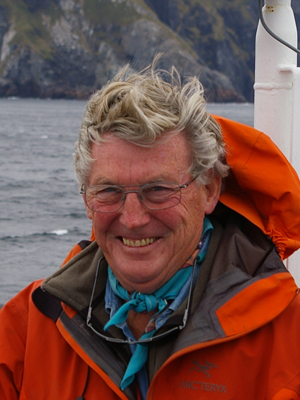 Ian W. D. Dalziel合作论文数Institute for Geophysics, Jackson School of Geosciences, The University of Texas at Austin1




