Two fundamental issues arising from the language of the Copyright-Patent Clause of the Constitution are (1) the limits, if any, the stated purpose of copyright in the Constitution - "To promote the Progress of Science" - places on the statutes Congress may enact, and (2) when is the Constitution's "limited Times" restriction on the duration of copyright protection exceeded. As copyright protection prevents some duplications, transmissions and performances of copyrighted works, and deriving new works from existing copyrighted works, the constitutional intersection of the Copyright Clause and the First Amendment likewise cannot be avoided. In the past decade, the Supreme Court has decided two cases that arose at the confluence of these issues: Eldred v. Ashcroft in 2003 upholding a twenty-year increase in the term of existing copyrights, and Golan v. Holder in 2012 upholding copyright protection for many foreign works previously in the public domain in the United States. This article examines the opinions and dissents in these cases and then discusses some problems, concerns, and alternatives that these decisions leave in their wake. The increased copyright duration and the removal of many foreign works from the public domain were sold to Congress on the grounds they would enhance the United States' balance of trade and increase income from abroad for United States copyright owners although more cosmetic reasons were articulated. It is clear the Court chose broader grounds than were needed to uphold the statutes in question. In upholding these enactments, the Court stressed its great deference to Congress. The level of deference given to Congress, however, quite arguably seems overly deferential and incorporates a very passive approach to judicial scrutiny of copyright legislation. This article concludes that we may be seeing a basic change in the focus of copyright in both Congress and the judiciary from enhancing and increasing knowledge to benefit the public to a model that favors the copyright owners and their monopolies.
This article discusses the development of the compulsory license for making phonorecords of nondramatic musical works in the Copyright Act of 1909 and the continued existence of this compulsory license in subsequent iterations of copyright law. Drawing on this background, the paper then argues that, however useful the compulsory license may have been in the past, it is no longer a useful means to promote the creation of intellectual works and should be repealed. In particular, the paper highlights several factors that compel the conclusion that compulsory licenses are an outdated concept and should be repealed. In particular, the article focuses on how compulsory licenses deviate from the traditional bargain struck by copyright law, the lack of moral rights under the present system, the debatability of the assertion that repeal of the compulsory license will result in a sufficient quantity of exclusive licenses that will not only be exclusive but will harm the public interest, the lack of anti-monopoly concerns in the modern marketplace, and a belief that private negotiation will result in fairer treatment of the authors of nondramatic musical compositions. Both the first recognition of a recording right for music and the first compulsory license provision in American copyright law were given birth in section 1(e) of the 1909 Copyright Revision Act.' t Howard B. Abrams is Professor of Law, University of Detroit Mercy School of Law. Thanks are due to Nina Dodge Abrams, Helene Blue, David Carson, Mike DiNapoli and Laurie Jakobsen for variously inspiring, helping with and commenting upon this article. Thanks are also due to the Santa Clara University School of Law for sponsoring a Conference on the 100th Anniversary of the 1909 Copyright Act at which an early draft of this paper was presented, to Tyler T. Ochoa and Pamela Samuelson for planning the Conference, and to Johnathan R. Elton and Aileen Kim of the Santa Clara Computer and High Technology Law Journal for their help editing this article. 1. An Act to Amend and Consolidate the Acts Respecting Copyright, ch. 320, § 1(e), 35 Stat. 1075 (March 4, 1909, effective July 1, 1909) [hereinafter 1909 Copyright Act]. These types of licenses are also commonly called "statutory licenses," which is arguably the
Copyright's history is one of continual expansion of the copyright-based industries and the laws on which they depend. Recently, they have grown exponentially in their economic and political importance and their impact on our daily lives. Copyright in the English-speaking world1 from the Statute of Anne in 17102 to today's statutes and treaties reflects this seemingly unending expansion of the rights of copyright holders. From a simple parliamentary grant of a right to exclusively print and reprint books for a maximum period of 28 years,3 copyright has grown almost beyond recognition. Copyright protection now encompasses not only books and printed material, but also music, drama, works of visual art (painting, sculpture, photography, etc.), audiovisual works (film, television, computer games), dance, databases, computer programs, architectural works, and recorded performances, to name only some of the works now included under the rubric of copyright and its neighbouring rights. The minimum duration of copyright protection under the Berne Convention4 is now the life of the author plus 50 years,5 and under the European Union's harmonization directive, the life of the author plus 70 years.6 The exclusive grant to the copyright holder has increased from merely printing and reprinting a book to include rights of adaptation, performance, and recording, and, in some cases a rental right and a right to control importation of legitimate copies. In addition to such original remedies as actions for damages and injunctive relief to stop further infringement, the copyright holder now can employ technological measures to encrypt their works and defeat copying with severe civil and criminal penalties levied against anyone who seeks to circumvent these restraints.7
Journal Article Authors’ Rights in Light of New Technologies Get access Howard B. Abrams Howard B. Abrams 1Howard B. Abrams is Professor of Law, University of Detroit School of Law. Search for other works by this author on: Oxford Academic Google Scholar The American Journal of Comparative Law, Volume 38, Issue suppl_1, Supplement 1990, Pages 283–323, https://doi.org/10.2307/840545 Published: 01 December 1990
To the Editor. —In the November 1986 issue of theArchives, Detsky et al 1 presented a modified version of the index of Goldman et al 2 of cardiac risk in noncardiac surgical procedures. In both these studies, a multifactorial risk index is derived using stepwise linear discriminant analysis. Whereas Goldman et al include the type of surgery among the factors used to calculate the risk index, Detsky et al use a Bayesian approach, modeled on that of Clinical Epidemiology Rounds (CER), 3 in which the calculation of a patient's overall of cardiac complications involves the use of a pretest probability based on the given hospital's experience with the particular surgical procedure planned for the patient, and a likelihood ratio (LR), which is calculated from the patient's risk score that in his approach is assumed to be independent of the surgical procedure to be done. A nomogram is used
Between October 30 and November 5, 1980, the Professional Association of Interns and Residents of Ontario called a strike of house staff in Ontario's teaching hospitals. The authors obtained data concerning utilization of laboratory tests and radiology procedures during that period and for the same days 2 weeks before and after the strike. During the strike period, the number of tests performed per patient day decreased by only 8.3%. After accounting for proportional changes in emergency and nonemergency admissions, there was no significant change in the number of tests or relative value units performed per patient day as a result of the strike. These results suggest that the volume of tests performed in teaching hospitals is more likely related to the case mix and severity of illness of patients admitted to these institutions than to a pure "teaching effect."
Previous articleNext article No AccessCopyright, Misappropriation, and Preemption: Constitutional and Statutory Limits of State Law ProtectionHoward B. AbramsHoward B. Abrams Search for more articles by this author PDFPDF PLUS Add to favoritesDownload CitationTrack CitationsPermissionsReprints Share onFacebookTwitterLinkedInRedditEmail SectionsMoreDetailsFiguresReferencesCited by The Supreme Court Review Volume 19831983 Article DOIhttps://doi.org/10.1086/scr.1983.3109483 Views: 6Total views on this site Copyright 1984 The University of ChicagoPDF download Crossref reports no articles citing this article.
Previous articleNext article No AccessGoldstein v. California: Sound, Fury, and SignificanceHoward B. Abrams and Robert H. AbramsHoward B. Abrams and Robert H. AbramsPDFPDF PLUS Add to favoritesDownload CitationTrack CitationsPermissionsReprints Share onFacebookTwitterLinkedInRedditEmail SectionsMoreDetailsFiguresReferencesCited by The Supreme Court Review Volume 19751975 Article DOIhttps://doi.org/10.1086/scr.1975.3108811 Views: 1Total views on this site Citations: 3Citations are reported from Crossref Copyright 1976 The University of ChicagoPDF download Crossref reports the following articles citing this article:Clemens A. Heusch Eine neue Ära der Teilchenphysik? (Teil II): Entdeckung scharfer Bosonenmassen oberhalb 3 GeV - ein Jahr danach, Physik Journal 32, no.44 (Feb 2013): 159–170.https://doi.org/10.1002/phbl.19760320405R.L. Hinrichs, V.L. Snoeyink Sorption of benzenesulfonates by weak base anion exchange resins, Water Research 10, no.11 (Jan 1976): 79–87.https://doi.org/10.1016/0043-1354(76)90161-5B. L. Ioffe Discovery of new mesons, Soviet Atomic Energy 39, no.22 (Aug 1975): 742–743.https://doi.org/10.1007/BF01129819
 Pamela Samuelson合作论文数School of Law, University of California, Berkeley;School of Information, University of California, Berkeley3
 As Detsky合作论文数2
 Jessica Litman合作论文数Law School, University of Michigan-Ann Arbor2
 Allan Detsky合作论文数Institute of Health Policy, Management and Evaluation, School of Public Health, University of Toronto;Department of Medicine, University of Toronto;Mount Sinai Hospital2Maria A. Pallante合作论文数1A Wajda合作论文数1
 June M. Besek合作论文数1Frank M. Markel合作论文数1Judith Finell合作论文数1Lois F. Wasoff合作论文数1
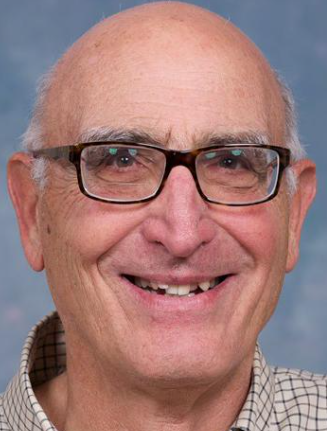 Leslie Roos合作论文数Department of Community Health Sciences, Max Rady College of Medicine, Rady Faculty of Health Sciences, University of Manitoba;Manitoba Centre for Health Policy, University of Manitoba1
 Michael Carroll合作论文数Department of Pediatrics, Boston Children's Hospital;Division of Immunology, Boston Children's Hospital;Harvard Medical School, Harvard University1David Nimmer合作论文数1John Mclaughlin合作论文数1N FORBATH合作论文数1Eric J. Schwartz合作论文数From the Department of Urology, New York University School of Medicine1




