Strong Thermal Emission Velocity Enhancement (STEVE) is a latitudinally narrow, purple-band emission observed at subauroral latitudes. Stable Auroral Red (SAR) arcs characterized by major red emission, and red/green arcs with both red and green emissions also occur at subauroral latitudes. Characteristics of magnetospheric source plasma and electromagnetic fields of these three types of arcs have not been fully understood because of the limited conjugate observations between magnetosphere and the ground. In this study, we report 11 conjugate observations (2 STEVEs, 7 SAR arcs, and 2 red/green arcs), using all-sky images obtained at seven ground stations over more than four years from January 2017 to April 2021 and magnetospheric satellites (Arase and Van Allen Probes). We found that, in the inner magnetosphere, the source region of STEVEs and red/green arcs were located outside the plasmasphere, and that of the SAR arc was in the region of spatial overlap between the plasmasphere and ring current region. Electromagnetic waves at frequencies below 1 Hz were observed for STEVEs and red/green arcs. SuperDARN radar data showed a strong westward plasma flow in the ionosphere, especially during STEVE events, whereas the plasma flows associated with SAR arcs and red/green arcs were generally weaker and variable. The STEVE and SAR arc can appear simultaneously at slightly different latitudes and STEVEs and red/green arcs can transform into SAR arcs. These first comprehensive ground-satellite measurements of three types of subauroral-latitude auroras increase our understanding on similarlity, differences, and coupling of these auroras in the ionosphere and the magnetosphere.
In Earth's inner magnetosphere low‐energy‐density plasma in the plasmasphere (PS) partially overlaps with higher‐energy plasma in the ring current (RC). Auroral emissions with zonally elongated arc‐like shapes called Stable Auroral Red (SAR) arcs occur in the subauroral latitudes that are connected to the inner magnetosphere. There has yet to be a statistical analysis of the PS‐RC overlap region in which SAR arcs occur. We conducted a statistical analysis of the occurrence characteristics of this PS‐RC overlap region for SAR arcs, using the RBSP‐B satellite over a 4‐year period from 1 January 2015 to 31 December 2018. We defined the PS‐RC overlap region based on ground‐satellite conjugate observations of SAR arcs on the same geomagnetic field line. The overlap region in which SAR arcs develop is located at pre‐midnight for high‐energy oxygen ions and post‐midnight for low‐energy hydrogen ions. Superposed epoch analysis using the SYM‐H index shows that the PS‐RC overlap occurs near the end of the main phase of magnetic storms for both H + and O + ions, indicating that the SAR arc source develops at the particle injection during the end of the storm's main phase. Superposed epoch analysis using the SML index revealed that several substorms occurred near the onset time of the SAR arc source for both ion species. This suggests that particle injection by substorms at the end of the magnetic storm is important for the formation of the SAR arc source.
The proton radiation belt contains high fluxes of adiabatically trapped protons varying in energy from similar to one to hundreds of megaelectron volts (MeV). At large radial distances, magnetospheric field lines become stretched on the nightside of Earth and exhibit a small radius of curvature RC near the equator. This leads protons to undergo field line curvature (FLC) scattering, whereby changes to the first adiabatic invariant accumulate as field strength becomes nonuniform across a gyroorbit. The outer boundary of the proton belt at a given energy corresponds to the range of magnetic L shell over which this transition to nonadiabatic motion takes place, and is sensitive to the occurrence of geomagnetic storms. In this work, we first find expressions for nightside equatorial RC and field strength Be as functions of Dst and L* to fit the TS04 field model. We then apply the Tu et al. (2014, ) condition for nonadiabatic onset to solve the outer boundary L*, and refine our expression for RC to achieve agreement with Van Allen Probes observations of 1-50 MeV proton flux over the 2014-2018 era. Finally, we implement this nonadiabatic onset condition into the British Antarctic Survey proton belt model (BAS-PRO) to solve the temporal evolution of proton fluxes at L <= 4. Compared with observations, BAS-PRO reproduces storm losses due to FLC scattering, but there is a discrepancy in mid-2017 that suggests a similar to 5 MeV proton source not accounted for. Our work sheds light on outer zone proton belt variability at 1-10 MeV and demonstrates a useful tool for real-time forecasting. Over 2014-2018, large geomagnetic storms resulted in field line curvature scattering of MeV trapped protons at L greater than or similar to 2.5 The nonadiabatic region subject to scattering can be predicted using an onset condition with Dst dependence The BAS-PRO model simulates scattering of outer zone proton flux during 2014-2018 using a method that can be applied in real time
The present study compares a single-band chorus wave against a banded chorus wave observed by Van Allen Probes at adjacent times, and demonstrates that the single-band chorus wave is associated with an anisotropic electron population over a broad energy range, while the banded chorus wave is accompanied by an electron phase space density plateau and an electron anisotropy reduction around Landau resonant energies. We further compare banded chorus waves with different spectral gap widths, and show that a wider spectral gap is associated with electron isotropization extending to higher energies with respect to the equatorial Landau resonant energy. We suggest that early generated chorus waves isotropize electrons via Landau resonant acceleration, and the waves that propagate to higher latitudes isotropize electrons at higher energies. The isotropization extending to higher energies leads to a larger spectral gap of new chorus waves after electrons bounce back to the equator. Naturally occurring chorus waves in the Earth's magnetosphere typically consist of two frequency bands. The present study aims to explain what controls the bandwidth of the chorus frequency gap that separates chorus waves into two bands. We first compare a single-band chorus wave against a banded chorus wave observed by a Van Allen Probe satellite at adjacent times. The banded chorus wave is accompanied by an electron phase space density plateau and an electron anisotropy reduction due to Landau resonance, while this phenomenon is not clearly seen in association with the single-band chorus wave. We further compare banded chorus waves with different gap widths. Satellite observations indicate that a wider frequency gap is associated with electron isotropization extending to higher energies. We suggest that Landau resonant acceleration extending to high latitudes isotropizes electron distribution at high energies, leading to new chorus waves with a large frequency gap. In contrast, Landau resonance that stops at a relatively lower latitude (due to waves being damped) leads to new chorus waves with a smaller frequency gap. Freshly injected anisotropic electron population without a PSD plateau generates single band chorus waves Banded chorus waves are more common because electrons usually have already undergone isotropization at Landau resonant energies along the drift path Landau acceleration extending to higher energies occurring at higher latitudes leads to more pronounced electron isotropization and larger chorus spectral gaps
Precipitation into the atmosphere is one of the main processes by which high energy electrons trapped in Earth's inner magnetosphere are lost from the system. Precipitating electrons can affect the chemical composition of the atmosphere and provide insight into the complex dynamics of the Van Allen radiation belts. This study compares energetic electron precipitation measurements at low-Earth-orbit by the Focused Investigations of Relativistic Electron Burst Intensity, Range, and Dynamics (FIREBIRD-II) CubeSats with NOAA Polar-orbiting Operational Environmental Satellite (POES) and ESA Meteorological Operational satellite (MetOp) satellites, which are equipped with the Medium-Energy Proton Electron Detector (MEPED). The analysis considers 51 high quality conjunction events at >300 keV during times of low to moderate geomagnetic activity. The spacecraft capture similar electron flux variability, and FIREBIRD-II observations fall between POES/MetOp 0 degrees and 90 degrees telescopes, likely a result of FIREBIRD-II sampling both precipitating and mirrored electrons due to uncertainties in pointing direction. Results demonstrate the value of high-resolution differential energy observations of electron precipitation by low-cost CubeSats such as FIREBIRD-II, especially during periods of low flux.
The Sun exhibited lower-than-average activity levels, including a weak maximum and a prolonged minimum in the solar cycle (SC) 24. Thiswas following a 60-year trend of weakening solar activity, leading to speculations that we could be moving into another secular minimum scenario like the Dalton or the Gleissberg periods. During such periods, the fluxes of galactic cosmic rays (GCRs) increase significantly, introducing radiation hazards for long-term crewed space explorations. In our previous work, we predicted the level of solar activity, and thus, the radiation environment for SC25 will be similar to SC24. In this paper, we show that, to date, the radiation environment observed by CRaTER has been similar to SC24, as we predicted. Furthermore, we predict that if the radiation environment remains similar to SC24, the maximum value for permissible mission duration (PMD) for SC25 will be 917-230+234 days based on NASA’s latest permissible exposure limit (PEL).
The present study uncovers the fine structures of magnetosonic waves by investigating the EFW waveforms measured by Van Allen Probes. We show that each harmonic of the magnetosonic wave may consist of a series of elementary rising-tone emissions, implying a nonlinear mechanism for the wave generation. By investigating an elementary rising-tone magnetosonic wave that spans a wide frequency range, we show that the frequency sweep rate is likely proportional to the wave frequency. Furthermore, we reveal that each elementary rising-tone magnetosonic waves consist of multiple mini-harmonics spaced at O+ gyrofrequency. We reveal that O+ ions can suppress the generation of magnetosonic waves at multiples of O+ gyrofrequency, resulting in the mini-harmonic structure. The commonly observed mini-harmonics indicate an energy transfer between different ion species.
We present multiple derivations of the Total Radiation Belt Electron Content (TRBEC), an indicator of the global number of electrons that instantaneously occupy the radiation belts. Derived from electron flux measurements, the TRBEC reduces the spatial information into a scalar quantity that concisely describes global aspects of the system. This index provides a simple, global, and long-term assessment of the radiation belts that enables systematic analysis. In this work, we examine the TRBEC using the adiabatic invariants of (mu,K,L-& lowast;) which has been used in previous articles as this coordinate system removes reversible adiabatic effects. We then introduce a new expression to compute the TRBEC using the non-adiabatic coordinates of (E, alpha(eq), L-& lowast;), relevant in the contexts of energetic electron precipitation, chorus, and hiss scattering where adiabatic invariant quantities are no longer conserved. From both expressions of the TRBEC we demonstrate that an erroneous factor of (2 pi)(3) that appeared in previous works using the adiabatic derivation led to an overestimate of the reported electron populations. In addition, we quantify electron loss in the outer radiation belt 3.5 < L-& lowast; < 5 via a case study using the Van Allen Probes data over a 20-day period from March 2013 specifying particle populations both in terms of the aforementioned adiabatic and non-adiabatic variables. The total number of electrons in the outer radiation belt reached upwards of 10(28) electrons at the peak of the storm, a rest mass of roughly 10 g.
The Imaging Microburst Precipitation with Atmospheric X-ray emissions (IMPAX) CubeSat was recently selected by NASA’s H-FORT program, with a planned launch date of late 2027. The overarching goal of IMPAX is to quantify relativistic electron microburst precipitation as a radiation belt loss mechanism.
We use Van Allen Probes electron data during 70 geomagnetic storms to examine the response of equatorial pitch angle distributions (PADs) at L* = 4.0–4.5 to a theoretical upper limit on stably trapped particle fluxes. Of the energies examined, 54 and 108 keV electron PADs isotropize to a previously assumed level within 6 hr of reaching the limit, near‐identically across all 70 storms, consistent with rapid pitch angle scattering due to chorus wave interactions. In around 30% of events, 54 keV electrons completely exceed the KP limit, before being quickly subdued. 470 and 749 keV PADs show clear indications of an upper limit, though less aligned with the calculated limit used here. The consistency of an absolute upper limit shown across all events demonstrates the importance of this phenomena in both the limiting effect on electron flux and consistently influencing electron PAD evolution during geomagnetic storms. These results also highlight the need for further investigation, particularly related to the limiting of higher energy electrons.
This document summarizes the results of a science and measurement gap analysis performed by space weather experts from academia, the commercial sector, and the space weather operational and end-user community under a NASA task order to the Johns Hopkins Applied Physics Laboratory (APL). The analysis informs on how measurements from NASA observatories will advance forecasting, nowcasting, and hindcasting (collectively referred to as "*-casting") capabilities by focusing on two tasks: (1) assess the current state of NASA's observational capability to address the science of space weather (SWx) and improve accuracy of predictive forecasting models and (2) identify high-priority measurements critical to improved fore(now)-casting that are either at risk or currently unavailable. The paper describes the gap analysis assumptions, scope, process, and summarizes its output and findings most relevant to the International Space Weather Action Teams (ISWAT) effort.
The previous Decadal Survey included a Working Group report on "Explorers, Suborbital, and Other Platforms", included in the Decadal as "Appendix C".The
Exigency: The needs of a Technologically Advanced CivilizationOur society have become heavily reliant on electrical technologies, from power grids to GPS network to wireless communication.Any disruption of these systems will have severe global consequences.One major natural hazard that can cause such disruptions comes from solar wind disturbances that impact the near-Earth environment.Estimates are that a solar storm of the magnitude of the 1859 Carrington Solar Superstorm would cost the modern-day society over $2 trillions to remediate the damages [NRC, 2008].In July 23, 2012, we had a near miss of a solar Superstorm that could have broken the record of largest such storms at Earth [Baker et al., 2013].To enable pre-emptive measures against the hazard of solar storms, developing accurate space weather forecasts is urgent.As much as understanding the underlying physics of atmospheric dynamics is critical to accurate terrestrial weather forecasting, a fundamental understanding of plasma physics is at the core of space weather forecasting.Of particular relevance is plasma turbulence in which distorted flows and magnetic fields transfer energy between scales, from larger injection scales down to smaller scales where dissipation and heating occur.Recent studies have shown the importance of turbulence in processes, such as magnetic reconnection, that are key agents of space weather.A primary challenge in understanding plasma turbulence and its global implications is its multi-scale nature, spanning from electron scales to scales larger than the magnetosphere.This white paper addresses the multi-scale challenge focusing on the contributions that multi-spacecraft measurements can make. Multi-spacecraft measurementsIn-situ probes forming multiple "n-hedrons (n >= 4)" and covering MHD to kinetic scales are key to meeting the multi-scale challenge of characterizing plasma turbulence.Current multi-spacecraft missions with 3D formations, the Magnetospheric Multiscale (MMS) [Burch et al., 2016] and Cluster [Escoubet et al., 2001], have made progress to address plasma turbulence.Yet the limitations of a fixed spacecraft formation size at a given time prohibit probing the multiscale nature as well as the dynamical evolution of turbulence.The recently selected NASA Midsize Explorer mission HelioSwarm, consisting of nine spacecraft, represents a major breakthrough in multi-scale measurements of turbulence.For an in-depth description of the mission, see the White Paper submitted to the 2023 Heliophysics Decadal Survey "HelioSwarm: A Multipoint, Multiscale Mission to Characterize Turbulence" by K. G. Klein et al.. Major achievements and challenges from the Cluster and MMS missionsWe briefly review the major achievements and challenges from the Cluster and MMS missions in the field of shock/foreshock/magnetosheath turbulence to provide a contrast with what can be achieved by a multi-scale mission.The major achievements of the Cluster mission on shock/foreshock/magnetosheath turbulence include: (1) Reconnecting current sheets were discovered in the turbulent magnetosheath [Retino et al., 2007].(2) the dissipation due to reconnecting current sheets is estimated to be about two orders of magnitude higher than that due to wave damping [Sunskvist et al., 2007;Chasapis et al, 2015].(3) The anisotropy of solar wind
In the next decade, there is an opportunity for very high return on investment of relatively small budgets by elevating the priority of smallsat funding in heliophysics. We've learned in the past decade that these missions perform exceptionally well by traditional metrics, e.g., papers/year/\$M (Spence et al. 2022 -- arXiv:2206.02968). It is also well established that there is a "leaky pipeline" resulting in too little diversity in leadership positions (see the National Academies Report at https://www.nationalacademies.org/our-work/increasing-diversity-in-the-leadership-of-competed-space-missions). Prioritizing smallsat funding would significantly increase the number of opportunities for new leaders to learn -- a crucial patch for the pipeline and an essential phase of career development. At present, however, there are far more proposers than the available funding can support, leading to selection ratios that can be as low as 6% -- in the bottom 0.5th percentile of selection ratios across the history of ROSES. Prioritizing SmallSat funding and substantially increasing that selection ratio are the fundamental recommendations being made by this white paper.
Water ice in permanently shadowed regions on the Moon is exposed to galactic cosmic rays (GCRs) and solar energetic particles (SEPs). Because this radiation alters the chemistry of the ice, constraining the total radiation dose is important for understanding both the origin and evolution of the ice. The Cosmic Ray Telescope for the Effects of Radiation (CRaTER) onboard the Lunar Reconnaissance Orbiter (LRO) has measured the energetic charged particle dose rate for more than a solar cycle, providing the longest continuous dataset of radiation in the lunar environment. CRaTER's unique design enables us to measure the dose rates behind three amounts of mass shielding and thus constrain the GCR and SEP dose rates as a function of depth in the regolith. In a further improvement on prior studies, we combine these dose rates with a model for how impact gardening affects the exposure time of the regolith. We can thus calculate the total dose received by water ice in gardened regolith and find that impact-gardened ice has received a dose of similar to 0.1-1 eV molecule-1 over the past 1 Gyr. This dose is one to two orders of magnitude lower than the doses calculated in studies that do not incorporate the effects of gardening. Relatively undisturbed ice may have received a higher dose, but no more than similar to 10 eV molecule-1 in the top centimeter. This result provides a valuable constraint for researchers studying radiation processing of lunar water ice.
Since the discovery of the Earth’s radiation belts in 1958, it has always been a challenge to determine the dominant physical mechanisms, whether local acceleration by chorus or inward radial diffusion, that leads to outer radiation belt relativistic electron flux enhancements. In this study, we test a chain of processes with several potential successive steps that is believed to accelerate outer belt relativistic electrons. By performing correlation analysis of different part of this chain, including the geomagnetic condition, evolution of source and seed electron fluxes, chorus wave activity, and maximum fluxes (jmax) of relativistic electrons, we aim to identify the critical steps that lead to acceleration of MeV electrons. Based on 5-years of Van Allen Probes observations, our results confirm the repeatable response of both source and seed electrons to the storms, showing a significant flux enhancement during the main phase of storms, followed by either a gradual decay or flux persistence at a stable level. However, it is the intense and prolonged occurrence of substorms that contributes to the long-lasting existence of both source and seed electrons, which is also strongly associated with the jmax of relativistic electrons. The significant correlation (Correlation Coefficient, CC∼0.8) between the seed electron fluxes and jmax reveal that the prolonged and pronounced seed electrons are the prerequisite for the significant flux enhancement of relativistic electrons regardless of the acceleration mechanism. The slightly smaller CC (∼0.5–0.7) between source electron fluxes and jmax of relativistic electrons indicates that while local acceleration by chorus wave plays an important role to accelerate relativistic electrons to jmax, other mechanisms such as inward radial diffusion are still needed in this process. The CC between the source electrons and the chorus wave amplitude increases with increasing levels of substorms, showing (CC)max of ∼0.8, which further supports the crucial role of chorus waves in accelerating the relativistic electrons during intense substroms.
 Geoff Reeves合作论文数Los Alamos National Laboratory;Space Sciences Division, The New Mexico Consortium219
 J. B. Blake合作论文数189
 Daniel N. Baker合作论文数Laboratory for Atmospheric and Space Physics, College of Engineering and Applied Science, University of Colorado Boulder158
 Craig Kletzing合作论文数University of Iowa115
 Nathan Schwadron合作论文数College of Engineering and Physical Sciences, University of New Hampshire103
 Joseph F. Fennell合作论文数86
 Seth Claudepierre合作论文数Accenture82
 Herbert Funsten合作论文数Los Alamos National Laboratory78
 John Wygant合作论文数School of Physics and Astronomy, College of Science and Engineering, University of Minnesota71
 Lawrence W. Townsend合作论文数Department of Nuclear Engineering, The University of Tennessee, Knoxville67
 William S. Kurth合作论文数Department of Physics and Astronomy, College of Liberal Arts and Sciences, The University of Iowa67
 Brian A. Larsen合作论文数61
 Jody K. Wilson合作论文数60
 George Hospodarsky合作论文数College of Liberal Arts and Sciences, University of Iowa56
 Jacob Bortnik合作论文数Department of Atmospheric and Oceanic Sciences, College of Physical Sciences, University of California, Los Angeles;SPACE Institute, College of Physical Sciences, University of California, Los Angeles55Andrew P. Jordan合作论文数52
 Wen Li合作论文数Department of Astronomy, College of Arts & Sciences, Boston University;Center for Space Physics, Boston University50
 Drew L. Turner合作论文数Johns Hopkins University Applied Physics Laboratory50
 Mark Dixon Looper合作论文数50
 Anthony (Tony) Case合作论文数BWX Technologies;Smithsonian Astrophysical Observatory48Larry Kepko合作论文数Center for Space Physics, Boston University48
 Richard M. Thorne合作论文数Department of Atmospheric and Oceanic Sciences, University of California, Los Angeles41
 Cary Zeitlin合作论文数Leidos, Inc.41m j golightly合作论文数38
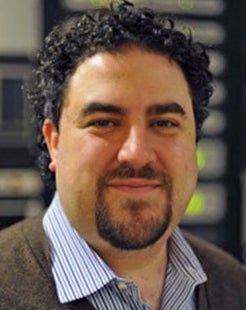 Justin C. Kasper合作论文数Climate and Space Sciences and Engineering Department, College of Engineering, University of Michigan;High Energy Astrophysics Division, Smithsonian Astrophysical Observatory, Harvard-Smithsonian Center for Astrophysics;Astronomy Department, Harvard University;BWX Technologies Inc36
 Ruth M Skoug合作论文数35J. E. Mazur合作论文数34
 Allison N. Jaynes合作论文数Laboratory for Atmospheric and Space Physics, University of Colorado33Shrikanth G Kanekal合作论文数33
 Qianli Ma合作论文数Department of Atmospheric and Oceanic Sciences, College of Physical Sciences, University of California, Los Angeles32
 Charles W. Smith合作论文数Department of physics & Astronomy, College of Engineering and Physical Sciences, University of New Hampshire;Institute for Earth, Oceans and Space, University of New Hampshire;Space Science Center, University of New Hampshire32Michael Henderson合作论文数Space Science and Applications Group, Los Alamos National Laboratory32
 Matina Gkioulidou合作论文数Applied Physics Laboratory, Johns Hopkins University32C. J. Joyce合作论文数Univ New Hampshire30
 Vassilis Angelopoulos合作论文数Department of Earth, Planetary, and Space Sciences, College of Physical Sciences, University of California, Los Angeles;Institute of Geophysics and Planetary Physics, University of California, Los Angeles29Ian Mann合作论文数Faculty of Science, University of Alberta29
 Donald Mitchell合作论文数26A. J. Boyd合作论文数Dept Space Sci, Aerosp Corp25
 Lynn Kistler合作论文数College of Engineering and Physical Sciences, University of New Hampshire;Physics and Space Science Center, University of New Hampshire25Chih Ling Huang合作论文数25
 sonya smith合作论文数Inst Study Earth Oceans & Space, Univ New Hampshire24Timothy J. Stubbs合作论文数NASA Goddard Space Flight Center24
 Qiugang Zong (宗秋刚)合作论文数School of Earth and Space Sciences, Peking University24
 R. H. W. Friedel合作论文数Space Science and Applications, Los Alamos National Laboratory23
 Xinlin Li合作论文数Laboratory for Atmospheric and Space Physics, University of Colorado Boulder;Department of Ann and H.J. Smead Aerospace Engineering Sciences, College of Engineering & Applied Science, University of Colorado Boulder23
 Zhenpeng Su (苏振鹏)合作论文数School of Earth and Space Sciences, University of Science and Technology of China22
 J. H. Clemmons合作论文数21H. J. Singer合作论文数21
 Sarah Gibson合作论文数High Altitude Observatory, National Center for Atmospheric Research20




