We have measured the time integrated B°-B° mixing parameter and the forward-backward asymmetry in the process e+e~ 4bb using hadronic events containing muons or electrons. The data sample corresponds to 1,044,000 hadronic decays of the Z. From a fit to the momentum and transverse momentum distributions for single lepton and dilepton events, we have determined the Bu-B° mixing parameter to be XB = 0.123 ± 0.012 (stat.) ± 0.008 (sys.), and the bb forward-backward asymmetry at the effective center-of-mass energy \/s = 91.30GeV to be A b5 = 0.087_± 0.011 (stat.) ±0.004 (sys.) This measurement corresponds to a value of the effective electroweak mixing angle of sin20w = 0.2335 ± 0.0021. Dedicated to the memory of Professor Salvatore Lanzano
Disclaimer/Complaints regulations If you believe that digital publication of certain material infringes any of your rights or (privacy) interests, please let the Library know, stating your reasons. In case of a legitimate complaint, the Library will make the material inaccessible and/or remove it from the website. Please Ask the Library: http://uba.uva.nl/en/contact, or a letter to: Library of the University of Amsterdam, Secretariat, Singel 425, 1012 WP Amsterdam, The Netherlands. You will be contacted as soon as possible.
A complete tree-level calculation of the reaction [Formula: see text] in the electroweak standard theory for the energy range of LEP200 and the Next Linear Collider is presented. The matrix elements were calculated by means of the package CompHEP, and phase space integration and event generation were carried out with the computer programs BASES/SPRING. Cross sections for the [Formula: see text] final state, the rate for Higgs production and for different background contributions are studied as a function of the cms energy and the Higgs mass in the range from 80 to 140 GeV. At LEP200 energies, the Higgs bremsstrahlung reaction and the two-body process e+e−→ZZ are dominant while near 500 GeV the Higgs fusion and two-to-three body background processes govern the [Formula: see text] final state. Interference patterns were searched for and found to be negligible except for [Formula: see text], where interferences are found to be of comparable strength with the Higgs signal diagrams. Some cancellations between different background diagrams are observed which are expected within the Standard Model. Missing transverse momentum and visible energy distributions for the [Formula: see text] final state indicate some further possibilities of removing background for Higgs searches. A suggestion for an approximate treatment of the reaction [Formula: see text] is presented so that much computer time can be saved in Monte Carlo simulations.
The International Linear Collider (ILC) and other proposed high energy e(+) e(-) machines aim to measure with unprecedented precision Standard Model quantities and new, not yet discovered phenomena. One of the main requirements for achieving this goal is a measurement of the incident beam energy with an uncertainty close to 10(-4). This article presents the analysis of data from a prototype energy spectrometer commissioned in 2006-2007 in SLAC's End Station A beamline. The prototype was a 4-magnet chicane equipped with beam position monitors measuring small changes of the beam orbit through the chicane at different beam energies. A single bunch energy resolution close to 5 . 10(-4) was measured, which is satisfactory for most scenarios. We also report on the operational experience with the chicane-based spectrometer and suggest ways of improving its performance.
Any future high energy e(+)e(-) linear collider aims at precision measurements of Standard Model quantities as well as of new, not yet discovered phenomena. In order to pursue this physics programme, excellent detectors at the interaction region have to be complemented by beam diagnostics of unprecedented precision. This article gives an overview of current plans and issues for polarimeters and energy spectrometers at the International Linear Collider, which have been designed to fulfill the precision goals at a large range of beam energies from 45.6 GeV at the Z(0) pole up to 250 GeV or, as an upgrade, up to 500 GeV.
A novel, non-invasive method of measuring the beam energy at the International Linear Collider is proposed. Laser light collides head-on with beam particles and either the energy of the Compton scattered electrons near the kinematic endpoint is measured or the positions of the Compton backscattered γ-rays, the edge electrons and the unscattered beam particles are recorded. A compact layout for the Compton spectrometer is suggested. It consists of a bending magnet and position sensitive detectors operating in a large radiation environment. Several options for high spatial resolution detectors are discussed. Simulation studies support the use of an infrared or green laser and quartz fiber detectors to monitor the backscattered photons and edge electrons. Employing a cavity monitor, the beam particle position downstream of the magnet can be recorded with submicrometer precision. Such a scheme provides a feasible and promising method to access the incident beam energy with precisions of 10-4 or better on a bunch-to-bunch basis while the electron and positron beams are in collision.
Physical consequences of the relativistic and nonrelativistic approaches to describe the energy levels of electrons which propagate in a static homogeneous magnetic field are considered. It is shown that for a given strength of the magnetic field, the quantized energy levels of the electrons calculated by nonrelativistic and relativistic equations dier substantially, up to few orders of magnitude for a magnetic field of about 1 Tesla. Experimental verification to resolve the discrepancy would be very welcome.
Prospects to search for a new massless neutral gauge boson, the paraphoton, in e(+)e(-) collisions at center-of-mass energies of 0.5 and 1 TeV are studied. The paraphoton naturally appears in models with Abelian kinetic mixing. A possible realistic model-independent lowest order effective Lagrangian contains magnetic interactions of the paraphoton with the standard model fermion fields. These interactions are proportional to the fermion mass and grow with energy, with however very weak paraphoton couplings to ordinary matter. At the ILC, a potentially interesting process to search for the paraphoton is its radiation from top quarks, so that the event topology of interest is a pair of acoplanar top quarks decaying to jets and missing energy. By combining many discriminating features of signal and background events, efficient paraphoton event selection is achieved, allowing us to set limits for the top-paraphoton coupling. Arguments in favor of the missing energy as the paraphoton with spin 1 are discussed.
The physical consequences of the relativistic and nonrelativistic approaches to describe the energy levels of electrons which propagate in a static homogeneous magnetic field are considered. It is shown that for a given strength of the magnetic field, the quantized energy levels of the electrons calculated by nonrelativistic and relativistic equations differ substantially, up to few orders of magnitude for a magnetic field of about 1 Tesla. Experimental verification to resolve the discrepancy would be very welcome.
We present a collection of signatures for physics beyond the standard model that need to be explored at the LHC. The signatures are organized according to the experimental objects that appear in the final state, and in particular the number of high p{sub T} leptons. Our report, which includes brief experimental and theoretical reviews as well as original results, summarizes the activities of the 'New Physics' working group for the 'Physics at TeV Colliders' workshop (Les Houches, France, 11-29 June, 2007).
The main physics program of the International Linear Collider requires a measurement of the beam energy with a relative precision of the order 10-4 or better. A magnetic spectrometer using high resolution beam position monitors (BPMs) has been proposed to achieve this goal. A prototype spectrometer chicane employing four dipole magnets is currently under development at the End Station A in SLAC, intending to demonstrate the required resolution and stability of this method and investigate possible systematic effects and operational issues. This contribution reports on the successful commissioning of the beam position monitor system and the resolution and stability achieved. Also, the initial results from a run with a full spectrometer chicane are presented.
Many scientific disciplines ranging from physics, chemistry and biology to material sciences, geophysics and medical diagnostics need a powerful X-ray source with pulse lengths in the femtosecond range [1-4]. This would allow, for example, time-resolved observation of chemical reactions with atomic resolution. Such radiation of extreme intensity, and tunable over a wide range of wavelengths, can be accomplished using high-gain free-electron lasers (FEL) [5-10]. Here we present results of the first successful operation of an FEL at a wavelength of 32 nm, with ultra-short pulses (25 fs FWHM), a peak power at the Gigawatt level, and a high degree of transverse and longitudinal coherence. The experimental data are in full agreement with theory. This is the shortest wavelength achieved with an FEL to date and an important milestone towards a user facility designed for wavelengths down to 6 nm. With a peak brilliance exceeding the state-of-the-art of synchrotron radiation sources [4] by seven orders of magnitude, this device opens a new field of experiments, and it paves the way towards sources with even shorter wavelengths, such as the Linac Coherent Light Source [3] at Stanford, USA, and the European X-ray Free Electron Laser Facility [4] in Hamburg, Germany.
We analyze the prospects for detecting the three neutral Higgs bosons of the Minimal Supersymmetric extension of the Standard Model in the intense-coupling regime at e+e− colliders. Due to the small mass differences between the Higgs states in this regime and their relative large total decay widths, the discrimination between the particles is challenging at the LHC and in some cases even impossible. We propose to use the missing mass technique in the Higgs-strahlung process in e+e− collisions to distinguish between the two CP-even Higgs eigenstates h and H, relying on their bb¯ decay in the bb¯ℓ+ℓ− event sample. Ah and AH associated production is then studied in the 4b-jet event sample to probe the CP-odd A boson. At collider energies s≃300GeV and an integrated luminosity of 500 fb−1, accuracies in the mass measurement of the CP-even Higgs bosons are expected to range from 100 to 300 MeV, while for the CP-odd A boson, accuracies of less than 500 MeV can be obtained.
 M. Sachwitz合作论文数75W. Lohmann合作论文数64Robert Leiste合作论文数56
 Ren-Yuan Zhu合作论文数Division of Physics, Mathematics and Astronomy, California Institute of Technology55
 Martin Karl Wilhelm Pohl合作论文数Deutsches Elektronen-Synchrotron DESY;Institut für Physik und Astronomie, University of Potsdam55W. Krenz合作论文数55Ja Rubio合作论文数54H. Stone合作论文数54Helmut Vogt合作论文数54Peter N Duinker合作论文数NIKHEF, National Institute for High Energy Physics54
 Maura Tonutti合作论文数53Mm Ilyas合作论文数53d luckey合作论文数53
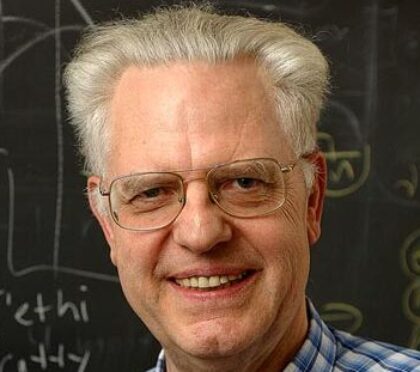 Ulrich Becker合作论文数Laboratory for Nuclear Science, Massachusetts Institute of Technology;Department of Physics, Massachusetts Institute of Technology53Jeremie Berdugo合作论文数53C. Mana合作论文数53Jd Burger合作论文数52Maurice H. Bourquin合作论文数52R. Schulte合作论文数52
 Joachim Mnich合作论文数Deutsches Elektronen-Synchrotron52
 Gert Viertel合作论文数52
 Harvey B. Newman合作论文数Division of Physics, Mathematics and Astronomy, California Institute of Technology52H. Rykaczewski合作论文数52Ren Danyang合作论文数52K. Deiters合作论文数51W. Kittel合作论文数51H. Anderhub合作论文数51Ggg Massaro合作论文数51
 Xiaoshan Wu (吴小山)合作论文数School of Physics, Nanjing University;National Laboratory of Solid State Microstructures, Nanjing University51K.N. Qureshi合作论文数51
 Marcos Cerrada合作论文数Departamento de Investigación Básica, Centro Investigaciones Energéticas, Medioambientales y Tecnológicas50Marco Meschini合作论文数Istituto Nazionale di Fisica Nucleare50M. Capell合作论文数50A. A. Syed合作论文数50Hans Hofer合作论文数50P. Schmitz合作论文数50J. Schwenke合作论文数49s patricelli合作论文数49K. Sudhakar合作论文数49
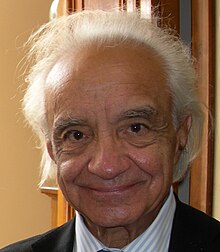 Antonino Zichichi合作论文数University of Bologna49
 Elemer Nagy合作论文数Centre de Physique des Particules de Marseille, IN2P349
 Panos Razis合作论文数49
 Lamberto Luminari合作论文数Istituto Nazionale di Fisica Nucleare49
 Frank Silvio Marzano合作论文数Dipartimento di Ingegneria Dell’Informazione, Elettronica e Telecomunicazioni, Sapienza University Di Rome;CETEMPS of the University of L Aquila49F. Wittgenstein合作论文数49D. Pandoulas合作论文数49P. Vikas合作论文数49P. Marchesini合作论文数49R Srinivasa Raghavan合作论文数49




