The two new thiostannate compounds (trenH)2Sn3S7 (1) and {[Mn(tren)]2Sn2S6} (2) (tren=tris-2-aminoethylamine) were obtained under solvothermal conditions. Compound 1 crystallizes in the hexagonal space group P63/mmc with a=13.2642(19), c=19.078(3) Å, V =2906.9(7) Å3. The layered [Sn3S7]2- anion is constructed by Sn3S4 semi-cubes sharing common edges. The layers are characterized by large hexagonal pores with dimensions of about 11×11 Å2. Compound 2 crystallizes in the triclinic space group P1̄ with lattice parameters a=7.6485(7), b=8.1062(7), c=12.1805(11) Å, α =97.367(11), β =103.995(11), γ = 108:762(10)°, V =676.17(10) Å3. The [Sn2S6]4- anion is composed of two edge-sharing SnS4 tetrahedra and joins two Mn2+-centered complexes by Mn-S bond formation. The Mn2+ cation is in a trigonal-bipyramidal environment of four N atoms of the tren ligand and one S atom of the thiostannate anion. Both compounds are semiconductors with a band gap of 2:96 eV for 1 and of 2:75 eV for 2. Graphical Abstract New Thiostannates Synthesized Under Solvothermal Conditions: Crystal Structures of (trenH)2Sn3S7 and {[Mn(tren)]2Sn2S6}
The two new thiostannate compounds (trenH)2Sn3S7 (1) and {[Mn(tren)]2Sn2S6} (2) (tren=tris-2-aminoethylamine) were obtained under solvothermal conditions. Compound 1 crystallizes in the hexagonal space group P63/mmc with a=13.2642(19), c=19.078(3) Å, V =2906.9(7) Å3. The layered [Sn3S7]2- anion is constructed by Sn3S4 semi-cubes sharing common edges. The layers are characterized by large hexagonal pores with dimensions of about 11×11 Å2. Compound 2 crystallizes in the triclinic space group P1̄ with lattice parameters a=7.6485(7), b=8.1062(7), c=12.1805(11) Å, α =97.367(11), β =103.995(11), γ = 108:762(10)°, V =676.17(10) Å3. The [Sn2S6]4- anion is composed of two edge-sharing SnS4 tetrahedra and joins two Mn2+-centered complexes by Mn-S bond formation. The Mn2+ cation is in a trigonal-bipyramidal environment of four N atoms of the tren ligand and one S atom of the thiostannate anion. Both compounds are semiconductors with a band gap of 2:96 eV for 1 and of 2:75 eV for 2. Graphical Abstract New Thiostannates Synthesized Under Solvothermal Conditions: Crystal Structures of (trenH)2Sn3S7 and {[Mn(tren)]2Sn2S6}
The non-stoichiometric chromium selenide Cr5.095(5)Se8 was prepared under high-pressure hightemperature conditions. The structure was refined from X-ray powder data with the Rietveld method in the non-conventional monoclinic space group F2/m, a = 12.2992(2), b = 7.12753(12), c = 11.4486(2) Å , β = 90.927(1)° and V = 1003.49(3) Å3. Three of the four unique Cr sites are fully occupied, and one site is only partially occupied. The structure may be viewed as being composed of alternating full and metal deficient layers which are oriented perpendicular to the crystallographic c axis of the pseudo-hexagonal unit cell. All Cr atoms are in an octahedral environment of six Se atoms. The CrSe6 octahedra of neighbouring layers share common faces whereas the octahedra with layers are joined by common edges. As a result short Cr-Cr distances of 2.867(3) and 2.951(6) Å are found across common faces while Cr-Cr separations between CrSe6 octahedra sharing edges are significantly longer. From a formal point of view charge balance requires a formulation as Cr4+ 0.715Cr3+ 4.38Se8. On the basis of the distortion of the CrSe6 octahedra the Cr4+ ions are mostly located on two different sites.
Two non-stoichiometric chromium rich Cr5+xS8 (x = 0.20 and 0.26) samples were prepared under high pressure and high temperature conditions. In the crystal structures three different metal atom sites are fully and the fourth site is only partially occupied. The results of single crystal and Rietveld refinements are in good agreement. The CrS6 octahedra share common corners and common faces. Across common faces extraordinary short Cr-Cr distances are observed suggesting metal-to-metal bonding. On the basis of the distortion of the CrS6 octahedra Cr4+ is located on two of the four Cr sites. With increasing Cr content the amount of Cr4+ is lowered and the distortion of two of the four CrS6 octahedra is significantly reduced.
Fibroosteoclasia as well as osteoidosis are reduced by 1,25(OH)2D3 treatment if secondary hyperparathyroidism preexists. Fibrosteoclasia completely disappeared after 6 months therapy in some cases. 1,25(OH)2D3 has no or only a very slight effect on the disturbed mineralization in type II of renal bone disorder (osteoidosis only, no signs of secondary hyperparathyroidism). The appositional rate of the osteoblasts increases under 1,25(OH)2D3 treatment if serum PTH values are raised. 1,25(OH)2D3 seemed to have, in the chosen dosage of this study, a self-limiting effect by reducing the bone-forming cells, i.e. the osteoblasts. This state already represents an overtreatment of the underlying bone disease.
1. Durch die Behandlung mit 1,25-DHCC gelingt es nach unseren Untersuchungsergebnissen einen Anstieg des Serumkalziumspiegels zu erhalten, die PTH-Synthese zu blockieren und die intestinale Kalziumresorption zu verbessern.
Twelve children with chronic renal failure (CRF) and sixteen children receiving regular dialysis therapy (RDT) were treated with between 10,000 and 50,000 IU of vitamin D daily. This was associated with an increase in serum calcium levels and reduction in PTH levels. In the children with CRF, secondary hyperparathyroidism was improved with treatment but its development was not completely prevented nor was healing complete. In the patients receiving RDT, treatment with vitamin D improved the changes associated with secondary hyperparathyroidism in 50% of cases but these features sometimes reappeared despite continuing treatment. Hypercalcaemia or metastatic calcification was not seen. Subsequently, 1,25(OH)2D3 was administered to 14 children receiving RDT. This was associated with the return of serum calcium levels to normal, inhibition of PTH synthesis and an improvement in intestinal calcium absorption. Fibro-osteoclasia was cured and there was improvement in actual bone resorption. There was also improvement in osteoidosis in those children who showed disturbances of mineralisation. Calcification in the limbus area of the eyes may occur and hypercalcaemia was seen commonly. Treatment with 1,25(OH)2D3 should only be offered to children with severe renal bone disease. Neither vitamin D3 nor 1,25(OH)2D3 can guarantee complete recovery of osteodystrophy and of growth arrest in uraemic children.
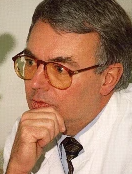 Günter Delling合作论文数Abteilung für Osteopathologie am Pathologischen Institut, Universitätsklinikums Eppendorf5
 Monika Bulla合作论文数5R Ziegler合作论文数3M. Severin合作论文数3A. Sánchez De Reutter合作论文数3A Puls合作论文数2C Manegold合作论文数2
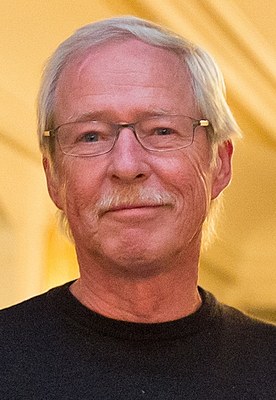 Wolfgang Bensch合作论文数Institute of Inorganic Chemistry, Department of Chemistry, Faculty of Mathematics and Natural Sciences, Christian-Albrechts-Universität zu Kiel2
 Hubert Huppertz合作论文数Department of General, Inorganic and Theoretical Chemistry, Institut Für Allgemeine, Anorganische Und Theoretische Chemie, Universität Innsbruck/Faculty of Chemistry and Pharmacy, Universität Innsbruck2G. Benz-Bohm合作论文数2H. V. Henning合作论文数2E. Kalbitzer合作论文数2G. J. Stock合作论文数2reinhard ziegler合作论文数1Ch. Fuchs合作论文数1
 Christian Näther合作论文数Institut für Anorganische Chemie, Mathematisch-Naturwissenschaftliche Fakultät, Christian-Albrechts-Universität zu Kiel1Gerd Offermann合作论文数1




