This paper presents an optimized implementation for Winograd non-fused convolution. Our optimizations comprise application-independent grouped producer-consumer chains and a set of Winograd-specific software techniques, including specialized interface-kernels data format which enhances memory access efficiency; warp specialization and double buffer prefetching which effectively exploit computational resources and memory bandwidth; utilizing “shuffle” instruction which conserves hardware resources. The paper also provides supplementary explanation of Winograds’ tile extraction, which saves memory and computing resources. The proposed techniques has been evaluated head to head by kernel level in GTX 980 GPU, CUDA 9.2 with a wide range of parameters which meet CNN layers benchmark. Compared with the state-of-the-art Winograd Non-fused convolution in CuDnn 7.6.4 (released in Sept, 2019), our implementation achieves a total speedup of 1.64x.
Scientific researchers are facing a rapidly growing volume of literatures nowadays. While these publications offer rich and valuable information, the scale of the datasets makes it difficult for the researchers to manage and search for desired information efficiently. Literature Explorer is a new interactive visual analytics suite that facilitates the access to desired scientific literatures through mining and interactive visualisation. We propose a novel topic mining method that is able to uncover "thematic topics" from a scientific corpus. These thematic topics have an explicit semantic association to the research themes that are commonly used by human researchers in scientific fields, and hence are human interpretable. They also contribute to effective document retrieval. The visual analytics suite consists of a set of visual components that are closely coupled with the underlying thematic topic detection to support interactive document retrieval. The visual components are adequately integrated under the design rationale and goals. Evaluation results are given in both objective measurements and subjective terms through expert assessments. Comparisons are also made against the outcomes from the traditional topic modelling methods.
The purpose of this paper is to analyze the properties of porcine cartilage type II collagen scaffolds crosslinked with 1-ethyl-3-(3-dimethylaminopropyl) carbodiimide/N-hydroxy-succinamide (EDC/NHS) under different conditions. The porous EDC/NHS-crosslinked scaffolds were obtained through a two-step freeze-drying process. To determine the optimal crosslinking condition, we used different solvents and various crosslinking temperatures to prepare the scaffolds. Three crosslinking solutions were prepared with different solvents, photographs were taken with a flash in the darkroom, and light transmission was observed. Type II collagen was crosslinked on a horizontal shaker at a speed of 60 r/min according to the above grouping conditions, and then the structural change of the scaffold in each group was observed. To investigate the swelling ratio and the in vitro degradation of the collagen scaffold, tests were also carried out by immersion of the scaffolds in a PBS solution and digestion in type II collagenase, respectively. The influence of the scaffolds on the proliferation of chondrocytes was assessed by the methyl thiazolyl tetrazolium colorimetric assay. The morphology of the crosslinked scaffolds cocultured with chondrocytes was characterized by a scanning electron microscope. The results proved that 75% alcohol and a crosslinking temperature of 37 °C are recommended. Collagen fibrils are more densely packed after crosslinking with EDC/NHS and have a more uniform structure than that of noncrosslinked ones. The EDC-crosslinked scaffolds possessed excellent mechanical property and biocompatibility.
The vibration characteristics of printed circuit boards are related to the reliability of electronic components installed on their surface. Finite element software is a powerful tool to analyze the vibration characteristics of printed circuit boards, and the correct establishment of finite element model is very important. In this paper, the dynamic model of anisotropic printed circuit board is established by analyzing the material properties of printed circuit board. The influence of boundary condition and lumped mass on the vibration characteristics of printed circuit board is analyzed. In order to establish a more realistic printed circuit The finite element model of the plate provides the necessary basis..
Efficient retrieval of scientific literature related to a certain topic plays a key role in research work. While little has been done on topic-enabled citation filtering in traditional citation tracing, this paper presents visual citation tracing of scientific papers with document topics taken into consideration. Improved term selection and weighting are employed for mining the most relevant citations. A variation of the TF-IDF scheme, which uses external domain resources as references is proposed to calculate the term weighting in a particular domain. Moreover document weight is also incorporated in the calculation of term weight from a group of citations. A simple hierarchical word weighting method is also presented to handle keyword phrases. A visual interface is designed and implemented to interactively present the citation tracks in chord diagram and Sankey diagram.
Printed circuit board as the carrier of electronic components, the vibration characteristic of printed circuit board is related to the performance of the whole electronic equipment and the stability of the system. The printed circuit board material has non-linear characteristics, and because in engineering applications to solve the nonlinear vibration problem is very complex, and there is no suitable software to calculate. Therefore, this paper focuses on how to linearize the nonlinear vibration dynamic model of printed circuit board. In addition, the effect of concentrated mass on printed circuit board is studied by means of experimental modal analysis, which provides a simple and convenient method for studying the vibration characteristics of printed circuit boards. Circuit board on the reliability of components provided an important basis.
Patient empowerment delivers health and social care services that enable people to gain more control of their healthcare needs. With the advancement of sensor technologies, it is increasingly possible to monitor people’s health with dedicated wearable sensors. The consistent measurements from a variety of wearable sensors imply that a huge amount of data may be exploited to monitor and predict people’s health using medically proven models. In the process of health data representation and analysis, visualisation can be employed to promote data analysis and knowledge discovery via mature visual paradigms and well-designed user interactions. In this paper, we introduce the role of visualisation for individualised health monitoring and risk management in the background of a European Commission funded project, which aims to provide self-management of cardiorenal diseases with the assistance of wearable sensors. The visualisation components of health monitoring, risk model exploration, and risk analysis are presented to achieve personalised health and risk monitoring and to promote people’s wellbeing. It allows the patients not only to view existing risks, but also to gain awareness of the right pathway to change their lifestyles in order to reduce potential health risks.
MyHealthAvatar is a European Commission funded project aimed to design a lifetime companion for citizens to collect, track and store lifestyle and health data to promote citizen well-being. MyHealthAvatar collects and aggregates life-logging data from wearable devices and mobile apps by integrating a variety of life-logging resources, such as Fitbit, Moves, Withings, etc. As a lifelong companion, the data collected will be too large for citizens, patients and doctors to understand and utilise without proper visual presentation and user interaction. This paper presents the key interactive visual analytics components in MyHealthAvatar to facilitate health and lifestyle data presentation and analysis, including 3D avatar, dashboard, diary, timeline, clockview and map to achieve flexible spatio-temporal lifestyle visual analysis to promote citizen well-being.
With the progress of wearable sensor technologies, more wearable health sensors have been made available on the market, which enables not only people to monitor their health and lifestyle in a continuous way but also doctors to utilise them to make better diagnoses. Continuous measurement from a variety of wearable sensors implies that a huge amount of data needs to be collected, stored, processed and presented, which cannot be achieved by traditional data processing methods. Visualisation is designed to promote knowledge discovery and utilisation via mature visual paradigms with well‐designed user interactions and has become indispensable in data analysis. In this study the authors introduce the role of visualisation in wearable sensor‐assisted health analysis platforms by case studies of two projects funded by the European Commission: MyHealthAvatar and CARRE. The former focuses on health sensor data collection and lifestyle tracking while the latter aims to provide innovative means for the management of cardiorenal diseases with the assistance of wearable sensors. The roles of visualisation components including timeline, parallel coordinates, map, node‐link diagrams, Sankey diagrams, etc. are introduced and discussed.
As we know, electric erosion caused by arc would affect the reliability of contact, and there are many related researches and analysis results. But generally in the condition of low voltage and low current, the influences of arc are ignored. In this paper. a failure phenomena which happened on some electronic device was shown and the failure mechanism was analyzed. The results show that even voltage is lower 5V, arcing effect would also cause contact failure under certain conditions.
Organizing scientific papers helps efficiently derive meaningful insights of the published scientific resources, enables researchers grasp rapid technological change and hence assists new scientific discovery. In this paper, we experiment text mining and data management of scientific publications for collecting and presenting useful information to support research. For efficient data management and fast information retrieval, four data storages are employed: a semantic repository, an index and search repository, a document repository and a graph repository, taking full advantage of their features and strength. The results show that the combination of these four repositories can effectively store and index the publication data with reliability and efficiency and hence supply meaningful information to support scientific research.
With the rise of wearable sensor technologies, an increasing number of wearable health and medical sensors are available on the market, which enables not only people but also doctors to utilise them to monitor people’s health in such a consistent way that the sensors may become people’s lifetime companion. The consistent measurements from a variety of wearable sensors implies that a huge amount of data needs to be processed, which cannot be achieved by traditional processing methods. Visual analytics is designed to promote knowledge discovery and utilisation of big data via mature visual paradigms with well-designed user interactions and has become indispensable in big data analysis. In this paper we introduce the role of visual analytics for health monitoring and risk management in the European Commission funded project CARRE which aims to provide innovative means for the management of cardiorenal diseases with the assistance of wearable sensors. The visual analytics components of timeline and parallel coordinates for health monitoring and of node-link diagrams, chord diagrams and sankey diagrams for risk analysis are presented to achieve ubiquitous and lifelong health and risk monitoring to promote people’s health.
It is commonly concluded that health literacy focuses on individual skills to obtain, process and understand health information and services necessary to make appropriate health decisions. To achieve this, an individual first needs to obtain an adequate level of health literacy. However, nowadays, the information that individuals encounter with regards to their health, the amount, credibility and quality of the data make it difficult for one to make judgments on their health and disease progression, let alone make informed decisions on behaviour change. In this paper, we will report our work in providing patients with efficient ways to explore and understand the relevant health literacy. We focus on two data types: 1) harvested medical evidence from PubMed on cardiorenal disease and its comorbidities, 2) data collected from patients including from PHR and wearable sensors. Our work provides ways for patients to visualise this data meaningfully. Our work aims to improve the health literacy for the general public and increase the population's understanding of the medical field, thus helping users to make informed decision with regards to their care.
To mainly investigate the initiation effect of iso-octane as an activation component on the binary model fuels of JP-10/iso-octane, the thermal decomposition of JP-10, iso-octane and their mixtures has been performed in a stainless-steel tubular reactor at the temperatures from 883 K to 963 K. The conversions of components, and the yields of gas and liquid products for each sample are determined in detail. The addition of iso-octane can promote the decomposition of JP-10, and the initiation (of JP-10)-inhibition (of isooctane) effects can be observed during the decomposition processes of JP-10/iso-octane mixtures. One possible mechanism has been proposed to demonstrate the initiation effect of iso-octane on the decomposition of JP-10. For the possible pathways, the rate constants of the H-abstraction reactions between the alkyl radicals obtained from CAC bond fission of iso-octane and the H atoms of JP-10 are calculated from the density functional theory (DFT). In combination with the quantum calculations and experimental observations, the formation of some decomposition products in the JP-10/iso-octane mixtures can be reasonably illustrated. (C) 2015 Elsevier Ltd. All rights reserved.
Effective management and visualization of scientific and research documents can greatly assist researchers by improving understanding of relationships (e.g.citations) between the documents.This paper presents work on the management and visualization of large corpuses of scientific papers in order to help researchers explore their citation relationships.Term selection and weighting are used for mining citation relationships by identifying the most relevant.To this end, we present a variation of the TF-IDF scheme, which uses external domain resources as references to calculate the term weighting in a particular domain; document weighting is taken into account in the calculation of term weighting from a group of citations.A simple hierarchical word weighting method is also presented.The work is supported by an underlying architecture for document management using NoSQL databases and employs a simple visualization interface.
The capability of chirped-pulse compression and beam focusing of an object-image-grating self-tiling grating compressor is demonstrated in an optical parametric chirped-pulse amplification laser for the first time. Probe lasers for tiling error adjustments, which are generally required by the traditional tiled-grating compressor, are not needed in our demonstration any more. With the aid of the double-sized effective optical aperture of the second grating in the compressor, a 490 fs near-transform-limit pulse duration and a 90 mu m near-diffraction-limit focal spot are obtained, synchronously, which are very close to the ones achieved by a non-tiled grating compressor with equal-sized individual gratings.
In many biomedical applications, it is often desired to simulate, analyse and visualise the dynamics of a particular patient based on a patient-specific musculoskeletal model. However, reconstructing a patient-specific model directly from medical images is highly labour intensive, and impractical in the clinical context. A more efficient method is to derive it from an atlas musculoskeletal model using patient-specific hints. In this paper, Laplacian mesh processing is introduced to deform an atlas model to a patient-specific model, based on patient-specific landmarks extracted from two orthogonal clinical images and using least-squares error optimization. Muscle attachment landmarks and motion landmarks in the atlas are also transformed as part of the process. Drift and inter-surface penetrations are prevented by supplementary inter-surface landmarks. Mesh simplification and reconstruction are used to avoid out-of-memory failures that may result from trying to deform models at high resolution.
MyHealthAvatar is designed to provide a digital representation of patient health status. It aims to become a `lifetime companion' for individual citizens that will facilitate the collection of, and access to, long term health-status information. This avatar is not only extremely valuable for clinical decision-making, but it will generate data to support clinical investigation, thereby leading to strengthened multidisciplinary research and excellence in supporting innovative medical care across the population. My Health Avatar platform is currently under development. The purpose of this paper is to present the scope, the provided service and the future plans of the platform as well as a detailed description of the visual representation of the MyHealthAvatar platform.
In this paper, we introduce a diagnosis and treatment for amblyopia performed through a game suitable for children aged between 3 and 7. Our method places emphasis on cooperation between the two eyes to achieve a good binocular outcome to aid the recovery of depth perception. Our approach is not limited to a particular device or platform nor even to a aprticular form of game. Several prototype games have been developed, including 2D games and 3D games.
 Youbing Zhao合作论文数17
 Gordon Clapworthy合作论文数15
 Enjie Liu合作论文数School Of Computer Science And Technology, University of Bedfordshire14
 Feng Dong合作论文数Department Computer Science and Technology, Centre for Visualisation and Data Analytics, University of Bedfordshire13
 Farzad Parvinzamir合作论文数Univ Bedfordshire, Luton LU1 3JU, Beds, England8
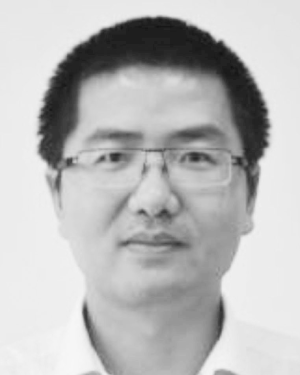 Zhikun Deng合作论文数Univ Bedfordshire, Dept Comp Sci & Technol, Luton, Beds, England7
 Xia Zhao合作论文数6
 Xingshu Li (黎星术)合作论文数School of Pharmaceutical Sciences, Sun Yat-sen University;The Hong Kong Polytechnic University5
 Yongsheng Guo (郭永胜)合作论文数Department of Chemistry, Zhejiang University;Center of Chemistry for Frontier Technologies, Zhejiang University5
 Wenjun Fang (方文军)合作论文数Department of Chemistry, Zhejiang University5Shaopeng Wu合作论文数4
 Nikolaos Ersotelos合作论文数Department of Information Systems and Computing, Brunel University4
 Robert Kennedy合作论文数Department of Chemistry, College of Literature, Science, and the Arts, University of Michigan;Department of Pharmacology, Medical School, University of Michigan;Michigan Neuroscience Institute, University of Michigan4
 Eleni Kaldoudi合作论文数Medical School, Democritus University of Thrace4N. J. B. Mcfarlane合作论文数4Fengjun Yang合作论文数4Ruisen Lin合作论文数4Chen Ling合作论文数3Lu Yin (尹璐)合作论文数3Mark C. Parkin合作论文数Department of Forensic Science & Drug Monitoring (Drug Control Centre),, Kings College London3
 Enduo Wang (王恩多)合作论文数School of Life Science and Technology, ShanghaiTech University3
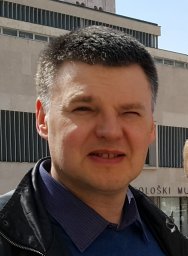 Vaidotas Marozas合作论文数Biomedical Engineering Institute, Kaunas Technology University3
 Liangjun Xu (许良军)合作论文数School of Artificial Intelligence, Beijing University of Posts and Telecommunications3
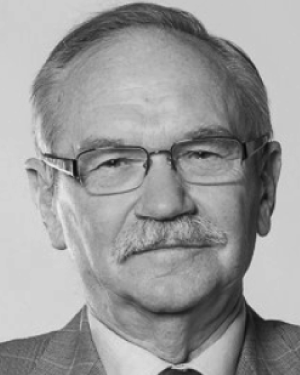 Arunas Lukosevicius合作论文数3Kerstin Nolkrantz合作论文数3Wenzhang Zeng合作论文数2ZhongLin Ma合作论文数2Yunyun Chen合作论文数2Shengjia ZHANG (张胜佳)合作论文数2
 Mei Rong (戎玫)合作论文数Shenzhen Tourism College, Jinan University2James P. O'Callaghan合作论文数2
 Guangquan Zhang (张广泉)合作论文数苏州大学计算机科学与技术学院2
 Xueming Chen (陈雪明)合作论文数College of Environmental and Resource Sciences, Zhejiang University2
 Tao Wang合作论文数School of Environmental and Biological Science and Technology, Dalian University of Technology2
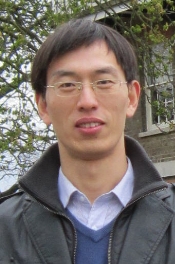 Yubo Tao (陶煜波)合作论文数State Key Lab of CAD&CG, College of Computer Science and Technology, Zhejiang University2
 Dongmei Chen合作论文数Department of Geography, Queen’s University2Shaohe Chen (陈绍和)合作论文数2
 Allan Third合作论文数School of Computing;University of Leeds;School of Computing, University of Leeds2DH Powell合作论文数1chuanfeng zhang合作论文数1Si-Yuan Zhou合作论文数1Angela Cheng合作论文数1ruofan zhang (张若凡)合作论文数1Lingling Zhang合作论文数1
 Gongyin Zhao合作论文数Dept Orthoped, Nanjing Med Univ1Nick Portokallidis合作论文数Democritus Univ Thrace, Sch Med, Alexandroupolis, Greece1
 Yuqing Jiang合作论文数1Yan Xing合作论文数1




