Automatic fish classification played an essential role in the fisheries sector, particularly in underwater environments where visual quality was often degraded. This study addressed challenges related to low-contrast underwater images and limited dataset conditions by integrating Contrast Limited Adaptive Histogram Equalization (CLAHE) with a VGG16-based transfer learning model with regularization approaches including L1, L2, and Dropout. The dataset consisted of multiple fish species, including Bream, Sea Bass, Horse Mackerel, Red Mullet, and Black Sea Sprat. To enhance dataset diversity, data augmentation was performed using geometric transformations such as rotation, flipping, cropping/resizing, translation, shearing, and zooming. The dataset was divided into training (70%, 18,900 images), validation (20%, 5,400 images), and testing (10%, 2,700 images). Experimental results showed that the VGG16-CLAHE-Dropout model achieved the best overall performance, with training, validation, and testing accuracies of99.15%, 98.37%, and 97.07%, respectively. CLAHE was implemented using a clip limit of 2.0 and a tile grid size of 8 & times;8 to enhance image contrast, while the model was optimized using the Adam optimizer with a learning rate of 0.0001 and a batch size of 32. These findings demonstrated that combining contrast enhancement with appropriate regularization techniques significantly improved deep learning performance for underwater fish species classification.
Detection of skin cancer in its early phase is a challenge even for dermatologists. This study aims to analyze the performance of classification methods on multiclass skin cancer datasets using K-nearest neighbor (KNN) and histogram of oriented gradients (HOG). The dataset is taken publicly under the name Skin Cancer MNIST dataset: HAM10000 dataset totaling 10,015 data. The first experiment used the pixels per cell parameter of 8.8 and cells per block of 2.2 to get an accuracy of 60.58%. The second experiment used the pixels per cell parameter of 8.8 and cells per block of 2.2 to get an accuracy of 60.58%. The last experiment using the pixels per cell parameter of 8.8 and cells per block of 2.2 got the best accuracy of 61.43%.
Analisis usability pada situs web Universitas Mercu Buana (UMB) adalah penelitian yang penting dilaksanakan untuk memastikan bahwa situs tersebut efektif mendukung tujuan universitas, terutama dalam hal pengalaman yang pengguna dalam menyelesaiakn tujuan akademik dan administratif dengan standar etika dan profesional. Penelitian ini dilaksanakan selama periode Januari 2024 sampai Mei 2024. Tujuan utama dari penelitian ini adalah untuk mengukur usabilitas situs web UMB dengan menggunakan metode kuesioner. Kuesioner yang digunakan untuk penelitian mengadaptasi System Usability Scale (SUS) yang terdiri dari total 10 pertanyaan. Berdasarkan perhittungan setiap item pernyataan memiliki skor minimal 0 dan skor maksimal 2,5, skor akhir setiap responden berkisar antara 0 hingga l00. Nilai skor rata-rata yang didapatkan yaitu 63,125. Berdasarkan hasil skor 63,125, situs web UMB memiliki nilai berada di antara rentang 50 hingga 70. Hal ini menunjukkan situs web UMB tersebut berada pada kategori "cukup baik" tetapi masih ada perlu ada sedikit perbaikan. Beberapa ikon atau tata letak pada situs UMB yang kurang familiar bagi responden. Selain itu, perlu adanya pedoman yang dikembangkan untuk memberikan informasi cara pengunaan website bagi pengguna yang pertama kali menggunakan situs web UMB.
Research for Arabic handwriting recognition is still limited. The number of public datasets regarding Arabic script is still limited for this type of public dataset. Therefore, each study usually uses its dataset to conduct research. However, recently public datasets have become available and become research opportunities to compare methods with the same dataset. This study aimed to determine the implementation of the transfer learning model with the best accuracy for handwriting recognition in Arabic script. The results of the experiment using ResNet50 are as follows: training accuracy is 91.63%, validation accuracy is 91.82%, and the testing accuracy is 95.03%.
The classification of bird species is a problem often faced by ornithologists, and has been considered scientific research since antiquity. This study aims to evaluate the results of color feature extraction including HSV, LAB and YCrCb against the results of the SVM classification. In addition, the results of this study are useful to determine the performance of color feature extraction that is suitable for bird species classification. The dataset used was 22,617 bird species images. Based on experimental results, the effect of HSV on the SVM classification caused a decrease in accuracy by -0.33% while LAB and YCrCb on the SVM classification caused an increase in accuracy of 0.44% and 0.21%. However, the accuracy of the SVM classification does not yet have good performance so that further research will be carried out using other classifications, including convolutional neural networks and others.
Kegiatan membaca agar dapat meningkatkan minat baca harus dilakukan sedini mungkin. Perlunya pembentukan kebiasaan akan membaca atau budaya membaca akan menjadi lebih baik apabila dimulai sejak dini dengan kegeiatan sesederhana mungkin. Literasi juga dapat diartikan sebagai kemampuan dalam melakukan kegiatan baca, tulis, berhitung dan berbicara serta kemampuan dalam mencari dan menggunakan sebuah informasi. Dengan bantuan teknologi gadget seperti tablet PC maka model pembalajaran yang akan dikembangkan pada pojok baca ini nantinya akan terdapat beberapa games edukasi, tetapi pada pojok baca ini juga terdapat beberapa buku bacaan agar anak-anak dapat menyukai membaca dari beberapa buku. Dengan adanya program Pojok Baca Berbasis Teknologi ini telah berhasil meningkat minat baca anak-anak serta dapat meningkatkan kemajuan berfikir dan kreatifitas anak-anak dilingkungan yang menjadi objek penelitian. Serta dapat disimpulkan pula dengan adanya pojok digital ini dapat mendorong pemikiran positif anak-anak dalam memanfaatkan gadget serta alat-alat teknologi lainnya. Kata Kunci: Pojok, Baca, Digital
Opinion mining has been a prominent topic of research in Indonesia, however there are still many unanswered questions. The majority of past research has been on machine learning methods and models. A comparison of the effects of random splitting and cross-validation on processing performance is required. Text data is in Indonesian. The goal of this project is to use a machine learning model to conduct opinion mining on Indonesian text data using a random splitting and cross validation approach. This research consists of five stages: data collection, pre-processing, feature extraction, training & testing, and evaluation. Based on the experimental results, the TF-IDF feature is better than the Count-Vectorizer (CV) for Indonesian text. The best accuracy results are obtained by using TF-IDF as a feature and Support Vector Machine (SVM) as a classifier with cross validation implementation. The best accuracy reaches 81%. From the experimental results, it can also be seen that the implementation of cross validation can improve accuracy compared to the implementation of random splitting.
Biodiversity information system (BIS) plays an essential role in supporting research, exploration, and conservation activities of biodiversity. However, the implementation of BIS is complex and challenging because it involves many stakeholders and various datasets and systems. As a developing country, Indonesia started to implement the integrated BIS because of its benefit to managing Indonesia’s biodiversity effectively. This paper attempted to explore the lesson learned of BIS implementation in several countries that may be useful for other countries to develop and implement BIS. This research was accomplished by conducting four focus group discussions (FGDs) that involved a representative of stakeholders, practitioners, and experts of a biodiversity information system in discussing issues in BIS implementation. The first FGD was conducted in Jakarta, Indonesia, which involved 16 participants. The second FGD has invited thirteen members and conducted them in Taiwan. The third session of FGD has been done by discussing with six members of FGD in Spain. The last FGD was held in Japan and invited eight members from several South Korea and Japan institutions. The output of FGDs was an analysis of five themes were identified, including data management, technology infrastructure, funding management, stakeholder involvement, and specialized agency. Stakeholder involvement is important to formulate policies and support BIS implementation and utilization sustainability. The lesson related to funding resources is that many organizations or people must be managed in centralization. It means a specialized agency is needed to conduct and control all programs related to BIS implementation.
The studies of human mobility prediction in mobile computing area gained due to the availability of large-scale dataset contained history of location trajectory. Previous work has been proposed many solutions for increasing of human mobility prediction result accuration, however, only few researchers have addressed the issue of human mobility for implementation of LSTM networks. This study attempted to use classical methodologies by combining LSTM and DBSCAN because those algorithms can tackle problem in human mobility, including large-scale sequential data modeling and number of clusters of arbitrary trajectory identification. The method of research consists of DBSCAN for clustering, long short-term memory (LSTM) algorithm for modelling and prediction, and Root Mean Square Error (RMSE) for evaluation. As the result, the prediction error or RMSE value reached score 3.551 by setting LSTM with parameter of epoch and batch_size is 100 and 20 respectively.
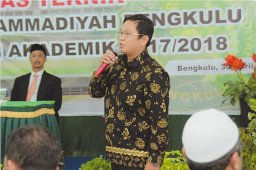 Erwin Dwika Putra合作论文数Fac Engn, Univ Muhammadiyah Bengkulu7
 Marissa Utami合作论文数Fac Engn, Univ Muhammadiyah Bengkulu5
 Sulis Sandiwarno合作论文数Sch Comp Sci & Technol, Beijing Inst Technol4
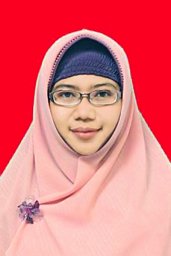 Sarwati Rahayu合作论文数Fac Comp Sci, Univ Mercu Buana4
 Mariana Purba合作论文数Faculty of Computer Science, Universitas Sjahyakirti4
 Vina Ayumi合作论文数4
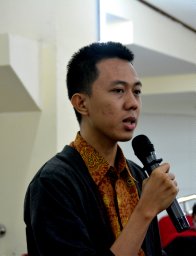 Handrie Noprisson合作论文数Fac Comp Sci, Univ Mercu Buana3
 Andi Nugroho合作论文数Binus Graduate Program, Doctor of Computer Science, Jakarta, Indonesia2
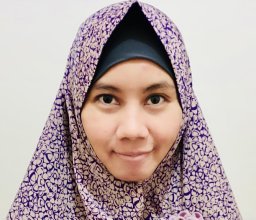 Umniy Salamah合作论文数Universitas Mercu Buana2
 Abdiansah Abdiansah合作论文数Univ Sriwijaya1
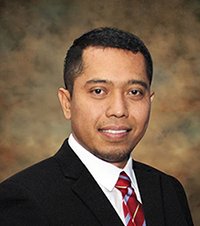 Wachyu Hari Haji合作论文数Universitas Mercu Buana1
 Nur Ani合作论文数Faculty of Computer Science, Universitas Mercu Buana1
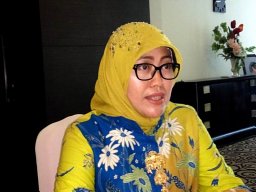 Ida Nurhaida合作论文数Lab. of Pattern Recognition & Image Process., Univ. of Indonesia;c;Lab. of Pattern Recognition & Image Process., Univ. of Indonesia1
 Hong Wei合作论文数School of Systems Engineering;Computational Vision Group;University of Reading;School of Systems Engineering, University of Reading1
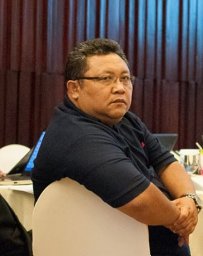 Dana Indra Sensuse合作论文数1




