Assessment satisfaction among lecturers and students is an important aspect of learning analytics for supporting evaluation strategies and timely instructional interventions. LMS platforms generate behavioral log data on engagement, module completion, response time, and lecturer-student interactions, yet these indicators are often studied separately. To address this gap, we propose the Affective a novel model called Users’ Representation for Assessment Network (AURA-Net), which integrates CNN and BiLSTM classifiers to extract complementary behavioral features. The model was evaluated on 100,000 real user activity logs from the Moodle-based e-learning platform of a university, covering three classes such as Assessment, Interaction, and Learning. AURA-Net outperformed conventional baselines, achieving an average F1-score of 91.09%. We also present an interactive map-based visualization of LMS activity events to support data-driven monitoring and targeted pedagogical interventions.
The proliferation of Information Technology (IT) has significantly accelerated the deployment of numerous services in different fields, including education. Assessing e-learning lecturers’ and students’ satisfaction has become essential for improving the quality of teaching and learning processes. Most of the previous approaches have introduced several feature weighting models that represent sentiment or emotion analysis by combining Word2Vec with TF-IDF or TF-IWF. However, these models do not consider two important features: Word Frequency (WF) and Document Frequency (DF) and fail to address varying levels of users’ satisfaction. Additionally, integrating sentiment and emotion information from extracted opinions in e-learning systems has received limited attention and still requires further improvement. To overcome these limitations, this study presents Sentiment and Emotion Multi-task Analysis Recognition (SEMAR), a new multi-task term-weighting strategy that departs from conventional embedding fusion. SEMAR assigns multiple, context-aware weights to every term and integrates TF-Density, Word2Vec, EWE, and fastText in a dual CNN+BiLSTM architecture, enabling joint capture of statistical, semantic, and affective patterns. Extensive experiments on six heterogeneous datasets show that SEMAR consistently delivers significant performance gains, achieving an average F1-score of 91.82 % and surpassing all baselines by a large margin. These findings indicate that employing multi-task term weighting together with a dual-branch deep learning architecture provides a substantial step forward for analyzing sentiment and emotion-driven e-learning satisfaction, rather than simply merging pre-existing methods.
A series of Community Service (PkM) programs has been carried out at SDN Kedoya Utara 03, West Jakarta, by a team from the Faculty of Computer Science, Mercu Buana University, aiming to improve the quality of technology-based elementary education. These programs include the development of a gamification-based learning application to enhance students’ digital literacy, training in graphic design software to support teachers’ creativity in delivering information, optimization of the interactive RubiMath media as an adaptive learning solution for inclusive education, and the utilization of Python-based Artificial Intelligence (AI) for learning patterns, geometry, and mathematical logic. The implementation results showed a significant increase in motivation, understanding, and skills for both students and teachers. The integration of technology and innovative methods proved effective in creating a more enjoyable, interactive, and inclusive learning process. All these activities contributed to enhancing digital literacy, teachers’ creativity, and the quality of mathematics learning outcomes, and can serve as a model for technology-based education implementation in other elementary schools.
Assessing e-learning students’ satisfaction with lecturers’ interactions in asynchronous forums is essential for enhancing teaching and learning processes. The discussion forum allows students to share comments and ideas with peers or lecturers, stimulating diverse perspectives and improving learning efficacy. However, lecturers’ responses are often similar or redundant to previous students’ comments, limiting feedback depth and potentially reducing students’ perceived value of the interaction. Machine learning classifiers have been widely used to assess satisfaction based on sentiment or semantic similarity. However, integrating sentiment and semantic similarity between students’ comments or opinions and lecturers’ responses in asynchronous online discussion forums has received limited attention and may be improved. Through this research, we propose a novel model called E-learning Satisfaction Assessment using Textual Neural Network (E-SATNet). The E-SATNet model has two main sub-networks. The first sub-network employs a Convolutional Neural Network (CNN) to extract sentiment-related features from students’ reactions to lecturers’ responses. The second sub-network utilizes a Bidirectional Long Short-Term Memory (BiLSTM) to extract semantic features from lecturers’ responses and compute their similarity with the overall discussion content. Evaluation results show that E-SATNet effectively assesses satisfaction, achieving an average F1-score of 88.12.
Detection of skin cancer in its early phase is a challenge even for dermatologists. This study aims to analyze the performance of classification methods on multiclass skin cancer datasets using K-nearest neighbor (KNN) and histogram of oriented gradients (HOG). The dataset is taken publicly under the name Skin Cancer MNIST dataset: HAM10000 dataset totaling 10,015 data. The first experiment used the pixels per cell parameter of 8.8 and cells per block of 2.2 to get an accuracy of 60.58%. The second experiment used the pixels per cell parameter of 8.8 and cells per block of 2.2 to get an accuracy of 60.58%. The last experiment using the pixels per cell parameter of 8.8 and cells per block of 2.2 got the best accuracy of 61.43%.
Understanding users' satisfaction is fundamental for enhancing the effectiveness and usability of e-learning platforms. The existing approaches for analyzing users' satisfaction leverage word embedding vectors to represent sentiment information, but they often fail to fully address the complex relationship between emotional and semantic information. Additionally, several emotional and semantic word embedding models are proposed, but they require sentiment information. In this study, we propose a novel multi-task deep neural model, called Sentiment-Emotion-Semantic Network (SES-Net), capable of learning sentiment, emotion, and semantic information simultaneously. The proposed model comprises three main sub-neural tasks: Bidirectional Long Short-Term Memory (BiLSTM) to capture sentiment, BiLSTM to extract semantics, and Convolutional Neural Networks (CNN) to learn emotional features. Experimental results reveal that, SES-Net outperforms the previous approaches by achieving an average F1-score of 90.59%.
E-learningtechnology is widely acknowledged as a crucial component of education. Researchers conduct extensive studies to analyze lecturers’ and students’ effectiveness and satisfaction of e-learning systems via interaction called usage and usability (i.e., SUS) metrics. In a recent empirical study, users’ interactions with an e-learning environment were examined based on a predefined task model that describes low-level interactions. However, the usage-based and usability metrics do not consider opinions of users related to e-learning. Additionally, machine learning algorithms have been widely used for this purpose to analyze satisfaction via opinions. However, they ignore analyzing users’ satisfaction through usage and SUS metrics, and emotions. In this study, we introduce a novel architecture of multi-task deep neural network coined as Satisfaction and Emotion Neural System for E-learning Improvement (SENSEI) for analyzing users’ satisfaction. The SENSEI combines deep neural network including CNN and BiLSTM algorithms to analyze satisfaction. The experimental results indicate that our proposed model effectively analyzes users’ satisfaction by achieving an average F1-score of $85.51 \%$.
Analyzing lecturers' and students' satisfaction with using e-learning is important to improve the teaching-learning processes. The existing approaches have been widely employing machine learning algorithms, usage-based, and System Usability Scale (SUS) metrics based on users' opinions, activities, and usability testing, respectively. However, the usage-based and SUS metrics fail to cover users' opinions about e-learning systems and they involve manual features engineering. Whereas, the machine learning classifiers do not analyze satisfaction based on activities and usability. Toward this end, we propose a machine learning model that employs CNN and BiLSTM algorithms to concatenate the features extracted from users' activities, usability testing, and users' opinions. The proposed model is coined as E-learning Users' Satisfaction Detection (El-USD). Experimental results suggest that there is a significant correlation between satisfaction analysis by achieving an average r = 0.778. The evaluation results further suggest that our proposed approach can analyze users' satisfaction accurately.
Analisis usability pada situs web Universitas Mercu Buana (UMB) adalah penelitian yang penting dilaksanakan untuk memastikan bahwa situs tersebut efektif mendukung tujuan universitas, terutama dalam hal pengalaman yang pengguna dalam menyelesaiakn tujuan akademik dan administratif dengan standar etika dan profesional. Penelitian ini dilaksanakan selama periode Januari 2024 sampai Mei 2024. Tujuan utama dari penelitian ini adalah untuk mengukur usabilitas situs web UMB dengan menggunakan metode kuesioner. Kuesioner yang digunakan untuk penelitian mengadaptasi System Usability Scale (SUS) yang terdiri dari total 10 pertanyaan. Berdasarkan perhittungan setiap item pernyataan memiliki skor minimal 0 dan skor maksimal 2,5, skor akhir setiap responden berkisar antara 0 hingga l00. Nilai skor rata-rata yang didapatkan yaitu 63,125. Berdasarkan hasil skor 63,125, situs web UMB memiliki nilai berada di antara rentang 50 hingga 70. Hal ini menunjukkan situs web UMB tersebut berada pada kategori "cukup baik" tetapi masih ada perlu ada sedikit perbaikan. Beberapa ikon atau tata letak pada situs UMB yang kurang familiar bagi responden. Selain itu, perlu adanya pedoman yang dikembangkan untuk memberikan informasi cara pengunaan website bagi pengguna yang pertama kali menggunakan situs web UMB.
Indonesia beriklim tropis karena terletak pada garis katulistiwa, oleh karena itu Indonesia juga hanya memiliki dua musim, yaitu musim kemarau dan musim hujan. Apabila musim hujan tiba dan curah hujan intensitasnya tinggi, maka hal tersebut berpotensi menyebabkan bencana banjir. Kerugian yang ditimbulkan akibat bencana banjir cukup besar. Untuk mengurangi risiko bencana dan kerugian akibat banjir, diperlukan inovasi dalam mitigasi bencana. Beberapa penelitan sebelumnya telah melakukan analisa dan prediksi mengenai bencana banjir dengan menggunakan metode berbasis machine learning seperti Support Vector Machine (SVM), K-Nearest Neighbor (KNN), dan Naive Bayes. Akan tetapi metode yang digunakan dalam penelitian tersebut memiliki permasalahan seperti tingkat akurasi yang rendah dan membutuhkan waktu yang lama untuk melakukan perhitungan data. Dalam penelitian ini kami mengusulkan sebuah model baru yang dinamakan Deep Neural Investigation Network (DNIN) algorithm, yang dikombinasikan dari Convolutional Neural Network (CNN) dan Bidirectional Long Short Term Memory (BiLSTM). Proses dari usulan metode dalam penelitiaan terdiri dari tiga bagian, yang pertama Convolutional Neural Network (CNN) digunakan untuk melakukan ekstraksi fitur spasial dari data banjir, selanjutnya Bidirectional Long Short Term Memory (BiLSTM) digunakan untuk menangkap pola temporal dari fitur-fitur tersebut. Kemudian tahap terakhir adalah menggabungkan hasil dari kedua metode tersebut. Hasil dari penelitian yang dilakukan terhadap data curah hujan, didapatkan informasi bahwa model yang kami usulkan lebih unggul dibandingkan dengan model sebelumnya dalam melakukan prediksi bencana banjir.
Research for Arabic handwriting recognition is still limited. The number of public datasets regarding Arabic script is still limited for this type of public dataset. Therefore, each study usually uses its dataset to conduct research. However, recently public datasets have become available and become research opportunities to compare methods with the same dataset. This study aimed to determine the implementation of the transfer learning model with the best accuracy for handwriting recognition in Arabic script. The results of the experiment using ResNet50 are as follows: training accuracy is 91.63%, validation accuracy is 91.82%, and the testing accuracy is 95.03%.
Perkembangan usaha kuliner di Jakarta bisa dibilang mengalami perkembangan yang cukup pesat. Setiap bulannya selalu ada resto baru maupun tempat makan baru seperti pedagang kaki lima maupun kafe. Untuk menghadapi persaingan tersebut, perlu adanya suatu ulasan kepada para pelaku Usaha Mikro Kecil dan Menengah (UMKM) agar dapat melakukan peningkatan dan perbaikan dalam pelayanannya. Pada penelitian terdahulu, telah dilakukan analisis terhadap kepuasan pelanggan menggunakan metode Simple Additive Weighting (SAW). SAW merupakan suatu metode penjumlahan terbobot yang dikenal secara luas untuk pengambilan keputusan. Akan tetapi, metode tersebut memiliki masalah seperti kurangnya akurasi data. Untuk mengatasi permasalahan tersebut dalam penelitian ini kami ingin menggunakan metode Servqual secara bersama di metode SAW. Tahapan dari usulan penelitian yang kami lakukan adalah melakukan pengumpulan data menggunakan kuesioner yang disebar lalu dianalisis menggunakan metode Servqual dan SAW. Berdasarkan uji coba sistem yang dilakukan pada 5 cabang restoran ayam geprek Sultan, didapatkan hasil bahwa pemilik harus memperbaiki dimensi Responsiveness dengan nilai gap sebesar 0.105, nilai ini lebih rendah dibandingkan dimensi yang lain. Sedangkan cabang Semper ini memiliki prioritas terbesar untuk dilakukan perbaikan dibandingkan dengan 4 cabang lainnya dengan nilai akhir 0.6237. Dengan hasil yang didapatkan tersebut, diharapkan pemilik restoran dapat memberikan perbaikan pelayanannya.
The classification of bird species is a problem often faced by ornithologists, and has been considered scientific research since antiquity. This study aims to evaluate the results of color feature extraction including HSV, LAB and YCrCb against the results of the SVM classification. In addition, the results of this study are useful to determine the performance of color feature extraction that is suitable for bird species classification. The dataset used was 22,617 bird species images. Based on experimental results, the effect of HSV on the SVM classification caused a decrease in accuracy by -0.33% while LAB and YCrCb on the SVM classification caused an increase in accuracy of 0.44% and 0.21%. However, the accuracy of the SVM classification does not yet have good performance so that further research will be carried out using other classifications, including convolutional neural networks and others.
Refactoring is a widespread practice of improving the quality of software systems by applying changes on their internal structures without affecting their observable behaviors. Rename is one of the most recurring and widely used refactoring operation. A rename refactoring is often required when a software entity was poorly named in the beginning or its semantics have changed and therefore should be renamed to reflect its new semantics. However, identifying renaming opportunities is often challenging as it involves several aspects including source code semantics, natural language understanding and developer's experience. To this end, we propose a new approach to identify rename refactoring opportunities by leveraging feature requests. The rationale is that, when implementing a feature request there are chances that the semantics of software entities could significantly change to fulfill the requested feature. Consequently, their names should be modified as well to portray their latest semantics. The approach employs textual similarity to assess the similarity between a feature request description and identifiers. The approach has been validated on the dataset of 15 open source Java applications by comparing the recommended renaming opportunities against those recovered from the refactoring history of the involved subject applications. The evaluation results suggest that, the proposed approach can identify renaming opportunities on up to precision and recall.
Nowadays, in the pandemic of COVID-19, e-learning systems have been widely used to facilitate teaching and learning processes between lecturers and students. Assessing lecturers’ and students’ satisfaction with e-learning systems has become essential in improving the quality of education for higher learning institutions. Most existing approaches have attempted to assess users’ satisfaction based on System Usability Scale (SUS). On the other hand, different studies proposed usage-based metrics (completion rate, task duration, and mouse or cursor distance) which assess users’ satisfaction based on how they use and interact with the system. However, the cursor or mouse distance metric does not consider the effectiveness of navigation in e-learning systems, and such approaches measure either lecturers’ or students’ satisfaction independently. Towards this end, we propose a lostness metric to replace the click or cursor distance metric for assessing lecturers’ and students’ satisfaction with using e-learning systems. Furthermore, to obtain a deep analysis of users’ satisfaction, we tandem the usage-based metric (i.e., completion rate, task duration, and lostness) and the SUS metric. The evaluation results indicate that the proposed approach can precisely predict users’ satisfaction with e-learning systems.
The development of good information now triggers the use of very broad and very easy to use technology. In its development this technology is known as Information Technology (IT), where IT is a good tool in connecting the giver and recipient of information. An example of the application of IT that can measure the level of user satisfaction with the system is by using sentiment analysis. Measuring the level of satisfaction by using this sentiment analysis can also be applied in the field of learning. Previous research has been conducted to measure the level of student satisfaction with the learning process assisted by laboratory assistants based on questionnaires. However, the assessment of student satisfaction in previous studies is said to fail if only limited to questionnaires. We propose using sentiment analysis to evaluate the learning process for students assisted by laboratory assistants. In conducting research using the concept of sentiment analysis we use logistic regression (LR) and naïve Bayes (NB) methods. As for several stages such as: first, collecting data about opinions or reviews from students whose learning process is assisted by laboratory assistants. Second, we will conduct training data with both methods. Third, we will make conclusions, what methods are best used in measuring the evaluation of learning carried out by laboratory assistants. The results of this study will provide results that NB is a good algorithm in evaluating student opinion levels with an accuracy value of 80.32%. Index Terms learning, evaluation, machine learning classifiers.
In order to solve some problems of importance of words and missing relations of semantic between words in the emotional analysis of e-learning systems, the TF-IWF algorithm weighted Word2vec algorithm model was proposed as a feature extraction algorithm. Moreover, to support this study, we employ Multinomial Naïve Bayes (MNB) to obtain more accurate results. There are three mainly steps, firstly, TF-IWF is employed used to compute the weight of word. Second, Word2vec algorithm is adopted to compute the vector of words, Third, we concatenate first and second steps. Finally, the users' opinions data is trained and classified through several machine learning classifiers especially MNB classifier. The experimental results indicate that the proposed method outperformed against previous approaches in terms of precision, recall, F-Score, and accuracy.
The development of information technology has supported many activities, especially in terms of health. Artificial Intelligence (AI) is the application of information technology that is currently developing well. Several previous studies have evaluated models from expert systems to diagnose lung disease in children using Naïve Bayes (NB) and Support Vector Machine (SVM). However, in conducting these evaluations they do not try to make an integrated application to facilitate evaluation. In this study we propose to build a system that integrates NB and SVM classifiers. Furthermore, in this study we used a sample of data from a clinic in Indonesia. The results of this study, we conclude that the existence of this system will make it easier to evaluate the lung disease experienced by children.
With the growth of online information, varying personalization drifts and volatile behaviors of internet users, recommender systems are effective tools for information filtering to overcome the information overload problem. Recommender systems utilize rating prediction approaches i.e. predicting the rating that a user will give to a particular item, to generate ranked lists of items according to the preferences of each user in order to make personalized recommendations. Although previous recommendation systems are effective in creating attired recommendations, however, they still suffer from different types of challenges such as accuracy, scalability, cold-start, and data sparsity. In the last few years, deep learning has attained substantial interest in various research areas such as computer vision, speech recognition, and natural language processing. Deep learning based approaches are vigorous in not only performance improvement but also to feature representations learning from the scratch. The impact of deep learning is also prevalent, recently validating its efficacy on information retrieval and recommender systems research. In this study, a comprehensive review of deep learning-based rating prediction approaches is provided to help out new researchers interested in the subject. More concretely, the classification of deep learning-based recommendation/rating prediction models is provided and articulated along with an extensive summary of the state-of-the-art. Lastly, new trends are exposited with new perspectives pertaining to this novel and exciting development of the field.
 Ally Nyamawe合作论文数Beijing Inst Technol, Sch Comp Sci & Technol, Beijing, Peoples R China5
 Sarwati Rahayu合作论文数Fac Comp Sci, Univ Mercu Buana4
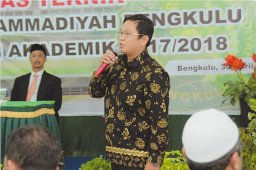 Erwin Dwika Putra合作论文数Fac Engn, Univ Muhammadiyah Bengkulu4
 Ariyani Wardhana合作论文数4
 Hadiguna Setiawan合作论文数Bengkulu, Universitas Muhammadiyah4
 Harry B. Santoso合作论文数University of Indonesia3
 Dana Indra Sensuse合作论文数3
 Andi Nugroho合作论文数Binus Graduate Program, Doctor of Computer Science, Jakarta, Indonesia2
 Mariana Purba合作论文数Faculty of Computer Science, Universitas Sjahyakirti2
 Marissa Utami合作论文数Fac Engn, Univ Muhammadiyah Bengkulu2
 Zhendong Niu (牛振东)合作论文数School of Computer Science and Technology, Beijing Institute of Technology2
 Umniy Salamah合作论文数Universitas Mercu Buana1
 Rukundo Prince合作论文数1
 Muhammad Mishbah合作论文数Fac Comp Sci, Univ Indonesia1
 Khadidja Bakhti合作论文数Centre des Techniques Spatiales, Agence Spatiale Algérienne1
 Abdallah Yousif合作论文数School of Computer Science and Technology, Beijing Institute of Technology1




