Cutaneous leishmaniasis (CL); caused by protozoa of the Leishmania genus, presents a public health concern in Algeria. This study aims to uncover the epidemiological patterns of CL in Biskra Province, Algeria, during the period of 2005 to 2020. The diagnosed patients with CL are registered at the health centers with some information's including sex, age, address. During the survey 43895 CL patients were recorded and the incidence of CL was declining at a stable rate, especially during the last 5 years. The registered cases of CL were distributed through all Biskra district and the most affected areas were Biskra town with 30.1%, followed by Sidi Okba with 10.33% and Zeribet El Oued with 7.33%. Furthermore, 43.3% of the patients were female and 56.7% were male. The highest incidence was found among patients in two age groups, ranging from 0–14 and 20–44 years old, with an incidence of 46.8% and 17.3% respectively. The analysis revealed that the highest frequencies of CL occurred in autumn and the lowest one in the summer period. A definite declining trend in the incidence of CL was noted and this imposes special public health measures in order to control the epidemiological disease in Algeria.
The purpose of the present study was to determine the chemical composition of Myrtus communis L. essential oil (EO) and to assess its effectiveness against newly exuviated fourth instar larvae and adults of Culex pipiens . The EO of the plant was extracted by hydrodistillation and its chemical profile has been analyzed by gas chromatography coupled with mass spectrometry (GC-MS) method. During this analysis, 36 Compounds were identified and the main components were alpha-Pinene (50.81%) and 1.8-Cineole (18.98%). The EO toxicity was tested using several concentrations (100, 200, 400, 600, 700 mu l/ml) and lethal concentrations (LC50 and LC90) were estimated at 329.5 mu l/ml and 737.6 mu l/ml against fourth-instar larvae. The adulticidal effect of this EO was tested using different concentrations ranging between 0.15 and 1.25 mu l/ml air and their lethal concentration values were estimated. The EO of M. communis L. applied at its LC50 and LC90 against fourth-instar larvae and the effect action pathway was studied using the acetylcholinesterase (AChE) and glutathione S -transferase (GSTs) biomarkers analyzes. These Biomarkers analyzes have confirmed the neurotoxic activity and activation of the detoxification system. It was concluded that M. communis EO exhibits insecticidal effects against Cx. pipiens and could be considered as a potential alternative to conventional insecticides.
Culex pipiens and Culiseta longiareolata, are domestic mosquitoes, and ones of the most dominant and abundant mosquito species in the urban areas of Algeria. Thus, the present study was conducted to evaluate the larvicidal activity of Bacillus thuringiensis (Bt.) Vectobac G and to estimate the disturbance of main body metabolites in the tissues of fourth instar larvae of Cx. pipines and Cs. longiareolata. The toxicological essays were done using different concentration of Bti vectobac G against a new exuviated fourth instar larve of Cx. pipiens, and Cs. longiareolata for 24h of exposure time. The results showed a toxic effect with a concentration-response relationship of this product. The biochemical analyses were carried out with the estimated lethal concentrations of both used species (Cx. pipiens: LC50=0.81 g /l and LC90=3.57 g /l; Cs. longiareolata: LC50=1.80 g/l and LC90=5.43 g/l) on the fourth instar larvae. As a result, Bti. Vectobac G caused a significant decrease in the whole body weight in the treated larvae as compared to the control series. Moreover, biochemical analyses revealed an increase in carbohydrates levels, and a decrease in protein and lipids in the whole larvae body treated with the lethal concentrations as compared to the control series for the both species Cx. pipiens and Cs. longiareolata.
In Algeria Cutaneous Leishmaniasis remain a public health concern, which is endemic in different provinces including Biskra; the highest focus of the dis-ease in the country. There for our aim was to assess the knowledge, attitude and practice on CL among health care physicians in Biskra province. A de-scriptive cross sectional study was carried out among 120 doctors practicing in private and state health centers areas of the eight localities of the prov-ince. Data were collected through a structured self-administered question-naire from December 2018 to March 2019. Questionnaire consisted of ques-tions related to the knowledge, attitude and practice (KAP) of the disease. The most of the staff (98.3%) knew that the Upper limb is a commonly affect-ed body parts. And at risk groups were observed in 0–10 years persons (82.5%). Most of the respondents believed the disease incidence is higher in men than women. Number of lesions varied with single and double lesions being observed in the majority of patients (50%) and (66.7%) respectively. Some believed that autumn was the main peak incidence of the disease. There was also good Knowledge regarding the clinical features. Majority (89.2%) of respondents knew Wound swab for microscopy culture and sensi-tivity as a definitive diagnostic test for CL. However, most of the respondents knew the pentavalent antimony compound (Glucantime) the conventional drugs for treating CL (95.83%). The study results demonstrated that majority of physicians had adequate knowledge about the disease. Having well trained technical personnel is important to empower the public health con-tribution.
The domestic mosquito Culex pipiens and Culiseta longiareolata are considered to be the most important mosquito species in Algeria, due to their large geographical distribution and abundance. Instead of causing environmental nuisance, they transmit diseases to the animals. The mosquito control, using conventional insecticides becomes harmful to human and to the environment and in addition mosquitoes have developed a resistance against these products. These reasons have encouraged scientists to propose new eco-friendly and effective alternatives to control insects. Plants extracts have showed a promising agents for pest treatments. In order to test a botanical larvicide against mosquito, extracts were prepared from the leaves of Marrubium vulgare, Laurus nobilis, Eucalyptus globulus, and Myrtus communis and the extractions were done with methanol, using a Soxhlet extractor. Bioassay was carried out, using different concentrations against the fourth mosquito larvae of the C. longiareolata. The toxicity of the tested extracts was evaluated and the lethal concentrations, LC50 and LC90) values were estimated. The obtained results indicated a sensitivity of Cs. longiareolata larvae to the four plants species, with dose-response relationship mortality. The lethal concentrations were calculated with their confidence limits and their values were for LC50 of 6.13, 7.03, 9.60 and 17.84g/l, while the LC90’s were 22, 37.19, 75.69 and 92.76g/l for M. vulgare, L. nobilis, E. globulus, and Myrtus communis respectively. These toxicological assays, using these autochthon plant extracts could be developed as an alternative compound for mosquito control programme.
The present study aimed to determine the phytochemical compounds and to evaluate the activities of the essential oil (EO) of Laurus nobilis against mosquito larvae, Culex pipiens. The EO was extracted by hydro-distillation from L. nobilis leaves and subsequently, their chemical profile was identified by gas chromatography coupled with mass spectrometry (GC-MS) method. 39 compounds, representing 99.98% of the crude oil were identified; namely 1.8-cineole (22.42%), isolongifolene (10.22%), 3-carene (7.74%), Alpha-zingiberene (6.69%), Eremophilene (4.87%), Aristola-1 (10), 8diene (3.09%) icyclo, sabinene (4.13%), alpha-pinene (1.94%) and Beta-caryophyllene (0.36%). Overall, 21 of these components, out of 39, were over 1%. The L. nobilis EO toxicity was tested at different concentrations, ranging between 5 and 35 mu l/l, against third and fourth-instar of Cx. pipiens larvae. Mortality was recorded for both stages and their lethal concentrations (LC50 and LC90) were estimated at 3.74 mu l/l and 14.47 mu l/l for the third-instar larvae and 18 mu l/l and 39.08 mu l/l for the fourth-instar larvae, respectively. The bioassay results showed a larvicidal effect with a concentration response- relationship. Furthermore, the compound effects, applied at LC50 and LC90 against the fourth-instars larvae showed an increase in the development duration and a disturbance in reproduction. The investigation confirmed the toxicological effects of L. nobilis EO against mosquito larvae; consequently, it could be considered as a potent source for producing natural larvicidal agents and bioinsecticides for pest an insect vector control.
Abstract. Djeddar H, Boudjelida H, Arroussi DER. 2021. New alternative for culicidian fauna control using Borago officinalis and Drimia maritima plant extracts. Biodiversitas 22: 5688-5694. Focus on the development of insecticides based on botanical extracts may represent an alternative environmentally interesting tool to chemical control. The current study aimed to investigate the effects of both extracts of Drimia maritima (Asparagales: Asparagaceae) and Borago officinalis (Lamiales: Boraginaceae) on larvae sensibility, physiological and biochemical parameters of Culex pipiens (Diptera: Culicidae). The larvicidal bioassay exhibits a significant dose-response relationship against the fourth instar larvae of Cx. pipiens. Moreover, biochemical analyses revealed a decrease in proteins levels, carbohydrates and lipids in the whole larvae body treated with the lethal concentrations (LC50, LC90) of D. maritima extract as compared to the control series. Whereas, using B. officinalis herbal plants, the result showed a decrease in lipid and carbohydrate contents and an increase in protein. The ability of D. maritima and B. officinalis extracts to inhibit acetylcholinesterase (AChE) activity in a whole body of the treated larvae of Cx. pipiens is examined. The estimated specific activity of glutathione S-transferase (GST) at different times was significantly increased under the effects of both plants. The present study demonstrates that the aqueous extracts of D. maritima and B.officinalis present insecticidal properties with neurotoxic effects against larval stages of the domestic mosquito Cx. pipiens. In this context, the use of chemical insecticides for mosquito control is no longer recommended and the alternatives of eco-friendly products are encouraged.
The diversity, distribution and ecology of mosquitoes, especially arbovirus vectors are important indices for arthropod-borne diseases control. The mosquito larvae were collected in different habitats in four sites of Annaba district, Algeria, during the period of March 2018 to February 2019 and the properties of larval habitats were recorded for each site. The systematic study revealed the presence of 8 species belonging to 4 genera; including Culex pipiens (Linnaeus, 1758), Culex modestus (Ficalbi, 1889), Culex theileri (Theobald, 1903), Culiseta longiareolata (Macquart, 1838), Anopheles labranchiae (Falleroni, 1926), Anopheles claviger (Meigen, 1804), Aedes aegypti (Linnaeus, 1762) and Aedes albopictus (Skuse, 1894). Among the species, C. pipiens presented the highest species abundance (RA %) (55.23%) followed by C. longiareolata (20.21%). The Aedes species are recorded for the first time in the study urban area. Variation of diversity in different sites depends on the type of breeding habitat. These results provided important information on species diversity, distribution and factors associated with breeding habitats. They could be used for the mosquito control and to prevent the spread of mosquito-borne diseases to the population of the region.
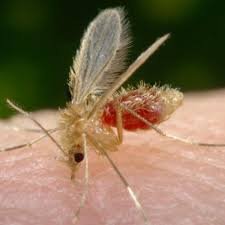
Both visceral leishmaniasis (VL) and cutaneous leishmaniasis (CL) exist in Algeria and are increasingly becoming a serious public health problem. This work aims to study the diversity of phlebotomine sand flies and its impact on leishmania incidence in the region of Biskra. The recorded diversity of sand flies showed the presence of ten species belonging to two genera; Phlebotomus and Sergentomyia. The occurrence of the sand fly species revealed that P. papatasi and S. minuta were the most abundant species covering all sites. The epidemiological survey showed that the number cases of CL and VL differ from site to another. While Biskra city was the most vulnerable to sand fly bites, accounting for 33% of the total number of CL cases. Therefore, Tolga municipality was the most affected by VL with 25% from recorded cases. While this result contributes to the existing survey of sand fly vectors in Biskra region, it is important to consider that seasonal fluctuations of phlebotomine insects which are varied across the year, affecting both the abundance of individual species and the diversity composition and their subsequent response to climatic variation.
Mosquitoes are vectors of several diseases affecting humans and domestic animals worldwide. Plants seem to be alternative sources, instead of conventional pesticides, for mosquito control agents. Essential oils are used fumigants and have low toxicity to non target animals and toxicity to insect pests. The purpose of the present study was to assess the larvicidal activity of a medicinal plant, Hertia cheirifolia, against Culex pipiens mosquito, under laboratory conditions. The toxicological assays were carried out using a powder formulation of Hertia cheirifolia, with different concentrations (8, 16 and 48g/l), on the fourth instar larvae of Culex pipiens, for 24 hours as recommended by World Health Organization (WHO), to determine the two lethal concentration LC50 and LC90. The obtained results showed a highly significant effect of this plant with all tested concentrations, with dose response relation-ship mortality, for all treated larval stages. Using the highest concentration of 48g/l of the plant extract the mortality increased throughout the stages; when it was 98.66% for the L1, 93.33% for L2, 86.66% for L3 and 82.66% for the oldest stage L4. The lethal concentrations LC50 and LC90 were estimated with confidence limits, and their values increased inversely to the larval stages.
Leishmaniasis has been classified primarily as a vector-borne disease that poses a major threat to public health. The Biskra region, which has long been known as a focal point for cutaneous leishmaniasis (CL), has a low extent of visceral leishmaniasis (VL). The objective of the present work was to highlight the spatial and temporal evolution of cutaneous and visceral leishmaniasis in Biskra over the last decade, with particular consideration of different environmental factors that were influencing their distribution.
Mosquito monitoring has been conducted in the Tebessa district with the aim of gaining information about Culicidian species composition, biodiversity and spatio-temporal distribution. The results were based on all sampled mosquito breeding sites found randomly in the four selected locations. The systematic study revealed the presence of 10 species belonging to 3 genera; Culex, Culesita and Aedes. Culex genus was the predominant taxa, with record of 8 species; Culex pipiens, Culex pipiens molestus, Culex modestus, Culex theileri, Culex univittatus, Culex perexiguus, Culex hortensis and Culex laticinctus. The other genera were represented by 1 species each; Culiseta longiareolata and Aedes aegypti. Culiseta longiareolata, Culex pipiens were abundantly distributed during the all year. Whereas the other species their temporal distribution was depending to the high temperature and type of breeding habitats. Monitoring the temporal and spatial distribution of mosquitoes is an essential step in the risk analysis of emerging mosquito-borne diseases.
Leishmaniasis has been classified primarily as a vector-borne disease that poses a major problem to public health. The Biskra region, which has long been known as a focal point for cutaneous leishmaniasis, has a low extent of visceral leishmaniasis. The aim of the study is to highlight the spatial and temporal evolution of cutaneous and visceral leishmaniasis in Biskra over the last decade, taking into account the different factors influencing their distribution. The present study is a ten-year retrospective survey (2007- 2016), carried out in Biskradistrict.During the study period, 24,232 confirmed cases of cutaneous leishmaniasis and 61 cases of visceral leishmaniasis were recorded. The registered cases were distributed in all the municipalities of Biskra, the disease affects, regardless of sex, all age groups but with heterogeneous proportions. The survey also showed that cutaneous leishmaniasis mainly infects (43.36%) the class of children with a male predominance of 57%. The Biskra city was the most vulnerable to sandfly bites, accounting for 33% of the total number of cases, while Tolga municipality was the most affected by visceral leishmaniasis with a percentage of 25%. Children under 5 years of age (85.24%) were the most exposed to visceral leishmaniasis following with predominance of male with 54%. The distribution of leishmaniasis was affected by the environmental and climate changes.
The secondary effects emerging from the use of conventional pesticides on environmental and human health were lead scientists to look for other safety products. Natural pesticides are promising in pest control, especially those derived from plants. In this study, the larvicidal activity and their effect on the reproduction potency of the essential oils of Ruta chalepensis and Eucalyptus camaldulensis were evaluated against the mosquito species Culex pipiens. Newly exuviated larvae of third and fourth instar larvae were exposed to various concentrations of Ruta chalepensis (150-700 ppm) and Eucalyptus camaldulensis (100-600 ppm). The results, for both plants, showed a toxic effect of the treated larval series with dose-response relationship. For Ruta chalepensis oil bioassay the lethal concentrations (LC50 and LC90) were estimated at 95ppm and 550 ppm for the third-instar larvae, respectively, while these respective values were 245ppm and 830ppm for the fourth-instar larvae of Culex pipiens. For Eucalyptus camaldulensis oil the LC50 and LC90 values of were 185 and 580ppm for the third-instar larvae, and 280 and 1050 ppm for the fourth-instar larvae respectively. In other experiments the compound was applied at LC50 and LC90 against the fourth instars larvae and its effects was investigated on fecundity of female emerged from larval treated series with lethal concentrations. The results showed that the two oils reduced significantly the laying egg number and the percentage of fecundity.
The present study was conducted under laboratory conditions and consisted to evaluate the lethal concentrations (LC50 & LC90) effects of an agonist of the molting hormone, the halofenozide (RH-0345), on several physiological and biological aspects (developmental duration, morphology, metabolites and potential reproduction) after treatment of newly ecdysed fourth instar larvae of mosquito species, Culex pipiens. The results showed that the RH-0345 induced a decrease of the developmental duration of the treated larval stage with morphological aberrations. The duration of control ones was 7.5 days whereas for treated series, it was 6.66 and 6 days for LC50 and LC90, respectively. The biochemical assays showed that the product has reduced significantly the amount of the metabolite contents; carbohydrates, lipids and proteins. The potential of reproduction of adult females emerged from treated fourth instar larvae, was affected and the number of laid eggs, hatching and fecundity were decreased compared to the control.
 Bouaziz A合作论文数10Khedidja Amira合作论文数9
 Noureddine Soltani合作论文数Faculty of Science, University of Annaba7
 Aissaoui Lynda合作论文数6Samir Zeroual合作论文数5Nour El-Houda Djeghader合作论文数5
 Randa Gaouaoui合作论文数Dept Nat Sci & Life, Univ Mohamed Khider5
 Guy Smagghe合作论文数Department of Plants and Crops, Faculty of Bioscience Engineering, Ghent University4Habiba Gacem合作论文数2Rabah Chaouch合作论文数2J P Farine合作论文数2AISSAOUI LYNDA合作论文数2
 Hicham Boughendjioua合作论文数2Jean-Pierre Farine合作论文数2S. Tine合作论文数1Bourhane-Eddine Belabed合作论文数1Fouzia Tine-Djebbar合作论文数1Amel Bendjema合作论文数1Imene Rahal合作论文数1Thouria Ababsia合作论文数1Chouaib Touahria合作论文数1Thomas Soin合作论文数1
 Larbi Djabri合作论文数Department of Geology, Annaba University1Nadia Aribi合作论文数Laboratoire de Biologie Animale Appliquée, Université Badji Mokhtar1
 Abdelouaheb Alouani合作论文数1Nassima Rehimi合作论文数1Mourad Bensouilah合作论文数Badji Mokhtar Annaba;Faculté des Sciences;Laboratoire d'écobiologie;Université Badji Mokhtar Annaba|Faculté des Sciences|Laboratoire d'écobiologie1




