Computer use agents (CUAs) are emerging as a powerful interface for automating complex digital workflows through visual perception and GUI execution. Online reinforcement learning with verifiable rewards (RLVR) has emerged as a key direction for scaling their capabilities. However, this paradigm is bottlenecked by verifiable data scarcity and online RL inefficiency. To break these barriers, we introduce ScaleCUA, a unified framework that scales online RL for CUAs via verifiable task synthesis and efficient training. At the data level, we design VeriGen, an end-to-end framework for generating verifiable RL tasks through iterative docker interactions and a multi-agent feedback loop. Scaled to 100+ concurrent agent workers via a shared docker interaction probe, this pipeline produces 24K+ verifiable tasks and nearly 3K high-quality RL tasks. To maximize sample efficiency, we propose Frontier Sampling, which tracks per-task capability and allocates rollouts to the current learning frontier. On the training side, we further design Visual Context Segmentation, a sliding window over recent visual context that balances rollout and training-engine pressure, yielding a 2.83x training speedup over step-wise decomposition. Together, ScaleCUA achieves 68.7
We introduce ComputerRL, a framework for autonomous desktop intelligence that enables agents to operate complex digital workspaces skillfully. ComputerRL features the API-GUI paradigm, which unifies programmatic API calls and direct GUI interaction to address the inherent mismatch between machine agents and human-centric desktop environments. Scaling end-to-end RL training is crucial for improvement and generalization across diverse desktop tasks; however, it remains challenging due to environmental inefficiency and instability during extended training. To support scalable and robust training, we develop a distributed RL infrastructure capable of orchestrating thousands of parallel virtual desktop environments to accelerate large-scale online RL. Furthermore, we propose Entropulse, a training strategy that alternates reinforcement learning with supervised fine-tuning, effectively mitigating entropy collapse during extended training runs. We employ ComputerRL on open models GLM-4-9B-0414 and GLM-4.1V-9B-Thinking, and evaluate them on the OSWorld benchmark. The GLM-ComputerRL-9B achieves a new state-of-the-art accuracy of 48.9%, demonstrating significant improvements for general agents in desktop automation. Our code and demos are available at https://computer-rl.vercel.app/.
We present GLM-5, a next-generation foundation model designed to transition the paradigm of vibe coding to agentic engineering. Building upon the agentic, reasoning, and coding (ARC) capabilities of its predecessor, GLM-5 adopts DSA to significantly reduce training and inference costs while maintaining long-context fidelity. To advance model alignment and autonomy, we implement a new asynchronous reinforcement learning infrastructure that drastically improves post-training efficiency by decoupling generation from training. Furthermore, we propose novel asynchronous agent RL algorithms that further improve RL quality, enabling the model to learn from complex, long-horizon interactions more effectively. Through these innovations, GLM-5 achieves state-of-the-art performance on major open benchmarks. Most critically, GLM-5 demonstrates unprecedented capability in real-world coding tasks, surpassing previous baselines in handling end-to-end software engineering challenges. Code, models, and more information are available at https://github.com/zai-org/GLM-5.
Reinforcement learning (RL) for large language models is moving toward multi-turn agentic workloads, where rollout tasks repeatedly pause for external environments, resume with growing contexts, and finish at highly variable times. In this setting, RL training goodput, measured by training throughput, matters more than raw GPU occupancy: GPU waiting and repeated prefill recomputation are pure overhead. We present TideRL, a readiness-aware elastic RL system with Continuous Task Batching, Resource-Aware Ref-Actor Pipelining, and Elastic Resource Scaling. CTB preserves useful rollout state, RA^2P selects between decoupled streaming and colocated aggregation from the ready backlog and arrival interval, and ERS moves ranks between rollout and training using the same readiness signals. Across text-only and multi-modal agentic workloads, TideRL improves RL training goodput by up to 5.6× over synchronous baselines and over 33
Large Language Models have shown remarkable potential as autonomous agents, but their effectiveness in knowledge-intensive tasks remains limited by passive knowledge utilization. We introduce KARL (Knowledge-Augmented Reinforcement Learning), a framework that enables LLM agents to dynamically explore structured knowledge sources through multi-turn interactions. Unlike existing retrieval-augmented approaches, KARL empowers agents to proactively decide when and what knowledge to acquire during task execution. Our framework incorporates online reinforcement learning with curiosity-driven reward shaping, explicitly incentivizing knowledge exploration while optimizing tool-use behaviors end-to-end. Extensive evaluation across six structured knowledge benchmarks demonstrates that KARL achieves state-of-the-art performance, with our Qwen2.5-14B-based agent significantly outperforming GPT-4o, Claude-4, and o4-mini on both knowledge graph and database tasks.Source code is available at https://github.com/THUDM/KARL.
Building general-purpose graphical user interface (GUI) agents has become increasingly promising with the progress in vision language models. However, developing effective mobile GUI agents with reinforcement learning (RL) remains challenging due to the heavy-tailed distribution of task difficulty and the inefficiency of large-scale environment sampling. We present an online agentic reinforcement learning framework MOBILERL to enhance GUI agents in mobile environments. Its core component is the Difficulty-Adaptive GRPO (ADAGRPO) algorithm. In ADAGRPO, we design difficulty-adaptive positive replay and failure curriculum filtering to adapt the model to different task difficulties. We introduce the shortest-path reward adjustment strategy to reshape rewards concerning the task length in multi-turn agentic tasks. Those strategies jointly stabilize RL training, improve sample efficiency, and generate strong performance across diverse mobile apps and tasks. We apply MOBILERL to two open models (Qwen2.5-VL-7B-Instruct and GLM-4.1V-9B-Base). The resultant MOBILERL-9B model achieves state-of-the-art results in terms of success rates on both AndroidWorld (80.2%) and Android-Lab (53.6%). The MOBILERL framework is open-sourced at https://anonymous.4open.science/r/MobileRL-iclr-4513.
Augmenting large language models (LLMs) with browsing tools substantially improves their potential as deep search agents to solve complex, real-world tasks. Yet, open LLMs still perform poorly in such settings due to limited long-horizon reasoning capacity with browsing tools and the lack of sufficiently difficult supervised data. To address these challenges, we present DeepDive to advance deep search agents. First, we propose a strategy to automatically synthesize complex, difficult, and hard-to-find questions from open knowledge graphs. Second, we apply end-to-end multi-turn reinforcement learning (RL) to enhance LLMs' long-horizon reasoning with deep search. Experiments show that DeepDive-32B achieves a new open-source competitive result on BrowseComp, outperforming WebSailor, DeepSeek-R1-Browse, and Search-o1. We demonstrate that multi-turn RL training improves deep search ability and significantly contributes to the performance improvements across multiple benchmarks. We observe that DeepDive enables test-time scaling of tool calls and parallel sampling. All datasets, models, and code are publicly available at https://github.com/THUDM/DeepDive.
Recent advances in large language models (LLMs) have sparked growing interest in building generalist agents that can learn through online interactions. However, applying reinforcement learning (RL) to train LLM agents in multi-turn, multi-task settings remains challenging due to lack of scalable infrastructure and stable training algorithms. In this work, we present the AgentRL framework for scalable multi-turn, multi-task agentic RL training. On the infrastructure side, AgentRL features a fully-asynchronous generation-training pipeline for efficient multi-turn RL. To support heterogeneous environment development in multi-task RL, we design a unified function-call based API interface, containerized environment development, and a centralized controller. On the algorithm side, we propose cross-policy sampling to encourage model exploration in multi-turn settings and task advantage normalization to stabilize multi-task training. Experiments show that AgentRL, trained on open LLMs across five agentic tasks, significantly outperforms GPT-5, Clause-Sonnet-4, DeepSeek-R1, and other open-source LLM agents. Multi-task training with AgentRL matches the best results among all task-specific models. AgentRL is open-sourced at https://github.com/THUDM/AgentRL. The algorithm and framework are adopted in building \textsc{\href{https://autoglm.zhipuai.cn}{AutoGLM}}.
Large Language Models (LLMs) are becoming increasingly smart and autonomous, targeting real-world pragmatic missions beyond traditional NLP tasks. As a result, there has been an urgent need to evaluate LLMs as agents on challenging tasks in interactive environments. We present AgentBench, a multi-dimensional evolving benchmark that currently consists of 8 distinct environments to assess LLM-as-Agent's reasoning and decision-making abilities in a multi-turn open-ended generation setting. Our extensive test over 27 API-based and open-sourced (OSS) LLMs shows that, while top commercial LLMs present a strong ability of acting as agents in complex environments, there is a significant disparity in performance between them and OSS competitors. We identify the typical reasons of failures in environments and LLMs, showing that poor long-term reasoning, decision-making, and instruction following abilities are the main obstacles for developing usable LLM agents. Training on code and high quality multi-turn alignment data could improve agent performance. Datasets, environments, and an integrated evaluation package for AgentBench are released at \url{https://github.com/THUDM/AgentBench}.
Large language models (LLMs) have fueled many intelligent web agents, but most existing ones perform far from satisfying in real-world web navigation tasks due to three factors: (1) the complexity of HTML text data (2) versatility of actions on webpages, and (3) task difficulty due to the open-domain nature of the web. In light of these challenges, we develop the open AutoWebGLM based on ChatGLM3-6B. AutoWebGLM can serve as a powerful automated web navigation agent that outperform GPT-4. Inspired by human browsing patterns, we first design an HTML simplification algorithm to represent webpages with vital information preserved succinctly. We then employ a hybrid human-AI method to build web browsing data for curriculum training. Finally, we bootstrap the model by reinforcement learning and rejection sampling to further facilitate webpage comprehension, browser operations, and efficient task decomposition by itself. For comprehensive evaluation, we establish a bilingual benchmark---AutoWebBench---for real-world web navigation tasks. We evaluate AutoWebGLM across diverse web navigation benchmarks, demonstrating its potential to tackle challenging tasks in real environments. Related code, model, and data are released at https://github.com/THUDM/AutoWebGLM.
We present AutoGLM, a new series in the ChatGLM family, designed to serve as foundation agents for autonomous control of digital devices through Graphical User Interfaces (GUIs). While foundation models excel at acquiring human knowledge, they often struggle with decision-making in dynamic real-world environments, limiting their progress toward artificial general intelligence. This limitation underscores the importance of developing foundation agents capable of learning through autonomous environmental interactions by reinforcing existing models. Focusing on Web Browser and Phone as representative GUI scenarios, we have developed AutoGLM as a practical foundation agent system for real-world GUI interactions. Our approach integrates a comprehensive suite of techniques and infrastructures to create deployable agent systems suitable for user delivery. Through this development, we have derived two key insights: First, the design of an appropriate "intermediate interface" for GUI control is crucial, enabling the separation of planning and grounding behaviors, which require distinct optimization for flexibility and accuracy respectively. Second, we have developed a novel progressive training framework that enables self-evolving online curriculum reinforcement learning for AutoGLM. Our evaluations demonstrate AutoGLM's effectiveness across multiple domains. For web browsing, AutoGLM achieves a 55.2 attempt) and 96.2 AutoGLM attains a 36.2 common tasks in popular Chinese APPs.
 Hao Yu合作论文数2Hanyu Lai合作论文数Tsinghua University2
 Xiao Liu (刘潇)合作论文数Department of Computer Science and Technology, Tsinghua University2
 Yuxiao Dong (东昱晓)合作论文数Institute of Computer Software, Department of Computer Science and Technology, Tsinghua University2
 Jie Tang (唐杰)合作论文数Department of Computer Science and Technology, Tsinghua University2Hangliang Ding合作论文数1Yifan Xu合作论文数Tsinghua University1Shuntian Yao合作论文数1Iat Long Iong合作论文数1Yuxuan Chen合作论文数1Shudan Zhang合作论文数1Kejuan Yang合作论文数1Kaiwen Men合作论文数1
 Aohan Zeng (曾奥涵)合作论文数Knowledge Engineering Group, Department of Computer Science and Technology, Tsinghua University1
 Xuanyu Lei合作论文数Tsinghua University, Beijing, China1Pengbo Shen合作论文数1
 Xiaohan Zhang (张笑涵)合作论文数Beijing Knowledge Atlas Technology Co., Ltd1Chenhui Zhang合作论文数Department of Computer Science and Technology, Tsinghua University1
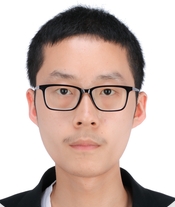 Zhengxiao Du (杜政晓)合作论文数Zhipu AI, Inc1
 Tianjun Zhang合作论文数RISE Lab, University of California, Berkeley;University of Michigan1
 Sheng Shen合作论文数University of California, Berkeley1
 Yu Gu (谷雨)合作论文数The Ohio State University1
 Yu Su (苏煜)合作论文数1
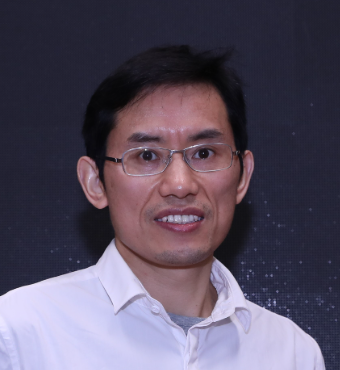 Minlie Huang (黄民烈)合作论文数Department of Computer Science and Technology, Tsinghua University1
 Huan Sun合作论文数Department of Computer Science and Engineering, College of Engineering, The Ohio State University1
 Xiang Deng合作论文数The Ohio State University1




