This research analyzes the roles of directive leadership and continuance commitment on the implementation of innovative work behavior (IWB). The study focuses on companies in the production of medical equipment industry. Both the direct and indirect effects were examined, with continuance commitment serving as the mediating variable. This study utilized purposive sampling as the sampling technique. Four hundred eight respondents was 408, classified as employees of the selected companies. The data analysis employed structural equation modeling (SEM) to demonstrate the direct and indirect effects within the research model. The research findings reveal that both directive leadership and continuance commitment directly and positively influence IWB. Additionally, there is a positive indirect effect, with directive leadership affecting IWB, mediated by continuance commitment. In conclusion, this research reinforces previous studies' findings, indicating both direct and indirect implications on IWB. Directive leadership and continuance commitment play vital roles in the implementation of IWB, influencing work activities and business quality. These aspects ensure long-term business sustainability The uniqueness of this research lies in its research object. Companies in the production of medical equipment industry were selected as the study's focus to analyze the implications of innovative work behavior (IWB) influenced by directive leadership and continuance commitment. The significance of innovative behavior is crucial for business sustainability.
The banking industry, especially Sharia banks, continues strengthening marketing communications and consumer education regarding Sharia-related information through social media marketing. Information dissemination by Islamic banks is important because it can encourage additional information and influence other consumers. This information can be in the form of the latest news, marketing programs, policies, or education to consumers to strengthen consumer product knowledge. This study identifies the use of social media as the leading platform to find out the conversations that are carried out by the public on social media related to the differences between Islamic and conventional banking; conversations conducted by consumers on social media related to products or contracts owned by Islamic banking and conversations conducted by the public on social media related to knowledge (literacy) and selection of Islamic banking products (inclusion).
As the global halal market continues to expand, the role of educational institutions in fostering sector growth becomes increasingly crucial. This systematic literature review investigates the role of Indonesian universities in driving halal product innovation and education, which is essential in a country with the largest Muslim demographic worldwide. The review synthesizes findings from diverse scholarly articles, including peer-reviewed journals and government reports, published between 2015 and 2023, to present a comprehensive overview of how higher education institutions contribute to the halal sector's growth. It focuses on areas such as curriculum development, research initiatives, industry-academia collaboration, and the impact of these activities on the halal market. The methodology includes a rigorous selection process, adhering to predefined inclusion and exclusion criteria, and leveraging databases such as Google Scholar, PubMed, and governmental archives, ensuring the analysis's relevance and depth. Key themes emerge, such as the integration of halal standards in academic programs, the role of universities in halal certification processes, and the incubation of halal product startups within university environments. The review also identifies gaps in existing research, notably in the quantification of universities' contributions to the halal market and the long-term outcomes of halal-focused education. Finally, the paper suggests areas for future research, including the need for longitudinal studies to assess the sustained impact of higher education on the halal industry's evolution in Indonesia and globally. This review provides policymakers with a framework for supporting academic programs that align with industry needs, thereby enhancing the national economy in Indonesia. It also offers valuable insights for academics and industry practitioners aiming to leverage educational institutions to foster innovation in the halal product sector.
Purpose - The study analyzes brand love in local eco-hijab fashion (LEHF) by discussing the value of collectivism, fashion consciousness, environmental value, religiosity and brand advocacy. LEHF becomes the trend pursued by consumers, so this can create market opportunities to optimize marketing strategies. The focus on LEHF in a sustainable fashion would allow local businesses to develop local values-based companies. This study uses the value attitude-behavior model to analyze data. Design/methodology/approach - This research uses a quantitative survey to obtain data. The questionnaire is spread to 300 respondents with a purposive sampling approach, especially respondents who have worn LEHF. Findings - This study shows that collectivism values, fashion consciousness, environmental values and religiosity influence brand love, while brand love influences brand advocacy related to LEHF. On the other hand, consumers are the target market with a fashion consciousness to follow the trend of hijab clothes. This also shows they wear clothes to fulfill religious values while prioritizing the latest styles. Research limitations/implications - Since this study focuses on LEHF, this product is only relevant to hijab fashion. This takes into account the potential of Muslim-dominated Indonesian society. The fashion category can be enlarged to include more local products in future studies. A large selection of goods may promote greater use of regional interests. Practical implications - For business actors, particularly micro and medium firms that are just starting to grow to support the local hijab fashion industry company, this research has managerial implications. This presents a chance for business actors to improve the local economy and opens doors for establishing more employment possibilities. The growth of the regional hijab fashion market offers an opportunity to satisfy the demands of customers who favor regional goods. Brand love in LEHF may foster business revenue growth and help local firms compete favorably with international brands. Marketers for LEHF are anticipated to intensify their efforts to advance socialism, the environment and fashion sensibility. Additionally, LEHF marketers emphasize the importance of religiosity when promoting their products to the target population. Marketers are also aware that the study's environment is Indonesia, which has 90% Muslim population. Marketers have an excellent opportunity to maximize this scenario. Social implications - This study also had social implications. The goal of producing locally made eco-hijabs is to benefit nearby communities and the environment. This aligns with the more general objectives of ethical and sustainable fashion. Sustainable methods are used in production, such as using eco-friendly colors, water conservation and waste reduction. Sustainable manufacturing methods are designed to reduce their adverse effects on the environment and encourage ethical production. Empowerment and community engagement may be involved in the manufacturing of locally-made eco-hijabs. This can entail educating and hiring regional craftspeople or incorporating neighborhood residents in manufacturing. Originality/value - The study focuses on religiosity and environmental value to further analyze its influence on LEHF. The context of the products analyzed in this study is LEHF, which prioritized local production and strengthened local wisdom through pro-environment. The study used the VAB (value, attitude, behavior) model to analyze the concept.
Research Originality: Technological developments have changed human behavior in economic activities, including payment methods that use e-wallets. On the other hand, consumers also need an e-wallet that complies with Sharia principles. The COVID-19 pandemic forced consumers to use digital payment methods. However, the number of studies related to the continued usage of Islamic e-wallets in Indonesia remains limited.Research Objectives: Hence, our study examines the factors influencing a person's intention to use an Islamic e-wallet.Research Method: The theoretical framework used in this study is the Technology Acceptance Model. The analysis technique employed is multiple regression analysis using 371 respondents.Result: Empirical results indicate that the factors influencing a person's intention to use an Islamic e-wallet are usability, ease of use, trustworthiness, and religiosity. However, the risk variable does not significantly affect a person's intention to use an Islamic e-wallet. Implication: These results imply that companies must improve the features and services of Islamic e-wallet applications.JEL Classification: D10, G29How to Cite:Risza, H. (2024). The Intention of Young Muslim Generation Using the Islamic E-wallet Services in Indonesia. Etikonomi, 23(1), 219 – 232. https://doi.org/10.15408/etk.v23i1.37452.
Product value creation training is a community service activity carried out by the Faculty of Economics and Business, Paramadina University. The aim of this program is to increase knowledge and practice of creating product value for MSME actors. The training participants were the South Jakarta MSME Community. The themes presented were digital entrepreneurship, the urgency of product value, and product value mapping with the Value Proposition Canvas. The number of participants was 38 people. The evaluation results showed that the participants were satisfied with this training program. The three aspects assessed are the committee, materials, and the implementation of the concept of product value. The training method is carried out face-to-face by inviting small-medium enterprise community actors in the South Jakarta area. The evaluation questionnaire was distributed online using the Google Form. The results of the evaluation assessment show that the program was successfully implemented with material in accordance with business needs. Training participants have a strong desire to apply the Value Proposition Canvas (VPC) concept to products or services. These This awareness is to be able to meet consumer expectations. The follow-up program will be carried out with the theme of packaging and product branding. These two themes are a continuation of the community service program in the coming year.
This study analyzes the implementation of environmental, social, and governance in Indonesia to support long-term business continuity.This research anticipates government policies to support sustainable programs, activities, and performance.This research method applied a qualitative approach through interviews with company employees directly involved in implementing environmental, social, and governance programs.Interviews were conducted with 24 manufacturing, government, service, NGO, and education employees using questionbased environmental, social, and governance indicators.The research results show that several companies have implemented environmental, social, and governanceoriented programs.However, program optimization and performance achievement have not been optimal because it requires a long time, organizational learning, and the support of all stakeholders.
Penelitian ini membahas tentang evaluasi pelaksanaan Program Merdeka Belajar Kampus Merdeka (MBKM) oleh pimpinan Universitas Paramadina. Program MBKM merupakan kebijakan yang dikeluarkan oleh Kementerian Pendidikan dan Kebudayaan untuk mempersiapkan mahasiswa menguasai berbagai keilmuan yang berguna untuk memasuki dunia kerja. Setelah dilakukan sosialisasi dan dilaksanakan selama satu semester, program MBKM perlu dilakukan evaluasi pelaksanaanya oleh pimpinan universitas. Pertama, pemahaman pimpinan universitas terhadap Program MBKM. Kedua, Kebijakan pimpinan universitas mempersiapkan pelaksanaan MBKM. Ketiga, pelaksanaan program MBKM. Keempat, manfaat program MBKM dan Kelima, faktor pendukung dan faktor penghambat pelaksanaan MBKM. Keberhasilan program MBKM akan sangat tergantung dari respon pimpinan universitas dalam mengetahui, mempersiapkan dan menjalankan kebijakan dengan tata kelola dan dukungan sumber daya yang baik. Penelitian yang digunakan dalam penelitian ini adalah kualitatif dengan pendekatan evaluasi program. Metode pengumpulan data menggunakan Focus Group Discussion (FGD). Analisis dilakukan dengan mencatat informasi penting dan relevan berdasarkan urutan kejadian. Pimpinan universitas Paramadina sudah memahami program MBKM dan mempersiapkan kebijakan dan sumber daya pendukung untuk pelaksanaan program MBKM ditingkat universitas.
Many organizations apply WFH policy during the pandemic. In this study, we focused on the employee performance quality when engaged in this working pattern. The result of the study is expected to provide positive recommendations to organizations in implementing the WFH policy. This approach allows researchers to see the significance of the construct and its effect on employee performance. 104 out of 140 employees were recruited as participants using a purposive sampling technique based on several criteria. The obtained data are considered representative of the population. This study examined the effect of workmotivation, work discipline, and compensation on employee performance. These variables were analyzed the Work from Home (WFH) setting during the COVID-19 pandemic. The result of the study may provide a positive recommendation to improve employee performance when working from home. This study found that work motivation and discipline positively affected employees’ job performance. Compensation did not affect but had a positive relationship with employees’ job performance. Work discipline was found to be the most dominant variable affecting the increase in employee performance during WFH. The organization needs to evaluate the compensation program to improve the work outcome quality and rewards for employees during the WFH program.
This research aims to develop a measuring instrument of integrity based on the presence of more holistic elements in understanding leadership. The research in the study of integrity is seen to be still very partial in nature to be used as a basis for evaluating the performance of individuals as leaders or organizations so that it is necessary to develop an eclectic measurement. The parameters in the eclective measurement lead to the existence of organizational elements and organizational systems that support the effectiveness of leaders in managing an institution. This study uses a qualitative approach through interviews with experts in confirming measuring instruments. The results of the development of this integrity measurement tool can strengthen the integrity dimension that can be used as a guide in assessing the perceptions of the leaders of institutions. This aspect of perception will also provide input for improving the performance of leaders by paying attention to aspects of the consequences of behavior. In addition, the existence of the integrity dimension can be realized in the form of policies and guidelines to become the standard and basis for evaluating employee performance.
1. Daya BTPN : Memberdayakan Untuk Tumbuh dan Memberikan Makna Lebih Dalam Hidup. 2. Baitul Mal wat Tamwil (BMT) UGT Sidogiri : Membangun Ekonomi Keummatan Menuju Terwujudnya Baldatun Thoyyibatun wa Robbun Ghafur Model Pengembangan Ekonomi Syariah Berbasis Umat 3. Studi Kemitraaan PT Pos Logistik Indonesia : Menuju Keberlangsungan Usaha sebagai Strategic Business Unit 4. Studi Kemitraan Tempo.co : Keberlangsungan Bisnis di Masa Depan 5. Studi Kemitraan Indonesian Service Dialog Council : Membantu Pemerintah Daerah dalam Memberdayakan UKM 6. Kemitraan untuk Peningkatan Kualitas Pendidikan Studi Kasus Program Corporate Citizenship (PCC) Trakindo untuk Pendidikan 7. Education for a Better Future Program Kemitraan Colruyt Grup Belgia dan Yayasan Kesejahteraan Anak Indonesia 8. Studi Kemitraan Ancora Foundation : Program Sahabat Air
The Critics of Structuralis Economics and Islam To Neo-Clasical Economy. This reserach proves that in the Islamic economic thought and structuralist discourse, the idea of economic and social transform is very strong, in the mean time, there is a lot of criticisms and corrections towards neoclassical economic thought. The idea of transformation is needed to re- establish economic credos and thoughts that put forward moral values and humanitarian system of ethics in the quest of economic justice and prosperity. The conclusion of this paper supports that there is an urgent need of social and economic transformation in order to establish social justice and economic prosperity. The conclusion is also a refutation to the views developed by neoclassical economic thinkers, who based their views on individual interest and free competition to realize prosperity and justice for the society. DOI:10.15408/aiq.v6i2.1234
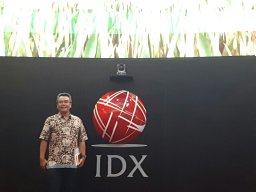 Iyus Wiadi合作论文数Universitas4
 Iin Mayasari合作论文数Univ Paramadina4
 Ahmad Azmy合作论文数Universitas3
 Handrix Chris Haryanto合作论文数3
 Fatchiah E. Kertamuda合作论文数Universitas Paramadina2
 Retno Hendrowati合作论文数Paramadina University2
 Prima Naomi合作论文数Fac Business & Econ, Univ Paramadina2Johan Ramadhan Nurwardana合作论文数1Diaz Ramadhani合作论文数1
 Ayu Dwi Nindyati合作论文数Dept. of Psychology, Universitas Paramadina1
 Sri Handini合作论文数Dr. Soetomo University1
 Tia Rahmania合作论文数Universitas1
 Asriana Sofia合作论文数1
 Alfikalia Alfikalia合作论文数Universitas1
 Gilang Cempaka合作论文数Universitas1




