Klimamodeller spiller en afgørende rolle i forståelsen af Jordens klimasystem og dets mulige udvikling over tid. Hans von Storch giver en fagligt velfunderet og systematisk introduktion til klimamodellering som et centralt videnskabeligt værktøj. Artiklen beskriver, hvordan klimamodeller bygger på grundlæggende fysiske principper, særligt bevarelse af masse, energi og impuls, samt hvordan disse principper omsættes til numeriske modeller gennem diskretisering og parameterisering. Der gives en introduktion til de centrale idéer inden for klimamodellering – fra simple energibalancemodeller til avancerede modeller, der beskriver samspillet mellem atmosfære, oceaner, landjorden og isdækkede områder. Derudover diskuteres betydningen af intern variabilitet som en væsentlig kilde til usikkerhed i klimafremskrivninger. Afslutningsvis forklares det, hvordan klimamodeller anvendes til at undersøge menneskeskabte klimaændringer og til at udvikle scenarier for fremtidens klima.
We analyze the tidal forcing effects on the internal variability in two marginal seas, the Bohai and Yellow Seas, and interpretate such effects from stochastic climate model and physical process (for instance, baroclinic instability) aspects. Ensemble simulations of the numerical module (Finite-volume Coastal Ocean Model) with and without tidal forcings are used to analyze the tidal forcing effects on the internal variability. EOF analysis is used to separate the variability into different spatial scales. The results show that the internal variability is significantly decreased especially in large (100 Km) and medium (60 km) scales, less so in small scales (23 km), when the tidal forcing is turned off. This result is well explained by Hasselmann's theory. Ocean memory, represented by the temporal autocorrelation function, is a critical element in this theory. Ocean memory is enhanced when the tidal forcing is excluded in all spatial scales, more obvious in large and medium scales; correspondingly, the internal variability increased significantly in the large and medium scales, compared with small scales in no-tide simulation. Physically, it can be explained as when the tidal forcing is turned off, once an anomaly appears in the system, it can survive for a longer time and easier to grow into large-scale variability. From the physical process aspect, we demonstrated that internal variability level and baroclinic instability variation co-vary consistently when comparing summer and winter seasons, and with and without tides. Our interpretation is that a stronger baroclinic instability causes more potential energy to be transformed into kinetic energy, allowing the unforced disturbances to grow.
Two types of variability are discernible in the ocean: a response to the atmospheric forcing and the so-called internal/intrinsic ocean variability, which is associated with internal instabilities, nonlinearities, and the interactions between processes at different scales. Producing an ensemble of 20 multiyear ocean simulations of the Mediterranean Sea, initialized with different realistic initial conditions but using the same atmospheric forcing, the study examines the intrinsic variability in terms of its spatial distribution and seasonality. In general, the importance of the external forcing decreases with depth but dominates in extended shelves such as the Adriatic Sea and the Gulf of Gabes. In the case of temperature, the atmospheric forcing plays a major role in the uppermost 50 m of the water column during summer and the uppermost 100 m during winter. Additionally, intrinsic variability displays a distinct seasonal cycle in the surface layers, with a prominent maximum at around 30 m depth during the summer connected to the summer thermocline formation processes. Concerning current velocity, the internal variability has a significant influence at all depths.
Using terms with the same meaning is a precondition of academic exchange and coordinated international actions to cope with the global climate issue. However, the understanding and usage of some terms in the climate change field are incompatible among researchers, policymakers, and publics. In particular, the Intergovernmental Panel on Climate Change (IPCC) and the United Nations Framework Convention on Climate Change have used significantly different definitions of climate change, which may result in unforeseen problems in coping with the global climate issue. Also, when referring to future changes, the terms climate change projection and climate prediction are frequently used inconsistently. Other terms not always used with the same meaning are global warming, global change, global climate change, abrupt climate change, climate change monitoring, climate change detection, and climate change attribution. With respect to the term climate change, it is suggested that it be defined in academic circles as a change in any key climate variables or climate extremes on timescales of multidecades or longer periods caused by any drivers (natural or human and external or internal), whereas the term climate variability should be used to refer to variations on all the spectrums of frequency provoked by natural internal drivers or on high-frequency spectrums caused by natural external drivers. Following the IPCC terminology, it is suggested that climate change projection be defined as estimating possible evolutions of the climate state in the future on scales of decades or longer, based on development scenarios and climate models, with the estimate considered possible, internally consistent, but not necessarily probable. It is also suggested that the term anthropogenic climate change be used to express large-scale climate change caused by various human activities, especially global warming caused by greenhouse gas emissions from human activities and the corresponding changes in other components of the climate system as noted in the IPCC reports and international climate negotiations.
Abstract. The circulation structure surrounding the Qingdao cold water mass in 2019 was investigated via three-dimensional numerical simulations. The study reveals that a cold pool appears in early spring and reaches its peak in late May, and this pool is accompanied by a local anticyclonic gyre. Momentum diagnostics are utilized to determine the relationship between the cold pool and this gyre. The momentum results reveal that vertical friction cannot be ignored due to the shallow topography and surface wind stress; as a result, the geostrophic balance is no longer applicable in the Qingdao cold water mass region. Consequently, the temperature and salinity gradients induced by the cold pool structure do not directly result in the anticyclonic gyre. Additional numerical experiments are conducted in which tidal forcing or wind forcing is excluded to understand the formation mechanism of this anticyclonic gyre. The t test results show that the difference between the control run and the ensemble experiments without tidal forcing (or without wind forcing) is statistically significant. Thus, both tidal forcing and wind forcing have a significant influence on the anticyclonic structure, although their impacts are different. Without tidal forcing, an unrealistic strong current appears throughout the domain. Moreover, the direction of the eastern side of the anticyclonic circulation is reversed. On the other hand, the wind forcing contributes to the magnitude of the anticyclonic circulation, especially in the western portion of the anticyclonic circulation. Additionally, subcirculation occurs vertically around the Qingdao cold water mass and is influenced by both wind and tidal forcings.
The Baltic Sea Experiment (BALTEX) started in 1993 as part of the Global Energy and Water Cycle Experiment (GEWEX). It was later organized into three programs: BALTEX I, BALTEX II, and Baltic Earth. Here, we examine in a brief overview the overall BALTEX achievements, including program goals, risks encountered during the research journey, and knowledge development when finalizing the programs. During three decades of climate and environmental studies of the Baltic Basin within the BALTEX/Baltic Earth programs, significant steps have been taken towards improved scientifically constructed knowledge and efforts to disseminate this knowledge to neighboring sciences and the public. These programs have illustrated the need to actively navigate the European research arena while remaining an independent science network. The well-organized International Baltic Earth Secretariat and many dedicated scientists made the research excursions safe and successful. The learning process relates to improved knowledge of the dynamics of the atmosphere-ocean-land climate system in the Baltic Sea region, the cycling of carbon and other substances, the region's anthropogenic climate and environmental changes, and how global warming and regional human activities can be detected outside natural variability. (c) 2023 Institute of Oceanology of the Polish Academy of Sciences. Production and hosting by Elsevier B.V. This is an open access article under the CC BY-NC-ND license ( http://creativecommons.org/licenses/by-nc-nd/4.0/ ).
 Eduardo Zorita合作论文数Institute of Coastal Systems Analysis and Modelling, Helmholtz-Zentrum Hereon;Institute of Coastal Research, Helmholtz-Zentrum Geesthacht Centre for Materials and Coastal Research90
 Nico Stehr合作论文数Zeppelin Universät;Department of Sociology, The University of Alberta65
 Frauke Feser合作论文数Institute for Coastal Research Geesthacht;Helmholtz-Zentrum hereon Geesthacht Centre for Materials and Coastal Research59
 Ralf Weisse合作论文数47
 Francis Zwiers合作论文数Pacific Climate Impacts Consortium, University of Victoria38J Fidel Gonzalezrouco合作论文数30
 Matthias Zahn合作论文数Institute for Coastal Research;GKSS Research Center;GKSS Research Center, Institute for Coastal Research20
 Martin Claussen合作论文数Climate Vegetation Dynamics Group, Max Planck Institute for Meteorology;Center for Earth System Research and Sustainability, Meteorological Institute, Universitat Hamburg19
 Martin Heimann合作论文数Department Biogeochemical Signals, Max Planck Institute for Biogeochemistry;Institute for Atmospheric and Earth System Research, University of Helsinki18Dennis Bray合作论文数Institute of Hydrophysics;GKSS Research Center;fuer Meteorologie, Institut17
 Ulrich Cubasch合作论文数17Armineh Barkhordarian合作论文数16Werner Krauss合作论文数Artec Sustainabil Res Ctr, Univ Bremen13
 Mojib Latif合作论文数Helmholtz Centre for Ocean Research Kiel;Christian-Albrechts-Universität zu Kiel13
 Anders Omstedt合作论文数Department of Earth Science, Oceanography, University of Gothenburg13i meinke合作论文数13Katja Woth合作论文数12
 Delei Li (李德磊)合作论文数Key Laboratory of Ocean Circulation and Waves, Institute of Oceanography, Chinese Academy of Sciences12
 Insa Meinke合作论文数12Beate Geyer合作论文数Institute of Coastal Systems, Helmholtz-Zentrum Geesthacht11marcus reckermann合作论文数10
 Xueen Chen (陈学恩)合作论文数College of Oceanic and Atmospheric Sciences, Ocean University of China10Martin Widmann合作论文数10
 Birger Tinz合作论文数Department Climate Monitoring, German Meteorological Service10
 Jonas Bhend合作论文数Institute for Coastal Research;GKSS Research Centre;GKSS Research Centre, Institute for Coastal Research10Stefan Guss合作论文数9
 Robert Sausen合作论文数9
 Birgit Hünicke合作论文数GKSS Research Centre, Institute for Coastal Research9
 Oliver Krueger合作论文数Editors9Joachim Biercamp合作论文数9Georg Kamp合作论文数8Christian Streffer合作论文数8
 Michèle Knodt合作论文数Residenzschloss Institut für Politikwissenschaft, Technische Universität Darmstadt8
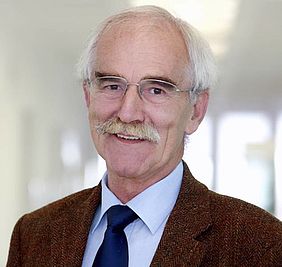 H. Miller合作论文数Alfred Wegener Institute8Heike Langenberg合作论文数8
 Wolfgang Kroger合作论文数8
 Christoph Matulla合作论文数8
 THOMAS H.W. Ziesemer合作论文数University of Limburg and Maastricht Economic Research Institute on Innovation and Technology Maastricht8
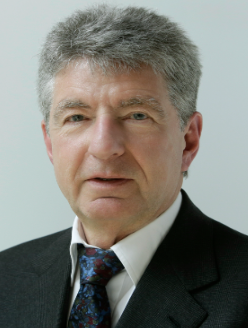 Carl Friedrich Gethmann合作论文数Lebenswissenschaftlichen Fakultät, Universität Siegen;Universität Essen;Universität zu Köln8k hasselmann合作论文数7m döring合作论文数7
 Monika Jolanta Barcikowska合作论文数Princeton Univ, Princeton Univ7Burkhardt Rockel合作论文数7
 Jinsong Xu合作论文数7
 Leone Cavicchia合作论文数School of Geography, Earth and Atmospheric Sciences, The University of Melbourne7R. Schnur合作论文数7
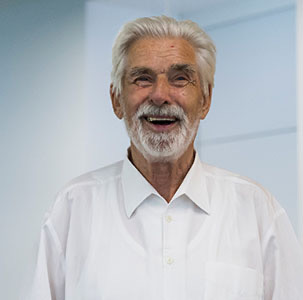 Klaus Hasselmann合作论文数Max Planck Institute for Meteorology7t cruger合作论文数6w settekorn合作论文数6




