Token compression has become a key technique for reducing the inference cost of large foundation models, with approaches such as token pruning and KV-cache reuse widely adopted in vision-language models and recently explored for embodied agents. In embodied agents, tokens not only support perception and semantic understanding but also directly affect latency-sensitive closed-loop robot action prediction. Existing schemes typically guide compression using redundancy or importance cues, such as visual similarity, attention scores, and saliency. However, these cues only indirectly measure the key factor for safe compression: how much a token can change before causing an unacceptable deviation in downstream actions. This receiver-dependent tolerance is closely related to the principle of just noticeable difference (JND). Classical JND characterizes signal tolerance in the human visual system, while machine-oriented JND extends this concept to downstream machine responses. Building on this progression, we introduce Action-JND, which extends JND modeling to embodied perception by defining noticeability through the language-conditioned action response of a vision-language-action (VLA) policy in closed-loop control. A token change is considered admissible only when the induced action deviation remains within a tolerated margin. To realize this concept, we develop a lightweight token-wise JND estimator in deep visual-feature space to predict the maximum tolerable perturbation while preserving policy responses. The resulting action-tolerance score serves as a plug-and-play criterion for VLA compression paradigms, including stale-KV reuse and token pruning, prioritizing action-tolerant tokens for compression. Experiments on the LIBERO benchmark with OpenVLA and OpenVLA-OFT demonstrate that Action-JND consistently improves compression reliability, especially under aggressive compression ratios.
Vision-Language Model (VLM)-based image quality assessment (IQA) has been significantly advanced by incorporating Chain-of-Thought (CoT) reasoning. Recent work has refined image quality reasoning by applying reinforcement learning (RL) and leveraging active visual tools. However, such strategies are typically language-centric, with visual information being treated as static preconditions. Quality-related visual cues often cannot be abstracted into text in extenso due to the gap between discrete textual tokens and quality perception space, which in turn restricts the reasoning effectiveness for visually intensive IQA tasks. In this paper, we revisit this by asking the question, "Is natural language the ideal space for quality reasoning?" and, as a consequence, we propose Q-Tacit, a new paradigm that elicits VLMs to reason beyond natural language in the latent quality space. Our approach follows a synergistic two-stage process: (i) injecting structural visual quality priors into the latent space, and (ii) calibrating latent reasoning trajectories to improve quality assessment ability. Extensive experiments demonstrate that Q-Tacit can effectively perform quality reasoning with significantly fewer tokens than previous reasoning-based methods, while achieving strong overall performance. This paper validates the proposition that language is not the only compact representation suitable for visual quality, opening possibilities for further exploration of effective latent reasoning paradigms for IQA. Source code will be released to support future research.
Assessing human creativity through visual outputs, such as drawings, plays a critical role in fields including psychology, education, and cognitive science. However, current assessment practices still rely heavily on expert-based subjective scoring, which is both labor-intensive and inherently subjective. In this paper, we propose a data-driven framework for automatic and interpretable creativity assessment from drawings. Motivated by the cognitive understanding that creativity can emerge from both what is drawn (content) and how it is drawn (style), we reinterpret the creativity score as a function of these two complementary dimensions.Specifically, we first augment an existing creativity labeled dataset with additional annotations targeting content categories. Based on the enriched dataset, we further propose a multi-modal, multi-task learning framework that simultaneously predicts creativity scores, categorizes content types, and extracts stylistic features. In particular, we introduce a conditional learning mechanism that enables the model to adapt its visual feature extraction by dynamically tuning it to creativity-relevant signals conditioned on the drawing's stylistic and semantic cues.Experimental results demonstrate that our model achieves state-of-the-art performance compared to existing regression-based approaches and offers interpretable visualizations that align well with human judgments. The code and annotations will be made publicly available at https://github.com/WonderOfU9/CSCA_PRCV_2025
Existing AI-generated video quality assessment (AIGVQA) methods mainly focus on global perceptual realism and coarse text-video alignment, while overlooking a critical requirement in educational scenarios: concept correctness. In early mathematics education, subtle errors in numerical quantities, geometric relations, or spatial configurations may fundamentally alter the conveyed knowledge despite visually plausible generation. To address this problem, we introduce EduAVQABench, the first benchmark for concept-aware educational AIGV assessment, containing 1,130 videos generated by ten state-of-the-art T2V models together with over 310,650 fine-grained human annotations spanning perceptual quality and semantic alignment. Built upon this benchmark, we further propose EduVQA, a concept-aware AIGVQA framework equipped with a Structured 2D Mixture-of-Experts (S2D-MoE) architecture. By jointly modeling fine-grained concept assessment and overall quality prediction through shared experts and adaptive two-dimensional routing, EduVQA effectively captures subtle concept-level inconsistencies overlooked by conventional global scoring methods. Extensive experiments demonstrate that EduVQA consistently outperforms existing AIGVQA approaches across both perceptual and semantic evaluation tasks while exhibiting strong generalization capability on unseen benchmarks. Code and dataset will be publicly available at: https://github.com/EduVQA/EduVQA.
Evaluation of Image Quality Assessment (IQA) models has long been dominated by global correlation metrics, such as Pearson Linear Correlation Coefficient (PLCC) and Spearman Rank-Order Correlation Coefficient (SRCC). While widely adopted, these metrics reduce performance to a single scalar, failing to capture how ranking consistency varies across the local quality spectrum. For example, two IQA models may achieve identical SRCC values, yet one ranks high-quality images (related to high Mean Opinion Score, MOS) more reliably, while the other better discriminates image pairs with small quality/MOS differences (related to $|\Delta$MOS $|$). Such complementary behaviors are invisible under global metrics. Moreover, SRCC and PLCC are sensitive to test-sample quality distributions, yielding unstable comparisons across test sets. To address these limitations, we propose Granularity-Modulated Correlation (GMC), which provides a structured, fine-grained analysis of IQA performance. GMC includes: (1) a Granularity Modulator that applies Gaussian-weighted correlations conditioned on absolute MOS values and pairwise MOS differences ($|\Delta$ MOS$|$) to examine local performance variations, and (2) a Distribution Regulator that regularizes correlations to mitigate biases from non-uniform quality distributions. The resulting correlation surface maps correlation values as a joint function of MOS and $|\Delta$MOS$|$, providing a 3D representation of IQA performance. Experiments on standard benchmarks show that GMC reveals performance characteristics invisible to scalar metrics, offering a more informative and reliable paradigm for analyzing, comparing, and deploying IQA models. Codes are available at https://github.com/Dniaaa/GMC.
Despite the impressive performance of large multimodal models (LMMs) in high-level visual tasks, their capacity for image quality assessment (IQA) remains limited. One main reason is that LMMs are primarily trained for high-level tasks (e.g., image captioning), emphasizing unified image semantics extraction under varied quality. Such semantic-aware yet quality-insensitive perception bias inevitably leads to a heavy reliance on image semantics when those LMMs are forced for quality rating. In this paper, instead of retraining or tuning an LMM costly, we propose a training-free debiasing framework, in which the image quality prediction is rectified by mitigating the bias caused by image semantics. Specifically, we first explore several semantic-preserving distortions that can significantly degrade image quality while maintaining identifiable semantics. By applying these specific distortions to the query/test images, we ensure that the degraded images are recognized as poor quality while their semantics remain. During quality inference, both a query image and its corresponding degraded version are fed to the LMM along with a prompt indicating that the query image quality should be inferred under the condition that the degraded one is deemed poor quality. This prior condition effectively aligns the LMM’s quality perception, as all degraded images are consistently rated as poor quality, regardless of their semantic difference. Finally, the quality scores of the query image inferred under different prior conditions (degraded versions) are aggregated using a conditional probability model. Extensive experiments on various IQA datasets show that our debiasing framework could consistently enhance the LMM performance and the code will be publicly available.
The evaluation of long-term video quality understanding remains an open challenge for large vision-language models (LVLMs). Existing video quality benchmarks predominantly focus on short clips and isolated distortions, overlooking the temporal continuity, cumulative degradation, and reasoning complexity inherent in long-duration content. To address these limitations, we present LongVQUBench, a comprehensive benchmark for long-term video quality understanding. LongVQUBench contains over 1200 diverse videos spanning movies, documentaries, surveillance footage, egocentric recordings, and animated content, accompanied by 1500 multiple-choice and open-ended questions for validation and testing. To assess perceptual reasoning across different temporal scopes, we introduce three progressively complex evaluation levels: (i) local event quality understanding (LQU) for analyzing localized distortions; (ii) cross-event quality reasoning (CQR) for integrating multiple degraded events; and (iii) global quality understanding (GQU) for holistic perceptual evaluation over extended durations. Furthermore, a needle distortion question-answering (NDQA) paradigm is embedded across all three levels, where spatial or temporal artifacts are sparsely inserted to probe fine-grained detection and reasoning capabilities. Extensive experiments on 14 state-of-the-art LVLMs reveal significant performance degradation with increasing video length and reasoning depth, highlighting their limited capacity for long-range temporal integration and perceptual attribution. We envision LongVQUBench as a foundational step toward the systematic, hierarchical, and explainable evaluation of LVLMs' long-term video quality understanding.
The rapid advancement of Multi-modal Large Language Models (MLLMs) has expanded their capabilities beyond high-level vision tasks. Nevertheless, their potential for Document Image Quality Assessment (DIQA) remains underexplored. To bridge this gap, we propose Q-Doc, a three-tiered evaluation framework for systematically probing DIQA capabilities of MLLMs at coarse, middle, and fine granularity levels. a) At the coarse level, we instruct MLLMs to assign quality scores to document images and analyze their correlation with Quality Annotations. b) At the middle level, we design distortion-type identification tasks, including single-choice and multi-choice tests for multi-distortion scenarios. c) At the fine level, we introduce distortion-severity assessment where MLLMs classify distortion intensity against human-annotated references. Our evaluation demonstrates that while MLLMs possess nascent DIQA abilities, they exhibit critical limitations: inconsistent scoring, distortion misidentification, and severity misjudgment. Significantly, we show that Chain-of-Thought (CoT) prompting substantially enhances performance across all levels. Our work provides a benchmark for DIQA capabilities in MLLMs, revealing pronounced deficiencies in their quality perception and promising pathways for enhancement. The benchmark and code are publicly available at: https://github.com/cydxf/Q-Doc.
Recent efforts have repurposed the Contrastive Language-Image Pre-training (CLIP) model for No-Reference Image Quality Assessment (NR-IQA) by measuring the cosine similarity between the image embedding and textual prompts such as "a good photo" or "a bad photo." However, this semantic similarity overlooks a critical yet underexplored cue: the magnitude of the CLIP image features, which we empirically find to exhibit a strong correlation with perceptual quality. In this work, we introduce a novel adaptive fusion framework that complements cosine similarity with a magnitude-aware quality cue. Specifically, we first extract the absolute CLIP image features and apply a Box-Cox transformation to statistically normalize the feature distribution and mitigate semantic sensitivity. The resulting scalar summary serves as a semantically-normalized auxiliary cue that complements cosine-based prompt matching. To integrate both cues effectively, we further design a confidence-guided fusion scheme that adaptively weighs each term according to its relative strength. Extensive experiments on multiple benchmark IQA datasets demonstrate that our method consistently outperforms standard CLIP-based IQA and state-of-the-art baselines, without any task-specific training.
Coresets are compact, representative subsets of large datasets. While coreset selection methods have been extensively investigated in image classification, their direct application to image quality assessment (IQA) is hindered by the incoherent and structurally distinct nature of content and quality representations in IQA tasks. To address this gap, we propose Q-Diverse coreset, a framework tailored for IQA. Our method begins by extracting dual-view embeddings that are both content-aware and quality-aware, capturing semantic and perceptual nuances. Rather than directly combining these heterogeneous features, we construct separate pairwise distance matrices and fuse them in the distance space. This fusion transforms into a graph-based structure from which spectral embeddings are derived. Finally, a geometric diversity-based sampling strategy is applied in the spectral space to select a coreset that maximizes representativeness. Notably, Q-Diverse operates in a label-free manner, making it especially valuable in IQA, where collecting quality score annotations is computationally expensive and time-consuming. Experimental results on seven IQA benchmarks demonstrate that Q-Diverse enables the effective training of deep learning-based IQA architectures, even with limited data, impressively retaining performance. It achieves SRCC and PLCC values within 0.045 and 0.042 of those obtained from full-data training, using only 10% of the dataset on average. Our results establish Q-Diverse as a coreset selection method that enables efficient dataset curation as well as training and fine-tuning deep learning–based IQA models. Code is available at: https://github.com/Arpita2012/Q-Diverse.
While spatial feature extraction has advanced rapidly in Video Quality Assessment (VQA), the temporal aggregation that processes frame-level scores into a global quality judgment remains an overlooked “black box.” Dominant strategies rely on heuristic pooling or generic sequence models, failing to account for the non-linear, retrospective nature of human Quality-of-Experience (QoE). In this paper, we first present a comprehensive Temporal Quality Aggregation Modeling (TQAM) Benchmark, evaluating 13 aggregation architectures across nine typical IQA backbones on four diverse VQA datasets. Our findings reveal that standard Transformers, despite their global reach, lack the necessary inductive bias to capture perceptual anchor points. To bridge this gap, we propose the Peak-End sensitive TransfER (PETER), a psychology-grounded framework that formalizes the foundational Peak-End Rule by prioritizing perceptually salient peak and end frames while preserving global temporal context for TQAM. Extensive experiments demonstrate consistent gains across diverse IQA backbones. Furthermore, as a plug-and-play module, PETER significantly enhances existing VQA frameworks, validating the robustness and generalizability of psychology-guided temporal modeling.
Image quality assessment (IQA) is inherently complex, as it reflects both the quantification and interpretation of perceptual quality rooted in the human visual system. Conventional approaches typically rely on fixed models to output scalar scores, limiting their adaptability to diverse distortions, user-specific queries, and interpretability needs. Furthermore, scoring and interpretation are often treated as independent processes, despite their interdependence: interpretation identifies perceptual degradations, while scoring abstracts them into a compact metric. To address these limitations, we propose AgenticIQA, a modular agentic framework that integrates vision-language models (VLMs) with traditional IQA tools in a dynamic, query-aware manner. AgenticIQA decomposes IQA into four subtasks – distortion detection, distortion analysis, tool selection, and tool execution – coordinated by a planner, executor, and summarizer. The planner formulates task-specific strategies, the executor collects perceptual evidence via tool invocation, and the summarizer integrates this evidence to produce accurate scores with human-aligned explanations. To support training and evaluation, we introduce AgenticIQA-200K, a large-scale instruction dataset tailored for IQA agents, and AgenticIQA-Eval, the first benchmark for assessing the planning, execution, and summarization capabilities of VLM-based IQA agents. Extensive experiments across diverse IQA datasets demonstrate that AgenticIQA consistently surpasses strong baselines in both scoring accuracy and explanatory alignment.
Generative model based compact video compression is typically operated within a relative narrow range of bitrates, and often with an emphasis on ultra-low rate applications. There has been an increasing consensus in the video communication industry that full bitrate coverage should be enabled by generative coding. However, this is an extremely difficult task, largely because generation and compression, although related, have distinct goals and trade-offs. The proposed Pleno-Generation (PGen) framework distinguishes itself through its exceptional capabilities in ensuring the robustness of video coding by utilizing a wider range of bandwidth for generation via bandwidth intelligence. In particular, we initiate our research of PGen with face video coding, and PGen offers a paradigm shift that prioritizes high-fidelity reconstruction over pursuing compact bitstream. The novel PGen framework leverages scalable representation and layered reconstruction for Generative Face Video Compression (GFVC), in an attempt to imbue the bitstream with intelligence in different granularity. Experimental results illustrate that the proposed PGen framework can facilitate existing GFVC algorithms to better deliver high-fidelity and faithful face videos. In addition, the proposed framework can allow a greater space of flexibility for coding applications and show superior RD performance with a much wider bitrate range in terms of various quality evaluations. Moreover, in comparison with the latest Versatile Video Coding (VVC) codec, the proposed scheme achieves competitive Bjøntegaard-delta-rate savings for perceptual-level evaluations.
Existing AGIQA models typically estimate image quality by measuring and aggregating the similarities between image embeddings and text embeddings derived from multi-grade quality descriptions. Although effective, we observe that such similarity distributions across grades usually exhibit multimodal patterns. For instance, an image embedding may show high similarity to both "excellent" and "poor" grade descriptions while deviating from the "good" one. We refer to this phenomenon as "semantic drift", where semantic inconsistencies between text embeddings and their intended descriptions undermine the reliability of text-image shared-space learning. To mitigate this issue, we draw inspiration from psychometrics and propose an improved Graded Response Model (GRM) for AGIQA. The GRM is a classical assessment model that categorizes a subject's ability across grades using test items with various difficulty levels. This paradigm aligns remarkably well with human quality rating, where image quality can be interpreted as an image's ability to meet various quality grades. Building on this philosophy, we design a two-branch quality grading module: one branch estimates image ability while the other constructs multiple difficulty levels. To ensure monotonicity in difficulty levels, we further model difficulty generation in an arithmetic manner, which inherently enforces a unimodal and interpretable quality distribution. Our Arithmetic GRM based Quality Grading (AGQG) module enjoys a plug-and-play advantage, consistently improving performance when integrated into various state-of-the-art AGIQA frameworks. Moreover, it also generalizes effectively to both natural and screen content image quality assessment, revealing its potential as a key component in future IQA models.
Visual corruptions can change vision–language model (VLM) behavior in ways that top-1 accuracy does not capture. A model may keep the same answer while losing distributional support, or improve accuracy through unstable wrong-to-correct changes. We introduce Bench-C, a controlled multiple-choice testbed for studying these effects. It selects semantically diverse samples whose predictions respond to corruption, and evaluates them under 19 corruption types and five severity levels. To measure how corruption changes the option distribution, we introduce the Robustness Alignment Score (RAS), which combines confidence-correctness alignment with uncertainty direction. We further separate originally correct samples from originally wrong samples, and track whether changes are temporary or persistent across severity. Experiments across 13 VLMs reveal a counterintuitive pattern: mild corruptions can improve top-1 accuracy while degrading prediction structure. These failures include silent degradation, erroneous overconfidence, and severity-dependent persistence. Bench-C therefore supports robustness evaluation that goes beyond final answers and attributes where reliability changes occur. Code and data are available at https://github.com/xiangjieSui/Bench-C.
Coreset selection improves training efficiency in deep learning but faces unique challenges in image quality assessment (IQA), where perceptual alignment with human vision and the interplay of distortions, semantics, and quality annotations are critical. Existing methods, designed for classification via static scoring criteria, fail to address IQA-specific multi-dimensional complexities, leading to suboptimal coreset construction. We propose perceptually guided coreset selection (PGCS), which employs adaptive sampling over a partitioned IQA latent space to dynamically balance distortion characteristics, perceptual quality, and semantic content. Latent space partitions are created based on the coverage of data points, ensuring that each partition reflects the overall structure of the dataset. Our adaptive sampling strategy dynamically adjusts the selection range, ensuring that local densities are preserved and better represented. Evaluated across five IQA benchmarks, PGCS-optimized coresets (5% − 90% of original data) reduce dataset redundancy and annotation noise while achieving ≤ 0.09 PLCC and ≤ 0.09 SRCC degradation on average with 5% data, matching or surpassing full-data training. Our work advances data-efficient learning by prioritizing perceptual alignment, offering a framework adaptable to human-centric vision tasks. Code is available at: https://github.com/Arpita2012/PGCS.
In this work, we propose a novel framework to enable diffusion models to adapt their generation quality based on real-time network bandwidth constraints. Traditional diffusion models produce high-fidelity images by performing a fixed number of denoising steps, regardless of downstream transmission limitations. However, in practical cloud-to-device scenarios, limited bandwidth often necessitates heavy compression, leading to loss of fine textures and wasted computation. To address this, we introduce a joint end-to-end training strategy where the diffusion model is conditioned on a target quality level derived from the available bandwidth. During training, the model learns to adaptively modulate the denoising process, enabling early-stop sampling that maintains perceptual quality appropriate to the target transmission condition. Our method requires minimal architectural changes and leverages a lightweight quality embedding to guide the denoising trajectory. Experimental results demonstrate that our approach significantly improves the visual fidelity of bandwidth-adapted generations compared to naive early-stopping, offering a promising solution for efficient image delivery in bandwidth-constrained environments. Code is available at: https://github.com/xzhang9308/BADiff.
There is an increasing consensus that the design and optimization of low light image enhancement methods need to be fully driven by perceptual quality. With numerous approaches proposed to enhance low-light images, much less work has been dedicated to quality assessment and quality optimization of low-light enhancement. In this paper, to close the gap between enhancement and assessment, we propose a loop enhancement framework that produces a clear picture of how the enhancement of low-light images could be optimized towards better visual quality. In particular, we create a large-scale database for QUality assessment Of The Enhanced LOw-Light Image (QUOTE-LOL), which serves as the foundation in studying and developing objective quality assessment measures. The objective quality assessment measure plays a critical bridging role between visual quality and enhancement and is further incorporated in the optimization in learning the enhancement model towards perceptual optimally. Finally, we iteratively perform the enhancement and optimization tasks, enhancing the low-light images continuously. The superiority of the proposed scheme is validated based on various low-light scenes.
This paper presents a summary of the VQualA 2025 Challenge on Visual Quality Comparison for Large Multimodal Models (LMMs), hosted as part of the ICCV 2025 Workshop on Visual Quality Assessment. The challenge aims to evaluate and enhance the ability of state-of-the-art LMMs to perform open-ended and detailed reasoning about visual quality differences across multiple images. To this end, the competition introduces a novel benchmark comprising thousands of coarse-to-fine grained visual quality comparison tasks, spanning single images, pairs, and multi-image groups. Each task requires models to provide accurate quality judgments. The competition emphasizes holistic evaluation protocols, including 2AFC-based binary preference and multi-choice questions (MCQs). Around 100 participants submitted entries, with five models demonstrating the emerging capabilities of instruction-tuned LMMs on quality assessment. This challenge marks a significant step toward open-domain visual quality reasoning and comparison and serves as a catalyst for future research on interpretable and human-aligned quality evaluation systems.
Assessing the quality of artificial intelligence-generated images (AIGIs) plays a crucial role in their application in real-world scenarios. However, traditional image quality assessment (IQA) algorithms primarily focus on low-level visual perception, while existing IQA works on AIGIs overemphasize the generated content itself, neglecting its effectiveness in real-world applications. To bridge this gap, we propose AIGI-VC, a quality assessment database for AI-Generated Images in Visual Communication, which studies the communicability of AIGIs in the advertising field from the perspectives of information clarity and emotional interaction. The dataset consists of 2,500 images spanning 14 advertisement topics and 8 emotion types. It provides coarse-grained human preference annotations and fine-grained preference descriptions, benchmarking the abilities of IQA methods in preference prediction, interpretation, and reasoning. We conduct an empirical study of existing representative IQA methods and large multi-modal models on the AIGI-VC dataset, uncovering their strengths and weaknesses.
 Shiqi Wang (王诗淇)合作论文数Department of Computer Science, City University of Hong Kong24
) Baoliang Chen (陈宝梁)合作论文数College of Environmental and Resource Sciences of Zhejiang University11
Baoliang Chen (陈宝梁)合作论文数College of Environmental and Resource Sciences of Zhejiang University11 Weisi Lin合作论文数School of Computer Science and Engineering, Nanyang Technological University;College of Computing and Data Science, Nanyang Technological University11
 Yuming Fang (方玉明)合作论文数Jiangxi University of Finance and Economics11
 Lingyu Zhu合作论文数City University of Hong Kong, Hong Kong10
 Zhou Wang合作论文数Department of Electrical and Computer Engineering, University of Waterloo;SSIMWAVE Inc.6
 Yixuan Li合作论文数5Xiangjie Sui合作论文数5
 Kede Ma (馬柯德)合作论文数Multimedia Analytics Laboratory, Department of Computer Science, City University of Hong Kong4
 Sam Tak Wu Kwong (鄺得互)合作论文数School of Graduate Studies, Lingnan University;Division of Artificial Intelligence, Lingnan University3
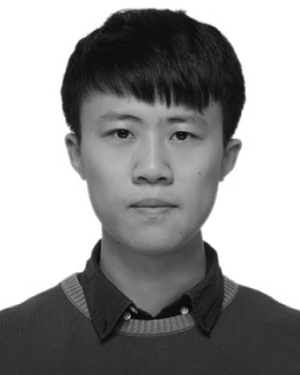 Peilin Chen合作论文数3
 Zicheng Zhang (张子澄)合作论文数Shanghai Artificial Intelligence Laboratory3
 Haoning Wu (吴昊宁)合作论文数S-Lab, Nanyang Technological University3
 Wenhan Yang (杨文瀚)合作论文数The Distributed High Performance Software Fundamental Research Laboratory, Pengcheng National Lab3
 Guangtao Zhai (翟广涛)合作论文数School of Integrated Circuits, Shanghai Jiao Tong University3
 Bolin Chen (陈柏林)合作论文数Institute of Geomechanics, Chinese Academy of Geological Sciences3
 Ru-Ling Liao合作论文数Alibaba Grp, Beijing, Peoples R China2
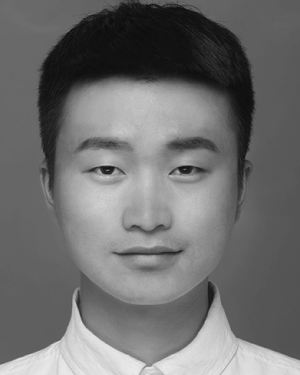 Xuelin Liu合作论文数School of Information Management, Jiangxi University of Finance and Economics, Nanchang, China2
 Yan Zeng合作论文数Jiangxi Univ Finance & Econ, Sch Informat Technol, Nanchang, Jiangxi, Peoples R China2
 Jie Chen (陈杰)合作论文数School of Intelligence Science and Engineering, Harbin Institute of Technology, Shenzhen2
 Yan Ye合作论文数2
 Keyan Ding (丁科炎)合作论文数Hangzhou Global Scientific and Technology Innovation Center, Zhejiang University2
 Linqi Song (宋林琦)合作论文数2
 Rui Zhao (赵睿)合作论文数College of Computing and Data Science, Nanyang Technological University1Jiamang Wang合作论文数1
 Zhicheng Liao合作论文数School of Computer Science, South China Normal University1Yu Tian合作论文数City University of Hong Kong1
 Yuxuan Jiang合作论文数Visual Information Laboratory, University of Bristol;School of Electrical, Electronic and Mechanical Engineering, Faculty of Engineering, University of Bristol1
 Chaofeng Chen (陈超锋)合作论文数School of Artificial Intelligence, Wuhan University1
 Liang Liao (廖良)合作论文数Hangzhou Institute of Technology, Xidian University1
 Zhangkai Ni (倪张凯)合作论文数School of Computer Science and Technology, Tongji University1
 Zhang Erli合作论文数1Jinge Wang合作论文数1Annan Wang合作论文数1
 Chunyi Li合作论文数1
 Haoyu Chen合作论文数Hong Kong University of Science and Technology (Guangzhou);Adobe1
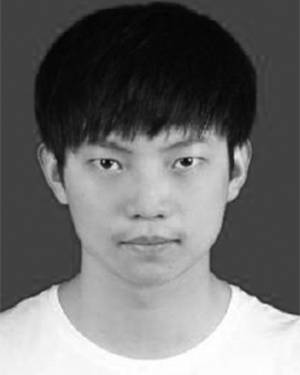 Yan Zhong合作论文数1
 Weixia Zhang (张维夏)合作论文数School of Electronic Information and Electrical Engineering, Shanghai Jiao Tong University1
 Shanzhi Yin合作论文数1
 Xigran Liao合作论文数1Dan Xia合作论文数Jiangxi University of Finance and Economics1Salah Karout合作论文数Huawei Technologies R&D UK1
 Aryan Esfandiari合作论文数Huawei Technologies R&D UK1Arnau Raventos合作论文数Huawei Technologies R&D UK1
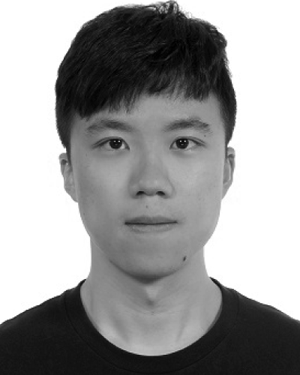 Yucheng Zhu合作论文数Shanghai Jiao Tong Univ, Inst Image Commun & Infor Proc, Shanghai, Peoples R China1
 Dario Fuoli合作论文数ETH Zürich1
 Densen Puthussery合作论文数College of Engineering1
 Kazutoshi Akita合作论文数Ecole Polytech Fed Lausanne, Image & Visual Representat Lab, Lausanne, Switzerland1




