To improve the efficiency of distributed large language model (LLM) inference, various parallelization strategies, such as tensor and pipeline parallelism, have been proposed. However, the distinct computational characteristics inherent in the two stages of LLM inference-prefilling and decoding-render a single static parallelization strategy insufficient for the effective optimization of both stages. In this work, we present Seesaw, an LLM inference engine optimized for throughput-oriented tasks. The key idea behind Seesaw is dynamic model re-sharding, a technique that facilitates the dynamic reconfiguration of parallelization strategies across stages, thereby maximizing throughput at both phases. To mitigate re-sharding overhead and optimize computational efficiency, we employ tiered KV cache buffering and transition-minimizing scheduling. These approaches work synergistically to reduce the overhead caused by frequent stage transitions while ensuring maximum batching efficiency. Our evaluation demonstrates that Seesaw achieves a throughput increase of up to 1.78x (1.36x on average) compared to vLLM, the most widely used state-of-the-art LLM inference engine.
For the grammatical error correction (GEC) task, there usually exist multiple correction ways for an erroneous input sentence, leading to multiple references. Observing the high proportion of multi-reference instances in Chinese GEC training data, we target a systematic study on how to better utilize multireference training data. We propose two new approaches and a simple two-stage training strategy. We compare them against previously proposed approaches, on two Chinese training datasets, i.e., Lang-8 for second language learner texts and FCGEC-Train for native speaker texts, and three test datasets. The experiments and analyses demonstrate the effectiveness of our proposed approaches and reveal interesting insights. Our code is available at https://github.com/ymliucs/MrGEC.
We introduce NaSGEC, a new dataset to facilitate research on Chinese grammatical error correction (CGEC) for native speaker texts from multiple domains. Previous CGEC research primarily focuses on correcting texts from a single domain, especially learner essays. To broaden the target domain, we annotate multiple references for 12,500 sentences from three native domains, i.e., social media, scientific writing, and examination. We provide solid benchmark results for NaSGEC by employing cutting-edge CGEC models and different training data. We further perform detailed analyses of the connections and gaps between our domains from both empirical and statistical views. We hope this work can inspire future studies on an important but under-explored direction--cross-domain GEC.
Some grammatical error correction (GEC) systems incorporate hand-crafted rules and achieve positive results. However, manually defining rules is time-consuming and laborious. In view of this, we propose a method to mine error templates for GEC automatically. An error template is a regular expression aiming at identifying text errors. We use the web crawler to acquire such error templates from the Internet. For each template, we further select the corresponding corrective action by using the language model perplexity as a criterion. We have accumulated 1,119 error templates for Chinese GEC based on this method. Experimental results on the newly proposed CTC-2021 Chinese GEC benchmark show that combing our error templates can effectively improve the performance of a strong GEC system, especially on two error types with very little training data. Our error templates are available at \url{https://github.com/HillZhang1999/gec_error_template}.
 Bo Zhang合作论文数Soochow University (Suzhou)3
 Li Chen (陈丽)合作论文数School of Physics & Optoelectronic Engineering, Guangdong University of Technology3
 Zheng-Hua Li (李正华)合作论文数Human Language Technology Research Center, School of Computer Science and Technology, Soochow University3Yumeng Liu合作论文数1
 Wei Zhao合作论文数School of Computing and Information Systems, Singapore Management University1
 Ji Zhang合作论文数CRIC1
 Christina Giannoula合作论文数ETH Zürich & National Technical University of Athens1
 Zuyi Bao合作论文数Alibaba Grp, 969 West Wenyi Rd, Hangzhou, Peoples R China1
 Min Zhang (张民)合作论文数School of Computer Science and Technology, Harbin Institute of Technology, Shenzhen1
 Yue Zhang合作论文数MURGe-Lab, University of North Carolina at Chapel Hill1
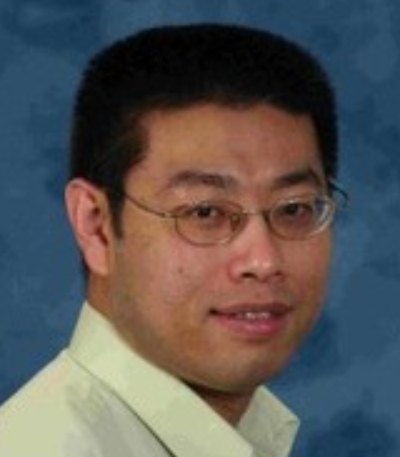 Fei Huang (黄非)合作论文数Language Technologies Lab, DAMO Academy, Alibaba Group1
 Gennady Pekhimenko合作论文数Department of Computer and Mathematical Sciences, University of Toronto Scarborough;Vector Institute;CentML1




