AbstractAm 3. Februar 2024 starb Otto J. Scherer, Professor für anorganische Chemie in Kaiserslautern. Er war ein Pionier der Clusterchemie von Arsen und Phosphor.
AbstractNach einer pandemiebedingten Pause experimentieren in diesem Jahr am Fachbereich Chemie der TU Kaiserslautern wieder Mittel‐ und Oberstufenschüler:innen. Diese Art der Ferienfreizeit begann vor mehr als 15 Jahren mit Mikroskopen für das anorganisch‐chemische Grundpraktikum.
Alkylcyclopentadienylchromium( II) bromide dimers [(CpCr)-Cr-m(mu-Br)](2) and [5CpCr(mu-Br)](2) (Cp-m = tri(tert-butyl)cyclopentadienide, Cp-5 = pentaisopropylcyclopentadienide) have been used as starting compounds for replacement of bromide with methyl, hydride, phenyl, phenylacetylide, cyanide, or tetrahydroaluminate anions and afforded dinuclear chromium(II) complexes except for cyanide and tetrahydroaluminate, where tetranuclear products were isolated. Mononuclear chromium complexes have been synthesized by N-heterocyclic carbene addition to the bromide complex or by bromide substitution with a cyclopentadienyl or another alkylcyclopentadienyl ligand. Strong antiferromagnetic coupling with J(1,2) = -206 cm(-1) of two high-spin Cr(II) central atoms has been found for the dinuclear hydride [Cp.Cr(mu-H)](2), which was obtained during reactions with isopropylmagnesium chloride via beta-hydride elimination and was also found after attempted potassium reduction of the chromium(II) starting compound. Diamagnetic behavior was observed only for the tetranuclear aluminumtetrahydro-tri(tert-butyl)chromate(II).
Pentaisopropylcyclopentadienyl dichloropnictogen complexes have been synthesized and studied in solution and in the solid state. The coordination mode of the group 15 element to the Cp ligand varie...
Trisdimethylamido complexes of the Group IV elements titanium, zirconium and hafnium bearing the chiral Cp-type ligand (Cp-C)(-1) were synthesized and characterized by means of NMR spectroscopy, elemental analysis and single crystal X-rax diffraction.
The vibronic properties of two dimeric iron (II) high-spin complexes [5CpFeX]2 (5Cp = Pentaisopropyl-cyclopentadienyl, X = OH-(1), Br-(2)) have been studied using nuclear inelastic scattering (NIS). In order to assign the experimentally observed bands to the particular modes, theoretical calculations using density functional theory (DFT) have been performed based on the structural data obtained by X-ray crystallography. The calculated partial density of vibrational states (pDOS) reproduces the experimental data. Thus, we were able to assign almost each of the experimentally observed NIS bands to their corresponding molecular vibrational modes.
Cyclopentadienide derivatives possessing intrinsic helical chirality have only rarely been published in the past. The ligand CpCH, which is well-accessible from inexpensive dibenzosuberenone, is paradigm for such a ligand. Here, the synthesis as well as the spectroscopic and structural characterization of a series of platinum group metal complexes containing this ligand are presented. While alkaline metal salts of CpCH failed in transferring the (CpC)−1 unit to this type of metal sites, (CpC)Tl turned out to be an excellent precursor for the synthesis of ruthenium ([(η5-CpC)Ru(η6-arene)]PF6, [(η5-CpC)Ru(NCCH3)3)]PF6), rhodium ((η5-CpC)Rh(η4-COD)), and iridium ((η5-CpC)Ir(η4-COD), [(η5-Cp*)Ir(η5-CpC)]PF6) complexes with CpC ligands. EXSY NMR studies were carried out to obtain a deeper insight into the ligand dynamics of CpC complexes.
The chromium(II) tricarbonyl methyl complex [Cp′′′Cr(CO)3CH3] (1, Cp′′′ = η5‐C5H2tBu3‐1,2,4) was obtained from chromium hexacarbonyl, NaCp′′′, and methyl iodide. 1 was found to establish an equilibrium with the dicarbonyl acetyl isomer [Cp′′′Cr(CO)2(COCH3)] in solution via reversible, slightly endothermic methyl migration from chromium to a carbonyl ligand with ΔH ca. 3.6 kJ/mol and Ea ca. 49.5 kJ/mol. Phosphorus pentachloride oxidized 1 to the green, dinuclear tetrachloro complex [Cp′′′CrCl(µ‐Cl)]2 (2), which was crystallized as the blue‐green chromium(III) half sandwich complex [Cp′′′CrCl2(THF)] (3) in the presence of tetrahydrofuran vapor. Attempted sublimation of the known chromium(II) iodo complex [4CpCr(µ‐I)]2 resulted in a redox reaction with formation of the chromium(III) iodo dimer [4CpCrI(µ‐I)]2, whose tri(tert‐butyl)cyclopentadienyl derivative [Cp′′′CrI(µ‐I)]2 (4) could also be prepared by oxidation of [Cp′′′Cr(µ‐I)]2 with iodine. The chromium(III) bis(2,6‐diisopropylphenolate) complex [4CpCr(OC6H3iPr2‐2,6)2] (5) was obtained from chromium trichloride in a one pot reaction with sodium tetraisopropylcyclopentadienide, followed by sodium 2,6‐diisopropylphenolate. The chromium(III) starting compound 2 reacted with 2,6‐diisopropylphenolate to the Cp′′′ derivative [Cp′′′Cr(OC6H3iPr2‐2,6)2] (6). The chromium(II) starting compound [Cp′′′Cr(µ‐Br)]2 afforded the phenolate‐bridged chromium(II) dimer [Cp′′′Cr(µ‐OC6H5)]2 (7) upon treatment with sodium phenolate, while the product of the analogous reaction with 2,6‐di(tert‐butyl)phenolate was the mononuclear tetrahydrofuran adduct [Cp′′′Cr(OC6H3tBu2‐2,6)(THF)] (8).
Dendritic growth of the metals lithium, magnesium, barium, gallium, indium, thallium, tin, lead, antimony, bismuth, iron, palladium, platinum, copper, silver, gold, zink, cadmium and of the semiconductor germanium with low chemical consumption from solutions has been accomplished with simple methods. The experiments do not take much time and only in exceptional cases a period of gas evolution passes by before the metal starts to grow. Apart from the established copper or silver growth, tin and bismuth are recommended for their special shape, but also because of their non-toxic properties, their low price, and their position in the electrochemical series of metals.
ZusammenfassungBei der reduktiven Abscheidung von 18 Metallen und einem Halbleiter an weniger edlen Metallen oder an einer Kathode durch Elektrolyse wurden charakteristische, eigentümliche und bisweilen bizarre Formen beobachtet. Besonders nachdenklich machten wirbelnde Salzkriställchen, Kupferstreifen auf Silberbäumen und Umwandlungen von goldhaltigen Niederschlägen. Besonders empfehlenswerte Metallbäumchen‐Versuche für den Schulunterricht sind außer den etablierten Favoriten Kupfer und Silber noch Zinn und Bismut wegen der Form und Dynamik ihres Wachstums, der Unbedenklichkeit, des günstigen Preises und deren Lage zwischen Kupfer und Zink in der Spannungsreihe der Metalle. Besonders genossen haben wir die Experimente mit jedem Tropfen Tetrachloridogold(III)säure, die sehr ergiebig ist und nicht so teuer wie der Ruf des Goldes.
High energy resolution fluorescence detected XANES (HERFD-XANES) and valence-to-core X-ray emission spectroscopy (VtC-XES) are introduced as powerful tools to investigate hydride-iron interaction, the possible iron-iron bond, and iron spin state of the dinuclear tetra-hydrido complex [{5CpFe}2(μ-H)4] (1H, 5Cp = η5-C5 iPr5) by thoroughly accessing the geometric and electronic structure of this complex in comparison to the nonhydride reference [5CpCpFe] (1, Cp = C5H5). The so far observed most intense hydride induced signals in the pre-edge feature of the HERFD-XANES and in the VtC-XES spectra at the iron K-edge allow a precise analysis of the LUMO and HOMO states, respectively, by application of time-dependent density function theory (TD-DFT) and density functional theory (DFT) calculations. The results of these calculations are further employed to understand the oxidation state, spin states, and potential Fe-Fe bonds in this complex.
Easily available chromium(II) acetate was used for an entry into chromium chemistry: sodium tetraisopropylcyclopentadienide (Na 4 Cp), sodium 1,2,4‐tri(tert‐butyl)cyclopentadienide (NaCp′′′), or lithium pentaisopropylcyclopentadienide (Li 5 Cp) convert the acetate to the acetate‐bridged dimers [ 4 CpCr(µ‐OOCCH 3 )] 2 ( 1a ), [Cp′′′Cr(µ‐OOCCH 3 )] 2 ( 1b ), or [ 5 CpCr(µ‐OOCCH 3 )] 2 ( 1c ) in yields well above 70 %. These acetates could be converted into the halide‐bridged dimers [ 4 CpCr(µ‐Cl)] 2 ( 2a ), [ 4 CpCr(µ‐Br)] 2 ( 3a ), [Cp′′′Cr(µ‐Br)] 2 ( 3b ), or [ 5 CpCr(µ‐Br)] 2 ( 3c ), [ 4 CpCr(µ‐I)] 2 ( 4a ), or [Cp′′′Cr(µ‐I)] 2 ( 4b ) with the corresponding trimethylsilyl halides in nearly quantitative yield. With bis(trimethylsilyl)sulfate the acetate 1a gave crude bis(tetraisopropylcyclopentadienylchromium)sulfate ( 5a ). From the bromide 3b and sodium bis(trimethylsilyl)amide the mononuclear chromium(II) silylamide [Cp′′′CrN(SiMe 3 ) 2 (THF)] ( 7b ) was obtained as a tetrahydrofuran adduct. Upon reaction with sodium azide, the iodide 4a afforded the tetranuclear chromium(IV) nitride cubane [( 4 CpCr) 3 (µ 3 ‐N) 4 CrOH] ( 8a ) after extraction with heptane containing traces of water. The analogous chromium nitride derivative [(Cp′′′Cr) 3 (µ 3 ‐N) 4 CrBr] ( 9b ) was obtained from the bromide 3b and sodium azide.
Two new complexes, [(C 5 Me 5 )FeBr(tmeda)] (tmeda = tetramethylethylenediamine) and [{C 5 (CHMe 2 ) 5 }FeN(SiMe 3 ) 2 ], have been synthesized and characterized as high-spin iron(II) complexes with typical distances between the iron atom and the center of gravity of the C 5 ring (Fe–Cp cent ) exceeding 190 pm and displaying paramagnetic behavior in solution. Both are analogues of known complexes, namely, the Jonas complex [(C 5 Me 5 )FeCl(tmeda)] and the Siemeling “ pogo-stick” complex [(C 5 Me 5 )FeN(SiMe 3 ) 2 ]. The silylamide [{C 5 (CHMe 2 ) 5 }FeN(SiMe 3 ) 2 ] was treated with water to yield the bridged hydroxo dimer [{C 5 (CHMe 2 ) 5 }Fe(µ-OH)] 2 with high-spin iron(II) configuration. With 2,5-dimethylpyrrole the azaferrocene derivative [{C 5 (CHMe 2 ) 5 }Fe(NC 4 H 2 Me 2 -2,5)] was obtained, and with diphenylphosphine a few crystals of the diphosphine hydride [{C 5 (CHMe 2 ) 5 }FeH(HPPh 2 ) 2 ] as well as a sample of its dehydrogenative P–P coupling product [{C 5 (CHMe 2 ) 5 }FeH(Ph 2 P–PPh 2 )] n ( n = 1 or 2) have been obtained, which are both diamagnetic 18-valence-electron complexes. Two-coordinated [{C 5 (CHMe 2 ) 5 }FeN(SiMe 3 ) 2 ] features sizeable negative magnetic anisotropy and slow magnetic relaxation with an effective energy barrier for spin reversal of 113 cm –1 under an applied field of 3000 Oe.
Instead of reacting with the σ‐mesityliron(II) complex [Cp′′′Fe(σ‐C 6 H 2 Me 3 ‐2,4,6)] ( 1 ; Cp′′′ = 1,2,4‐tri‐ tert ‐butylcyclopentadienyl) to form a cyclohexadienyl(cyclopentadienyl)iron(II) sandwich complex with palladium coordination to the ipso carbon atom of the six‐membered ring, palladium(II) chloride oxidized 1 to the mesityliron(III) complex [Cp′′′Fe(σ‐C 6 H 2 Me 3 ‐2,4,6)Cl] ( 5 ) with a two‐legged piano‐stool geometry. The oxidation of [ 4 CpFe(σ‐C 6 H 2 Me 3 ‐2,4,6)] ( 4 ; 4 Cp = tetraisopropylcyclopentadienyl) to [ 4 CpFe(σ‐C 6 H 2 Me 3 ‐2,4,6)Cl] ( 6 ) was accomplished with hexachloroethane. Two other derivatives, [ 4 CpFe(σ‐C 6 H 3 i Pr 2 ‐2,6)Cl] ( 7 ) and [ 5 CpFe(σ‐C 6 H 3 i Pr 2 ‐2,6)Cl] ( 8 ; 5 Cp = pentaisopropylcyclopentadienyl), could also be obtained by the same method. The molecular structures of 5 and 6 are compared with the structure of the (tetraisopropylcyclopentadienyl)iron(III) dibromide [ 4 CpFeBr 2 ] ( 9 ), which was formed from the iron(II) analogue [ 4 CpFe(µ‐Br)] 2 during attempted nucleophilic substitution with an arylmagnesium bromide.
Reactions of the alkaline earth metals magnesium, calcium, strontium, and barium with water, phenolphthalein solution, diluted extract of red cabbage, diluted hydrochloric acid, or ammonia are well suited for a demonstration of the increase in reactivity within this group of metals with increasing atomic number. If the alkali metals lithium and sodium are included, the reactivity of six s-block elements can be demonstrated in test tubes with small amounts of chemicals.
An entry from the Cambridge Structural Database, the world’s repository for small molecule crystal structures. The entry contains experimental data from a crystal diffraction study. The deposited dataset for this entry is freely available from the CCDC and typically includes 3D coordinates, cell parameters, space group, experimental conditions and quality measures.
 Gotthelf Wolmershäuser合作论文数30Yu Sun合作论文数25Gotthelf Wolmershauser合作论文数24Dirk Saurenz合作论文数15Bauer Heiko合作论文数13Otto Josef Scherer合作论文数Universität Kaiserslautern12
 Roland Boese合作论文数Universität Duisburg Essen12Marc D. Walter合作论文数12Frank Weber合作论文数11Daniel Weismann合作论文数11Wjatscheslaw Gidt合作论文数9Mark W. Wallasch合作论文数9T Dezember合作论文数8Sergej Lauk合作论文数7
 Werner R. Thiel合作论文数Department of Chemistry, Technische Universität Kaiserslautern7
 Wolfgang Kaim合作论文数Institute of Inorganic Chemistry, University of Stuttgart7Oliver Schmitt合作论文数6David J Stein合作论文数6Igor Smytschkow合作论文数5G. Wolmershaeuser合作论文数5oliver schmitt合作论文数5
 Tobias Bottcher合作论文数5Elmar Dormann合作论文数5Marion Schaer合作论文数5Marc Kelemen合作论文数5Jens Langer合作论文数5Valeri Quindt合作论文数4
 Michael Ruck合作论文数Department of Chemistry and Food Chemistry, Dresden University of Technology4Christoph Wachter合作论文数4Yvonne Ehleiter合作论文数4Christian Färber合作论文数4Hubert Winter合作论文数3Jae-Yeon Chung合作论文数3Jennifer Schygulla合作论文数3Julia Weismann合作论文数3Ondřej Kaman合作论文数Czech Acad Sci, Inst Phys3Lenka Kubíčková合作论文数Institute of Physics, the Czech Academy of Sciences3
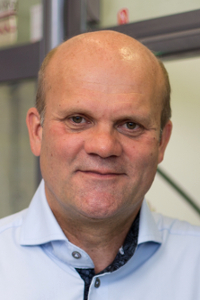 Sjoerd Harder合作论文数Department Chemie Und Pharmazie, Naturwissenschaftliche Fakultät, Friedrich-Alexander-Universität Erlangen-Nürnberg3
 Dietmar Stalke合作论文数Institut fur Anorganische Chemie, Universitat Gottingen3L. Zanathy合作论文数3
 Gereon Niedner-Schatteburg合作论文数Institut für Physikalische und Theoretische Chemie, Technische Universität München3
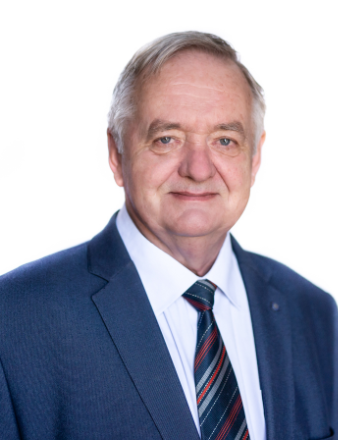 Zdeněk Havlas合作论文数Institute of Organic Chemistry and Biochemistry, Academy of Sciences of the Czech Republic3
 Michael Moscherosch合作论文数Institut für Anorganische Chemie, Universität Stuttgart3Jörg Kärcher合作论文数3Carsten Müller合作论文数3Frank Pammer合作论文数3markus pagels合作论文数2C. Üffing合作论文数2




