We have analyzed one-prong r decays with neutral kaons using the information from a fine-grained hadron calorimeter. The data sample consists of 43 500 Z 7-V~(y) events collected by the L3 detector at LEP in 1991, 1992 and 1993. The following branching fractions are measured: B(t~~ —+ iy7r“ K°) = 0.0095 ± 0.0015(stat) ± 0.0006(syst); B ( t —> vrir " 7r°K°) = 0.0041 ± 0.0012(stat) ± 0.0003(syst) and 2?(r' -> pTir~K°K°) = 0.0031 ± 0.0012(stat) ± 0.0004(syst).
The variety of isotopes in cosmic rays allows us to study different aspects of the processes that cosmic rays undergo between the time they are produced and the time of their arrival in the heliosphere. In this paper we present measurements of the isotopic ratios 2H/4He, 3He/4He, 6Li/7Li, 7Be/(9Be+10Be) and 10B/11B in the range 0.2-1.4 GeV of kinetic energy per nucleon. The measurements are based on the data collected by the Alpha Magnetic Spectrometer, AMS-01, during the STS-91 flight in 1998 June.
Bose–Einstein correlations of pairs of identical charged pions produced in hadronic Z decays are analyzed in terms of various parametrizations. A good description is achieved using a Lévy stable distribution in conjunction with a model where a particle’s momentum is correlated with its space–time point of production, the τ-model. Using this description and the measured rapidity and transverse momentum distributions, the space–time evolution of particle emission in two-jet events is reconstructed. However, the elongation of the particle emission region previously observed is not accommodated in the τ-model, and this is investigated using an ad hoc modification.
We present results from a study of hadronic event structure in high energy e+e− interactions using the L3 detector at LEP. A new class of event shape distributions are measured at and above the Z boson pole for light quark (u, d, s, c) flavours. Energy flow correlations are studied for all hadronic events. Next-to-leading-log QCD calculations and QCD models with improved leading-log approximations are compared to data and good agreement is found at the Z-pole whereas some discrepancies are observed at higher centre-of-mass energies.
Measurement of the chemical and isotopic composition of cosmic rays is essential for the precise understanding of their propagation in the galaxy. While the model parameters are mainly determined using the B/C ratio, the study of extended sets of ratios can provide stronger constraints on the propagation models. In this paper, the relative abundances of light-nuclei lithium, beryllium, boron, and carbon are presented. The secondary-to-primary ratios Li/C, Be/C, and B/C have been measured in the kinetic energy range 0.35–45 GeV nucleon−1. The isotopic ratio 7Li/6Li is also determined in the magnetic rigidity interval 2.5–6.3 GV. The secondary-to-secondary ratios Li/Be, Li/B, and Be/B are also reported. These measurements are based on the data collected by the Alpha Magnetic Spectrometer AMS-01 during the STS-91 space shuttle flight in 1998 June. Our experimental results are in substantial agreement with other measurements, where they exist. We describe our light-nuclei data with a diffusive-reacceleration model. A 10%–15% overproduction of Be is found in the model predictions and can be attributed to uncertainties in the production cross-section data.
The response of the combined CMS barrel calorimeters to hadrons, electrons and muons over a range from 2 to 350 GeV/c has been measured. The analysis of the differences in calorimeter response to charged pions, kaons, protons and antiprotons and a discussion of the underlying phenomena are presented. Techniques to correct the signals from the considerably different electromagnetic (EB) and hadronic (HB) barrel calorimeters in reconstructing the energies of hadrons are also presented. Above 5 GeV/c, these corrections improve the energy resolution of the combined system where the stochastic term equals 84.7% and the constant term is 7.4%. The corrected mean response remains constant within 1.3% rms.
Calibration of the relative response of the individual channels of the barrel electromagnetic calorimeter of the CMS detector was accomplished, before installation, with cosmic ray muons and test beams. One fourth of the calorimeter was exposed to a beam of high energy electrons and the relative calibration of the channels, the intercalibration, was found to be reproducible to a precision of about 0.3%. Additionally, data were collected with cosmic rays for the entire ECAL barrel during the commissioning phase. By comparing the intercalibration constants obtained with the electron beam data with those from the cosmic ray data, it is demonstrated that the latter provide an intercalibration precision of 1.5% over most of the barrel ECAL. The best intercalibration precision is expected to come from the analysis of events collected in situ during the LHC operation. Using data collected with both electrons and pion beams, several aspects of the intercalibration procedures based on electrons or neutral pions were investigated.
The energy resolution of the barrel part of the CMS Electromagnetic Calorimeter has been studied using electrons of 20 to 250 GeV in a test beam. The incident electron's energy was reconstructed by summing the energy measured in arrays of 3 x 3 or 5 x 5 channels. There was no significant amount of correlated noise observed within these arrays. For electrons incident at the centre of the studied 3 x 3 arrays of crystals, the mean stochastic term was measured to be 2.8% and the mean constant term to be 0.3%. The amount of the incident electrons' energy which is contained within the array depends on its position of incidence. The variation of the containment with position is corrected for using the distribution of the measured energy within the array. For uniform illumination of a crystal with 120 GeV electrons a resolution of 0.5% was achieved. The energy resolution meets the design goal for the detector.
The (KSK +/-)-K-0 pi(-/+) final state in two-photon collisions is studied with the L3 detector at LEP at e(+)e(-) centre- of- mass energies from 183 to 209 GeV with an integrated luminosity of 664.6 pb(-1). The eta (1475) and f(1)(1420) mesons are observed and their contribution is separated by measuring the formation rates as a function of the photon virtuality Q(2). The eta(1475) is found to be dominant for Q(2) <= 0.01 GeV2 and its two- photon width is measured to be 0.23 +/- 0.05 (stat.) +/- 0.05 (sys.) keV. At higher Q(2), the f(1)(1420) is formed and decays to K*(892) K. The coupling and form factor parameters of this state are measured to be Gamma(gamma gamma) = 3.2 +/- 0.6 (stat.) +/- 0.7 ( sys.) keV and Lambda(1) = 926 +/- 72 (stat.) +/- 32 (sys.) MeV, respectively.
M.Aguilar,aa J.Alcaraz,aa J.Allaby,s B.Alpat,ae G.Ambrosi,t,ae H.Anderhub,ai L.Ao,g A.Arefiev,ad P.Azzarello,t E.Babucci,ae L.Baldini,j,l M.Basile,j D.Barancourt,u F.Barao,y,x G.Barbier,u G.Barreira,y R.Battiston,ae R.Becker,lU.Becker,l L.Bellagamba,j P.Béné,t J.Berdugo,aa P.Berges,l B.Bertucci,ae A.Biland,ai S.Bizzaglia,ae S.Blasko,ae G.Boella,ab M.Boschini,ab M.Bourquin,t L.Brocco,j G.Bruni,j M.Buénerd,u J.D.Burger,l W.J.Burger,ae X.D.Cai,l C.Camps,b P.Cannarsa,ai M.Capell,l D.Casadei,j J.Casaus,aa G.Castellini,q,j C.Cecchi,ae Y.H.Chang,m H.F.Chen,v H.S.Chen,i Z.G.Chen,g N.A.Chernoplekov,ac T.H.Chiueh,m K.Cho,p M.J.Choi,aƒ Y.Y.Choi,aƒ Y.L.Chuang,ag F.Cindolo,j V.Commichau,b A.Contin,j E.Cortina-Gil,t M.Cristinziani,t J.P.da Cunha,n T.S.Dai,l C.Delgado,aa J.D.Deus,x N.Dinu,ae,1 L.Djambazov,ai I.D’Antone,j Z.R.Dong,h P.Emonet,t J.Engelberg,w F.J.Eppling,l T.Eronen,ah G.Esposito,ae P.Extermann,t J.Favier,c E.Fiandrini,ae P.H.Fisher,l G.Fluegge,b N.Fouque,c Yu.Galaktionov,ad,l M.Gervasi,ab P.Giusti,j D.Grandi,ab O.Grimm,ai W.Q.Gu,h K.Hangarter,b A.Hasan,ai V.Hermel,c H.Hofer,ai M.A.Huang,ag W.Hungerford,ai M.Ionica,ae,1 R.Ionica,ae,1 M.Jongmanns,ai K.Karlamaa,w W.Karpinski,a G.Kenney,ai J.Kenny,ae D.H.Kim,p G.N.Kim,p K.S.Kim,aƒ M.Y.Kim,aƒ A.Klimentov,l,ad R.Kossakowski,c V.Koutsenko,l,ad M.Kraeber,ai G.Laborie,u T.Laitinen,ah G.Lamanna,ae E.Lanciotti,aa G.Laurenti,j A.Lebedev,l C.Lechanoine-Leluc,t M.W.Lee,p S.C.Lee,ag G.Levi,j P.Levtchenko,ae,2 C.L.Liu,z H.T.Liu,i I.Lopes,n G.Lu,g Y.S.Lu,i K.Lübelsmeyer,a D.Luckey,l W.Lustermann,ai C.Maña,aa A.Margotti,j F.Mayet,u R.R.McNeil,e B.Meillon,u M.Menichelli,ae A.Mihul,k A.Mourao,x A.Mujunen,w F.Palmonari,j A.Papi,ae H.B.Park,p W.H.Park,p M.Pauluzzi,ae F.Pauss,ai E.Perrin,t A.Pesci,j A.Pevsner,d M.Pimenta,y,x V.Plyaskin,ad V.Pojidaev,ad M.Pohl,t V.Postolache,ae,1 N.Produit,t P.G.Rancoita,ab D.Rapin,t F.Raupach,a D.Ren,ai Z.Ren,ag M.Ribordy,t J.P.Richeux,t E.Riihonen,ah J.Ritakari,w S.Ro,p U.Roeser,ai C.Rossin,u R.Sagdeev,o D.Santos,u G.Sartorelli,j C.Sbarra,j S.Schael,a A.Schultz von Dratzig,a G.Schwering,a G.Scolieri,ae E.S.Seo,o J.W.Shin,p E.Shoumilov,ad V.Shoutko,l R.Siedling,a D.Son,p T.Song,h M.Steuer,l G.S.Sun,h H.Suter,ai X.W.Tang,i Samuel C.C.Ting,l S.M.Ting,l M.Tornikoski,w J.Torsti,ah J.Trümper,r J.Ulbricht,ai S.Urpo,w E.Valtonen,ah J.Vandenhirtz,a F.Velcea,ae,1 E.Velikhov,ac B.Verlaat,ai,3 I.Vetlitsky,ad F.Vezzu,u J.P.Vialle,c G.Viertel,ai D.Vité,t H.Von Gunten,ai S.Waldmeier Wicki,ai W.Wallraff,a B.C.Wang,z J.Z.Wang,g Y.H.Wang,ag K.Wiik,w C.Williams,j S.X.Wu,l,m P.C.Xia,h J.L.Yan,g L.G.Yan,h C.G.Yang,i J.Yang,aƒ M.Yang,i S.W.Ye,v,4 P.Yeh,ag Z.Z.Xu,v H.Y.Zhang,ƒ Z.P.Zhang,v D.X.Zhao,h G.Y.Zhu,i W.Z.Zhu,g H.L.Zhuang,i A.Zichichi,j B.Zimmermann,ai P.Zuccon.ae
Measurements of inclusive production of the Lambda, Xi- and Xi*(1530) baryons in two-photon collisions with the L3 detector at LEP are presented. The inclusive differential cross sections for Lambda and Xi- are measured as a function of the baryon transverse momentum, pt, and pseudo-rapidity, eta. The mean number of Lambda, Xi- and Xi*(1530) baryons per hadronic two-photon event is determined in the kinematic range 0.4 GeV < pt< 2.5 GeV, |eta| < 1.2. Overall agreement with the theoretical models and Monte Carlo predictions is observed. A search for inclusive production of the pentaquark theta+(1540) in two-photon collisions through the decay theta+ -> proton K0s is also presented. No evidence for production of this state is found.
A measurement of the cosmic ray positron fraction e+/(e++e−) in the energy range of 1–30 GeV is presented. The measurement is based on data taken by the AMS-01 experiment during its 10 day Space Shuttle flight in June 1998. A proton background suppression on the order of 106 is reached by identifying converted bremsstrahlung photons emitted from positrons.
The reactions gamma gamma ->pi^+pi^-pi^+pi^- and gamma gamma ->pi^+pi^0pi^-pi^0 are studied with the L3 detector at LEP in a data sample collected at centre-of-mass energies from 161GeV to 209GeV with a total integrated luminosity of 698/pb. A spin-parity-helicity analysis of the rho^0 rho^0 and rho^+ rho^- systems for two-photon centre-of-mass energies between 1GeV and 3GeV shows the dominance of the spin-parity state 2+ with helicity 2. The contribution of 0+ and 0- spin-parity states is also observed, whereas contributions of 2- states and of a state with spin-parity 2+ and zero helicity are found to be negligible.
The amplitude of the signal collected from the PbWO4 crystals of the CMS electromagnetic calorimeter is reconstructed by a digital filtering technique. The amplitude reconstruction has been studied with test beam data recorded from a fully equipped barrel supermodule. Issues specific to data taken in the test beam are investigated, and the implementation of the method for CMS data taking is discussed.
The reactions γγ→π+π−π+π− and γγ→π+π0π−π0 are studied with the L3 detector at LEP in a data sample collected at centre-of-mass energies from 161 GeV to 209 GeV with a total integrated luminosity of 698 pb−1. A spin-parity-helicity analysis of the ρ0ρ0 and ρ+ρ− systems for two-photon centre-of-mass energies between 1 and 3 GeV shows the dominance of the spin-parity state 2+ with helicity 2. The contribution of 0+ and 0− spin-parity states is also observed, whereas contributions of 2− states and of a state with spin-parity 2+ and zero helicity are found to be negligible.
 Hans Hofer合作论文数259K. Freudenreich合作论文数Eidgenössische Technische Hochschule, ETH Zürich, CH-8093 Zürich, Switzerland256
 Gert Viertel合作论文数256
 Jean-Jacques J Blaising合作论文数255P. Extermann合作论文数250A. Degré合作论文数250H. Anderhub合作论文数249Bl Betev合作论文数249M. Steuer合作论文数248Maurice H. Bourquin合作论文数247Jeremie Berdugo合作论文数247A. Biland合作论文数Eidgenössische Technische Hochschule, ETH Zürich247Bruna Bertucci合作论文数246
 Ren-Yuan Zhu合作论文数Division of Physics, Mathematics and Astronomy, California Institute of Technology246M. Capell合作论文数246Juergen Ulbricht合作论文数246Fj Eppling合作论文数244Juan Alcaraz合作论文数243
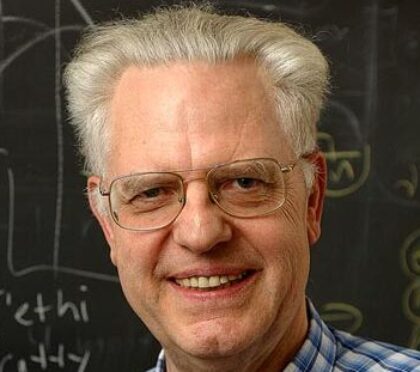 Ulrich Becker合作论文数Laboratory for Nuclear Science, Massachusetts Institute of Technology;Department of Physics, Massachusetts Institute of Technology243P. Lecomte合作论文数242C. Mana合作论文数242
 Paul Lecoq合作论文数Multiwave Metacrystal SA;Centre Européen de Recherche en Imagerie Médicale, European Organization for Nuclear Research;Crystal Clear241Ren Danyang合作论文数241
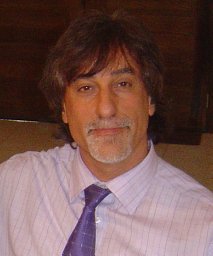 Panos Razis合作论文数240I. Vetlitsky合作论文数240
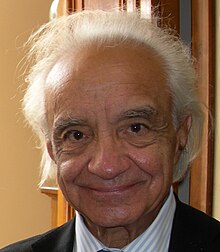 Antonino Zichichi合作论文数University of Bologna239V. Shoutko合作论文数239
 Joachim Mnich合作论文数Deutsches Elektronen-Synchrotron239
 Harvey B. Newman合作论文数Division of Physics, Mathematics and Astronomy, California Institute of Technology239K. Sudhakar合作论文数238P. Berges合作论文数238A. Kunin合作论文数238Peter Denes合作论文数Lawrence Berkeley National Laboratory238C. Luci合作论文数237Vladimir Koutsenko合作论文数237Helmut Vogt合作论文数237V Ya Plyaskin合作论文数237C. Sciacca合作论文数236Xd Cai合作论文数236I. Clare合作论文数236Marcella Diemoz合作论文数INFN Sezione di Roma236G. Landi合作论文数236Paul L. G. Lebrun合作论文数Experimental Beam Physics Department, Fermi National Accelerator Laboratory236E. Valente合作论文数235Ja Rubio合作论文数235W James Metzger合作论文数235M. Chemarin合作论文数235g chiefari合作论文数234Dj Schotanus合作论文数234




