Until approximately 1928 it was generally believed that specific information carried in biopolymers involves proteins. Landsteiner gave us the concept of haptenes and specific determinant groups. Between 1925 and 1928 Oswald T. Avery, laterjoined by Michael Heidelberger and Walther Goebel, succeeded beyond any doubt in demonstrating that pure polysaccharides can carry specific immunological messages (antigens or haptenes). The purified Type II pneumococcus substance did not possess any of the properties of a polypeptide and was even found to be free of nitrogen (see Addendum Í) . In this year of 1928 a young Englishman, F. Griffith, discovered the pneumococcus transforming factor. Fifteen to sixteen years later Avery, MacLeod, and McCarty showed that the pneumococcus transforming factor is a polypeptide-free, polysaccharide-free biopolymer composed entirely of deoxyribonucleic acid (DNA). This triumphant discovery of DNA as a carrier of heritable messages may overshadow Avery's early discovery of polysaccharide antigens. Yet, as developments subsequent to 1928 will testify, the biological aspects of this discovery were as boundless as those deriving from the discovery of transforming DNA preparations. About 1930 the discovery of the antigenicity of polysaccharides was translated into a more precise chemical language of monoand disaccharides through the joint work of Avery, Goebel, and Heidelberger. This field was further developed through the application ofhighly sophisticated end-group techniques developed by Heidelberger, Kabat, Morgan, Staub, Westphal, McCarty, and many others. In this article my aim is to try to
Many studies have shown that, although glucose is converted to glucuronides without cleavage of the carbon chain (2--S), free glucuronic acid functions poorly, if at all, as a precursor of glucuronic acid-containing compounds in living systems (e.g. phenol or alcohol glucuronides, mucopolysaccharides) (9-l 1). An important advance in elucidating the nature of the intermediates in the biosynthesis of glucuronic acid and its conjugates was made when Dutton and Storey discovered a thermostable cofactor in liver necessary for the formation of a phenol glucuronide by cell-free liver preparations (12). This compound was subsequently isolated and identified as uridine diphosphoglucuronic acid (13-15), and was shown to act as a substrate in a reaction in which glucuronic acid was transferred to a suitable acceptor with the formation of a glucuronide. The biosynthesis of this nucleotide might take place through various pathways. Kornberg (16) first showed that the synthesis of oxidized diphosphopyridine nucleotide’ occurred via a reaction between adenosine triphosphate and nicotinamide mononucleotide with the formation of the nonsymmetrical pyrophosphate nucleotide and inorganic pyrophosphate. This type of mechanism has also been found to be operative in the synthesis of uridine diphosphoglucose (17) (Equation 1) and other nucleotides.
The all-cis hexose D-allose, fed to hamster fibroblast cultures over 14-20 hr, brings about a striking down-regulation of hexose transport. This down-regulation by allose is inhibited by 2,4-dinitrophenol. By using D-[14C]allose and thin-layer chromatography, two types of products accumulated that have been identified as allose and allose phosphate. We suspect that allose phosphate might be the down-regulator.
The hexose transport in a hamster fibroblast mutant (DS7), unable to use glucose for generation of energy, is nevertheless subject to a marked down-regulation ("curb") after prolonged incubation of monolayer cultures with glucose; fructose is unable to exert any curb. D-Allose, an all-cis hexose, mediates a vigorous curb of the transport system. Moreover, prolonged coincubation of glucose or allose with tunicamycin (TM) brings about an additional effect that is not an inhibition of the transport system, which we shall call the "concerted" transport curb. This type of concerted transport curb requires L-glutamine in the maintenance medium; moreover, addition of cycloheximide prevents the development of this TM effect. Apparently, cellular protein synthesis or protein turnover or both are required for the development of the TM-concerted transport curb. The concerted transport curb can be reversed in sugar-free or in fructose-containing medium, even upon readdition of TM. In contrast, the sole readdition of glucose or D-allose renders the concerted curb irreversible. This raises the question of whether the cells under the condition of the concerted curb somehow have internalized the TM into the membrane.
The hexose transport system of a fibroblast mutant, DS7, unable to convert glucose 6-phosphate to fructose 6-phosphate ("the phosphoglucose isomerase mutant"), is subject to a specific down-regulation ("curb") evoked by only glucose or D-allose. Neither fructose nor mannose has a curbing effect on this mutant. Further addition of tunicamycin intensified the transport curb on the mutant mediated by glucose or allose. Mannose added to the parental cell line 023 seems able to mimic a glucose-mediated transport curb. In this line, but not the mutant, tunicamycin also intensifies a mannose-mediated curb. It seems that the tightening of the allose-mediated curb is a function of a specific type of transport regulation and perhaps too of interference with glycosylation of the hexose transporter. Furthermore, this type of curb can be strikingly reversed by shifting the cultures to medium containing fructose.
Endogenous oligonucleotides were found in trichloroacetic acid extracts of hamster lung fibroblasts and Tetrahymena cells. Peaks of radioactivity that eluted with retention times similar to oligonucleotide markers (5- to 50-mer) were found by HPLC in cells labeled briefly with 32Pi. Only minute amounts of UV-absorbing material were detected, consistent with a rapid turnover of phosphate groups. The 32P-labeled material also migrated as oligonucleotides on 20% polyacrylamide gels; it was not hydrolyzed by alkaline phosphatase but was digested by snake venom phosphodiesterase, S1 nuclease, and pancreatic RNase and was phosphorylated by T4 polynucleotide kinase. The 32P-labeled material isolated by HPLC was alkali labile and the hydrolyzate ran as nucleotides on paper chromatography. It is concluded that the oligonucleotides are mainly oligoribonucleotides, but it is possible that oligodeoxynucleotides are also present.
By studying the energy-requiring control of the hexose transport system (the transport "curb") in a lung fibroblast mutant called the phosphoglucose isomerase mutant (because it is devoid of the enzyme phosphoglucose isomerase) the following features were noted. The aldohexose D-allose, if added over 20 hr to a culture of the mutant, promotes the development of an intense curb of the hexose transport system, greatly surpassing that brought about by incubation with glucose. The allose-mediated curb can be circumvented by various metabolic inhibitors as well as by the presence of other aldohexoses such as mannose.
The interrelationships of hexose feeding and insulin action were studied in the Chinese hamster fibroblast cell lines 023 and DS-7. The latter, derived from 023 and deficient in phosphoglucose isomerase, has been used to map the metabolic requirements for aldohexose-mediated down-regulation or "curbing" of hexose transport. We have characterized insulin binding and the response to insulin in both cell lines to determine if the insulin-mediated stimulation of transport is similarly dependent on hexose metabolism. DS-7 cells exhibited 5-6 times as many high-affinity insulin binding sites as the parental strain. Apart from this difference, 023 and DS-7 cells showed comparable insulin binding characteristics, which are similar to those observed in other cell types. Insulin at a concentration of 1 microgram/ml (167 nM) was found to stimulate 3-O-methylglucose uptake by approximately equal to 50% in glucose-fed cells of both lines. In neither line did glucose starving significantly alter insulin binding or the insulin-induced stimulation of transport. Feeding with mannose or fructose was found to increase both parameters in 023 cells but had no effect on DS-7 cells. The increase in hexose uptake with the administration of insulin or with glucose starving was shown to be due to an increase in Vmax. Our studies suggest that insulin binding and effect are not regulated by hexose metabolism in the same manner as in the curbing process and insulin induces the recruitment of a transporter pool that is insensitive to hexose curbing.
The generation of ATP in a hamster fibroblast mutant devoid of the enzyme phosphoglucose isomerase (PGI) has been studied and compared with that in the parental line, which is PGI+. Both cell lines could be maintained for 24 hr in hexose media devoid of L-glutamine. Under these conditions in mannose medium, both the parental line and the PGI mutant maintained high intracellular ATP levels. With glucose under the same conditions, the parental line was able to keep the ATP level high. In contrast, the mutant line lost most of its ATP pool after incubation with glucose; the ATP/ADP ratio fell about 80% after incubation in glucose medium. Addition of pyruvate, with or without glucose, preserved the ATP pool at high levels even in the mutant, as did the presence of L-glutamine. When the PGI mutant was maintained for 3-4 days in growth medium, containing 4 mM L-glutamine and 10% dialyzed calf serum, in which glucose was replaced by mannose, the UDP-glucose pool dwindled and mediated control of the hexose uptake system did not ensue, in contrast to results of the same exposure to glucose-containing medium.
Thirty years ago, a number of human inborn errors in carbohydrate metabolism were explored with specific enzymatic tests on blood samples (hemolysates). Hereditary galactosemia was the first example. When the inoperative step in galactose metabolism was specified, the basis for the diet therapy used on the galactosemic infants, namely galactose-free diet, could be shown to be securely founded. As far as galactose metabolism is concerned, the cells of the infant are faced with two problems: (i) the conversion of dietary lactose (galactosyl glucose) to glucose and its catabolites involved in energy metabolism, and (ii) the conversion of dietary glucose or lactose to galactosyl units of glycolipids and glycoprotein cell structures. Subsequent studies on microorganisms revealed several types of hereditary defect in galactose metabolism. One type which permits the bacteria to develop a normal carbohydrate pattern in their cell walls includes an enzyme defect, like that described in the cells of the galactosemic infant. Two other types, with the inability to synthesize UDPGlc or UDPGal from glucose, do not permit the bacteria to build the fabric of the normal bacterial cell wall. This is the subject for discussion.
We describe a quenching-free, ‘online’ ion exchange chromatography (oIEC) method for the quantitative analysis of enzymatic reactions in real-time. We show that separate quenching of the ongoing reaction performed conventionally is not required, since enzymatic reactions are interrupted upon immobilization of the reaction compounds by binding to the stationary phase of the ion exchange column. The reaction mix samples are directly injected into the column, thereby improving data consistency and allowing automation of the process. The method allows reliable and efficient acquisition of enzymatic progress curves by automatic loading of aliquots of an ongoing reaction at predefined timepoints. We demonstrate the applicability of this method for a variety of enzymatic reactions.Enzymatic assays and analysis
A protracted type of down-regulation of the hexose transport system in cultured fibroblasts that depends on one main factor in their nutritional state, the presence or absence of metabolizable D- aldohexoses in the culture fluid, is discussed. Fructose feeding is unable to elicit a down-regulation, whereas mannose and D-glucosamine, regulation of the transport system. This down-regulation or transport curb depends on oxidative energy metabolism, because inhibitors of this type of metabolism bring about a striking release of the transport curb. Studies with a fibroblast mutant that lacks the enzyme glucosephosphate isomerase (D-glucose-6-phosphate ketol-isomerase, EC 5.3.1.9, abbreviated phosphoglucose isomerase) (pgi-) have indicated that two types of metabolism are needed: 1) oxidative energy metabolism, which in the pgi- mutant can still be generated effectively from L-glutamine or, in its absence, from mannose or D-glucosamine; 2) glucose-6-phosphate metabolism, either its catabolism through the pentose shunt or through the anabolic pathway to UDP glucose and UDP galactose. The schism in carbohydrate metabolism in the pgi- fibroblasts is clearly reflected through the development of the metabolically mediated curb of the hexose transport or uptake system.
A close study of the metabolic regulation of hexose transport in a hamster fibroblast mutant, highly defective in the enzyme phosphoglucose isomerase (PGI mutant), reveals the requirement for at least three vectors for transport regulation. The downward regulation of the hexose transport system, called the "transport curb," requires (i) a ligand for the transport system, (ii) oxidative energy metabolism, and (iii) some specific enzymes of the glucose-6-phosphate metabolism. Deprivation of glucose was shown to deprive the PGI mutant of UDP hexose, whereas the glucose-fed mutant contained high levels. The parental strain preserved the UDP hexose with or without glucose feeding. Cycloheximide added to the mutant showed two different types of effects. If added at the onset of glucose starvation, the up-regulation of the transport system was scarcely affected. If cycloheximide was added to the mutant at the onset of glucose refeeding, it prevented the development of the glucose-mediated transport curb. In the mutant, the glucose-mediated curb is not derived from energy metabolism but is solely dependent on certain enzymes of glucose-6-phosphate metabolism. The interference of this curb by cycloheximide requires evidently a reassessment, including that of the role of the UDP hexose pathway in regulation of the hexose transport system.
 Ullrey D B合作论文数18Donna Ullrey合作论文数12CW CHRISTOPHER合作论文数10
 Kurt Julius Isselbacher合作论文数Harvard Medical School;Cancer Center, Massachusetts General Hospital9Hans Klenow合作论文数6e p anderson合作论文数5Elizabeth S. Maxwell合作论文数5
 Jack Strominger合作论文数Department of Stem Cell and Regenerative Biology, Faculty of Arts and Sciences, Harvard University5Au Bertland合作论文数4E S MAXWELL合作论文数4Kiyoshi Kurahashi合作论文数4
 Julius Axelrod (朱利叶斯·阿克塞尔罗德)合作论文数National Institute of Mental Health, National Institutes of Health;The George Washington University3T.A. Sundararajan合作论文数3Donna B. Ullrey合作论文数3Morris Friedkin合作论文数3E HOFFJORGENSEN合作论文数3P Plesner合作论文数2Wl Adair合作论文数2MT GAMMON合作论文数2A Franchi合作论文数2O Gabriel合作论文数2E Jordan合作论文数2A. Christensen合作论文数2Yousuke Seyama合作论文数2Amar Bhaduri合作论文数2
 Jacques Pouyssegur合作论文数Scientific Center of Monaco;Institute for Research on Cancer & Aging, Nice, University of Nice2Michael B. Yarmolinsky合作论文数2S. P. Colowick合作论文数2Eliezer Rapaport合作论文数2Agnete Munch-Petersen合作论文数2L B BRADLEY合作论文数1Elizabeth P. Anderson合作论文数1BEATRIZ BRAGANCA合作论文数1K Sanford合作论文数1H N Kirkman合作论文数1S Hakomori合作论文数1F Eisenberg合作论文数1W Boos合作论文数1
 Thomas J. Silhavy合作论文数Department of Molecular Biology, Princeton University1
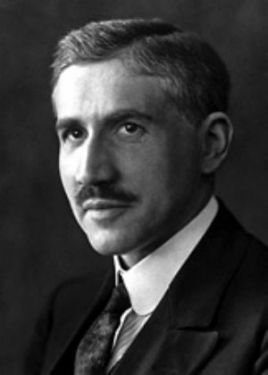 Otto Fritz Meyerhof (奥托·弗利兹·迈尔霍夫)合作论文数宾州大学1W Wayne Kielley合作论文数1R SCHILLER合作论文数1Kijomoto S合作论文数1Max Bergmann合作论文数1Hoyoku Nishino合作论文数1C. Wilson合作论文数1P. Plesner合作论文数1Joseph S. Fruton合作论文数1




