Amyotrophic Lateral Sclerosis is a disease that compromises the motor system and the functional abilities of the person in an irreversible way, causing the progressive loss of the ability to communicate. Tools based on Augmentative and Alternative Communication are essential for promoting autonomy and improving communication, life quality, and survival. This Systematic Literature Review aimed to provide evidence on eye-image-based Human–Computer Interaction approaches for the Augmentative and Alternative Communication of people with Amyotrophic Lateral Sclerosis. The Systematic Literature Review was conducted and guided following a protocol consisting of search questions, inclusion and exclusion criteria, and quality assessment, to select primary studies published between 2010 and 2021 in six repositories: Science Direct, Web of Science, Springer, IEEE Xplore, ACM Digital Library, and PubMed. After the screening, 25 primary studies were evaluated. These studies showcased four low-cost, non-invasive Human–Computer Interaction strategies employed for Augmentative and Alternative Communication in people with Amyotrophic Lateral Sclerosis. The strategies included Eye-Gaze, which featured in 36% of the studies; Eye-Blink and Eye-Tracking, each accounting for 28% of the approaches; and the Hybrid strategy, employed in 8% of the studies. For these approaches, several computational techniques were identified. For a better understanding, a workflow containing the development phases and the respective methods used by each strategy was generated. The results indicate the possibility and feasibility of developing Human–Computer Interaction resources based on eye images for Augmentative and Alternative Communication in a control group. The absence of experimental testing in people with Amyotrophic Lateral Sclerosis reiterates the challenges related to the scalability, efficiency, and usability of these technologies for people with the disease. Although challenges still exist, the findings represent important advances in the fields of health sciences and technology, promoting a promising future with possibilities for better life quality.
Objetivo: discutir se replicar o Projeto “Sífilis Não”, naquilo que se refere ao tratamento de vastas quantidades de dados pessoais relativos à saúde sem o consentimento dos titulares, seria possível em solo português. Metodologia: análise da legislação referente à proteção de dados pessoais brasileira, portuguesa e europeia, tendo o Projeto “Sífilis Não” como o caso em estudo. Resultados: o tratamento de dados pessoais sensíveis sem o consentimento do titular é, em regra, proibido pelo Regulamento Geral de Proteção de Dados, entretanto, o tratamento por motivo de interesse público na área da saúde e para fins de pesquisa científica é autorizado, desde que sejam garantidas as liberdades fundamentais dos titulares. Conclusão: tendo em vista que o Projeto “Sífilis Não” é um projeto de pesquisa que envolve o enfrentamento e erradicação da sífilis em todas as suas formas, hipóteses específicas da legislação portuguesa e europeia autorizam o tratamento de dados pessoais sensíveis mesmo sem o consentimento dos titulares, notadamente o tratamento de dados pessoais por motivos de interesse público no domínio da saúde pública e para fins de investigação científica.
The progressive diminishment of motor capacities due to Amyotrophic Lateral Sclerosis (ALS) causes a severe communication deficit. The development of Alternative Communication software aids ALS patients in overcoming communication issues and the detection of communication signals plays a big role in this task. In this paper, volunteer eye-blinking is proposed as human–computer interaction signal and an intelligent Computer Vision detector was built for handling the captured data in real-time using a generic webcam. The eye-blink detection was treated as an extension of the eye-state classification, and the base pipeline used is delineated as follows: face detection, face alignment, region-of-interest (ROI) extraction, and eye-state classification. Furthermore, this pipeline was complemented with auxiliary models: a rotation compensator, a ROIs evaluator, and a moving average filter. Two new datasets were created: the Youtube Eye-state Classification (YEC) dataset, built from the AVSpeech dataset by extracting face images; and the Autonomus Blink Dataset (ABD), built completely as a result of the present work. The YEC allowed training the eye-classification task; ABD was specifically idealized taking into consideration volunteer eye-blinking detection. The proposed models, a Convolutional Neural Network (CNN) and a Support Vector Machine (SVM), were trained by the YEC dataset and performance evaluation experiments for both models were conducted across different databases: CeW, ZJU, Eyeblink, Talking Face (public datasets) and ABD. The impact of the proposed auxiliary models was evaluated and the CNN and SVM models were compared for the eye-state classification task. Promising results were obtained: 97.44% accuracy for the eye-state classification task on the CeW dataset and 92.63% F1-Score for the eye-blink detection task on the ABD dataset.
This paper presents the synthesis of multiband frequency selective surfaces (FSSs) using supervised machine learning (ML) with the decision tree (DT) algorithm. The proposed FSS structure is composed of an array of metallic patches printed on a dielectric substrate for stopband spatial filtering microwave applications. The shapes of the metallic patches are based on the sunflower (helianthus annus) geometry. In the first step, a parametric analysis is performed to investigate the use of different FSS geometries, including those with circular, annular and corolla integrated patch elements, to compose the sunflower geometry, regarding multiband and polarization independent performances with size reduction. Two bioinspired FSS geometries are synthesized using supervised machine learning with the decision tree algorithm. The random forest (RF) algorithm is used to validate the decision tree algorithm and to confirm the obtained results. The numerical analysis of the proposed FSS geometries is performed using Ansoft Designer software. Prototypes are fabricated and measured. The good agreement observed between simulated and measured results has validated the proposed approach. The use of supervised machine learning with the decision tree algorithm resulted in a particularly efficient and accurate synthesis procedure due to its intuitive implementation and simplified and effective data analysis modelling.
A transfusão sanguínea é um procedimento complexo que envolve riscos, os quais podem ser minimizados com atividades para manter a qualidade dos processos. Para isso, faz-se necessário o estabelecimento de fluxos bem definidos para melhorar os processos e minimizar gastos desnecessários. O objetivo deste trabalho é propor um novo protocolo de reserva de hemocomponentes para cirurgias em um hospital universitário de Recife-PE. Inicialmente, mapeou-se o processo de trabalho relacionado a transfusão e reserva de hemocomponentes e, com base das 511 solicitações de transfusão de sangue- STS analisadas entre fevereiro e junho de 2018, foi possível descrever os indicadores “Conformidade das STS”, “Frequência de dados ausentes nas STS; e “Número de reservas de concentrado de hemácias- CH para cirurgias”. Após essa avaliação prévia, realizou-se a construção do protocolo de reserva de hemocomponentes para cirurgias. Os pontos críticos descados no mapeamento foram o preenchimento das STS e o número excessivo de CH reservados que retornavam ao estoque. Foi verificado que quase a metade das solicitações estudadas estavam incompletas ou com rasusas. Os dados mais ausentes nas STS foram idade, resultados laboratoriais, peso, sexo e localização do paciente. No período estudado, das solicitações de reservas de CH realizadas, apenas 5,3% foram utilizadas. Isso evidencia um elevado número de sangue solicitado desnecessariamente. Com a utilização do protocolo de reserva de hemocomponentes para cirurgias os gastos com as reservas teriam caído em 50%. A utilização do protocolo proposto, gera uma economia com impacto direto nos níveis de estoque de sangue, pois, ao realizar apenas as reservas necessárias, menos tempo e materiais serão desperdiçados e principalmente menos hemocomponentes serão manuseados desnecessariamente, diminuindo assim, o risco de perda desse bem tão importante que é o sangue humano.
O trabalho em evidência tem como objetivo expor o desenvolvimento de um aplicativo Desktop que utiliza tecnologias web para a gravação e edição de vídeos de exames de Nasofibrolaringoscopia e Laringoscopia, bem como a emissão de laudos digitais e a realização de uma integração com um servidor PACS. Nesse sentido, foram estudadas novas tecnologias que pudessem facilitar e agilizar o progresso da aplicação, além de disponibilizar uma interface amigável. O framework Electron e tecnologias web, como CSS, HTML, JavaScript e Node.js, atendem bem a tais propósitos. Nesse contexto, o OpenMed Vídeo, nome do aplicativo aqui apresentado, ao gravar e editar vídeos, atendeu aos requisitos mínimos sugeridos pelos profissionais da saúde do serviço de otorrinolaringologia do Hospital Universitário Onofre Lopes (HUOL), local onde surgiu a demanda. O aplicativo em destaque também concedeu que os exames fossem armazenados de forma remota em um sistema de arquivamento e comunicação de imagens médicas, por meio de uma integração com um servidor PACS, ademais da realização de laudos digitais, permitindo que os profissionais do setor pudessem guardá-los, de forma mais segura, assim como acessá-los de qualquer lugar uma vez que esses se tornaram digitais. Acredita-se que o referido projeto está em consonância com a necessidade prevista pela equipe médica do HUOL e espera-se que venha a ser apropriado com êxito e com larga utilidade.
Introdução: O volume de informação técnico-científica produzida nas instituições de saúde tem crescido exponencialmente; e reuni-las, armazená-las, recuperá-las e facilitar seu acesso torna-se, então, um desafio. O objetivo do trabalho é construir a modelagem descritiva de um Repositório Institucional (RI) de Protocolos de Cuidado a Saúde que possa atender a essa demanda e ainda otimizar os processos de trabalho e melhorar a qualidade assistencial nos hospitais universitários brasileiros. Métodos: Estudo híbrido de produção e pesquisa metodológica de um RI de Protocolos de Cuidado a Saúde permeada por três etapas: Observação, Revisão Integrativa da literatura e construção da Modelagem Descritiva. Resultados: A modelagem apresenta 3 atores de uso: usuários dos sistemas (servidores/residentes multiprofissionais); gestor local e central. Cada protocolo é inserido no RI através de um formulário padrão estruturado com atualização periódica. Após acessar os protocolos, o usuário pode avaliar seu conteúdo, gerando um feedback ao gestor. O RI produzirá relatórios estatísticos subsidiarão a gestão e a educação permanente. Conclusão: A facilidade de acesso à informação possibilita maior adesão e utilização dos protocolos. O que efetiva a padronização frente a diversidades de condutas, diminuindo os eventos adversos, melhorando a qualidade assistencial, além de conferir respaldo jurídico e reduzir custos aos hospitais.
INTRODUCTION:The goal of this paper is to present a critical review on the main systems that use artificial intelligence to identify groups at risk for osteoporosis or fractures. The systems considered for this study were those that fulfilled the following requirements: range of coverage in diagnosis, low cost and capability to identify more significant somatic factors.METHODS:A bibliographic research was done in the databases, PubMed, IEEExplorer Latin American and Caribbean Center on Health Sciences Information (LILACS), Medical Literature Analysis and Retrieval System Online (MEDLINE), Cumulative Index to Nursing and Allied Health Literature (CINAHL), Scopus, Web of Science, and Science Direct searching the terms "Neural Network", "Osteoporosis Machine Learning" and "Osteoporosis Neural Network". Studies with titles not directly related to the research topic and older data that reported repeated strategies were excluded. The search was carried out with the descriptors in German, Spanish, French, Italian, Mandarin, Portuguese and English; but only studies written in English were found to meet the established criteria. Articles covering the period 2000-2017 were selected; however, articles prior to this period with great relevance were included in this study.DISCUSSION:Based on the collected research, it was identified that there are several methods in the use of artificial intelligence to help the screening of risk groups of osteoporosis or fractures. However, such systems were limited to a specific ethnic group, gender or age. For future research, new challenges are presented.CONCLUSIONS:It is necessary to develop research with the unification of different databases and grouping of the various attributes and clinical factors, in order to reach a greater comprehensiveness in the identification of risk groups of osteoporosis. For this purpose, the use of any predictive tool should be performed in different populations with greater participation of male patients and inclusion of a larger age range for the ones involved. The biggest challenge is to deal with all the data complexity generated by this unification, developing evidence-based standards for the evaluation of the most significant risk factors.
In this paper a coplanar waveguide (CPW) fed ultra-wideband (UWB) circular ring monopole antenna with a modified ground plane is proposed. The dimensions of the antenna are obtained using a genetic algorithm (GA) optimization procedure. To proof the concept and validate the design antenna prototypes have been fabricated and tested. A good agreement is obtained between numerical simulation and experimental results. The input reflection coefficient is below -10 dB in the frequency range 2.52 GHz to 12 GHz, which corresponds to an impedance bandwidth of about 4.8:1, and the gain is about 3 dBi. The proposed antenna element seems to be suitable for UWB and cognitive radio spectrum sensing applications. (c) 2016 Wiley Periodicals, Inc. Microwave Opt Technol Lett 58:1319-1323, 2016
The synthesis of a simple electronically reconfigurable annular ring monopole antenna using a designing optimisation process based on particle swarm optimisation (PSO) and artificial bee colony (ABC) algorithms is proposed. Several antenna dimensions are selected as objective functions of PSO and ABC and their best solutions are considered as the optimised dimensions of the antenna geometry. Two radio-frequency p-i-n diodes, connecting the antenna feeding line to two microstrip stubs are used to change the antenna frequency response from ultra-wideband (UWB), from 3.1 to 10.6 GHz, to narrowband (NB) operation about 5.8 GHz. The antenna design and simulation are performed using Ansoft high-frequency structure simulator software. PSO and ABC algorithms are written in Java language. Thereafter, antenna prototypes are fabricated and measured for validation purposes. Simulation and measurement results are obtained showing good agreement. The measured optimised impedance bandwidths of the UWB and NB bands are up to 128 and 23%, respectively. Additionally, simulated and measured radiation patterns are very similar when the reconfigurable antenna is operating in OFF-state (UWB sensing antenna) and in ON-state (NB transmitting antenna) modes, indicating the proposed antenna geometry as a promising candidate for applications such as UWB and cognitive radio.
A grande demanda por soluções para reabilitação de pacientes com deficiência ou limitações visuais tem motivado o desenvolvimento das tecnologias assistivas. Estas tecnologias possibilitam o aumento da qualidade de vida dos pacientes através de uma maior autonomia no seu cotidiano. Este artigo apresenta uma solução de tecnologia assistiva aplicada na locomoção do paciente com deficiência visual.
In this work, a new ultra wide band circular ring patch antenna is proposed for spectral sensing application as well as the transmission and reception of radiofrequency in cognitive radio systems. The proposed structure has simple design and easy construction, making it reconfigurable by enabling or disabling the parasitic elements coplanar to the antenna. Simulation and measurements results confirm good agreement and adequate antenna response in the frequency range from 3.1 GHz to 10.6 GHz, in terms of the reflection coefficient and radiation pattern, validating the applicability of the proposed structure for cognitive radio systems front-end.
ABSTRACTA hybrid optimization technique is used to synthesize frequency selective surface (FSS) structures composed of periodic arrays of integrated rings and dipole patch elements, printed on dielectric substrates, for microwave filtering applications. The optimization technique is based on the combination of genetic algorithms and neural networks. This hybrid optimization technique is used to determine specific values for the resonant frequency and bandwidth from variations of the FSS structural parameters, such as patch element and periodic array dimensions. The synthesized FSS structure is also analyzed using a fast and accurate wave concept iterative procedure for comparison purpose. Thereafter, prototypes are built and measured. A good agreement is observed between simulated and measured results. © 2014 Wiley Periodicals, Inc. Microwave Opt Technol Lett 56:329–333, 2014
This article presents a bandwidth optimization study of two coupled frequency selective surfaces (FSS).The optimization is performed in two steps. In the first step, a genetic algorithm is developed to synthesize two single FSS crossed dipoles with resonant frequencies equal to 9.5 and 10.5 GHz, to be used in a broadside coupled geometry, separated by an air gap. In the second step, a particle swarm optimization algorithm is developed to determine the optimal value for the air gap length to optimize the geometry bandwidth. Prototypes are fabricated and measured to validate the optimization study results for the two coupled FSS structure. (c) 2012 Wiley Periodicals, Inc. Microwave Opt Technol Lett 55:711715, 2013; View this article online at wileyonlinelibrary.com. DOI: 10.1002/mop.27451
This paper presents an application of a machine learning technique to enhance a multi-objective genetic algorithm to estimate fitness function behaviors from a set of experiments made in laboratory to analyze a microstrip antenna used in ultra-wideband (UWB) wireless devices. These function behaviors are related to three objectives: bandwidth, return loss and central frequency deviation. Each objective (modeled as dependent of an antenna slit dimensions Ls and Ws) is used inside an aggregate adaptive weighted fitness function that estimates the multi-objective behavior in the algorithm. The final results were compared with the ones obtained with a similar antenna modeled in a simulator program and with the ones of a real prototype antenna built from the optimal values obtained after the optimization. The final comparison has shown a promising gain for the designed antenna in the analyzed frequencies.
This article presents the optimization process of a microstrip antenna designed to operate with ultra-wideband applications. This optimization process was accomplished by applying a self organizing multiobjective genetic algorithm (GA) to optimize a geometry aspect of a ring monopole antenna (a slit in the ground plane) considering three objectives simultaneously (bandwidth, return loss and central frequency deviation). Each of these objectives are modeled as dependent of two variables (the slit dimensions) and used in a single weighted compound aggregate objective function in which weights are defined by an adjuster GA that uses another GA to evaluate each combination of possible weights. The results were compared with the ones obtained to the same antenna using a simulator program (Ansoft HFSS) and with the results of a real prototype antenna built from the slit dimension optimal values obtained after the optimization process. (C) 2012 Wiley Periodicals, Inc. Microwave Opt Technol Lett 54:18241828, 2012; View this article online at wileyonlinelibrary.com. DOI 10.1002/mop.26945
 Adaildo Gomes D'Assunção合作论文数7
 Ricardo Alexsandro de Medeiros Valentim合作论文数Laboratory of Technological Innovation in Health (LAIS),, Federal University of Rio Grande do Norte (UFRN),6
 Karilany Dantas Coutinho合作论文数Lab Technol Innovat Hlth LAIS, Fed Univ Rio Grande Norte UFRN2
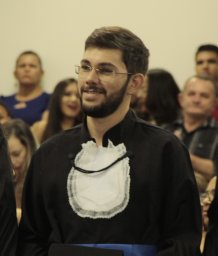 Felipe Fernandes合作论文数Laboratory of Technological Innovation in Health (LAIS),, Federal University of Rio Grande do Norte2helio roberto hekis合作论文数2
 Danilo Alves Pinto Nagem合作论文数2
 Claudio Rodrigues Muniz Silva合作论文数2Eduardo B. Rodrigues合作论文数2Sinara R. Martins合作论文数2Rafael Cavalcanti Contreras合作论文数1Rodrigo Dantas da Silva合作论文数1Custódio Leopoldino de Brito Guerra Neto合作论文数1
 Thales Barros de Castro合作论文数1Ernano Arrais Junior合作论文数1Mario Emilio Dourado Junior合作论文数1Carlos Alberto Pereira de Oliveira合作论文数1Guilherme Medeiros Machado合作论文数1Paulo Augusto de Lima Medeiros合作论文数1Pablo Holanda Cardoso合作论文数1
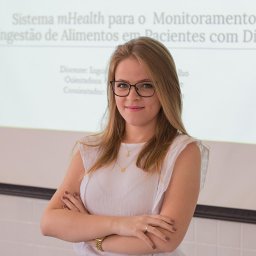 Ingridy M P Barbalho合作论文数1
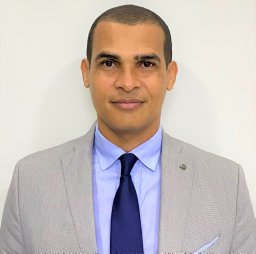 Agnaldo Souza Cruz合作论文数Lab Technol Innovat Hlth, Univ Fed Rio Grande do Norte1Andréa Santos Pinheiro de Melo合作论文数1
 Carla Barbosa合作论文数1
 Philippi Sedir Grilo de Morais合作论文数1
 Andre Dias Pereira合作论文数Faculty of Law, University of Coimbra1
 Aliete Cunha-Oliveira合作论文数Nursing Sch Coimbra ESEnfC, Hlth Sci Res Unit Nursing UICISA E1
 Daniele Barros合作论文数Laboratory of Technological Innovation in Health (LAIS),, Federal University of Rio Grande do Norte1Maria Cláudia Medeiros Dantas de Rubim Costa合作论文数1
 Ignacio Sánchez-Gendriz合作论文数Laboratory of Technological Innovation in Health (LAIS),, Federal University of Rio Grande do Norte1
 Cesar Ricardo da Silva Teixeira合作论文数Univ Coimbra, Ctr Informat & Syst, Polo 2, P-3030290 Coimbra, Portugal1Araujo, W.C.合作论文数Dept. of Commun. Eng., Fed. Univ. of Rio Grande do Norte;c1Morais Antonio H F合作论文数1
 Antonio Morais合作论文数1Rodrigues, E.J.B.合作论文数1João Paulo Queiroz Santos合作论文数1
 Alfredo Gomes Neto合作论文数CEFET-PB / GTMA1Rosemary Silva Da Silveira合作论文数Universidade Federal de Santa Catarina;Departamento de Enfermagem, Fundação Universidade Federal do Rio Grande;Coordenação de Aperfeiçoamento de Pessoal de Nível Superior;Núcleo de Estudos e Pesquisa em Saúde;Fundação Universidade Federal do Rio Grande, Universidade Federal de Santa Catarina1
 Custodio Peixeiro合作论文数Inst Super Tecn, Univ Tecn Lisboa1
 Jorge Henriques合作论文数Centro de Informática e Sistemas;Universidade de Coimbra;Departamento de Engenharia Informática;Centro de Informática e Sistemas, Universidade de Coimbra1




