This document summarizes the prospective physics plans of the French QCD and Heavy-Ion community, including the experimental programs at the LHC Run 5 and beyond and future colliders at CERN, within the context of the French contribution to the update of the European Strategy in Particle Physics (ESPPU 2025), as discussed in the workshop on European Strategy for Particle Physics Update 2025 organised by the QCD GdR in Oct. 2024.
Femtoscopic correlations with the particle pair combinations KS0KS0 and KS0K± are studied in pp collisions at s=5.02 and 13 TeV by the ALICE experiment. At both energies, boson source parameters are extracted for both pair combinations, by fitting models based on Gaussian size distributions of the sources, to the measured two-particle correlation functions. The interaction model used for the KS0KS0 analysis includes quantum statistics and strong final-state interactions through the f0(980) and a0(980) resonances. The model used for the KS0K± analysis includes only the final-state interaction through the a0 resonance. Source parameters extracted in the present work are compared with published values from pp collisions at s=7 TeV and the different pair combinations are found to be consistent. From the observation that the strength of the KS0KS0 correlations is significantly greater than the strength of the KS0K± correlations, the new results are compatible with the a0 resonance being a tetraquark state of the form (q1,q2‾,s,s‾), where q1 and q2 are u or d quarks.
The first measurement of the coherent photoproduction of $\rho^{0}$ vector mesons in ultra-peripheral Xe-Xe collisions at $\sqrt{s_{\mathrm{\rm NN}}}= 5.44$ TeV is presented. This result, together with previous $\gamma$p and $\gamma$-Pb measurements, describes the atomic number ($A$) dependence of this process, which is particularly sensitive to nuclear shadowing effects and to the approach to the black-disc limit of QCD at a semi-hard scale. The cross section of the ${\rm Xe}+{\rm Xe} \to \rho^{0} + {\rm Xe}+{\rm Xe}$ process, measured at midrapidity through the decay channel $\rho^{0}\to\pi^+\pi^-$, is found to be ${\rm d}\sigma/{\rm d}y=131.5\pm 5.6 {\rm (stat.)} ^{+17.5}_{-16.9} {\rm (syst.)}$ mb. The ratio of the continuum to resonant contributions for the production of pion pairs is also measured. In addition, the fraction of events accompanied by electromagnetic dissociation of either one or both colliding nuclei is reported. The dependence on $A$ of cross section for the coherent $\rho^{0}$ photoproduction at a centre-of-mass energy per nucleon of the $\gamma A$ system of $W_{\gamma A,n}= 65$ GeV is found to be consistent with a power-law behaviour $\sigma (\gamma A\rightarrow \rho^{0} A) \propto A^{\alpha}$ with a slope $\alpha = 0.96 \pm 0.02 {\rm (syst.)}$. This slope signals important shadowing effects, but it is still far from the behaviour expected in the black-disc limit.
The first results on K$^{*}$(892)$^{\mathrm{\pm}}$ resonance production in inelastic pp collisions at LHC energies of $\sqrt{s} = 5.02$, 8, and 13 TeV are presented. The K$^{*}$(892)$^{\mathrm{\pm}}$ has been reconstructed via its hadronic decay channel K$^{*}$(892)$^{\mathrm{\pm}}$$\rightarrow$$\mathrm {K^0_S}$$~+~\pi^{\pm}$ with the ALICE detector. Measurements of transverse momentum distributions, integrated yields, and mean transverse momenta for charged K$^{*}$(892) are found to be consistent with previous ALICE measurements for neutral K$^{*}$(892) within uncertainties. For $p_{\mathrm{T}} > 1$ GeV/$c$ the K$^{*}$(892)$^{\mathrm{\pm}}$ transverse momentum spectra become harder with increasing centre-of-mass energy from 5.02 to 13 TeV, similar to what previously observed for charged kaons and pions. For $p_{\mathrm{T}} < 1$ GeV/$c$ the K$^{*}$(892)$^{\mathrm{\pm}}$ yield does not evolve significantly and the abundance of K$^{*}$(892)$^{\mathrm{\pm}}$ relative to K is rather independent of the collision energy. The transverse momentum spectra, measured for K$^{*}$(892)$^{\mathrm{\pm}}$ at midrapidity in the interval $0 < p_{\mathrm{T}} < 15$ GeV/$c$, are not well described by predictions of different versions of PYTHIA 6, PYTHIA 8 and EPOS-LHC event generators. These generators reproduce the measured $p_{\mathrm{T}}$-integrated K$^{*\mathrm{\pm}}$/K ratios and describe well the momentum dependence for $p_{\mathrm{T}} < 2$ GeV/$c$.
The first measurement of the dependence on $|t|$, the square of the momentum transferred between the incoming and outgoing target nucleus, of coherent J/$\psi$ photoproduction is presented. The data were measured with the ALICE detector in ultra-peripheral Pb-Pb collisions at a centre-of-mass energy per nucleon pair $\sqrt{s_{\rm NN}} = 5.02$ TeV with the J/$\psi$ produced in the central rapidity region $|y|<0.8$, which corresponds to the small Bjorken-$x$ range $(0.3-1.4)\times10^{-3}$. The measured $|t|$-dependence is not described by computations based only on the Pb nuclear form factor, while the photonuclear cross section is better reproduced by models including shadowing according to the leading-twist approximation, or gluon-saturation effects from the impact-parameter dependent Balitsky-Kovchegov equation. This new observable is therefore a valid tool to constrain the relevant model parameters and to investigate the transverse gluonic structure at very low Bjorken-$x$.
The $p_{\rm T}$-differential production cross sections of prompt D$^{0}$, $\Lambda_{\rm c}^{+}$, and $\Sigma_{\rm c}^{0,++}(2455)$ charmed hadrons are measured at midrapidity ($|y| < 0.5$) in pp collisions at $\sqrt{s} = 13$ TeV. This is the first measurement of $\Sigma_{\rm c}^{0,++}$ production in hadronic collisions. Assuming the same production yield for the three $\Sigma_{\rm c}^{0,+,++}$ isospin states, the baryon-to-meson cross-section ratios $\Sigma_{\rm c}^{0,+,++}/{\rm D}^{0}$ and $\Lambda_{\rm c}^{+}/{\rm D}^{0}$ are calculated in the transverse momentum ($p_{\rm T}$) intervals $2 < p_{\rm T} < 12$ GeV/$c$ and $1 < p_{\rm T} < 24$ GeV/$c$. Values significantly larger than in e$^{+}$e$^{-}$ collisions are observed, indicating for the first time that baryon enhancement in hadronic collisions also extends to the $\Sigma_{\rm c}$. The feed-down contribution to $\Lambda_{\rm c}^{+}$ production from $\Sigma_{\rm c}^{0,+,++}$ is also reported and is found to be larger than in e$^{+}$e$^{-}$ collisions. The data are compared with predictions from event generators and other phenomenological models, providing a sensitive test of the different charm-hadronisation mechanisms implemented in the models.
The global polarization of the $\\Lambda$ and $\\overline\\Lambda$ hyperons is measured for Pb-Pb collisions at $\\sqrt{s_{\\rm{NN}}}$ = 2.76 and 5.02 TeV recorded with the ALICE at the LHC. The results are reported differentially as a function of collision centrality and hyperon\u0027s transverse momentum ($p_{\\rm{T}}$) for the range of centrality 5-50%, $0.5 \u003c p_{\\rm{T}} \u003c5$ GeV/$c$, and rapidity $|y|\u003c0.5$. The hyperon global polarization averaged for Pb-Pb collisions at $\\sqrt{s_{\\rm{NN}}}$ = 2.76 and 5.02 TeV is found to be consistent with zero, $\\langle P_{\\rm{H}}\\rangle$ (%) $\\approx$ 0.01 $\\pm$ 0.06 (stat.) $\\pm$ 0.03 (syst.) in the collision centrality range 15-50%, where the largest signal is expected. The results are compatible with expectations based on an extrapolation from measurements at lower collision energies at RHIC, hydrodynamical model calculations, and empirical estimates based on collision energy dependence of directed flow, all of which predict the global polarization values at LHC energies of the order of 0.01%.
An improved value for the lifetime of the (anti-)hypertriton has been obtained using the data sample of Pb–Pb collisions at sNN=5.02 TeV collected by the ALICE experiment at the LHC. The (anti-)hypertriton has been reconstructed via its charged two-body mesonic decay channel and the lifetime has been determined from an exponential fit to the d N /d( ct ) spectrum. The measured value, τ=242−38+34 (stat.) ± 17 (syst.) ps, is compatible with representative theoretical predictions, thus contributing to the solution of the longstanding hypertriton lifetime puzzle.
A measurement of the production of prompt $Lambda_{rm c}^{+}$ baryons in Pb-Pb collisions at $sqrt{s_{rm NN}} = 5.02 $ TeV with the ALICE detector at the LHC is reported. The $Lambda_{rm c}^{+}$ and $overline{Lambda}_{rm c}^{-}$ were reconstructed at midrapidity ($|y| u003c 0.5$) via the hadronic decay channel $Lambda_{rm c}^{+}rightarrow {rm p} {rm K}_{rm S}^{0}$ (and charge conjugate) in the transverse momentum and centrality intervals $6 u003c p_{rm T} u003c12$ GeV/$c$ and 0-80%. The $Lambda_{rm c}^{+}$/D$^0$ ratio, which is sensitive to the charm quark hadronisation mechanisms in the medium, is measured and found to be larger than the ratio measured in minimum-bias pp collisions at $sqrt{s} = 7$ TeV and in p-Pb collisions at $sqrt{s_{rm NN}} = 5.02 $ TeV. In particular, the values in p-Pb and Pb-Pb collisions differ by about two standard deviations of the combined statistical and systematic uncertainties. The $Lambda_{rm c}^{+}$/D$^0$ ratio is also compared with model calculations including different implementations of charm quark hadronisation. The measured ratio is reproduced by models implementing a pure coalescence scenario, while adding a fragmentation contribution leads to an underestimation. The $Lambda_{rm c}^{+}$ nuclear modification factor, $R_{rm AA}$, is also presented. The measured values of the $R_{rm AA}$ of $Lambda_{rm c}^{+}$, D$_{rm s}^+$ and non-strange D mesons are compatible within the combined statistical and systematic uncertainties. They show, however, a hint of a hierarchy $(R_{rm AA}^{{rm D}^{0}}u003cR_{rm AA}^{{rm D}_{rm s}^+}u003cR_{rm AA}^{Lambda_{rm c}^{+}})$, conceivable with a contribution of recombination mechanisms to charm hadron formation in the medium.
The inclusive J/ψ nuclear modification factor (RAA) in Pb–Pb collisions at sNN=2.76TeV has been measured by ALICE as a function of centrality in the e+e− decay channel at mid-rapidity (|y|<0.8) and as a function of centrality, transverse momentum and rapidity in the μ+μ− decay channel at forward-rapidity (2.5
 Laurent Aphecetche合作论文数SUBATECH;Laboratoire de Physique Subatomique et des Technologie Associées, Centre National de la Recherche Scientifique;Nantes Université44
 Yaroslav A. Berdnikov合作论文数Department of Experimental Nuclear Physics, Peter the Great St. Petersburg Polytechnic University;High Energy Physics Division, Petersburg Nuclear Physics Institute42
 Tatsuya Chujo合作论文数Institute of Physics, University of Tsukuba;Division of Physics, Faculty of Pure and Applied Sciences, University of Tsukuba41
 Henner Buesching合作论文数40Alberto Baldisseri合作论文数38
 Hideki Hamagaki (浜垣秀樹)合作论文数Division of Fundamental Science, Institute for Innovative Science and Technology, Nagasaki Institute of Applied Science36Bruno Espagnon合作论文数34Alexei Khanzadeev合作论文数34
 Toru Sugitate (杉立徹)合作论文数Hiroshima University34
 David Silvermyr合作论文数Division of Particle Physics, Department of Physics, Lund University34Ken Oyama合作论文数33
 Taku Gunji (郡司卓)合作论文数Center for Nuclear Study, Graduate School of Science, The University of Tokyo33J. Nystrand合作论文数32Terry Awes合作论文数Oak Ridge National Laboratory32Marie Germain合作论文数31Shingo Sakai合作论文数31Motoi Inaba合作论文数28Anders Oskarsson合作论文数Division of Particle and Nuclear Physics, Department of Physics, Faculty of Science, Lund University28Anand Kumar Dubey合作论文数28A. Bazilevsky合作论文数27S. Bathe合作论文数27J. G. Boissevain合作论文数27N. N. Ajitanand合作论文数27
 Kenneth N Barish合作论文数Physics and Astronomy Dept, University of California, Riverside27
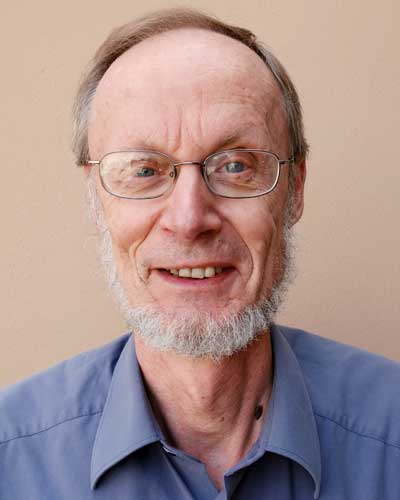 Bernd Bassalleck合作论文数Department of Physics and Astronomy, The University of New Mexico27
 S. V. Belikov合作论文数Ural Federal University27
 Yasuyuki Akiba合作论文数RHIC Physics Research Laboratory, Nishina Center for Accelerator-Based Science, RIKEN27Serguei Afanasiev合作论文数Joint Institute for Nuclear Research, Dubna, Russia27Sotiria Batsouli合作论文数27Christophe Pierre Suire合作论文数26H. Delagrange合作论文数26Hua Pei合作论文数26
 Paul Constantin合作论文数ELI-NP, IFIN-HH26S. L. Fokin合作论文数25
 Sandra Moretto合作论文数Finapp;Dipartimento di Fisica e Astronomia, University of Padua25
 Barbara Jacak合作论文数Department of Physics, University of California Berkeley25g bunce合作论文数24Olivier Drapier合作论文数CNRS24
 Melvin L. Brooks合作论文数Los Alamos National Laboratory24S. Esumi合作论文数24
 Christine A. Aidala合作论文数Department of Physics, University of Michigan24S. Chernichenko合作论文数24
 Yasuo Miake (三明康郎)合作论文数Institute of Physics, University of Tsukuba;Department of Pure and Applied Sciences, University of Tsukuba23Abhay Deshpande合作论文数Brookhaven National Laboratory23
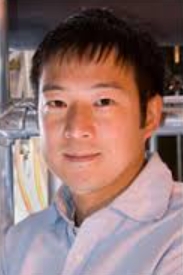 Mickey Chiu合作论文数Physics Department, Brookhaven National Laboratory;NEXO;PHENIX23
 Christian Klein-Bösing合作论文数Institute for Nuclear Physics, University of Münster23O. Dietzsch合作论文数23
 Alexei Denisov合作论文数Department of Experimental Physics, Institute for High Energy Physics23J. E. Frantz合作论文数22




