Foundation models are increasingly used as image feature extractors for mammography, but their robustness under external domain shift remains unclear. We benchmark 15 foundation-model backbones across breast density, BI-RADS severity, and cancer status using a unified frozen-backbone linear-probe protocol, training on 3 source datasets and evaluating on 12 task-compatible out-of-distribution (OOD) datasets after label harmonization. Mammography-specific vision-language models (Mammo-FM and MaMA) provide the strongest mean OOD performance, but robustness is not explained by mammography exposure alone. DINOv3 remains a competitive vision-only baseline, and mammography-adapted pretraining does not consistently improve generalization. Dataset-level analysis further shows that even leading models show heterogeneous performance across datasets. Feature-space inspection reveals that useful representations can preserve clinical signal while retaining dataset and acquisition structure. These findings highlight dataset-level OOD evaluation as a central criterion for assessing mammography representations. Our code is publicly available: https://github.com/biomedia-mira/mammo-ood.
Deep neural networks often suffer performance drops when test data distribution differs from training data. Domain Generalization (DG) aims to address this by focusing on domain-invariant features or augmenting data for greater diversity. However, these methods often struggle with limited training domains or significant gaps between seen (training) and unseen (test) domains. To enhance DG robustness, we hypothesize that it is essential for the model to be trained on data from domains that closely resemble unseen test domains-an inherently difficult task due to the absence of prior knowledge about the unseen domains. Accordingly, we propose ConstStyle, a novel approach that leverages a unified domain to capture domain-invariant features and bridge the domain gap with theoretical analysis. During training, all samples are mapped onto this unified domain, optimized for seen domains. During testing, unseen domain samples are projected similarly before predictions. By aligning both training and testing data within this unified domain, ConstStyle effectively reduces the impact of domain shifts, even with large domain gaps or few seen domains. Extensive experiments demonstrate that ConstStyle consistently outperforms existing methods across diverse scenarios. Notably, when only a limited number of seen domains are available, ConstStyle can boost accuracy up to 19.82% compared to the next best approach.
Understanding the inner workings of neural networks is essential for enhancing model performance and interpretability. Current research predominantly focuses on examining the connection between individual neurons and the model's final predictions. Which suffers from challenges in interpreting the internal workings of the model, particularly when neurons encode multiple unrelated features. In this paper, we propose a novel framework that transitions the focus from analyzing individual neurons to investigating groups of neurons, shifting the emphasis from neuron-output relationships to functional interaction between neurons. Our automated framework, NeurFlow, first identifies core neurons and clusters them into groups based on shared functional relationships, enabling a more coherent and interpretable view of the network's internal processes. This approach facilitates the construction of a hierarchical circuit representing neuron interactions across layers, thus improving interpretability while reducing computational costs. Our extensive empirical studies validate the fidelity of our proposed NeurFlow. Additionally, we showcase its utility in practical applications such as image debugging and automatic concept labeling, thereby highlighting its potential to advance the field of neural network explainability.
Transformer-based foundation models for Electrocardiograms (ECGs) have recently achieved impressive performance in many downstream applications.
This paper introduces Smooth-Distill, a novel self-distillation framework designed to simultaneously perform human activity recognition (HAR) and sensor placement detection using wearable sensor data. The proposed approach utilizes a unified CNN-based architecture, MTL-net, which processes accelerometer data and branches into two outputs for each respective task. Unlike conventional distillation methods that require separate teacher and student models, the proposed framework utilizes a smoothed, historical version of the model itself as the teacher, significantly reducing training computational overhead while maintaining performance benefits. To support this research, we developed a comprehensive accelerometer-based dataset capturing 12 distinct sleep postures across three different wearing positions, complementing two existing public datasets (MHealth and WISDM). Experimental results show that Smooth-Distill consistently outperforms alternative approaches across different evaluation scenarios, achieving notable improvements in both human activity recognition and device placement detection tasks. This method demonstrates enhanced stability in convergence patterns during training and exhibits reduced overfitting compared to traditional multitask learning baselines. This framework contributes to the practical implementation of knowledge distillation in human activity recognition systems, offering an effective solution for multitask learning with accelerometer data that balances accuracy and training efficiency. More broadly, it reduces the computational cost of model training, which is critical for scenarios requiring frequent model updates or training on resource-constrained platforms. The code and model are available at https://github.com/Kuan2vn/smooth_distill.
Gait and movement analysis have become a well-established clinical tool for diagnosing health conditions, monitoring disease progression for a wide spectrum of diseases, and to implement and assess treatment, surgery and or rehabilitation interventions. However, quantitative motion assessment remains limited to costly motion capture systems and specialized personnel, restricting its accessibility and broader application. Recent advancements in deep neural networks have enabled quantitative movement analysis using single-camera videos, offering an accessible alternative to conventional motion capture systems. In this paper, we present an efficient approach for clinical gait analysis through a dual-pattern input convolutional Transformer network. The proposed system leverages a dual-input Transformer model to estimate essential gait parameters from single RGB videos captured by a single-view camera. The system demonstrates high accuracy in estimating critical metrics such as the gait deviation index (GDI), knee flexion angle, step length, and walking cadence, validated on a dataset of individuals with movement disorders. Notably, our approach surpasses state-of-the-art methods in various scenarios, using fewer resources and proving highly suitable for clinical application, particularly in resource-constrained environments.
This exploratory study introduces a portable, wearable device using a single accelerometer to monitor twelve sleep positions. Targeted for home use, the device aims to assist patients with mild conditions such as gastroesophageal reflux disease (GERD) by tracking sleep postures, promoting healthier habits, and improving both reflux symptoms and sleep quality without requiring hospital-based monitoring. The study developed AnpoNet, a lightweight deep learning model combining 1D-CNN and LSTM, optimized with BN and Dropout. The 1D-CNN captures short-term movement features, while the LSTM identifies long-term temporal dependencies. Experiments were conducted on data from 15 participants performing twelve sleep positions, with each position recorded for one minute at a sampling frequency of 50 Hz. The model was evaluated using 5-Fold cross-validation and unseen participant data to assess generalization. AnpoNet achieved a classification accuracy of 94.67
Dynamic Time Warping (DTW) is a widely used metric for time series matching. However, when applied to few-shot action recognition (FSAR), DTW often encounters the "identical matching" issue, where multiple frames from one video are matched to a single frame from another. To address this, we introduce FTP-FSAR, a novel metric-based FSAR approach designed to mitigate this challenge. FTP-FSAR proposes an innovative alignment metric that incorporates temporal priors, guiding the matching process by encouraging the alignment of frames with similar temporal progression, thus improving the accuracy of frame matching. Additionally, FTP-FSAR integrates a dual framework, combining a foundation model with transductive learning to optimize feature extraction. Extensive experiments across multiple datasets demonstrate that FTP-FSAR outperforms existing methods, achieving the best results in 3 out of 4 benchmarks across 1-shot, 3-shot, and 5-shot settings, with performance improvements of up to 4.5%.
This paper introduces SEMISE, a novel method for representation learning in medical imaging that combines selfsupervised and supervised learning. By leveraging both labeled and augmented data, SEMISE addresses the challenge of data scarcity and enhances the encoder's ability to extract meaningful features. This integrated approach leads to more informative representations, improving performance on downstream tasks. As result, our approach achieved a 12% improvement in classification and a 3% improvement in segmentation, outperforming existing methods. These results demonstrate the potential of SIMESE to advance medical image analysis and offer more accurate solutions for healthcare applications, particularly in contexts where labeled data is limited.
We present VinDr-CXR-VQA, a large-scale chest X-ray dataset for explainable Medical Visual Question Answering (Med-VQA) with spatial grounding. The dataset contains 17,597 question-answer pairs across 4,394 images, each annotated with radiologist-verified bounding boxes and clinical reasoning explanations. Our question taxonomy spans six diagnostic types-Where, What, Is there, How many, Which, and Yes/No-capturing diverse clinical intents. To improve reliability, we construct a balanced distribution of 41.7
Quantifying sarcomere structure organization in human-induced pluripotent stem cell-derived cardiomyocytes (hiPSC-CMs) is crucial for understanding cardiac disease pathology, improving drug screening, and advancing regenerative medicine. Traditional methods, such as manual annotation and Fourier transform analysis, are labor-intensive, error-prone, and lack high-throughput capabilities. This paper proposes SarcNet, a novel deep learning-based framework that leverages cell images and integrates cell features to automatically evaluate the sarcomere structure of hiPSC-CMs from the onset of differentiation. The proposed framework is a cell-features concatenated and linear layers-added ResNet18 module, to output a continuous score ranging from 1 to 5 that captures the level of sarcomere structural organization. SarcNet achieves a Spearman correlation of 0.831 with expert evaluations, demonstrating superior performance and an improvement of 7.5% over the previous approach, which uses linear regression. Our results also show a consistent pattern of increasing organization from day 18 to day 32 of differentiation, aligning with expert evaluations. This study contributes to the development of a new automated tool for quantifying sarcomere structural organization in hiPSC-CMs, advancing cardiac research.
Positron Emission Tomography (PET) and Computed Tomography (CT) are essential for diagnosing, staging, and monitoring various diseases, particularly cancer. Despite their importance, the use of PET/CT systems is limited by the necessity for radioactive materials, the scarcity of PET scanners, and the high cost associated with PET imaging. In contrast, CT scanners are more widely available and significantly less expensive. In response to these challenges, our study addresses the issue of generating PET images from CT images, aiming to reduce both the medical examination cost and the associated health risks for patients. Our contributions are twofold: First, we introduce a conditional diffusion model named CPDM, which, to our knowledge, is one of the initial attempts to employ a diffusion model for translating from CT to PET images. Second, we provide the largest CT-PET dataset to date, comprising 2,028,628 paired CT-PET images, which facilitates the training and evaluation of CT-to-PET translation models. For the CPDM model, we incorporate domain knowledge to develop two conditional maps: the Attention map and the Attenuation map. The former helps the diffusion process focus on areas of interest, while the latter improves PET data correction and ensures accurate diagnostic information. Experimental evaluations across various benchmarks demonstrate that CPDM surpasses existing methods in generating high-quality PET images in terms of multiple metrics. The source code and data samples are available at https://github.com/thanhhff/CPDM.
Due to global air pollution, there is a growing demand for accurate and large-scale air quality monitoring systems. Consequently, low-cost air monitoring devices have emerged as a potential alternative to expensive conventional ones. However, the low-cost devices’ major drawback is their insufficient level of accuracy. This work investigates the problem of calibrating the sensory data, especially PM2.5 concentration, collected by low-cost sensor-based air quality monitoring devices. Recently, deep learning has emerged as a potential solution for data calibration instead of using traditional methods, whose accuracy is relatively low. Nevertheless, it generally incurs significant costs. Moreover, it is necessary to employ a dedicated calibration model for each device to increase precision, resulting in additional expenditures. To address the issue, this study provides a novel approach named GAMMA, which entails the development of a deep learning-based model capable of accurately calibrating data for multiple devices simultaneously. The proposed method leverages the multitask learning paradigm to solve the challenge of concurrently processing several devices’ data. This involves capturing common features across all devices’ data while also distinguishing the device-specific characteristics. Furthermore, GAMMA also employs the adversarial training approach to augment the accuracy of predictions. This method has been implemented and integrated into an air quality monitoring system in Hanoi, Vietnam. Comprehensive experiments are conducted on real-world data to demonstrate the superiority of GAMMA against the comparison benchmarks in terms of various metrics. Notably, GAMMA reduces MAE from 60.19% to 74.09% compared to the best comparison baseline. The source code is available at https://github.com/anhduy0911/FimiCalibIdea/tree/multi_attention.
Sleep apnea (SA) is a significant respiratory condition that poses a major global health challenge. Deep Learning (DL) has emerged as an efficient tool for the classification problem in electrocardiogram (ECG)-based SA diagnoses. Despite these advancements, most common conventional feature extractions derived from ECG signals in DL, such as R-peaks and RR intervals, may fail to capture crucial information encompassed within the complete ECG segments. In this study, we propose an innovative approach to address this diagnostic gap by delving deeper into the comprehensive segments of the ECG signal. The proposed methodology draws inspiration from Matrix Profile algorithms, which generate an Euclidean distance profile from fixed-length signal subsequences. From this, we derived the Min Distance Profile (MinDP), Max Distance Profile (MaxDP), and Mean Distance Profile (MeanDP) based on the minimum, maximum, and mean of the profile distances, respectively. To validate the effectiveness of our approach, we use the modified LeNet-5 architecture as the primary CNN model, along with two existing lightweight models, BAFNet and SE-MSCNN. Our experiment results on the PhysioNet Apnea-ECG dataset (70 overnight recordings), and the UCDDB dataset (25 overnight recordings) revealed that our new feature extraction method achieved per-segment accuracies of up to 92.11% and 81.25%, respectively. Moreover, using the PhysioNet data, we achieved a per-recording accuracy of 100% and yielded the highest correlation of 0.989 compared to state-of-the-art methods. By introducing a new feature extraction method based on distance relationships, we enhanced the performance of certain lightweight models in DL, showing potential for home sleep apnea test (HSAT) and SA detection in IoT devices. The source code for this work is made publicly available in GitHub: https://github.com/vinuni-vishc/MPCNN-Sleep-Apnea.
Federated learning (FL) is recently surging as a promising decentralized deep learning (DL) framework that enables DL-based approaches trained collaboratively across clients without sharing private data. However, in the context of the central party being active and dishonest, the data of individual clients might be perfectly reconstructed, leading to the high possibility of sensitive information being leaked. Moreover, FL also suffers from the nonindependent and identically distributed (non-IID) data among clients, resulting in the degradation in the inference performance on local clients' data. In this paper, we propose a novel framework, namely Personalized Privacy-Preserving Federated Learning (PPPFL), with a concentration on cross-silo FL to overcome these challenges. Specifically, we introduce a stabilized variant of the Model-Agnostic Meta-Learning (MAML) algorithm to collaboratively train a global initialization from clients' synthetic data generated by Differential Private Generative Adversarial Networks (DP-GANs). After reaching convergence, the global initialization will be locally adapted by the clients to their private data. Through extensive experiments, we empirically show that our proposed framework outperforms multiple FL baselines on different datasets, including MNIST, Fashion-MNIST, CIFAR-10, and CIFAR-100.
Representation learning for time series has been an important research area for decades. Since the emergence of the foundation models, this topic has attracted a lot of attention in contrastive self-supervised learning, to solve a wide range of downstream tasks. However, there have been several challenges for contrastive time series processing. First, there is no work considering noise, which is one of the critical factors affecting the efficacy of time series tasks. Second, there is a lack of efficient yet lightweight encoder architectures that can learn informative representations robust to various downstream tasks. To fill in these gaps, we initiate a novel sampling strategy that promotes consistent representation learning with the presence of noise in natural time series. In addition, we propose an encoder architecture that utilizes dilated convolution within the Inception block to create a scalable and robust network architecture with a wide receptive field. Experiments demonstrate that our method consistently outperforms state-of-the-art methods in forecasting, classification, and abnormality detection tasks, e.g. ranks first over two-thirds of the classification UCR datasets, with only $40\%$ of the parameters compared to the second-best approach. Our source code for CoInception framework is accessible at https://github.com/anhduy0911/CoInception.
U nguyên bào nuôi là nhóm bệnh lý tân sản ác tính hoặc có tiềm năng ác tính của nguyên bào nuôi. Hầu hết bệnh nhân UNBN tái phát trong năm đầu tiên, các trường hợp tái phát sau 5 năm là hiếm gặp. U nguyên bào nuôi tái phát có tiên lượng xấu do rất khó điều trị, tỷ lệ tái phát cao và tỷ lệ sống sau 5 năm thấp. Hóa trị với phác đồ đa hóa chất như EMACO (Etoposide, Methotrexate, Actinomycin D, Cyclophosphamide và Vincristine) là biện pháp quan trọng nhất để tăng tỷ lệ thoái lui bệnh và giảm tỷ lệ tái phát của bệnh nhân UNBN đã tái phát. Phác đồ bắt đầu với hóa chất EP (etoposide, cisplatin) liều thấp, đang được áp dụng tại nhiều trung tâm hiện nay, nhằm hạ thấp tỷ lệ tử vong do vỡ các nhân di căn của bệnh nhân UNBN nguy cơ cực cao nếu như bệnh nhân điều trị với phác đồ đa hóa chất tiêu chuẩn như EMACO từ ban đầu. Chúng tôi báo cáo 1 trường hợp U nguyên bào nuôi tái phát nguy cơ cực cao xuất hiện 7 năm sau điều trị: bệnh nhân vào viện xét nghiệm βhCG huyết thanh tăng rất cao với tổn thương di căn gan, phổi kích thước lớn. Chúng tôi trình bày ngắn gọn tổng quan y văn.
Denoising Diffusion Probabilistic Models (DDPMs) have demonstrated significant achievements in various image and video generation tasks, including the domain of medical imaging. However, generating echocardiography videos based on semantic anatomical information remains an unexplored area of research. This is mostly due to the constraints imposed by the currently available datasets, which lack sufficient scale and comprehensive frame-wise annotations for every cardiac cycle. This paper aims to tackle the aforementioned challenges by expanding upon existing video diffusion models for the purpose of cardiac video synthesis. More specifically, our focus lies in generating video using semantic maps of the initial frame during the cardiac cycle, commonly referred to as end diastole. To further improve the synthesis process, we integrate spatial adaptive normalization into multiscale feature maps. This enables the inclusion of semantic guidance during synthesis, resulting in enhanced realism and coherence of the resultant video sequences. Experiments are conducted on the CAMUS dataset, which is a highly used dataset in the field of echocardiography. Our model exhibits better performance compared to the standard diffusion technique in terms of multiple metrics, including FID, FVD, and SSIM.
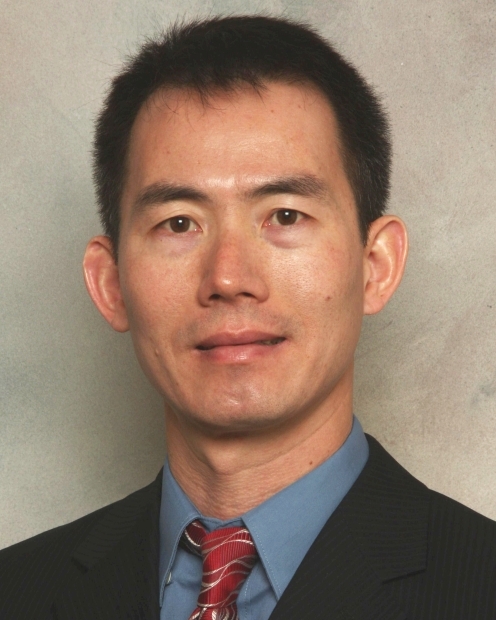 Ha Nguyen合作论文数Department of Electrical and Computer Engineering, College of Engineering, University of Saskatchewan22
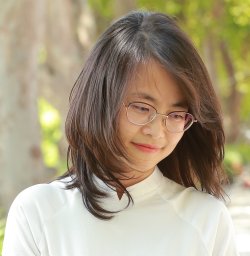 Phi Le Nguyen合作论文数Hanoi Univ Sci & Technol, Sch Informat & Commun Technol, Hanoi, Vietnam21
 Quoc V. Le合作论文数Google19
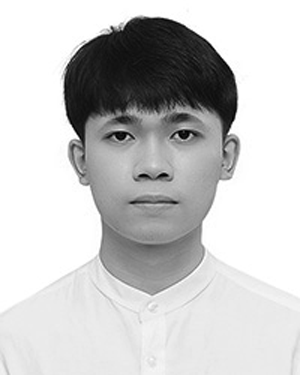 Thanh-Hung Nguyen合作论文数10
 Hieu Nguyen合作论文数7
 Truong Thao Nguyen合作论文数7
 Jeff Dean合作论文数DiscoveryLoop7
 Azalia Mirhoseini合作论文数Computer Science Department, Stanford University;DeepMind6
 Anh Duy Nguyen合作论文数Sch Informat & Commun Technol, Hanoi Univ Sci & Technol6
 Dat Ngo合作论文数HCMUT, VNU-HCM6
 Benoit Steiner合作论文数Anthropic;Facebook6
 Cuong Do合作论文数6
 Thanh-Tung (Tony) Le合作论文数University of California, Irvine5Nguyen Thuy Dung合作论文数5
 Dung Nguyen合作论文数Applied Artificial Intelligence Institute, Deakin University5
 Khiem Le合作论文数5
 Thang Luong合作论文数Google DeepMind;VietAI5
 Kenji Kawaguchi合作论文数Department of Computer Science, School of Computing, National University of Singapore;Deep Learning Lab, National University of Singapore;Institute of Data Science, National University of Singapore5
 Xinyi(Cindy) Wang合作论文数Google DeepMind5
 Graham Neubig合作论文数Language Technologies Institute, School of Computer Science, Carnegie Mellon University5
 Linh Hue Thi Le合作论文数Kennesaw State University4
 Zihang Dai (戴自航)合作论文数Google Brain4
 Sergio A. Velastin合作论文数Department of Computer Science and Engineering, Universidad Carlos III de Madrid Leganés4
 Mingxing Tan (谭明星)合作论文数Waymo Research4
 Truong-Thao Nguyen合作论文数Department of Electrical Engineering, The Grove School of Engineering, The City College of New York;Department of Computer Engineering, The Grove School of Engineering, The City College of New York4
 Pablo Zegers合作论文数Universidad de los Andes4
 Trung Thanh Nguyen合作论文数ORlab, Department of Computer Science, Phenikaa University4Khanh Lam合作论文数Department of Integrative Physiology, National Institute for Physiological Sciences4
 Kok-Seng Wong合作论文数From the Department of Nephrology, Singapore General Hospital4
 Mohammad Norouzi合作论文数Ideogram AI4Alain Crouzil合作论文数4Phi Nguyen Van合作论文数3Tien N. Thanh合作论文数3
 Anna Goldie合作论文数Google DeepMind;Stanford University3
 Tuan Ngoc Nguyen合作论文数3Nguyen Viet Thang合作论文数3Naveen Kumar合作论文数Google3Yuefeng Zhou合作论文数3
 Vikas Verma合作论文数UOB3
 Adams Wei Yu合作论文数Google DeepMind3
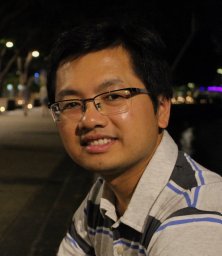 Minh N. Dao合作论文数School of Science, RMIT University3
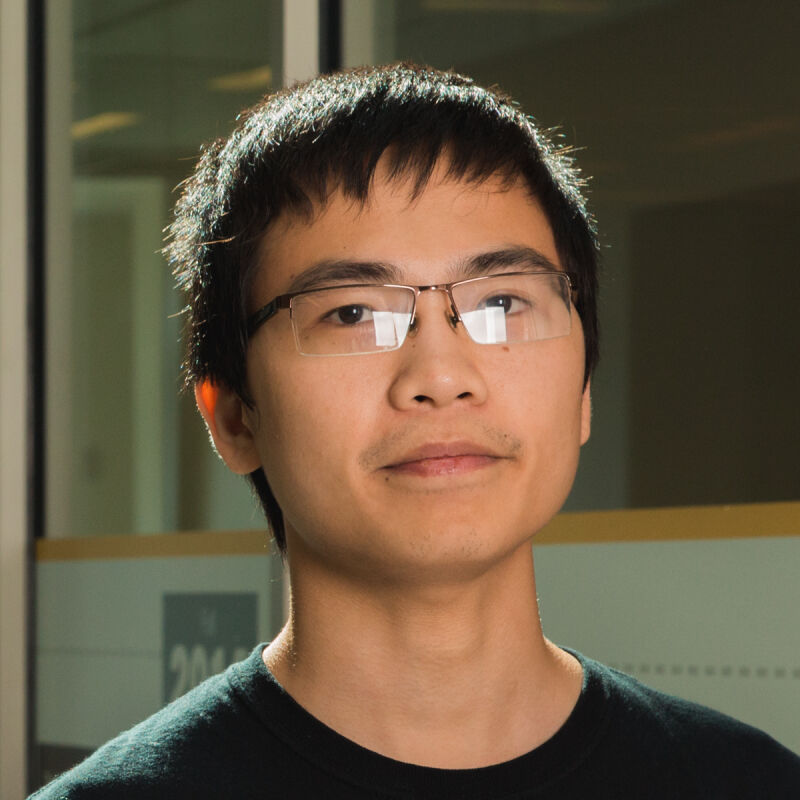 Hung T. Nguyen合作论文数Department of Electrical and Computer Engineering, Princeton University3
 Hanxiao Liu (刘寒骁)合作论文数3
 Samy Bengio合作论文数Apple Inc3
 Christopher Manning合作论文数Department of Linguistics, Stanford University;Department of Computer Science, Stanford University;AIX Ventures3
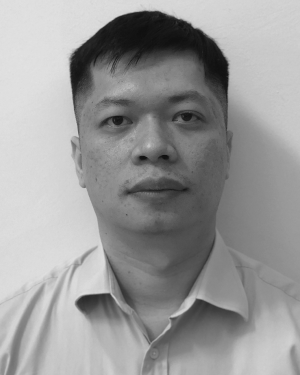 Quoc-Long Tran合作论文数Institute for Infocomm Research3
 Rasmus Larsen合作论文数Technical University of Denmark3
 Louahdi Khoudour合作论文数3Dat Q. Tran合作论文数2