PreviousNext No AccessSeismic Diffraction3. Numerical and Physical Modeling of DiffractionAuthors: Vlsatislav CervenyIvan PsenckiWilliam S. FrenchV. G. KhaidukovB. Barry NarodMatthew J. YedlinG. D. HuttonAnne PaulMichel CampilloH. M. PedersenL.-J. GeliusJ. J. StamnesStlvette DurandStéphane GaffetJean VirieuxQ. ZhangE. V. JullB. ZhouD. R. PantS. A. GreenhalghG. R. MellemaF. HronG. H. ChanMargarita LunevaJeroen GroenenboomDirkjan B. van DamA. Rodríguez-CastellanosR. Ávila-CareraF. J. Sánchez-SesmaVlsatislav Cerveny, Ivan Psencki, William S. French, V. G. Khaidukov, B. Barry Narod, Matthew J. Yedlin, G. D. Hutton, Anne Paul, Michel Campillo, H. M. Pedersen, L.-J. Gelius, J. J. Stamnes, Stlvette Durand, Stéphane Gaffet, Jean Virieux, Q. Zhang, E. V. Jull, B. Zhou, D. R. Pant, S. A. Greenhalgh, G. R. Mellema, F. Hron, G. H. Chan, Margarita Luneva, Jeroen Groenenboom, Dirkjan B. van Dam, A. Rodríguez-Castellanos, R. Ávila-Carera, and F. J. Sánchez-Sesmahttps://doi.org/10.1190/1.9781560803188.ch3 SectionsAboutPDF/ePub ToolsAdd to favoritesDownload CitationsTrack CitationsPermissions ShareFacebookTwitterLinked InRedditEmail Abstract In Chapter 3, the forward problem is presented in a collection of papers which focus on numerical and physical modeling. Whereas the preceding chapter contains a number of numerical modeling studies, the topic of this chapter is the zero-offset and prestack seismic diffraction responses of simple structural and stratigraphic features. The convolutional model of seismic diffraction is another key theme. Whereas geophysicists undoubtedly have good knowledge of the convolutional model of seismic reflection, the convolutional model for seismic diffraction, and the common basis of both convolutional models in the Kirchhoff integral, is probably less well known. Permalink: https://doi.org/10.1190/1.9781560803188.ch3FiguresReferencesRelatedDetails Seismic DiffractionISBN (print):978-1-56080-317-1ISBN (online):978-1-56080-318-8Copyright: 2016 Pages: 832 publication data© 2016 All rights reserved. This book or parts hereof may not be reproduced in any form without permission in writing from the publisher.Publisher:Society of Exploration Geophysicists HistoryPublished in print: 01 Jan 2016 CITATION INFORMATION Vlsatislav Cerveny, Ivan Psencki, William S. French, V. G. Khaidukov, B. Barry Narod, Matthew J. Yedlin, G. D. Hutton, Anne Paul, Michel Campillo, H. M. Pedersen, L.-J. Gelius, J. J. Stamnes, Stlvette Durand, Stéphane Gaffet, Jean Virieux, Q. Zhang, E. V. Jull, B. Zhou, D. R. Pant, S. A. Greenhalgh, G. R. Mellema, F. Hron, G. H. Chan, Margarita Luneva, Jeroen Groenenboom, Dirkjan B. van Dam, A. Rodríguez-Castellanos, R. Ávila-Carera, and F. J. Sánchez-Sesma, (2016), "3. Numerical and Physical Modeling of Diffraction," Geophysics Reprints Series : 307-497. https://doi.org/10.1190/1.9781560803188.ch3 Plain-Language Summary PDF DownloadLoading ...
The use o f Mi chel son interfero met er to measure the coheren ce function for the determin ation o f temporal coherence o f visi ble continuous wave Nd:YA G and Diode laser sources is present ed. The application o f this method is i mport ant in particul ar wh en dealin g wi th weak coherent li ght sources wh ere in formation about their coherence properti es may be useful. Frin ge pat terns were formed, modulated and measured b y point detection and obser vation on an oscilloscope were used to obtain the fringe visibilit y as a funct ion of the length diffe rence bet ween interfero met er arms. The visibilit y function indicativel y measured the modulus of the t emporal coherence function of laser sources. By Fourier transforming th e sq uare o f th e modulus o f t h e t emporal coherence function , the auto-correl atio n of th e frequency di stributi on of the laser sources were obtained. Thei r mode structures, coh eren ce lengths and coherence ti mes were then esti mat ed fro m this distribution. The result also shows a stead y decrease o f visibilit y as the len gth di fference bet ween the arms o f the interfero met er was made very large for both sources, which is consist ent with th e theo ry.
Low-frequency electromagnetic (EM) signal propagation in geophysical applications is sometimes referred to as diffusion and sometimes as waves. In the following we discuss the mathematical and physical approaches behind the use of the different terms. The basic theory of EM wave propagation is reviewed. From a frequency-domain description we show that all of the well-known mathematical tools of wave theory, including an asymptotic ray-series description, can be applied for both nondispersive waves in nonconductive materials and low-frequency waves in conductive materials. We consider the EM field from an electric dipole source and show that a common frequency-domain description yields both the undistorted pulses in nonconductive materials and the strongly distorted pulses in conductive materials. We also show that the diffusion-equation approximation of low-frequency EM fields in conductive materials gives the correct mathematical description, and this equation has wave solutions. Having considered both a wave-picture approach and a diffusion approach to the problem, we discuss the possible confusion that the use of these terms might lead to.
We present a novel OCT (Optical Coherence Tomography) instrument which enables us to detect two orthogonal polarization states at two different wavelengths simultaneously. We have used this instrument to demonstrate, study, and compare the properties of speckle averaging using frequency compounding and polarization diversity separately and in combination. Reductions in speckle contrast obtained by measurements are compared to theoretical values and results from computer simulations of OCT signals.
The radiometric theory of spatial coherence is presented with special attention to the validity of the approximations on which it is based. A new definition of the transverse coherence area is introduced and shown to be in general agreement with earlier definitions. In free-space propagation the product of the transverse coherence area and the intensity is shown to be constant along rectilinear rays, and, for radiation from uniform Lambert sources, a well-known paraxial formula for the transverse coherence area is extended to the extraparaxial domain. A decrease of the spatial coherence in free-space propagation takes place in regions with an increase of the intensity. For imaging systems this occurs in a finite part of image space whenever a real image of a diffusely radiating, extended object is formed at a finite distance.
Starting from two-dimensional optical diffraction tomography (ODT) for an object embedded in a non-absorbing and non-scattering medium, we consider the case in which the object is embedded in a randomly scattering medium. We use the 'effective wavenumber' K in the random medium and reasonable approximations to study both the forward problem and the inverse problem (i.e. the reconstruction of the object) and present relevant computer simulation results. For practical measurements of transmitted fields we discuss the possibility of using the coherent detection imaging (CDI) technique as a means of realizing ODT in a random medium.
Members of our group have previously demonstrated that TV holography may be used to measure the amplitude and the phase distributions of a sound field in air. This technique is not limited to acoustic fields in air, but may be applied to acoustic fields in any transparent medium. Its applicability to ultrasonic fields in water is demonstrated in this Letter.
We separately measure the higher harmonics vibration patterns of a periodic vibrating object by using time-average TV holography and phase modulation. During measurements the frequency of the phase modulation is adjusted to each harmonic component while the excitation of the object is set low enough to record all components on the linear part of the fringe function. Using acoustical phase stepping and calibration of the fringe function, we compute the amplitude and phase distributions of the frequency component. We measure components up to the 65th harmonic by using square-wave excitation.
The cross-spectral density function for radiation from three-dimensional extended sources is approximated by a modified Debye integral which implies that the radiated field obeys classical radiometry. The theory agrees with a recent detailed analysis of the radiation problem and provides the correct explicit expression for the specific intensity in terms of the Wigner distribution of the source. It also includes Wolf's correlation-dependent modification of the radiated spectrum.
The radiative energy transfer for partially coherent water waves is analysed, For linear gravity waves in water of constant depth, the coherence properties are described within the framework of optical coherence theory. Exact energy transfer relations are derived and compared to similar relations for acoustical compression waves. On the basis of previous results for non-dispersive waves, an exact, geometrical description of the radiative energy transfer for dispersive water waves is derived. The theory reduces to the classical theory of radiative energy transfer within a quasihomogeneous wave model. The results are discussed in relation to the applications of the classical description for local wave energy prediction.
The geometrical theory of free-space radiative energy transfer is extended to include the case of partially coherent, radiating sources. For quasi-homogeneous sources an explicit formula for the generalized specific intensity that applies both inside and outside the source is given. Such sources are shown to radiate mainly according to classical theory, and the spectral energy flux density is given by the same expression everywhere. Outside the source only nonevanescent, traveling waves exist, and both the energy density function and the cross-spectral density function of the field are explicitly expressed in terms of the generalized specific intensity. Within a quasi-homogeneous-wave model all the energy expressions then reduce to those of classical theory. Inside the source there are also evanescent, standing waves, but their contributions to the cross-spectral density function and the energy expressions are shown to be negligible.
The analogy between the van Cittert-Zernike theorem and diffraction in focal regions is discussed. For wavefields that can be approximated by a generalized quasihomogeneous wave model, the spatial coherence is described by a generalized van Cittert-Zernike theorem even close to the source. The main difference between the classical and the generalized theorem is that the source intensity in the former is replaced by the source radiance in the direction of the observation point in the latter. The spatial coherence is related to the source radiance by a modified Debye integral, which implies that the wave energy is propagated according to the laws of classical radiometry. No assumption of source incoherence is involved, and the results apply to radiation from both primary sources and secondary sources like rough scattering objects or illuminated apertures in optical systems.
The geometrical theory of free-space radiative energy transfer is extended to the case of refracting media. For a smoothly varying refractive index the cross-spectral density of the field is expressed in terms of a generalized specific intensity that satisfies a transport equation along refracted rays. If the generalized specific intensity varies slowlyover distances of the order of a wavelength, its value along a refracted ray varies as the square of the local refractive index.
The RETRA 1000 TV-holography system has been further developed for analysis of high frequency vibrations, using automatic data acquisition. Special phase shift algorithms are executed by means of a PC-based image processing system. The phase shifts are effected by a built in electro-optic modulator, controlled by a two channel high-resolution digital frequency synthesizer. The optical (speckle) and electronic noise is reduced, using an automatic speckle averaging technique. Amplitude and phase distributions can be calculated and presented for frequencies up to 10 MHz. The lower limit for amplitude detection is below 1 nm (for HeNe laser), while the relative phase distribution is given with less than 3° accuracy under stable conditions. We show results where the technique has been used to analyze various vibrating test objects like a ceramic "crystal", a high frequency loudspeaker and finally an underwater acoustic transducer. The crystal had resonant modes from 3,8 to 7,8 MHz
Lippmann photography is based on Bragg diffraction from photographically recorded volume gratings, in which the index and absorption variations occur mainly in the direction normal to the film plane. A simplified model of the process is formulated. A first Born analysis is used to find a simple physical description of the reconstruction process. More accurate computer simulations, based on the theory of wave propagation in a stratified medium, confirm the predictions from the first Born analysis and permit modeling of situations in which the first Born analysis breaks down. A number of computed spectral response curves are used to illustrate the dependence of the color and tone reproduction properties of the process on typical recording parameters.
An exact theory of free-space radiative energy transfer is given in terms of a generalized specific intensity that is constant along geometrical rays. General and explicit relations are derived for the generalized specific intensity expressed in terms of the field variables. Such relations are also derived for the cross-spectral density function of the field expressed in terms of the generalized specific intensity. For an arbitrary, freely propagated field, the theory is shown to reproduce the exact results of wave theory by transfer equations that are almost identical to the classical ones. The description reduces to the classical theory within a quasi-homogeneous field approximation. Similarly, it reduces to the geometrical-optics energy expressions in that approximation. For two-wave interference, additional ray contributions to the energy transport are found along the interference fringes. These interference rays serve only to describe the effects of the interference on the local energy transport.
Lippmann photography and reflection holography is based on Bragg diffraction from photographically recorded volume gratings, where the index and absorption variations occur mainly in the direction normal to the film plane. A first Born analysis provides a simple physical description of the reconstruction process. Computer simulations, based on the theory of wave propagation in a stratified medium, confirm the predictions and enables modelling of situations where the first Born analysis breaks down. A number of computed spectral response curves are used to illustrate the color and tone reproduction properties of the processes.
The problem of providing a wave theoretical justification of the classical theory of radiative energy transfer [l,2] has received considerable attention (cf. [3-14]). An exact theory of free space radiative energy transfer has been given by Wolf [5] and Zubairy and Wolf [6], but by their approach a geometrical description is obtained only for completely homogeneous fields. Sudarshan [11,15–17] has shown that a geometrical description is always possible, but restricted the explicit description to specific examples, mainly in the paraxial domain. In [12] it was shown that the energy transfer can be described by geometrical theory, and that the classical theory is obtained in a quasihomogeneous approximation [18]. Here we extend and generalize that approach, introduce a new generalized specific intensity, and derive a geometrical theory which is exact for any state of the field.
ABSTRACTAn accurate, fast, and simple algorithm for 3D modelling of seismic edge diffractions is presented. It is based on a generalized Kirchhoff theory that applies also to inhomogeneous (non‐uniform) media. Both the boundary values and the Green functions in the Kirchhoff diffraction integral are determined by dynamic ray tracing, and each ray event is treated separately to obtain a description with clear physical interpretation. For each event the resulting Kirchhoff diffraction integral is evaluated by means of a uniform asymptotic technique that remains valid for receiver points near shadow boundaries. Since all parameters needed in the computations are obtained from dynamic ray tracing, the algorithm can readily be incorporated in existing software packages for 3D seismic ray modelling.
 O. J. Løkberg合作论文数4
 Jakob J. Stamnes合作论文数Department of Physics and Technology, Faculty of Science and Technology, University of Bergen4Svein Ellingsrud合作论文数3Helge Nareid合作论文数2Trude Støren合作论文数2
 Leiv-J. Gelius合作论文数Department of Geosciences;University of Oslo;Department of Geosciences, University of Oslo2
 Ståle Emil Johansen合作论文数Institute of Petroleum Engineering and Applied Geophysics, Norwegian University of Science and Technology1G. H. Chan合作论文数1F. J. Sánchez-Sesma合作论文数1Bjøsrn Spjelkavik合作论文数1l o loseth合作论文数1в. г. Хайдуков合作论文数1Stlvette Durand合作论文数1Ivan Psencki合作论文数1Vlsatislav Cerveny合作论文数1
 A. Rodriguez-Castellanos合作论文数1Kristin Klepsvik合作论文数1
 Ebenezer Ekow Mensah合作论文数1Edward V Jull合作论文数1
 Jean Virieux合作论文数Institut des Sciences de la Terre, Universite Grenoble Alpes1
 Tore Lindmo合作论文数Department of Physics, Norwegian University of Science and Technology1
 Bing Zhou合作论文数University of Adelaide, University of Adelaide1
 Michel Campillo合作论文数Department of Earth, Atmospheric and Planetary Sciences, School of Science, MIT;ISTERRE, Universite Grenoble-Alpes1
 Anders Farestveit合作论文数GeoTeam S.p.A.1Dhiraj Pant合作论文数1
 Bjørn Ursin合作论文数Department of Petroleum Engineering and Applied Geophysics, The Norwegian University of Science and Technology;Department of Electronic Systems, The Norwegian University of Science and Technology1
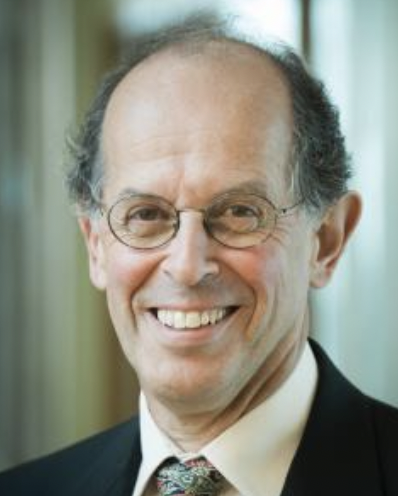 Matthew J. Yedlin合作论文数Department of Electrical and Computer Engineering, Faculty of Applied Science, The University of British Columbia;Department of Earth and Ocean Science, Faculty of Science, The University of British Columbia1
 Jeroen Groenenboom合作论文数1
 Rolf Rustad合作论文数Department of Physics, The Norwegian Institute of Technology1Gunnar Wang合作论文数1W. French合作论文数1
 Anne Paul合作论文数Angewandte Physikalische Chemie, Universität Heidelberg1Bingquan Chen合作论文数School of Sciences, Qingdao University of Technology1
 Arne Røyset合作论文数1Terje Eidesmo合作论文数1Stephane Gaffet合作论文数1
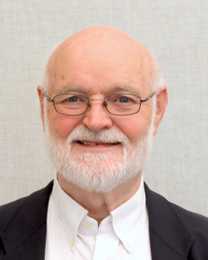 Knut Stamnes合作论文数Department of Physics, School of Engineering and Science, Stevens Institute of Technology1B. Barry Narod合作论文数1Lasse Amundsen合作论文数Statoil Research Centre1
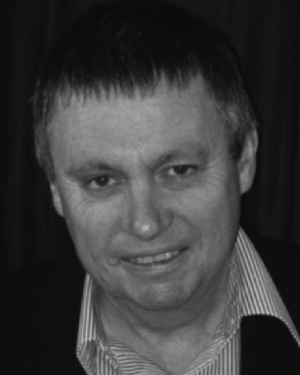 Stewart Greenhalgh合作论文数Institute of Geophysics, ETH Zürich1H. Valo合作论文数1Ole J. Løkberg合作论文数1F HRON合作论文数1M. N. Luneva合作论文数1




