PreviousNext No AccessSeismic Diffraction3. Numerical and Physical Modeling of DiffractionAuthors: Vlsatislav CervenyIvan PsenckiWilliam S. FrenchV. G. KhaidukovB. Barry NarodMatthew J. YedlinG. D. HuttonAnne PaulMichel CampilloH. M. PedersenL.-J. GeliusJ. J. StamnesStlvette DurandStéphane GaffetJean VirieuxQ. ZhangE. V. JullB. ZhouD. R. PantS. A. GreenhalghG. R. MellemaF. HronG. H. ChanMargarita LunevaJeroen GroenenboomDirkjan B. van DamA. Rodríguez-CastellanosR. Ávila-CareraF. J. Sánchez-SesmaVlsatislav Cerveny, Ivan Psencki, William S. French, V. G. Khaidukov, B. Barry Narod, Matthew J. Yedlin, G. D. Hutton, Anne Paul, Michel Campillo, H. M. Pedersen, L.-J. Gelius, J. J. Stamnes, Stlvette Durand, Stéphane Gaffet, Jean Virieux, Q. Zhang, E. V. Jull, B. Zhou, D. R. Pant, S. A. Greenhalgh, G. R. Mellema, F. Hron, G. H. Chan, Margarita Luneva, Jeroen Groenenboom, Dirkjan B. van Dam, A. Rodríguez-Castellanos, R. Ávila-Carera, and F. J. Sánchez-Sesmahttps://doi.org/10.1190/1.9781560803188.ch3 SectionsAboutPDF/ePub ToolsAdd to favoritesDownload CitationsTrack CitationsPermissions ShareFacebookTwitterLinked InRedditEmail Abstract In Chapter 3, the forward problem is presented in a collection of papers which focus on numerical and physical modeling. Whereas the preceding chapter contains a number of numerical modeling studies, the topic of this chapter is the zero-offset and prestack seismic diffraction responses of simple structural and stratigraphic features. The convolutional model of seismic diffraction is another key theme. Whereas geophysicists undoubtedly have good knowledge of the convolutional model of seismic reflection, the convolutional model for seismic diffraction, and the common basis of both convolutional models in the Kirchhoff integral, is probably less well known. Permalink: https://doi.org/10.1190/1.9781560803188.ch3FiguresReferencesRelatedDetails Seismic DiffractionISBN (print):978-1-56080-317-1ISBN (online):978-1-56080-318-8Copyright: 2016 Pages: 832 publication data© 2016 All rights reserved. This book or parts hereof may not be reproduced in any form without permission in writing from the publisher.Publisher:Society of Exploration Geophysicists HistoryPublished in print: 01 Jan 2016 CITATION INFORMATION Vlsatislav Cerveny, Ivan Psencki, William S. French, V. G. Khaidukov, B. Barry Narod, Matthew J. Yedlin, G. D. Hutton, Anne Paul, Michel Campillo, H. M. Pedersen, L.-J. Gelius, J. J. Stamnes, Stlvette Durand, Stéphane Gaffet, Jean Virieux, Q. Zhang, E. V. Jull, B. Zhou, D. R. Pant, S. A. Greenhalgh, G. R. Mellema, F. Hron, G. H. Chan, Margarita Luneva, Jeroen Groenenboom, Dirkjan B. van Dam, A. Rodríguez-Castellanos, R. Ávila-Carera, and F. J. Sánchez-Sesma, (2016), "3. Numerical and Physical Modeling of Diffraction," Geophysics Reprints Series : 307-497. https://doi.org/10.1190/1.9781560803188.ch3 Plain-Language Summary PDF DownloadLoading ...
AbstractSeismic study of transition zones in Arctic regions in summer is troublesome because of the presence of large areas covered by shallow waters like bays, lakes, rivers, their estuaries and so on. The winter is more convenient and essentially facilitates logistic operations and implementation of seismic acquisition. But in winter there is a complicating factor - intensive seismic noise generated for acquisitions installed on the ice covering shallow waters. It is well-known that this noise is connected with flexural waves generated in ice by seismic sources. These waves are one of the strongest known coherent noises. At the same time they are much slower than surface waves well known for onshore acquisition and seem to be easy avoided by f-k filtration. However, this type of filtration fails to suppress such noise. To understand the matter the representative series of numerical experiments are conducted and prove that the main impact to noise is multiple conversions of flexural waves to the body ones and vice versa. Ways to reduce this noise are proposed and discussed.
The paper deals with numerical simulation of waves’ propagation within multiscale heterogeneous elastic media. Multiscale nature of the media is induced by the presence of areas filled with cavernous/fractures/cracks. Stability and order of approximation of the finite-difference schemes is analysed. The series of numerical experiments for typical geological model of East Siberia carbonate reservoirs is performed and analysed.
New numerical method for large-scale computer simulation of seismic waves in multiscale heterogeneous media is developed. As multiscale hereafter we mean media with heterogeneities of extremely different sizes. In the paper we deal with a layered medium c
в работе численным методом конечных разностей исследуются вопросы раcПpocтране-ния упругих волн в неоднородной ледяной пластине, лежащей на тонком же слое воды. Подобная ситуация моделирует технологию сейсмических наблюдений в транзитных зонах.
В работе исследуется причина возникновения интенсивного случайно-коррелированного шума, возникающего при наблюдениях на льду замерзших водоемов. По результатам численного моделирования установлено, что наиболее вероятной причиной его могут служить неровности границ ледяного покрова.
Under consideration is a linearized problem of percovery of local two-dimensional perturbations of a vertically-inhomogeneous medium of a given structure by using multicoverage data of an ideal system (with the sources and receivers filling a straight line completely). After a Fourier transform with regard to time and source coordinates is made, it reduces to a decompasable system of Fredholm integral equations of first kind with a continuous kernel relative to Fourier transform components with regard to the horizontal variable of the function to be sought.This paper reports results of numerical SVD analysis of linear finite-dimensional operators that appear in the process of discretization of this system for a realistic model for a vertically-inhomogeneous enclosing medium. It is shown that the concept of <<r>>-solution to this system - a solution obtained by truncating SVD of the matrices representing these linear finite-dimensional operators in some basis - are meaningful even at small values of parameter <<r>> (r - is a number of singular vectors corresponding to largest singular values and retained upon truncating the SVD). Sensitivity of <<r>>-solutions to errors in specification of a vertically-inhomogeneous enclosing medium is investigated numerically. Also they are compared with the ideal multicoverage data prestack migration into the enclosing vertically-inhomogeneous medium.
 в а чеверда合作论文数15
 Galina V. Reshetova合作论文数7v a tcheverda合作论文数6Vi Kostin合作论文数3Valery Shilikov合作论文数3
 Vadim Lisitsa合作论文数Institute of Petroleum Geology and Geophysics of SB RAS, 3 Koptug pr., Novosibirsk, Russia3v a pozdnyakov合作论文数2Victor Kostin合作论文数2ю а дашевский合作论文数1п г дядьков合作论文数1а г фатьянов合作论文数1о а михеев合作论文数1и с чичинин合作论文数1д м вишневский合作论文数1G. H. Chan合作论文数1в в ковалевский合作论文数1в н кашун合作论文数1F. J. Sánchez-Sesma合作论文数1в и юшин合作论文数1Б. М. Глинский合作论文数1As Alekseev合作论文数1Ne Ershov合作论文数1Stlvette Durand合作论文数1Ivan Psencki合作论文数1Vlsatislav Cerveny合作论文数1
 A. Rodriguez-Castellanos合作论文数1о ю дашевский合作论文数1е ланда合作论文数1
 Aleksander F. Emanov合作论文数1A. A. Kashirin合作论文数1Edward V Jull合作论文数1
 Jean Virieux合作论文数Institut des Sciences de la Terre, Universite Grenoble Alpes1
 Bing Zhou合作论文数University of Adelaide, University of Adelaide1
 Jakob J. Stamnes合作论文数Department of Physics and Technology, Faculty of Science and Technology, University of Bergen1
 Michel Campillo合作论文数Department of Earth, Atmospheric and Planetary Sciences, School of Science, MIT;ISTERRE, Universite Grenoble-Alpes1Dhiraj Pant合作论文数1
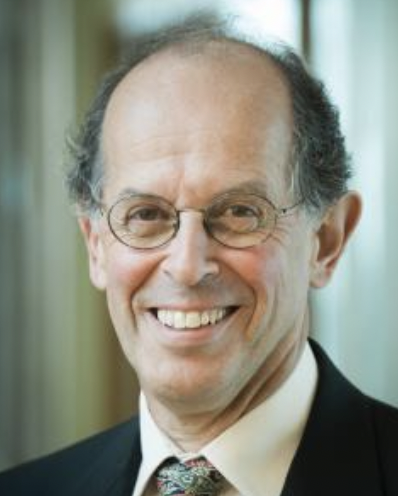 Matthew J. Yedlin合作论文数Department of Electrical and Computer Engineering, Faculty of Applied Science, The University of British Columbia;Department of Earth and Ocean Science, Faculty of Science, The University of British Columbia1
 Jeroen Groenenboom合作论文数1W. French合作论文数1
 Anne Paul合作论文数Angewandte Physikalische Chemie, Universität Heidelberg1Hans M. Pedersen合作论文数1
 Pierre Thore合作论文数Department of Geology & Geophysics;Texas A&M University;Department of Geology & Geophysics, Texas A&M University1
 Leiv-J. Gelius合作论文数Department of Geosciences;University of Oslo;Department of Geosciences, University of Oslo1
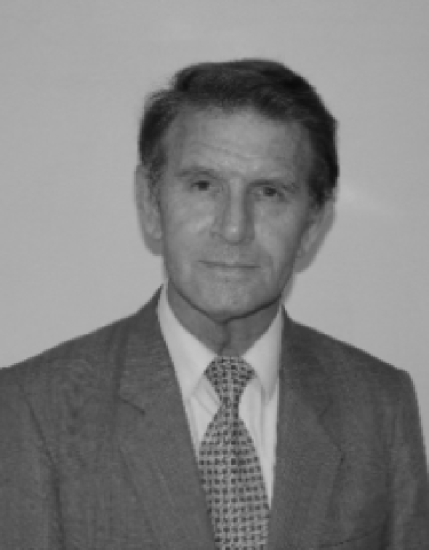 Marat S. Khairetdinov合作论文数1
 Sergei I Kabanikhin合作论文数S. L. Sobolev Institute of Mathematics, Russian Academy of Sciences1Victor I Kostin合作论文数1V. V. Skazka合作论文数1Maxim A. Shishlenin合作论文数1Stephane Gaffet合作论文数1




