Modern scientific instruments are becoming essential for discoveries because they provide unprecedented insight into physical or biological events – often in real time. However, these instruments may generate large amounts of data, and increasingly they require sophisticated e-infrastructure for analysis, storage and archive. The increasing complexity and scale of the data, processing steps and systems has made it difficult for domain scientists to perform their research, narrowing the user base to a select few. In this paper, we present a framework that democratises large-scale instrument-based science, increasing the number of researchers who can engage. We discuss a prototype at the University of Queensland. The system is illustrated through two case studies, one involving light microscopy imaging of the innate immune system, and the other electron microscopy imaging of the SARS-CoV-2 viral proteins.
Quantifying species population trends is crucial for monitoring progress towards global conservation targets, justifying investments, planning targeted responses and raising awareness about threatened species. Many global indicators are slow in response and report on common species, not on those at greatest risk of extinction. Here we develop a Threatened Species Index as a dynamic tool for tracking annual changes in Australia's imperiled birds. Based on the Living Planet Index method and containing more than 17,000 time series for 65 bird taxa surveyed systematically, the index at its second iteration shows an average reduction of 59% between 1985 and 2016, and 44% between 2000 and 2016. Decreases seem most severe for shorebirds and terrestrial birds and least severe for seabirds. The index provides a potential means for measuring performance against the Convention on Biological Diversity's Aichi Target 12, enabling governments, agencies and the public to observe changes in threatened species.
As cloud computing has become the de facto standard for big data processing, there is interest in using a multi-cloud environment that combines public cloud resources with private on-premise infrastructure. However, by decentralizing the infrastructure, a uniform storage solution is required to provide data movement between different clouds to assist on-demand computing. This paper presents a solution based on our earlier work, the MeDiCI (Metropolitan Data Caching Infrastructure) architecture. Specially, we extend MeDiCI to simplify the movement of data between different clouds and a centralized storage site. It uses a hierarchical caching system and supports most popular infrastructure-as-a-service (IaaS) interfaces, including Amazon AWS and OpenStack. As a result, our system allows the existing parallel data intensive application to be offloaded into IaaS clouds directly. The solution is illustrated using a large bioinformatics application, a Genome Wide Association Study (GWAS), with Amazons AWS, HUAWEI Cloud, and a private centralized storage system. The system is evaluated on Amazon AWS and the Australian national cloud.
Engineering design is typically a complex process that involves finding a set of designs satisfying various performance criteria. As a result, optimisation algorithms dealing with only single-objective are not sufficient to deal with many real-life problems. Meanwhile, scientific workflows have been shown to be an effective technology for automating and encapsulating scientific processes. While optimisation algorithms have been integrated into workflow tools, they are generally single-objective. This paper first presents our latest development to incorporate multi-objective optimisation algorithms into scientific workflows. We demonstrate the efficacy of these capabilities with the formulation of a three-objective aerodynamics optimisation problem. We target to improve the aerodynamic characteristics of a typical 2D airfoil profile considering also the laminar-turbulent transition location for more accurate estimation of the total drag. We deploy two different heuristic optimisation algorithms and compare the preliminary results.
Coral reefs are of global economic and biological significance but are subject to increasing threats. As a result, it is essential to understand the risk of coral reef ecosystem collapse and to develop assessment process for those ecosystems. The International Union for Conservation of Nature (IUCN) Red List of Ecosystem (RLE) is a framework to assess the vulnerability of an ecosystem. Importantly, the assessment processes need to be repeatable as new monitoring data arises. The repeatability will also enhance transparency. In this paper, we discuss the evolution of a computational pipeline for risk assessment of the Meso-American reef ecosystem, a diverse reef ecosystem located in the Caribbean, with the focus on improving the execution time starting from sequential and parallel implementation and finally using Apache Spark. The final form of the pipeline is a scientific workflow to improve its repeatability and reproducibility.
Effective ecosystem risk assessment relies on a conceptual understanding of ecosystem dynamics and the synthesis of multiple lines of evidence. Risk assessment protocols and ecosystem models integrate limited observational data with threat scenarios, making them valuable tools for monitoring ecosystem status and diagnosing key mechanisms of decline to be addressed by management. We applied the IUCN Red List of Ecosystems criteria to quantify the risk of collapse of the Meso-American Reef, a unique ecosystem containing the second longest barrier reef in the world. We collated a wide array of empirical data (field and remotely sensed), and used a stochastic ecosystem model to backcast past ecosystem dynamics, as well as forecast future ecosystem dynamics under 11 scenarios of threat. The ecosystem is at high risk from mass bleaching in the coming decades, with compounding effects of ocean acidification, hurricanes, pollution and fishing. The overall status of the ecosystem is Critically Endangered (plausibly Vulnerable to Critically Endangered), with notable differences among Red List criteria and data types in detecting the most severe symptoms of risk. Our case study provides a template for assessing risks to coral reefs and for further application of ecosystem models in risk assessment.
One of the challenges of computational-centric research is to make the research undertaken reproducible in a form that others can repeat and re-use with minimal effort. In addition to the data and tools necessary to rerun analyses, execution environments play crucial roles because of the dependencies of the operating system and software version used. However, some of the challenges of reproducible science can be addressed using appropriate computational tools and cloud computing to provide an execution environment.Here, we demonstrate the use of a Kepler scientific workflow for reproducible science that is sharable, reusable, and re-executable. These workflows reduce barriers to sharing and will save researchers time when undertaking similar research in the future.To provide infrastructure that enables reproducible science, we have developed cloud-based Collaborative Environment for Ecosystem Science Research and Analysis (CoESRA) infrastructure to build, execute and share sophisticated computation-centric research. The CoESRA provides users with a storage and computational platform that is accessible from a web-browser in the form of a virtual desktop. Any registered user can access the virtual desktop to build, execute and share the Kepler workflows. This approach will enable computational scientists to share complete workflows in a pre-configured environment so that others can reproduce the computational research with minimal effort.As a case study, we developed and shared a complete IUCN Red List of Ecosystems Assessment workflow that reproduces the assessments undertaken by Burns et al. (2015) on Mountain Ash forests in the Central Highlands of Victoria, Australia. This workflow provides an opportunity for other researchers and stakeholders to run this assessment with minimal supervision. The workflow also enables researchers to re-evaluate the assessment when additional data becomes available. The assessment can be run in a CoESRA virtual desktop by opening a workflow in a Kepler user interface and pressing a "start" button. The workflow is pre-configured with all the open access datasets and writes results to a pre-configured folder. Crown Copyright (C) 2016 Published by Elsevier B.V. All rights reserved.
The Collaborative Environment for Ecosystem Science Research and Analysis (CoESRA) is a Web-based virtual desktop environment that integrates existing eResearch infrastructure in Australia for synthesis and analysis of scientific data for the ecological science community. Data synthesis and analysis is performed through scientific workflows. Even though this is powerful, it has a large learning curve for novice users. We have implemented a Web layer on top of an existing virtual desktop layer to hide this complexity from users. This new layer allows users to execute scientific workflows without requiring a desktop, and thus reduces the learning curve. The virtual desktop is still accessible for more advanced users.
In order to perform complex scientific data analysis, multiple software and skillsets are generally required. These analyses can involve collaborations between scientific and technical communities, with expertise in problem formulation and the use of tools and programming languages. While such collaborations are useful for solving a given problem, transferability and productivity of the approach is low and requires considerable assistance from the original tool developers.Any complex scientific data analysis involves accessing and refining large volumes of data, running simulations and algorithms, and visualising results. These steps can incorporate a variety of tools and programming languages, and can be constructed as a series of activities to achieve a desired outcome. This is where scientific workflows are very useful. Scientific workflows abstract complex analyses into a series of inter-dependent computational steps that lead to a solution for a scientific problem. Once constructed, the workflow can be executed repeatedly and the results reproduced with minimal assistance from the original tool developers. This improves transferability, repeatability and productivity, and reduces costs by reusing workflow components for similar problems but using different datasets. Kepler is a popular open-source scientific workflow tool for designing, executing, archiving and sharing workflows. It has the ability to couple disparate execution environments on a single platform. For example, users can run analysis steps written in Python, R and Matlab on a single platform as part of a single analysis and synthesis experiment. Kepler provides a wide variety of reusable components that perform various tasks, including data access from databases, remote system, file system and web services, and data servers, and executes these processes in a local or distributed environment. Together these functionalities provide greater flexibility for researchers to undertake complex scientific analyses compared with traditional homogeneous environments.In this paper, we will describe a new scientific workflow based on Kepler that automates data analysis tasks for Marxan, a widely used conservation planning software. Marxan is used by over 4,200 active users in more than 180 countries to identify gaps in biodiversity protection, identify cost effective areas for conservation investment and inform multiple-use zoning. Its use is expanding rapidly and this new functionality will improve the application of Marxan to various conservation planning problems. A Kepler workbench has been extended to provide functionality to invoke Marxan and execute it within a distributed environment using Nimrod/K. Our aim was to develop a reproducible, reusable workflow to generate conservation planning scenarios on the Kepler platform. The workflow components include data acquisition and pre-processing, construction of planning scenarios, generation of efficient solutions to the complex problem formulations and visualization of outputs. The workflow components are shared for reuse and reconfigured to design and simulate other conservation planning applications. We also present a use case to demonstrate a Kepler Marxan workflow to design and implement conservation planning computational simulation experiments.
This paper presents WorkWays, a workflow-based science gateway that supports human-in-the-loop workflows. The computational steering capability of WorkWays has been used to solve a number of problems in which it is useful for users to study intermediate results and steer the computation. Two of those use cases are discussed in this paper.
Science gateways allow computational scientists to interact with a complex mix of mathematical models, software tools and techniques, and high performance computers. Accordingly, various groups have built high-level problem-solving environments that allow these to be mixed freely. In this paper, we introduce an interactive workflow-based science gateway, called WorkWays. WorkWays integrates different domain specific tools, and at the same time is flexible enough to support user input, so that users can monitor and steer simulations as they execute. A benchmark design experiment is used to demonstrate WorkWays.
.......................................................................................................................III Acknowledgement....................................................................................................... IV Table of
In many universities it would be useful to have a database of publications that reflects the research results of the academic staffs. Such a database can be built by automatically retrieve publication information from faculties’ homepage. In this project, we deploy focused crawling to build such a system. We also proposed a new focused crawling heuristics based on URL classification. We compare the performance of our proposed method with breadth first crawling and a variant of context focused crawling. Experiment results show that our new heuristics can find target page faster, avoid irrelevant page better, outperforms other crawling methods. Subject Descriptors: H3.1 Content Analysis and Indexing H.3.3 Information Search and Retrieval I.2.7 Natural Language Processing I.2.8 Problem Solving, Control Methods, and Search
 David Abramson合作论文数School of Information Technology and Electrical Engineering, The University of Quennsland;Faculty of Engineering, Architecture and Information Technology, The University of Quennsland8
 Siddeswara Mayura Guru合作论文数CSIRO Tasmanian ICT Centre4
 Minh Ngoc Dinh合作论文数Monash University3
 Timos Kipouros合作论文数Department of Engineering, University of Cambridge3
 Jake Carroll合作论文数2Zane van Iperen合作论文数2
 Lucie M Bland合作论文数Institute of Zoology, Zoological Society of London;Division of Biology, Imperial College London;Institute of Zoology, Imperial College London2
 Chao Jin合作论文数2
 Hugh Possingham合作论文数Centre for Biodiversity and Conservation Science, Faculty of Science, The University of Queensland;Accounting for Nature Ltd2
 T. F. Clancy合作论文数2Joris Driessen合作论文数1
 sreekanth raghunath合作论文数Ctr Hyperson, Univ Queensland1Michael Mallon合作论文数1James O'Connor合作论文数1
 Rachel Morgain合作论文数Natl Environm Sci Program Threatened Species Reco, Australian Natl Univ1
 Wade Blanchard合作论文数Fenner School of Environment and Society, College of Science, The Australian National University1
 Ayesha Tulloch合作论文数School of Life and Environmental Sciences, Faculty of Science, The University of Sydney1Ivan Hanigan合作论文数School of Medicine, Faculty of Medicine and Health, The University of Sydney1
 Allan McRae合作论文数Institute for Molecular Bioscience, The University of Queensland1Daniel Watterson合作论文数School of Chemistry and Molecular Biosciences, Faculty of Science, The University of Queensland1
 Brendan Wintle合作论文数School of Ecosystem and Forest Sciences, Faculty of Science, The University of Melbourne1
 Nicholas Murray合作论文数James Cook University1
 Ross G Dwyer合作论文数1Barkauskas Deborah S合作论文数1
 McRae Louise合作论文数1
 Chauvenet Aliénor L M合作论文数Institute of Zoology, Zoological Society of London1
 Ferrari Renata合作论文数School of Biological Sciences, University of Sydney;School of Engineering, University of Sydney;University of Sydney, University of Sydney1
 Craig Franklin合作论文数School of Biological Sciences, Faculty of Science, The University of Queensland1Burns Emma C合作论文数1
 Nicholas D Condon合作论文数Institute for Molecular Bioscience, The University of Queensland1
 Stephanie Avery-Gomm合作论文数Zoology Department, University of British Columbia1J. L. Stein合作论文数1
 David Keith合作论文数School of Biological, Earth and Environmental Sciences, Faculty of Science, University of New South Wales1
 David Lindenmayer合作论文数Fenner School of Environment and Society, College of Systems and Society, Australian National University1
 Matthew E. Watts合作论文数The Ecology Centre, University of Queensland1
 John C. Z. Woinarski合作论文数Department of Infrastructure;Planning and Environment;Department of Infrastructure|Planning and Environment1Naphak Modhiran合作论文数School of Chemistry and Molecular Biosciences, Faculty of Science, The University of Queensland1
 David Mouillot合作论文数Unité mixte de recherche Ecologie des Systèmes Marins Côtiers, Université de Montpellier;ARC Centre of Excellence for Coral Reef Studies, James Cook University1
 Tracey J. Regan合作论文数Ecology Centre;School of Integrative Biology;University of Queensland;School of Integrative Biology, University of Queensland1
 Andrew Janke合作论文数Centre for Advance Imaging,University of Queensland1
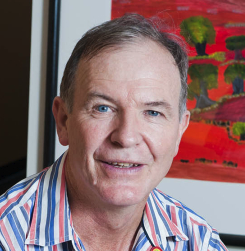 Stephen Garnett合作论文数Research Institute for Environment and Livelihoods, Faculty of Science and Technology, Charles Darwin University1
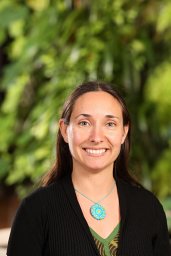 Elisa Bayraktarov合作论文数Department of Biology, Humboldt University Berlin1
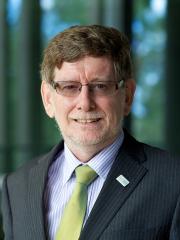 Graham Galloway合作论文数Centre for Magnetic Resonance,The University of Queensland1
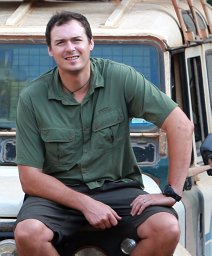 Hamish A. Campbell合作论文数School of Biological Sciences, The University of Queensland1
 Emily Nicholson合作论文数Department of Life Sciences, Imperial College London1
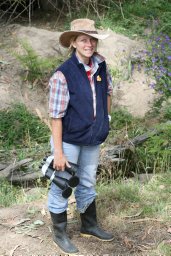 Megan Diane Barnes合作论文数School of Natural Resources and Environmental Management, University of Hawaii at Manoa1
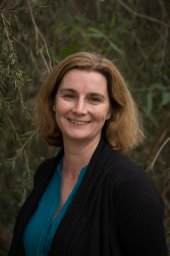 Rebecca E. Lester合作论文数Centre for Regional and Rural Futures, Deakin University, Warrnambool Campus1Glenn Ehmke合作论文数1




