Research Infrastructures (RIs) operating across the edge-to-cloud continuum face a fundamental trade-off between the high-throughput requirements of transient scratch storage and the long-term persistence of archival tiers. Traditionally, these are managed as discrete silos, forcing researchers to manually orchestrate data movement - a process that is inefficient, error-prone and poorly scalable. RI Testbeds need long term archival capability and data integrity for repeatability of experiments but traditional filesystems are heterogeneous, separating the two. We unify them, proposing a policy-driven, continuumaware solution: a converged filesystem that utilizes late-bound declarative directives to combine scratch and archival workflows into a single, software-defined system. Our user-centric feedback engine provides real-time telemetry-informed recommendations to dynamically balance performance and residency across the continuum. Using synthetic and real-world applications, we demonstrate that while naive tiering can degrade performance by 40%, our converged approach achieves near-baseline scratch performance while ensuring seamless archival transition. This provides a scalable blueprint for unified RI data management without multi-system orchestration complexity.
In this article, we contribute a new Capability Maturity Model that allows organizations to assess their specific requirements, including projected growth, risk profile, and budgets. The intended audience includes senior research/academics, CIOs, CDOs, and those responsible for implementing operational infrastructure in research organizations.
Institutional research computing infrastructure plays a vital role in Australia’s research ecosystem, complementing and extending national-level facilities. This paper presents an analysis of research computing capabilities across Australian universities and research organisations, examining how institutional infrastructure supports research excellence through localised compute resources, specialised hardware, and cluster solutions. Our study reveals that institutional computing resources of nearly 112,258 CPU cores and 2,241 GPUs serve as essential bridges between desktop computing and national facilities for over 6,000 researchers, enabling research workflows that span from development to large-scale computations. We estimate the total replacement value of this infrastructure to be approximately $144M AUD. Based on detailed infrastructure data provided by research computing facilities across multiple institutions, we identify key patterns in infrastructure deployment, utilisation metrics, and strategic alignment with research priorities. Our findings demonstrate that institutional computing resources not only provide critical support for data-intensive research but also facilitate training and higher-degree research student projects, enable prototyping and development, and ensure data sovereignty compliance when necessary. The analysis shows how these facilities leverage national infrastructure investments while addressing institution-specific needs that cannot be met by national facilities alone. We present evidence that strategic investment in institutional research computing capabilities yields significant returns through increased research productivity, enhanced graduate training, and improved research outcomes. This study provides valuable insights for research organisations planning their computing infrastructure strategies and highlights the importance of maintaining robust institutional computing capabilities alongside national facilities.
Optimizing cache efficiency is critical for mitigating the performance gap between CPUs and memory systems. However, the interaction between application data access patterns and the cache hierarchy complicates debugging cache performance. Existing profiling approaches can identify program performance bottlenecks but leave root-cause diagnosis of cache inefficiencies to programmer expertise. This paper presents an innovative approach that not only precisely captures where cache inefficiencies exist but also helps identify why they occur. Our methodology captures the causal relationship of cache interactions among array variables by tracking cache line evictions, while simultaneously measuring both temporal and spatial locality and classifying cache miss types. We use a new visualization technique (a Cache Interaction Graph), to correlate these metrics with detected interaction patterns to identify root causes and appropriate optimizations. Our Cachegrind extension provides variable-level data locality analysis with acceptable overhead. Our real-world cases demonstrate the effectiveness of our approach.
The scientific protocols, experiments and instruments that generate data are an integral part of the research lifecycle. Consequently, almost every scientific research institution requires a Research Data Storage System (RDSS). However, RDSS implementations vary significantly due to factors that include cost, geography, workloads, policy, risk tolerance and available technical skills. A RDSS may be on premises, in the public cloud or a mixture of both. Previously we identified 10 key high level features of a RDSS and defined an abstract high-level Research Data Reference Architecture (RDRA). Together, these features enable data fabrics, creating repeatable and consistent structures for low friction, highly efficient data movement and near real time data analysis for decision making and scientific workflows. We build on this earlier work in this paper to present a new Research Data Implementation Architecture (RDIA) that meets the RDRA and can guide implementations without locking in any specific product or service. This paper presents and compares six significant RDSSs and shows how they meet both the RDIA and therefore the RDRA. We identify a new structure - the Research Data Storage System Aggregator (RDSS-A) that describes clusters of RDSSs, and survey five such instances. Finally, we provide a real-world validation of the RDIA by documenting the technical specification of a real RDSS. The new work both clarifies a complex landscape, and aids groups building new systems or adopting existing systems.
Globally distributed computing infrastructures, such as clouds and supercomputers, are currently used to manage data that is generated with an unprecedented speed from a variety of resources. Coping with this trend, the volume of data exchanged across distant sites increases substantially. To accelerate data transfer, high-speed networks are provided to connect remote sites. Most existing data movement solutions are optimized for moving large files. However, it is still challenging to transfer a large number of small files across networks. This disadvantage not only lowers data transfer performance, but also decreases overall system utilization. We identify that moving small files is mainly constrained by degraded file system throughput, not just network performance as might be suspected. We have built a data transfer pipeline model to analyze the impact of small network I/O and storage I/O on data movement. Extending one of the widely used open source data movement solutions, GridFTP, we demonstrate several appropriate engineering approaches that mitigate the bottleneck and increase data transfer efficiency. We show optimizations that improve data transfer performance more than 5 times. In comparison to existing solutions, our approaches can save a significant amount of system resources for moving lots of small files.
High-performance computing (HPC) has become an indispensable tool for solving diverse problems in science and engineering. Harnessing the power of HPC is not just a matter of efficient computation, however; it also calls for the efficient management of vast quantities of scientific data. This presents daunting challenges: rapidly evolving storage technology has motivated a shift toward increasingly complex, heterogeneous storage architectures that are difficult to optimize, and scientific data management needs have become every bit as diverse as the application domains that drive them. There is a clear need for agile, adaptable storage solutions that can be customized for the task and platform at hand. This motivated the establishment of the Mochi composable data service project. The Mochi project provides a library of robust, reusable, modular, and connectable data management components and microservices along with a methodology for composing them into specialized distributed data services. Mochi enables rapid deployment of custom data services with a high degree of developer productivity while still effectively leveraging cutting-edge HPC hardware. This article explores how the principles of translational computer science have been applied in practice in Mochi to achieve these goals.
<p>Methods: List of Antibodies, reagents and cell lines Table S1: Distribution of EphA3 protein in human cancers assessed by IHC. Table S2: Kinetic properties of mouse IIIA4 and chimeric IIIA4 for binding to EphA3 Figure S1: Expression patterns of EphA3 in human cancer tissue samples and cell lines. Figure S2: EphA3 is not expressed in normal adult mouse tissues and cell lines. Figure S3: Tumour targeting characteristics of the chIIIA4 antibody. Figure S4: chIIIA4 accumulation into tumour xenografts and association with [FITC] lectin-stained tumour vessels. Figure S5: The EphA3+ stromal tumour infiltrate contains a BM-derived cell population with mesenchymal stromal cell surface phenotype. Figure S6: Bone-marrow origin of EphA3+ tumour stromal cells. Figure S7: EphA3+ MSC's are not exposed to tumour endogenous ephrins; their activation with pre-clustered chIIIA4 triggers cell contraction and apoptosis. Figure S8: cIIIA4 antibody treatment-effects in PCa tumours.</p>
There is little doubt that we have entered an era where data underpins modern science and research in general. In support of this, numerous infrastructures have been designed and built, ranging from proprietary on-prem systems through to distributed commercial clouds. Such implementations provide a range of functions during the research lifecycle from provisioning and cataloguing data assets through to storing and presenting data to computing platforms. In this paper we analyse the underlying principles of such systems and develop a high-level Research Data Reference Architecture (RDRA). Specifically, we identify eight key features of a RDRA that can guide the design, construction, and procurement of implementations without mandating any domain, approach, technical solution, or product choice. As a result, it allows implementers to make local and commercial decisions while still meeting the core requirements of a research data management platform. The intended audience is teams charged with implementing infrastructure in research organizations.
AbstractMotivationAlignments are correspondences between sequences. How reliable are alignments of amino acid sequences of proteins, and what inferences about protein relationships can be drawn? Using techniques not previously applied to these questions, by weighting every possible sequence alignment by its posterior probability we derive a formal mathematical expectation, and develop an efficient algorithm for computation of the distance between alternative alignments allowing quantitative comparisons of sequence-based alignments with corresponding reference structure alignments.ResultsBy analyzing the sequences and structures of 1 million protein domain pairs, we report the variation of the expected distance between sequence-based and structure-based alignments, as a function of (Markov time of) sequence divergence. Our results clearly demarcate the ‘daylight’, ‘twilight’ and ‘midnight’ zones for interpreting residue–residue correspondences from sequence information alone.Supplementary informationSupplementary data are available at Bioinformatics online.
Much of computer science research can benefit from the Translational Computing Science paradigm, which bridges foundational, use-inspired, and applied research with the delivery and deployment of its outcomes and supports essential bidirectional interplays. However, its wide adoption continues to face multiple challenges and roadblocks. This paper uses the perspectives and experiences of two accidental translationists to illustrate the translation process, it impacts, as well as the challenges and roadblocks faced.
Modern scientific instruments are becoming essential for discoveries because they provide unprecedented insight into physical or biological events – often in real time. However, these instruments may generate large amounts of data, and increasingly they require sophisticated e-infrastructure for analysis, storage and archive. The increasing complexity and scale of the data, processing steps and systems has made it difficult for domain scientists to perform their research, narrowing the user base to a select few. In this paper, we present a framework that democratises large-scale instrument-based science, increasing the number of researchers who can engage. We discuss a prototype at the University of Queensland. The system is illustrated through two case studies, one involving light microscopy imaging of the innate immune system, and the other electron microscopy imaging of the SARS-CoV-2 viral proteins.
Presents the introductory editorial for this issue of the publication.
Big data and advanced computational methods are increasingly being used to inform decision making in social policy globally. As a result, there is a pressing need to identify best practice digital infrastructure design that allows policymakers and social sciences researchers to access, manipulate and use big data soundly and ethically, while identifying and resolving issues that can lead to unintended consequences and adverse social policy outcomes. However, building such digital infrastructure continues to be a technical challenge for users of big social and administrative data. This paper presents a model to evaluate and design best practice infrastructure for the use of big data in social policy. Our model identifies key technical infrastructure considerations for six stages of a data analysis pipeline, namely (1) data storage, (2) data integration, (3) data access, (4) data analysis, (5) data interpretation and (6) data operationalisation. We demonstrate the model via two applications: the E-Verify online employment rights system and the Australian COVIDSafe app. The model provides a high-level guide for social policymakers and researchers to consider systematically the relevant technical considerations when designing or upgrading digital infrastructure that uses analytical tools and big datasets from multiple sources.
This paper presents a framework to characterize and identify local sequences of proteins that are statistically redundant under the measure of Shannon information content while accounting for variations in their occurrences over evolutionary insertions, deletions, and substitutions of amino acids. The identification of such local sequences provides insights for downstream studies on proteins. Here, we have applied our methods to amino acid sequence data sets derived from a database corresponding to 935,552 substructural regions of varying sizes, covering 113,724 proteins from the protein data bank. The results identify, among others, a surjective mapping between 110,598 local sequences (with an average length of 82 amino acids per sequence) and 1,493 topological shapes. The C++ source code and supporting material are available from https://lcb.infotech.monash.edu.au/bibm2021.
What is the architectural “basis set” of the observed universe of protein structures? Using information-theoretic inference, we answer this question with a dictionary of 1,493 substructures—called concepts—typically at a subdomain level, based on an unbiased subset of known protein structures. Each concept represents a topologically conserved assembly of helices and strands that make contact. Any protein structure can be dissected into instances of concepts from this dictionary. We dissected the Protein Data Bank and completely inventoried all the concept instances. This yields many insights, including correlations between concepts and catalytic activities or binding sites, useful for rational drug design; local amino-acid sequence–structure correlations, useful for ab initio structure prediction methods; and information supporting the recognition and exploration of evolutionary relationships, useful for structural studies. An interactive site, Proçodic, at http://lcb.infotech.monash.edu.au/prosodic (click), provides access to and navigation of the entire dictionary of concepts and their usages, and all associated information. This report is part of a continuing programme with the goal of elucidating fundamental principles of protein architecture, in the spirit of the work of Cyrus Chothia.
Summary form only given, as follows. The complete presentation was not made available for publication as part of the conference proceedings. Modern research intensive organisations face challenges storing and preserving the increasing amounts of data generated by scientific instruments and high performance computers. Data must be delivered in a variety of modes depending on the end use, ranging from Web portals through to supercomputers. Building infrastructure to meet this need is complex and expensive. There is a need for mechanisms that support both managed and unmanaged data in a coherent and scalable way, often over a physically distributed multi-campus environment. In this talk I will discuss the ways we are delivering such infrastructure at the University of Queensland. Long term hierarchical storage, and many of the computing systems, are housed in a commercial Tier 3 data centre 20 kms from the main campus in St Lucia. Some high performance machines and desktops, and all scientific instruments, are housed on campus. University researchers work with local, national and international collaborators, requiring the need to share data securely and efficiently across a variety of scales. Our COTS based "MeDiCI data fabric" provides seamless access to data in such an environment. In order to improve standards of management, curation and preservation of data, a locally developed meta-data management service called RDM provides a single point of access for storage requests. Recent work on the CAMERA environment links unmanaged collections to managed repositories in a flexible and efficient manner. Finally, the fabric delivers data to a range of commodity and novel computing platforms such as the FlashLite data intensive cluster and the Wiener GPU supercomputer.
The increase in compute power and complexity of supercomputing systems requires the decrease in the feature size and the supply voltage of internal components. Such development makes unintended errors such as soft errors, potentially caused by random bit flips, inevitable because of the huge size of the resources (such as CPU cores and memory). In this paper, we discuss a non-parametric statistical modelling technique to implement a soft error detector. By exploring temporal autocorrelation within key variables of a running scientific simulation, we introduce an automatic anomaly detection technique in which runtime data from a time-step based simulation can be converted into a time series, and a time series modelling technique can be used to identify soft errors at runtime. Experiments with LAMMPS, a high-performance molecular dynamics simulator, and with PLUTO, an open-source astrophysical code, reveal that the time-series based detector is subjected to less than 3% of both false-positive rate and false-negative rate while incurring only 6% performance overheads.
 Tom Peachey合作论文数No Image Available34Slavisa Garic合作论文数No Image Available
Position: Distributed Systems Technology Centre26
Tom Peachey合作论文数No Image Available34Slavisa Garic合作论文数No Image Available
Position: Distributed Systems Technology Centre26 Rajkumar Buyya合作论文数Cloud Computing and Distributed Systems Laboratory, School of Computing and Information Systems, The University of Melbourne24
 Chao Jin合作论文数22
 Minh Ngoc Dinh合作论文数Monash University22C. Enticott合作论文数Monash University Caulfield22
 Blair Bethwaite合作论文数19Jonathan Giddy合作论文数Welsh e-Science Centre18
 Colin Enticott合作论文数Monash University Caulfield17
 Andrew Lewis合作论文数School of Information and Communication Technolog, Griffith University16
 Kim Baldridge合作论文数School of Pharmaceutical Science and Technology, Tianjin University13
 Jefferson Tan合作论文数13
 Rok Sosič合作论文数Department of Computer Science, Stanford University13Jake Carroll合作论文数11John Rosenberg合作论文数University of Sydney11Donny Kurniawan合作论文数11Luiz Derose合作论文数Cray Inc11
 Wojtek Goscinski合作论文数Monash University11
 Lloyd Allison合作论文数MONASH UNIV,DEPT COMP SCI,CLAYTON,VIC 3168,AUSTRALIA10
 Arthur Lesk合作论文数Department of Biochemistry and Molecular Biology, Eberly College of Science, Pennsylvania State University10
 Peter Stuckey合作论文数Faculty of Information Technology, Monash University10
 David Gavaghan合作论文数Department of Computer Science, University of Oxford;New College, University of Oxford9
 Arun S. Konagurthu合作论文数Department of Data Science and Artificial Intelligence, Faculty of Information Technology, Monash University9Tirath Ramdas合作论文数Center for Telecoms. and Information Eng., Monash University9
 Philip Chan合作论文数8Gregory K. Egan合作论文数8
 Adam Postula合作论文数School of Information Technology and Electrical Engineering, University of Queensland8
 Bronis R. De Supinski合作论文数Lawrence Livermore National Laboratory8Mark Endrei合作论文数Research Computing Center, The University of Queensland, Brisbane, Queensland, Australia7
 Hoang Nguyen合作论文数Faculty of Information Technology, Monash University7Paul Logothetis合作论文数7
 Marcus Randall合作论文数Bond Business School, Bond University7
 Srikumar Venugopal合作论文数IBM Research7Rhys S. Francis合作论文数7
 Gregory R. Watson合作论文数Oak Ridge National Laboratory6Martin R. Dix合作论文数ACCESS Model Evaluat Team, Australia/Commonwealth Scientific and Industrial Research Organisation6
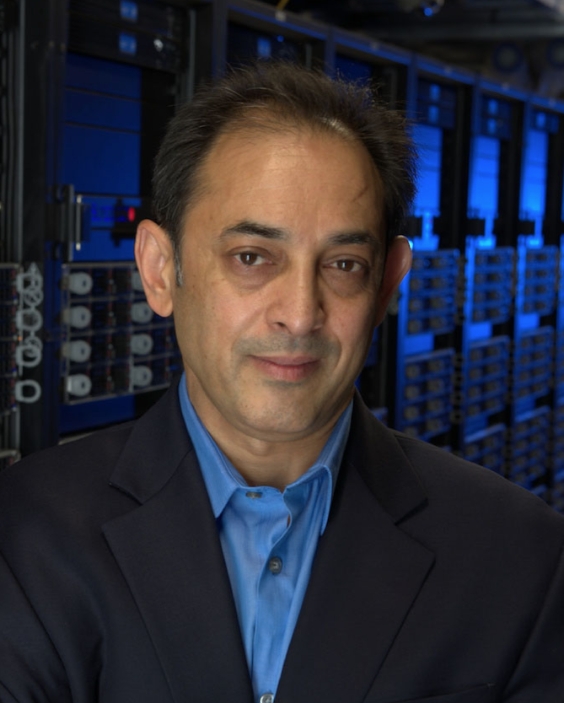 Manish Parashar合作论文数Scientific Computing and Imaging Institute, University of Utah;Kahlert School of Computing, University of Utah;Department of Computer Science, Rutgers University6Christine Mingins合作论文数6
 Anna Amelia Sher合作论文数University of New Mexico;Biology Department;Biology Department, University of New Mexico6
 Ilkay Altintas合作论文数San Diego Supercomputer Center, The University of California San Diego6
 Andrew Gontarek合作论文数6Jagan Komineni合作论文数6
 Wibke Sudholt合作论文数6Bob Moench合作论文数6
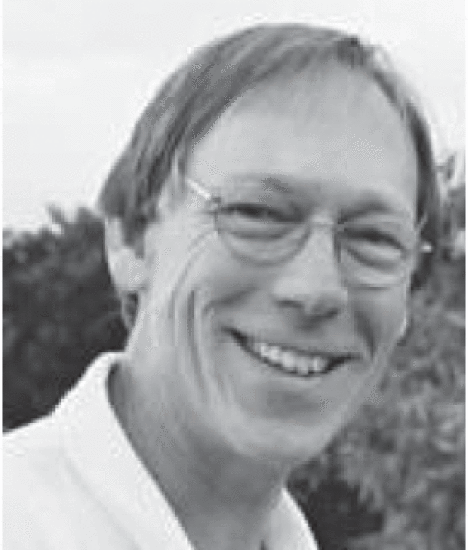 Peter Arzberger合作论文数6jon giddy合作论文数5Mary E Vail合作论文数5
 Jack Dongarra合作论文数Department of Electrical Engineering and Computer Science, The University of Tennessee;Innovative Computing Laboratory, The University of Tennessee;Center for Information Technology Research, The University of Tennessee;School of Mathematics, University of Manchester;Computer Science and Mathematics Division, Oak Ridge National Laboratory5
 Denis Noble合作论文数Department of Physiology, Anatomy and Genetics, University of Oxford5




