Increasing renewable sources in the energy mix is essential to mitigate climate change, not least in countries where the energy demand is likely to rise over the coming decades to reduce or even skip durations of time where fossils dominate. For Africa, solar photovoltaic (PV) and inland wind energy, combined with hydropower, provide significant and untapped potentials, whereas trends and robustness measures need further investigation. This study aims to gain insight into distributed trends in solar PV and wind energy potentials over Africa. This study employs relevant metrics, including relative change, model agreement, robustness, bias, and absolute levels for every available model combination and two climate scenarios, with energy planning purposes in mind. The study finds that regional climate models were the primary control of spatio-temporal patterns over their driving global climate model. Solar PV potentials show more coherence between models, a lower bias and general high potentials in most African regions than wind potentials. Favourable locations for inland wind energy include mainly the regions of greater Sahara and the Horn region. For wind and solar potentials combined, scattered locations within Sahara stand out as the most favourable across scenarios and periods. The analysis of minimum energy potentials shows stable conditions despite low potentials in certain regions. The results demonstrate a potential for solar and wind power in most of the African regions and highlight why solar and wind power or synergies of energy mix should be considered for local energy planning and storage solutions.
Operating within safe and just Earth system boundaries requires mobilizing key actors across scale to set targets and take actions accordingly. Robust, transparent and fair cross-scale translation methods are essential to help navigate through the multiple steps of scientific and normative judgements in translation, with clear awareness of associated assumptions, bias and uncertainties. Here, through literature review and expert elicitation, we identify commonly used sharing approaches, illustrate ten principles of translation and present a protocol involving key building blocks and control steps in translation. We pay particular attention to businesses and cities, two understudied but critical actors to bring on board. Translating Earth system boundaries across scale involves scientific and normative judgements, with associated assumptions, bias and uncertainties. A protocol involving key building blocks and control steps in translation is presented with focus on businesses and cities, two understudied critical actors.
In support of West Africa's potential energy transition under climate change, an international team of scientists and a wide range of local stakeholders in Ghana and Burkina Faso jointly assessed different mitigation and adaptation pathways for energy and water supply and demand, including their implications for achieving SDGs, in a transdisciplinary approach. They iteratively co-developed a range of future scenarios based on i) stakeholder knowledge and priorities, ii) countries' national plans, and iii) simulations with a set of complementary energy and water models. Unlike current national plans, the more ambitious scenarios indicate that the projected rapid increase in electricity demand could be met almost entirely from renewables, but that a diversification beyond hydropower will be necessary. Phasing out fossil fuels would bring West African countries's energy policies in line with Paris Agreement targets and generate additional socio-economic and environmental co-benefits.
Researchers must help to define science-based targets for water, nutrients, carbon emissions and more to avoid cascading effects and stave off tipping points in Earth's systems. Researchers must help to define science-based targets for water, nutrients, carbon emissions and more to avoid cascading effects and stave off tipping points in Earth's systems.
The COVID-19 pandemic has exposed an interconnected and tightly coupled globalized world in rapid change. This article sets the scientific stage for understanding and responding to such change for global sustainability and resilient societies. We provide a systemic overview of the current situation where people and nature are dynamically intertwined and embedded in the biosphere, placing shocks and extreme events as part of this dynamic; humanity has become the major force in shaping the future of the Earth system as a whole; and the scale and pace of the human dimension have caused climate change, rapid loss of biodiversity, growing inequalities, and loss of resilience to deal with uncertainty and surprise. Taken together, human actions are challenging the biosphere foundation for a prosperous development of civilizations. The Anthropocene reality-of rising system-wide turbulence-calls for transformative change towards sustainable futures. Emerging technologies, social innovations, broader shifts in cultural repertoires, as well as a diverse portfolio of active stewardship of human actions in support of a resilient biosphere are highlighted as essential parts of such transformations.
Livestock is important for livelihoods of millions of people across the world and yet climate change risk and impacts assessments are predominantly on cropping systems. Climate change has significant impacts on Net Primary Production (NPP) which is a grassland dynamics indicator. This study aimed to analyze the spatio-temporal changes of NPP under climate scenario RCP2.6 and RCP8.5 in the grassland of Tanzania by 2050 and link this to potential for key livestock species. To this end, a regression model to estimate NPP was developed based on temperature (T), precipitation (P) and evapotranspiration (ET) during the period 2001–2019. NPP fluctuation maps under future scenarios were produced as difference maps of the current (2009–2019) and future (2050). The vulnerable areas whose NPP is mostly likely to get affected by climate change in 2050 were identified. The number of livestock units in grasslands was estimated according to NPP in grasslands of Tanzania at the Provincial levels. The results indicate the mean temperature and evapotranspiration are projected to increase under both emission scenarios while precipitation will decrease. NPP is significantly positively correlated with Tmax and ET and projected increases in these variables will be beneficial to NPP under climate change. Increases of 17% in 2050 under RCP8.5 scenario are projected, with the southern parts of the country projected to have the largest increase in NPP. The southwest areas showed a decreasing trend in mean NPP of 27.95% (RCP2.6) and 13.43% (RCP8.5). The highest decrease would occur in the RCP2.6 scenario in Ruvuma Province, by contrast, the mean NPP value in the western, eastern, and central parts would increase in 2050 under both Scenarios, the largest increase would observe in Kilimanjaro, Dar-Es-Salaam and Dodoma Provinces. It was found that the number of grazing livestock such as cattle, sheep, and goats will increase in the Tanzania grasslands under both climate scenarios. As the grassland ecosystems under intensive exploitation are fragile ecosystems, a combination of improving grassland productivity and grassland conservation under environmental pressures such as climate change should be considered for sustainable grassland management.
Increasing population, change in consumption habits, and climate change will likely increase the competition for freshwater resources in the future. Exploring ways to improve water productivity especially in food and livestock systems is important for tackling the future water challenge. Here we combine detailed data on feed use and livestock production with Food and Agriculture Organization of the United Nations (FAO) statistics and process‐based crop‐water model simulations to comprehensively assess water use and water productivity in the global livestock sector. We estimate that, annually, 4,387 km 3 of blue and green water is used for the production of livestock feed, equaling about 41% of total agricultural water use. Livestock water productivity (LWP; protein produced per m 3 of water) differs by several orders of magnitude between livestock types, regions, and production systems, indicating a large potential for improvements. For pigs and broilers, we identify large opportunities to increase LWP by increasing both feed water productivity (FWP; feed produced per m 3 of water) and feed use efficiency (FUE; protein produced per kg of feed) through better crop and livestock management. Even larger opportunities to increase FUE exist for ruminants, while the overall potential to increase their FWP is low. Substantial improvements of FUE can be achieved for ruminants by supplementation with feed crops, but the lower FWP of these feed crops compared to grazed biomass limits possible overall improvements of LWP. Therefore, LWP of ruminants, unlike for pigs and poultry, does not always benefit from a trend toward intensification, as this is often accompanied by increasing crop supplementation.
The planetary boundaries framework defines the "safe operating space for humanity" represented by nine global processes that can destabilize the Earth System if perturbed. The water planetary boundary attempts to provide a global limit to anthropogenic water cycle modifications, but it has been challenging to translate and apply it to the regional and local scales at which water problems and management typically occur. We develop a cross-scale approach by which the water planetary boundary could guide sustainable water management and governance at subglobal contexts defined by physical features (e.g., watershed or aquifer), political borders (e.g., city, nation, or group of nations), or commercial entities (e.g., corporation, trade group, or financial institution). The application of the water planetary boundary at these subglobal contexts occurs via two approaches: (i) calculating fair shares, in which local water cycle modifications are compared to that context's allocation of the global safe operating space, taking into account biophysical, socioeconomic, and ethical considerations; and (ii) defining a local safe operating space, in which interactions between water stores and Earth System components are used to define local boundaries required for sustaining the local water system in stable conditions, which we demonstrate with a case study of the Cienaga Grande de Santa Marta wetlands in Colombia. By harmonizing these two approaches, the water planetary boundary can ensure that water cycle modifications remain within both local and global boundaries and complement existing water management and governance approaches.
From our experience in West Africa it is obvious that the concept of climate services is not yet well understood or established in all user groups. Also some scientists still wonder if they have not been working on generating knowledge and information about climate change impacts for decades anyway. In some climate services projects, scientists find themselves in a new role, "selling" their products to users who are not necessarily aware of the existence of the product, where an attempt is made to create a demand. In other projects the demand is clear from the beginning. However, the introduction of the term or the concept of climate services has the potential to add a new dimension to the world of climate impact research and especially its application. It influences the attitude of scientists towards the applicability of their results in the direction of more targeted and demand-driven or ideally even co-produced information and services. Understanding scientific information as a service rather than as self-sufficient information for the scientific community, helps to better meet the needs of users. To improve the production and particularly the use of climate services both parties (producer and user) are challenged. To a certain extent, the scientist has to rethink and see the results as a valuable product that can be easily understood and used by others. This often requires a redesign, not necessarily of the product itself but the way it is presented. The user, in turn, must formulate precisely which information is useful to support her or his daily work, e.g. integrating climate change information into development plans for natural resources, sustainable energy planning or adaptation and mitigation strategies. This part in particular poses a real challenge, as the user does not always urgently need the information that a project intends to provide (bad timing) or is not in a position to adequately formulate the type of information required by the institution where she or he is employed. In this case, scientists occasionally face situations where they try to anticipate what kind of information is really useful for the user. Hence, communication between producer and user is key, but is normally not trivial, because of different backgrounds, expertise, language etc. It’s a process that requires facilitation by skilled staff.In the CIREG project in West Africa we elicited the stakeholder’s information demand in a first workshop. Apparently, the greatest need was formulated as capacity building for planning instruments for water and energy management in the context of climate change. By training on these tools, we gain access to the stakeholders and gain insight into their actual information needs. The willingness to share data and information also increases with this kind of cooperation and can lead to real co-production. However, data availability and the willingness to share is a challenge in many developing countries. Research projects are usually too short to identify the need for information, to jointly develop information and at the same time to guarantee and observe its uptake.
There is wide agreement that a nexus or integrated approach to managing and governing natural resources such as land, water and energy can improve environmental, climate, human and political security. However, few if any countries in the MENA region have made progress in implementing such an approach. There appear to be several constraints inhibiting the development and adoption of nexus approaches. These constraints include strong sectoral silos, insufficient incentives for integrated planning and policy making at all levels, and limited vision, knowledge and practical experience to guide successful implementation. In turn, the limited implementation and hence lack of empirical evidence of a nexus approach, which could demonstrate its benefits, does little to strengthen political will for the development of adequate incentives, structures and procedures. Against this backdrop, this paper presents five case studies which take an integrated approach, in three MENA countries, namely Jordan, Lebanon and Morocco. Based on an analytical framework developed here, the paper analyses and compares the success factors for nexus implementation, and also for transfer and upscaling. The analysis emphasizes the need for appropriate framework conditions, targeted investments and pioneering actors, to make integrated approaches across sectors and levels work. With the evidence presented, the paper aims to set in motion a positive or virtuous cycle of generating more nexus evidence, improved framework conditions, further nexus implementation on the ground, and from that even more nexus evidence. Finally, the paper contributes to overcoming the repeated requests for better definition and conceptualization of the nexus, which often has slowed down adoption of the concept.
The planetary boundary framework presents a ‘planetary dashboard’ of humanity’s globally aggregated performance on a set of environmental issues that endanger the Earth system’s capacity to support humanity. While this framework has been highly influential, a critical shortcoming for its application in sustainability governance is that it currently fails to represent how impacts related to one of the planetary boundaries affect the status of other planetary boundaries. Here, we surveyed and provisionally quantified interactions between the Earth system processes represented by the planetary boundaries and investigated their consequences for sustainability governance. We identified a dense network of interactions between the planetary boundaries. The resulting cascades and feedbacks predominantly amplify human impacts on the Earth system and thereby shrink the safe operating space for future human impacts on the Earth system. Our results show that an integrated understanding of Earth system dynamics is critical to navigating towards a sustainable future. The cascading effects and feedbacks of interactions between planetary boundaries shrink the safe operating space originally identified by analysing each boundary separately.
Debate around increasing demand for natural resources is often framed in terms of a ‘nexus’, which is perhaps at risk of becoming a buzz word. A nexus between what? Over what scales? And what are the consequences of such a nexus? This article analyses why readers should care about the nexus concept in relation to the United Nations Sustainable Development Goals (SDGs). We discuss a five-nodes definition and propose perspectives that may lead to a reload of climate policy with buy-in from supply-chain managers and resource-rich developing countries. Our research perspectives address modelling approaches and scenarios at the interface of bio-physical inputs and the human dimensions of security and governance.
In this paper we develop and assess alternative global land use patterns, guided by the Planetary Boundaries framework, to quantify land use opportunities for staying within the safe environmental operating space. Through a simulation based multi-criteria land use optimisation procedure, we determine the potential upper bounds of improved terrestrial carbon storage and of biodiversity conservation, while also meeting the Planetary Boundaries of land and water use and ensuring improved food supply for a population of 9 billion people. We present alternative global land use scenarios that could simultaneously yield better outcomes on all of these goals, in particular if substantial increases in agricultural productivity are realised. Terrestrial carbon sequestration potentials reach 98 GtC, whereas the potential reduction of the risk to biodiversity is 53%. Furthermore, we analyse the potential synergies and trade-offs of these global land use scenarios with national- and local-level environmental and developmental goals such as those specified in the SDGs, e.g. related to nature conservation, afforestation, bioenergy, employment and equity. This model-based information on synergies and trade-offs between different sustainability goals at different scales can be used in scientific assessments of transformation pathways, in policy making, in support of improved horizontal and vertical policy coherence and multi-level institutional solutions, as well as in SDG implementation, sustainable production and consumption (SDG 12) and global partnership mechanisms (SDG 17).
Many global challenges, though interconnected, have been addressed singly, at times reducing one problem while exacerbating others. Nexus approaches simultaneously examine interactions among multiple sectors. Recent quantitative studies have revealed that nexus approaches can uncover synergies and detect trade-offs among sectors. If well implemented, nexus approaches have the potential to reduce negative surprises and promote integrated planning, management and governance. However, application and implementation of nexus approaches are in their infancy. No studies have explicitly quantified the contributions of nexus approaches to progress toward meeting the Sustainable Development Goals. To further implement nexus approaches and realize their potential, we propose a systematic procedure and provide perspectives on future directions. These include expanding nexus frameworks that consider interactions among more sectors, across scales, between adjacent and distant places, and linkages with Sustainable Development Goals; incorporating overlooked drivers and regions; diversifying nexus toolboxes; and making these strategies central in policy-making and governance for integrated Sustainable Development Goal implementation.
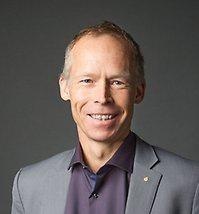 Johan Rockstrom合作论文数Stockholm Resilience Centre, Stockholm University;Potsdam Institute for Climate Impact Research;Potsdam University28
 Claudia Pahl Wostl合作论文数Institut fur Geographie, Universitat Osnabruck;Institute for Environmental Systems Research, Universitat Osnabruck19
 Line Josefin Gordon合作论文数Stockholm Resilience Centre;Stockholm University;Stockholm Resilience Centre, Stockholm University19
 Malin Falkenmark合作论文数Stockholm Resilience Centre, Stockholm University18
 Jens Heinke合作论文数Potsdam Institute for Climate Impact Research;International Livestock Research Institute;Potsdam Institute for Climate Impact Research, International Livestock Research Institute17
 Jennie Barron合作论文数Stockholm Environment Institute, University of York17
 Mats Lannerstad合作论文数17
 Carl Folke合作论文数Beijer Institute of Ecological Economics, Royal Swedish Academy of Sciences;Stockholm Resilience Centre, Stockholm University16Elin Enfors合作论文数16
 Dieter Gerten合作论文数Department of Earth System Analysis, Potsdam Institute for Climate Impact Research;Geographisches Institut, Mathematisch-Naturwissenschaftliche Fakultät, Humboldt-Universitat zu Berlin13
 Marianela Fader合作论文数Potsdam Institute for Climate Impact Research9Guy Jobbins合作论文数8
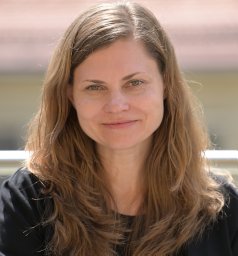 Ilona M. Otto合作论文数Potsdam Inst Climate Impact Res PIK, Potsdam, Germany8
 Ronald Hutjes合作论文数Alterra, Wageningen University and Research Center8Katharina Waha合作论文数Potsdam Institute for Climate Impact Research8rachel marcus合作论文数7
 Linda Krummenauer合作论文数7
 Florent Baarsch合作论文数7Valentin Aich合作论文数Global Climate Observing System, World Meteorological Organization Geneva7Sophie Marie Adams合作论文数School of Humanities & Languages, Faculty of Arts, Design & Architecture, The University of New South Wales7Matthias Mengel合作论文数Potsdam Institute for Climate Impact Studies;Potsdam Institute for Climate Impact Studies7Sakschewski Boris合作论文数Potsdam Institute for Climate Impact Research (PIK), Telegraphenberg A31, Potsdam, 14473, Germany;Berlin-Brandenburg Institute of Advanced Biodiversity Research (BBIB),;Potsdam Institute for Climate Impact Research (PIK),, Berlin-Brandenburg Institute of Advanced Biodiversity Research (BBIB),7
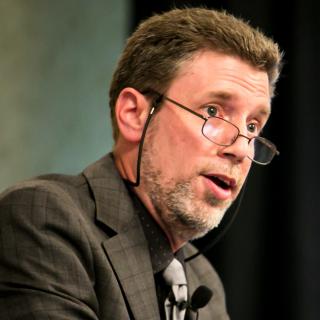 Paul Alan Dirmeyer合作论文数Center for Ocean-Land-Atmosphere Studies, George Mason University7
 Dim Coumou合作论文数Faculty of Science, Water and Climate Risk, Vrije Universiteit Amsterdam;Beyond Weather7
 Pavel Kabat合作论文数Climate Change Group7Marcia Rocha合作论文数6
 Paola Pereznieto合作论文数6mahe perette合作论文数6matti cartsburg合作论文数6
 Nella Canales合作论文数Stockholm Environm Inst SEI Latinoamer6judith stagl合作论文数6julia reinhardt合作论文数6
 Anja Rammig合作论文数School of Life Sciences, Technical University of Munich6
 Olivia Serdeczny合作论文数6Schleussner Carl-Friedrich合作论文数6
 Bill Hare合作论文数Potsdam Institute for Climate Impact Research (PIK6
 Diana Reckien合作论文数Potsdam Institute for Climate Impact Research6Sibyll Schaphoff合作论文数Potsdam Inst Climate Impact Res6
 Alice Boit合作论文数Hochschule Bremen, University of Applied Sciences)6Eva Ludi合作论文数Centre for Development and Environment, University of Bern6
 Kirsten Thonicke合作论文数Potsdam Institute for Climate Impact Research6
 Lindsey Jones合作论文数6
 Oleksandr Kit合作论文数PIK-Potsdam-Institut für Klimafolgenforschung6
 Fanny Langerwisch合作论文数6
 Torsten Albrecht合作论文数Research Department Potsdam, Alfred Wegener Institute for Polar and Marine Research6Louise Karlberg合作论文数6
 Christopher Reyer合作论文数Potsdam Institute for Climate Impact Research6r j olson合作论文数5roy l jenne合作论文数5




