Variability management in software systems requires adequate tool support to cope with the ever increasing complexity of software systems. The paper presents a tool chain which can be used for variability management within almost all software development processes. The tools presented use extended feature models as the main model for describing variability and commonality, and provide user changeable customization of the software artifacts to be managed.
PURE/OSEK dient in diesem Papier als Beispiel, an dem gezeigt wird, wie durch geeignete Entwicklungswerkzeuge die Entwicklung von Softwarefamilien fur den automotiven Bereich beherrschbar wird. Dabei steht das Management der Softwarevarianten auf Basis von Feature Modellen mittels CONSUL und die aspektorientierte Implementierung der Systemkomponenten mit Hilfe der C++ Spracherweiterung AspectC++ im Mittelpunkt.
Reusable software based on design patterns typically utilizes “expensive” language features like object composition and polymorphism. This limits their applicability to areas where efficiency in the sense of code size and runtime is of minor interest. To overcome this problem our paper presents a generative approach to “streamline” pattern-based object-oriented software. Depending on the actual requirements of the environment the source code is optimized with a transformation tool. The presented technique provides “scalable” software structures and thus reconciles reusability with efficiency of pattern-based software.
Article Free Access Share on On architecture transparency in operating systems Authors: Danilo Beuche University of Magdeburg, Universitätsplatz 2, D-39106 Magdeburg, Germany University of Magdeburg, Universitätsplatz 2, D-39106 Magdeburg, GermanyView Profile , Antônio Augusto Fröhlich GMD FIRST, Kekuléstraße 7, D-12489 Berlin, Germany GMD FIRST, Kekuléstraße 7, D-12489 Berlin, GermanyView Profile , Reinhard Meyer University of Magdeburg, Universitätsplatz 2, D-39106 Magdeburg, Germany University of Magdeburg, Universitätsplatz 2, D-39106 Magdeburg, GermanyView Profile , Holger Papajewski University of Magdeburg, Universitätsplatz 2, D-39106 Magdeburg, Germany University of Magdeburg, Universitätsplatz 2, D-39106 Magdeburg, GermanyView Profile , Friedrich Schön GMD FIRST, Kekuléstraße 7, D-12489 Berlin, Germany GMD FIRST, Kekuléstraße 7, D-12489 Berlin, GermanyView Profile , Wolfgang Schröder-Preikschat University of Magdeburg, Universitätsplatz 2, D-39106 Magdeburg, Germany University of Magdeburg, Universitätsplatz 2, D-39106 Magdeburg, GermanyView Profile , Olaf Spinczyk University of Magdeburg, Universitätsplatz 2, D-39106 Magdeburg, Germany University of Magdeburg, Universitätsplatz 2, D-39106 Magdeburg, GermanyView Profile , Ute Spinczyk University of Magdeburg, Universitätsplatz 2, D-39106 Magdeburg, Germany University of Magdeburg, Universitätsplatz 2, D-39106 Magdeburg, GermanyView Profile Authors Info & Claims EW 9: Proceedings of the 9th workshop on ACM SIGOPS European workshop: beyond the PC: new challenges for the operating systemSeptember 2000Pages 147–152https://doi.org/10.1145/566726.566758Published:17 September 2000Publication History 11citation433DownloadsMetricsTotal Citations11Total Downloads433Last 12 Months25Last 6 weeks6 Get Citation AlertsNew Citation Alert added!This alert has been successfully added and will be sent to:You will be notified whenever a record that you have chosen has been cited.To manage your alert preferences, click on the button below.Manage my AlertsNew Citation Alert!Please log in to your account Save to BinderSave to BinderCreate a New BinderNameCancelCreateExport CitationPublisher SiteeReaderPDF
In diesem Dokument prasentieren wir unseren Ansatz, wie ein OSEKkonformes Betriebssystem als spezielles Mitglied der Betriebssystemfamilie PURE implementiert werden kann. Mit PURE wenden wir das Konzept der Programmfamilien in Kombination mit objektorientierten Implementierungstechniken an. Durch die Entwicklung eines OSEK-konformen Familienmitgliedes zeigen wir beispielhaft die Flexibilitat und Wiederverwendbarkeit PURE’s. Das resultierende System gleichzeitig eine Alternative zu einer „normalen” OSEK-Implementierung dar. Es wird variable Funktionalitat sowie eine objektorientierte Schnittstelle geboten, indem die Konfigurationsmoglichkeiten des PURE-Systems genutzt werden.
Deeply embedded systems are forced to operate under extreme resource constraints in terms of memory, CPU, time and power consumption. Automotive systems are a typical example: today's limousines can be considered as (large-scale) distributed systems on wheels. There are cars in daily operation consisting of over 60 networked processors (i.e. microcontrollers). Conservative estimations suggest that, in the near future, every car will be equipped with about 20 networked microcontrollers, on average. The complexity of these “decentralized computer architectures” can no longer be managed by the application alone. Dedicated embedded operating systems are required to ensure the manageability, adaptability, portability and efficiency of the software. Resource-sparing operations under (hard) real-time constraints must be the maxim. This paper discusses the design and implementation of PURE (Portable Universal Runtime Executive) for these classes of deeply embedded systems
Water-soluble condensation products which are not self-crosslinking and are prepared from polyacidic amines and compounds which are polyfunctional towards amino groups, in an aqueous medium at temperatures from 0 DEG to 120 DEG C. and pH values above 6 in the presence of emulsifiers are used in the production of paper.
In general the implementation of a software product line leads to a high degree of variability within the software architecture. For an effective development and deployment it is necessary to resolve variation points within the architecture and source code automatically during product/variant derivation. Given the complexity of most software systems tool support is necessary for these tasks.
 Olaf Spinczyk合作论文数Osnabrück University7
 Danilo Beuche合作论文数6Ute Spinczyk合作论文数Otto von Guericke University of Magdeburg6Wolfgang Schröder-Preikschat合作论文数3Wolfgang Schroder-Preikschat合作论文数3Reinhard Meyer合作论文数1Timo Soininen合作论文数Software Business and Engineering Institute1Wolfgang Schroeder-Preikschat合作论文数Professorship of Computer Science 4 (Distributed Systems and Operating System) at the Friedrich-Alexander University Erlangen-Nuremberg.1Tarik Ziadi合作论文数1
 Timo Asikainen合作论文数1Friedrich Schön合作论文数1Attilio Maccari合作论文数1
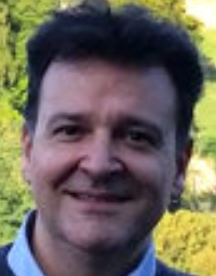 Antônio Augusto Fröhlich合作论文数Software/Hardware Integration Lab, Computer Science Department, Federal University of Santa Catarina;Departamento de Informática e Estatística, Federal University of Santa Catarina1
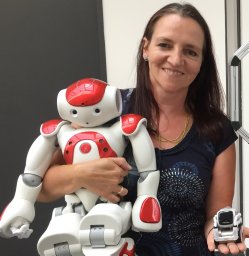 Isabel John合作论文数Fraunhofer Institute for Experimental1
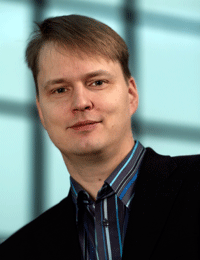 Tomi Männistö合作论文数Preago research group, University of Helsinki1Serge Demeyer合作论文数1G. Florijn合作论文数1




