Owing to the unique composition principles of the Chinese language and the certain rules within the radical information, Chinese named entity recognition differs from English. These features prove beneficial for models tasked with identifying entity types, furnishing them with valuable cues and patterns that enhance recognition accuracy. Over the past few years, there has been an increasing trend to utilize certain pre-trained models, BERT for instance, to deal with the task of Chinese named entity recognition. However, existing models have not integrated external features into the underlying layers of BERT. Within this study, we propose a multi-feature fusion BERT model based on nonlinear spiking neural convolution models, which is called MF-BERT. It extracts features from three perspectives, namely radical information, character, and lexicon, and integrates them into the bottom layer of BERT. By introducing a nonlinear spiking neural convolution model, a radical feature extraction module, called Conv-SNP-RFE, is designed to effectively extract radical features. Moreover, using Global Pointer instead of CRF to assign labels to sentences facilitates better processing of nested entities. We carried out experiments on three commonly used datasets and contrasted them with some baseline models. The experiment results show that the proposed MF-BERT model is effective for the Chinese named entity recognition task. The code is available on: https://github.com/jiangmingtaoo/MF-BERT .
Spiking neural P systems (SNP systems) are a type of neuromorphic membrane computing models abstracted based on neuron spiking mechanisms, with nonlinear spiking neural P systems (NSNP systems) being a nonlinear variant of them. Based on the theoretical framework of NSNP systems, this paper proposes a novel spiking neuron model called TC-SNP neurons. The computational model constructed from TC-SNP neurons is referred to as Spiking Neural P Systems with temporal coding. The model can theoretically be regarded as an extension of NSNP systems, while at the implementation level, it constitutes a practical variant of Spiking Neural Networks (SNNs). Due to the introduction of temporal coding, the information transmitted between neurons consists of precisely timed spike sequences. This TC-SNP model achieves dynamic reset operations of membrane voltage during nonlinear regulation processes by introducing a dynamic membrane potential reset mechanism. Unlike the traditional fixed reset methods in spiking neural networks, this model effectively enhances the temporal encoding capability of neurons by dynamically adjusting the post-reset membrane potential reference value, thereby achieving a balance between high accuracy and low latency. In the systematic validation of image classification tasks, experiments conducted on deep learning architectures built upon benchmark datasets such as CIFAR-10, CIFAR-100, and TinyImageNet demonstrate that the proposed model achieves a significant improvement in classification accuracy compared to state-of-the-art spiking neuron models.
Major depressive disorder (MDD) is a prevalent psychiatric illness, but its diagnosis still heavily relies on subjective scales and clinical judgment, leading to inconsistencies in assessments and limited capabilities for early detection. EEG and eye tracking (ET) provide complementary neurobehavioral insights, but integrating these heterogeneous signals into stable and interpretable multimodal feature representations remains a challenge. To address this issue, we propose the Graph Discriminative Low Rank Correlation Embedding (GDLRCE) framework. This framework combines low-rank representation learning, graph-based discriminative constraints, and correlation analysis within a unified optimization model to fuse EEG and ET features while minimizing redundancy. Three visual oculomotor paradigms including prosaccade (PS), antisaccade (AS), and fixation stability (FS) were designed to examine perceptual processing, executive control, and sustained attention, respectively. EEG and ET features extracted from each paradigm were projected into a shared low rank subspace that preserves both local structural information and class discriminability. Experimental results demonstrate that GDLRCE outperforms unimodal and conventional fusion approaches in depression recognition, while revealing interpretable multistage brain-eye coupling patterns. These findings highlight the potential of a robust multimodal framework for automatic MDD identification and mechanism-oriented analysis.
IntroductionUltra-High-Density Electroencephalography (uHD EEG) has gained increasing attention for its potential in individual finger decoding. However, accurately classifying these movements remains challenging due to the subtle spatial overlaps in cortical activity, which standard architectures often fail to isolate.MethodsTo address this, we propose the Sandwich enhanced Convolutional Block Attention Module (SCBAM). The unique sandwich structure integrates dual attention mechanisms between convolutional layers, enabling the network to more effectively refine high-dimensional spatial features.Results and discussionThe proposed network achieves an average accuracy of 78.63 (1.56)% in binary classification across ten finger pairs in five subjects, with the highest accuracy of 85% obtained at Thumb vs. Ring. The proposed network achieves an average accuracy of 61.12 (0.95)% in five-class classification across five subjects, with a highest accuracy of 62.36% on subject S2. The five-class classification is performed using 10 binary classifiers under a one-vs.-one strategy. Notably, five-class classification of individual fingers has not been extensively explored in the current literature, particularly with high-density EEG (HDEEG) data. This study addresses this gap, offering a valuable reference for future discussions. We conduct ablation studies to investigate the individual and synergistic effects of the modules in the proposed model. The results highlight the effects of two sequential attention mechanisms in this task. We conduct comparative experiments of our proposed model against six benchmark networks. The results from SCBAM significantly outperform these established models with FBCSP features. The proposed SCBAM significantly improves accuracy in binary finger classification compared to SVM and MLP using the same uHD EEG dataset. In summary, this study presents a high-performance hybrid network for individual finger classification and highlights the potential of uHD EEG for dexterous task decoding in Brain-Computer Interfaces (BCI).
In multimodal video reasoning, reinforcement learning-based methods typically rely on simplistic and inflexible reasoning-length control strategies that fail to adapt to the model's evolving competence. This mismatch may suppress necessary exploration at early stages, while encouraging redundant reasoning and inefficient decoding once the model becomes more competent. In this paper, we propose CARE, a competence-aware reward shaping framework for adaptive reasoning length optimization in multimodal reasoning. Specifically, CARE maintains a smoothed competence estimate via an exponential moving average of pass rates, and uses it to route training into progressive stages that shift the reward preference from exploration-oriented long-form reasoning to efficiency-oriented concise reasoning. To avoid conflating verbosity with intrinsic task complexity, CARE further normalizes reasoning effort with batch-level statistics, and introduces a posterior amplifier to strengthen reward signals for unexpectedly strong performance on historically difficult samples. The proposed mechanism is seamlessly integrated into the GRPO training pipeline and incurs no additional inference-time overhead. Extensive experiments on multiple video reasoning and general video understanding benchmarks demonstrate that CARE consistently improves reasoning accuracy, stabilizes reinforcement learning, and significantly enhances token efficiency. Moreover, CARE exhibits a characteristic inverted-U trajectory of reasoning length during training, and yields shorter yet more informative reasoning traces at convergence, indicating effective adaptive allocation of reasoning budget. We provide the source code for our proposed CARE framework and experiments at https://github.com/1Pansy/Video-CARE.
Computer-aided nuclear instance inspection and diagnostic systems play a crucial role in routine histopathological image analysis. Efficient and accurate nuclear instance segmentation facilitates the quantitative assessment of diseases. Although recent deep learning approaches have achieved remarkable progress, practical diagnostic scenarios still involve challenges such as irregular nuclear shapes, low contrast, substantial lesion variability, and ambiguous boundaries, which may lead to segmentation errors. To mitigate these challenges, we propose a nuclear instance segmentation network, CAS-Net, which integrates three specifically designed modules to enhance spatial dependency modeling, boundary discrimination, and multiscale feature fusion. Specifically, to enable the network to capture long-range dependencies between adjacent nuclei, we design a multichannel sequential long short-term memory module, which models feature channels as sequential inputs to capture cross-channel long-distance dependencies. To improve nuclear instance localization and suppress irrelevant context, a differential attention module that enhances the contrast between foreground and background responses is designed. Furthermore, a multiscale sequential feature fusion module is devised, which leverages NSNP-like convolution to learn multiscale information by combining local and global receptive fields, enabling the model to recognize nuclear instances with varying sizes and textures. Extensive experiments on the MoNuSeg, CoNSeP, and CPM-17 datasets demonstrate that CAS-Net achieves competitive performance compared to other methods.
Alzheimer's disease (AD) is a progressive neurodegenerative disorder marked by both structural atrophy and functional dysregulation in the brain, yet its early detection remains elusive. Although recent efforts have leveraged artificial intelligence combined with multimodal neuroimaging to improve diagnostic accuracy, these methods often falter in harmonizing disparate data sources and lack the transparency needed for clinical adoption. In particular, the sheer dimensionality of functional Magnetic Resonance Imaging (fMRI) and T1-weighted Magnetic Resonance Imaging (T1w-MRI) features, together with complex inter-modality relationships, can lead to overfitting and hinder the reliable identification of robust biomarkers. To overcome the aforementioned challenges, we propose a novel Multimodal Graph Fusion Graph Convolutional Network (MGF-GCN) that integrates functional (fMRI) and structural (T1w-MRI) brain features for accurate and interpretable AD diagnosis. We construct brain graphs by incorporating nonlinear Granger causality (NGC) from resting-state fMRI (rs-fMRI) to capture inter-regional functional dependencies, alongside morphological features from T1-weighted MRI to enrich node attributes. To effectively align and enhance multimodal representations while preserving the underlying topological structure, we introduce a cross-attention-based graph fusion strategy. To further improve both performance and interpretability, we develop a Bayesian Self-Attention Graph Convolutional Network (BSAGCN), where attention weights are modeled as probability distributions, allowing for the identification of critical brain regions and minimizing noise sensitivity. All features are extracted based on the BN246 brain atlas, facilitating fine-grained localization of potential biomarkers. Experimental results show that our approach significantly outperforms existing methods in diagnostic accuracy and interpretability, providing new insights into the pathophysiological mechanisms of AD and offering valuable support for clinical decision-making.
Semantic segmentation of remote sensing (RS) image is crucial to tasks such as geographic research, land monitoring and environmental protection. In recent years, deep learning models built with convolutional neural networks (CNNs) and Transformer structures have proven effective in semantic segmentation task of RS images. With the increase in resolution of RS images in complex scenes and the complexity of high-resolution urban images, each object has rich textures and edges, and the distribution of objects is extremely irregular. To resolve above challenges, a semantic segmentation network for RS images is proposed, which employs an encoder-decoder structure, where four ResNet-18 blocks act as encoders, and four specially designed local-contextual Transformer blocks form the decoder. In order to effectively utilize local contextual features, a channel attention-feature fusion module using a novel nonlinear spiking neuron model is designed to assist the decoder in better feature recovery. The experimental results demonstrate that the proposed method is feasible and effective for semantic segmentation of RS images. Specifically, the suboptimal 86.42% and optimal 82.25% mIoU are achieved on Potsdam and Vaihingen datasets, respectively, and the best 52.4% and the near-optimal 65.3% mIoU on the LoveDA and UAVid datasets, respectively, for the proposed model.
The increasing frequency of extreme weather events has brought about significant mutation in the distribution characteristics of power load, while traditional models are unable to handle such sudden changes in load and adequately characterize the coupling effects across various scales. To address this problem, this study proposes a bidirectional nonlinear spiking neural P (NSNP) model with weather-aware multi-scale fusion, which represents an enhanced NSNP framework that integrates multi-scale adaptive feature extraction network (MAFEN) and multiple encoders based on bidirectional NSNP (BiNSNP) variants, termed multi-scale spatiotemporal BiNSNP attention fusion network (MSBAF-Net). Inspired by nonlinear spiking mechanisms, this architecture captures complex nonlinear load dynamics. Moreover, this multi-source data parallel fusion network effectively achieves dynamic weighting of features across both spatial and temporal dimensions, thereby capturing local patterns at critical time steps in load sequences and cross-channel feature correlations under extreme weather. Specifically, MSBAF-Net performs channel separation, isolating the abrupt components of the load into the residual channel. Based on the characteristics of different channels, MSBAF-Net incorporates a targeted bidirectional modeling strategy alongside differentiated feature extraction pathways, implemented through two lightweight NSNP-like convolutional models. Additionally, feature fusion network (FFN) maintains the interaction of multi-scale load features in time and space. Finally, comparison study using three real-world datasets and 25 baseline prediction models is performed. Experimental results demonstrate that MSBAF-Net achieves the best comprehensive performance across all extreme weather scenarios. Notably, under the low-temperature cold wave scenario, MSBAF-Net achieves average forecasting accuracies of 97.51% and 97.38% for Lines 1–10 at the power station A and Lines 1–7 at the power station B, respectively. Our codes and datasets have been released at https://github.com/hssinne/MSBAF-Net.
Multimodal emotion recognition relies on the joint modeling of text, speech, and visual signals. In real-world scenarios, however, some modalities are often unavailable due to noise, occlusion, recognition errors, or device malfunction. This not only weakens the use of complementary cross-modal information, but also intensifies imbalance in modality learning. To address this issue, we propose a Cross-modal Prompt Disentangled Graph Neural Network (CPD-GNN) for incomplete multimodal conversational emotion recognition. Specifically, to reduce interference caused by modality heterogeneity, the proposed method first projects incomplete multi-modal features into a unified semantic space and disentangles them into shared representations and modality specific representations. On this basis, the framework jointly performs cross-modal information compensation and dynamic modality balancing, providing a robust foundation for modeling both local contextual interactions and higher-order conversational dependencies under missing-modality conditions. Extensive experiments on multiple benchmark datasets demonstrate that the proposed method is effective for incomplete multimodal learning and achieves competitive or superior performance compared with existing approaches.
Video multimodal large language models support language guided video segmentation, but they often show spatio temporal inconsistencies, e.g., jitter, drift, and identity switches. These failures are more common when targets are partly hidden or when similar objects appear nearby.One likely reason is that current training lacks explicit spatial priors, which makes it difficult to maintain stable spatial identity and shape over time. We present PhysMLLMs, a training-stage prior injection architecture that injects physics-inspired spatial continuity priors into Video MLLMs. PhysMLLMs is designed to encourage more stable object-centered representations by aligning the student global visual representation with a frozen teacher model during training. Our core mechanism, Global Representation Prior Alignment (REPA-Global), distills global visual representations from a frozen DINOv2 teacher using an offline embedding cache and a scheduled distillation plan. This design keeps inference unchanged and does not add inference time cost. Across multiple video benchmarks, PhysMLLMs improves video segmentation mask quality and cross-frame consistency, with larger gains on challenging cases involving small targets, fast motion, occlusion, distractors, and reasoning queries. On single-frame referring image segmentation and representative general VLM benchmarks, PhysMLLMs maintains comparable performance, demonstrating that the injected spatial prior improves video consistency without compromising image-level grounding or general multimodal capability. These results suggest that physics-inspired spatial prior injection can improve temporal stability while preserving general capability. The code is available at https://github.com/tusu-code/20260121-icml2026-2.git.
Electrocardiogram (ECG) analysis is crucial in the diagnosis of cardiovascular diseases (CVDs). With the continuous development of deep learning, significant progress has been made in ECG-based automatic diagnosis of CVDs. Currently, most studies typically use variants of CNN+RNN for feature extraction of ECG signals. Common variants of RNN mainly include LSTM and GRU, which are designed to mitigate gradient vanishing by gating mechanism, but the deep network may still lose the long-distance feature information. The fluctuation and periodic changes of ECG signals exhibit stronger nonlinear characteristics, so it is very important to construct models with stronger nonlinear expression ability for ECG classification and diagnosis. To address the above challenges, this paper proposes a new ECG classification method based on spiking neural convolutional model and echo-like recurrent model. First, convolutional spiking neural P model (ConvSNP) is utilized to design a multiscale network and a residual network to alternatively extract features from the ECG beat section. Second, a bi-directional echo-like spiking neural P system (ESNP) is designed for feature extraction of the ECG rhythmic part. Finally, the ConvSNP is utilized to perform feature fusion on the information of the lead part, and the attention mechanism is used to focus on the more important leads. This paper was evaluated on three public datasets and achieved good performance, obtaining AUC metrics of 0.9324, 0.9690 and 0.9968 respectively.
Despite significant advancements in point cloud analysis, reducing energy consumption and improving robustness remain understudied, largely due to the inherent limitations of Convolutional Neural Networks (CNNs). To address this issue, we draw inspiration from the primary visual cortex and propose a Dendritic-Connected Continuous-Coupled Neural Network (DC-CCNN), a novel Brain-Inspired Neural Network (BINN) architecture for point cloud analysis. By combining discrete and continuous encoding, our design replaces traditional Multilayer Perceptrons (MLPs) with more efficient and robust BINNs. Building upon this framework, we further propose an extended model, DC-CCNN++, to improve robustness under complex corruption conditions. Specifically, we introduce a Neuro-Inspired Robust Modulation-and-Readout Module (NRMR) to enhance feature stability and decision robustness through global-context gain modulation and dual-code evidence integration. We also design a Cortically Inspired Progressive Variability Training (CPVT) strategy, which progressively exposes the model to structured environmental variability while preserving stable clean-sample anchors during training. Experimental results show that DC-CCNN++ improves the performance of brain-inspired networks on point cloud analysis while maintaining performance comparable to state-of-the-art methods. Compared with the original DC-CCNN, it achieves stronger results on both classification and part segmentation, and exhibits enhanced robustness against sparsity, occlusion, Gaussian noise, salt-and-pepper noise, and spatial transformations. With its efficiency, robustness, and biologically grounded design, DC-CCNN++ provides a promising alternative to traditional deep learning methods for point cloud analysis. Code is available at https://anonymous.4open.science/r/DC-CCNNpp-44E3.
Electroencephalography (EEG) signals contain rich spatiotemporal information reflecting brain activity, making them valuable for analyzing cognitive, emotional, and neurological disorders. However, effectively integrating these two types of information to capture both discriminative and complementary features remains a significant challenge. To address this, we propose a Graph-Enhanced Dual Low-Rank Correlation Embedding (GEDLCE) method, which integrates spatiotemporal EEG features to improve depression recognition. GEDLCE enforces low-rank constraints at both feature and sample levels, enabling extraction of shared latent factors across multiple feature sets. To preserve the intrinsic geometric structure of the data, GEDLCE employs two graph Laplacian terms to model local relationships in the sample space. Furthermore, GEDLCE introduces a graph embedding term that utilizes label information to enhance its discriminative capability. In addition, GEDLCE incorporates an enhanced correlation analysis to exploit inter-view correlations while reducing intra-view redundancy. Finally, GEDLCE jointly optimizes low-rank representations, correlation constraints, and graph embedding within a unified framework. Experiments on EEG datasets show that GEDLCE effectively captures critical information, achieves superior performance in depression recognition, and shows promise for early diagnosis and disease monitoring.
Accurate and effective skin lesion segmentation plays a crucial role in clinical diagnosis. Despite the success of recent deep learning methods, challenges such as irregular shapes, blurred boundaries, and low contrast remain. To address these issues, we propose a multi-scale feature fusion and hybrid attention network (MFFHA-Net). The model incorporates nonlinear spiking-based encoder–decoder fusion modules to enhance multi-scale feature integration. A hybrid attention module is introduced at the bottleneck to capture both global and local contextual information. In addition, a feature mapping function is designed to refine attention weights and improve detail representation. The experimental results on four publicly available datasets (ISIC 2016, 2017, 2018 and PH^2 ) show that MFFHA-Net achieves competitive performance, with Dice scores of 0.9338, 0.8806, 0.9212, and 0.9503, respectively. Code in: https://github.com/xhucr/MFFHA-Net.
Multimodal video reasoning and anomaly detection remain key challenges for Large Language Models (LLMs) due to limited video-text alignment, narrow knowledge coverage, and difficulties in handling complex or weakly video-related queries. To address these limitations, we propose a Hierarchical Multi-Agent Retrieval-Augmented Generation (HM-RAG) framework that integrates internal temporal understanding with external knowledge retrieval. Specifically, our approach operates through a coordinated pipeline: it begins with a question decomposition agent that reformulates complex queries into structured sub-tasks, followed by multi-source reasoning agents, comprising a web agent for external retrieval and a memory-enhanced model for long-range temporal dependencies. Finally, decision agent synthesizes these multi-source insights to resolve contradictions and generate precise predictions. By hierarchically coordinating agents across retrieval and reasoning modalities, our framework achieves effective knowledge fusion. Extensive evaluations demonstrate that HM-RAG significantly improves performance not only on standard multimodal video reasoning benchmarks but also effectively identifies irregular events, validating its robustness in video anomaly detection tasks. Code is available at https://github.com/hanzif1/HM-RAG.
Recent extensive research has demonstrated that the enhanced reasoning capabilities acquired by models through Reinforcement Learning with Verifiable Rewards (RLVR) are primarily concentrated within the rank-1 components. Predicated on this observation, we employed Periodic Rank-1 Substitution and identified a counterintuitive phenomenon: RLVR may exhibit implicit reward overfitting to the training dataset. Specifically, the model can achieve satisfactory performance on the test set even when its rewards remain relatively low during the training process. Furthermore, we characterize three distinct properties of RL training: (1) The effective rank-1 component in RLVR don't maintain other model knowledge except mathematical reasoning capability. (2) RLVR fundamentally functions by optimizing a specific singular spectrum. The distribution of singular values of almost all linear layers in RLVR-trained model behaves like heavy-tailed distribution. (3) the left singular vectors associated with rank-1 components demonstrate a stronger alignment tendency during training, which echoes the discovery that RLVR is optimizing sampling efficiency in essence. Taken together, our findings and analysis further reveal how RLVR shapes model parameters and offer potential insights for improving existing RL paradigms or other training paradigms to implement continual learning.
Real-time standard view recognition and quality control are crucial for accurately diagnosing heart diseases and quantifying cardiac function in two-dimensional transthoracic echocardiography (2D-TTE). However, existing methods still face substantial challenges in the fine-grained quality grading task due to two limitations: (1) the inability to model long-range dependencies, and (2) the loss of discriminative information from small target regions during feature aggregation. In this study, we propose the Echo Enhanced Ghost Bottleneck-Based Lightweight Network (EEGB-LNet), a novel 15-layer architecture that can be easily deployed on mobile devices. The EEGB module is lightweight and generalizable, employing a dual-attention coordination strategy to capture long-range dependencies and enhance local feature representations. We further propose a simple yet effective Spatial Weighted Global Pooling (SWGP) module, which is the first to enable global pooling without uniform averaging by employing a learnable spatial weighting matrix to preserve fine-grained details in medical imaging. EEGB-LNet was evaluated on our private dataset for the previously unexplored task of real-time view recognition integrated with quality grading, covering 14 view classes (13 standard views and 1 non-standard view). It achieves an accuracy of 99.97% for view recognition and 96.59% for the challenging quality grading task, with a notable improvement of 9.35% over the baseline. Furthermore, EEGB-LNet requires only 0.58M model parameters and 159.45M floating-point operations (FLOPs), demonstrating its potential for real-time deployment in clinical scenarios. The source code is available at https://github.com/hongp-AI/EEGB-LNet.
Multi-view learning is a rapidly developing field that enables comprehensive data analysis from multiple perspectives. Despite its potential, it has been rarely applied to depression detection using functional near-infrared spectroscopy (fNIRS). In this study, we propose a novel fusion algorithm, named multi-view structured sparse canonical correlation analysis (MS2CCA). It combines the 8 2,1 norm and fused group lasso regularization to suppress noise and maintain local smoothness. It also reveals the underlying group structure among features and produces clearer canonical weight patterns. Our experiments involve 60 individuals with depression and 60 healthy controls. MS2CCA achieves an accuracy of 86.31 %, a precision of 86.96 %, a recall of 87.71 %, and an F1-score of 0.87. Compared to state-of-the-art algorithms, it outperforms by more than 4.7 % across all metrics. These results demonstrate that MS2CCA facilitates more reliable detection outcomes and holds promise for future applications in clinical auxiliary diagnosis.
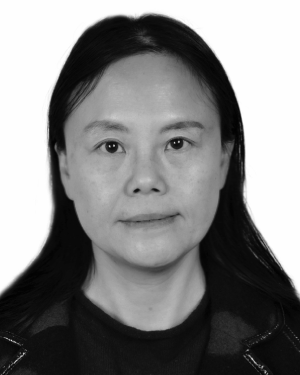 Jun Wang (王峻)合作论文数Department of Control Science and Engineering, Tongji University116
 Bin Hu (胡斌)合作论文数School of Information Science & Engineering, Lanzhou University;School of Computer Science & Technology, Beijing Institute of Technology66
 Qian Yang合作论文数Xihua Univ, Sch Comp & Software Engn, Chengdu 610039, Sichuan, Peoples R China32
 Qinglin Zhao (赵庆林)合作论文数School of Information Science and Engineering, Lanzhou University28
 Mario de J. Pérez-Jiménez合作论文数Department of Computer Science and Artificial Intelligence, University of Seville27
 Liu Zhicai合作论文数24
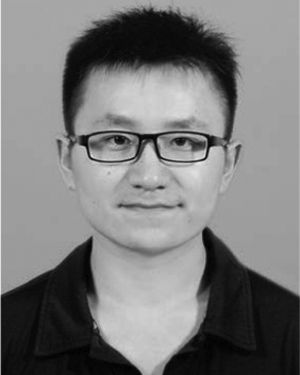 Xiaohui Luo合作论文数Huazhong University of Science and Technology, Huazhong Univ. of Sci. and Technol.23
 Song Xiaoxiao合作论文数19
 Jitao Zhong合作论文数17
 Agustin Riscos-Núñez合作论文数E.T.S. Ingeniería Informática, Universidad de Sevilla15
 JinLong Chao (钞锦龙)合作论文数13
 Tao Wang合作论文数Academy of Medical Engineering and Translational Medicine, Tianjin University13
 Peng Shi合作论文数School of Electrical and Electronic Engineering, The University of Adelaide;Faculty of Sciences, Engineering and Technology, The University of Adelaide12
 Antonio Ramirez de Arellano Marrero合作论文数11
 Jisheng Dang合作论文数Lanzhou Jiao Tong University11
 Chang Lei合作论文数Lanzhou University,Gansu Provincial Key Laboratory of Wearable Computing School of Information Science and Engineering,Lanzhou,China10Ko Ishibashi合作论文数10
 Shuzhen Zheng合作论文数Lanzhou University,Gansu Provincial Key Laboratory of Wearable Computing School of Information Science and Engineering,Lanzhou,China9
 Qian Liu合作论文数Beijing University of Technology, Beijing Polytechnic University9
 Takafumi Niihara合作论文数9
 Yasuhito Sekine合作论文数8
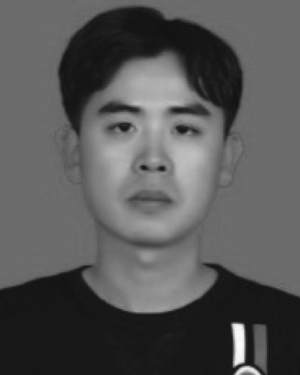 Hongtong Wu合作论文数Lanzhou Univ, Sch Informat Sci & Engn, Lanzhou 730000, Peoples R China8
 Dixin Wang合作论文数School of Information Science and Engineering, Lanzhou University8
 Jun Guo (郭军)合作论文数School of Artificial Intelligence, Beijing University of Posts and Telecommunications8
 Xiangnian Huang (黄襄念)合作论文数西华大学计算机与软件工程学院8Yanbing Qi合作论文数8
 Seiji Sugita合作论文数Department of Complexity Science and Engineering, University of Tokyo8Xuan Zhang合作论文数Tsinghua University7Nan Zhou合作论文数7
 Hideaki Miyamoto (宮本英昭)合作论文数Department of System Innovation, Graduate School of Engineering, University of Tokyo7
 Hongmin Cai (蔡宏民)合作论文数School of Computer Science and Engineering, South China University of Technology7Koji Wada合作论文数7Tomoko Arai合作论文数7
 Fumi Yoshida合作论文数National Astronomical Observatory7
 Tat-Seng Chua (蔡达成)合作论文数Department of Computer Science, School of Computing, National University of Singapore7Yanping Huang合作论文数6
 Hiroki Senshu合作论文数6
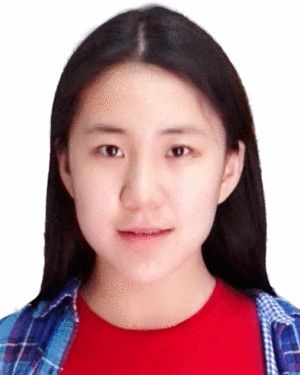 Zeqiong Lv合作论文数Xihua Univ, Sch Comp & Software Engn, Chengdu 610039, Sichuan, Peoples R China6
 Chengjian Zhao合作论文数Gansu Provincial Key Laboratory of Wearable Computing, School of Information Science and Engineering, Lanzhou University, Lanzhou, China6
 Jun Ming合作论文数Xihua Univ, Sichuan Prov Key Lab Power Elect Energy Saving Te, Chengdu 610039, Sichuan, Peoples R China6
 Lifan Long合作论文数6Zheng Pei (裴峥)合作论文数6Hiroshi Terada合作论文数School of Pharmaceutical Science, Tokyo University of Science6
 Lisheng Xu (徐礼胜)合作论文数College of Medicine and Biological Information Engineering, Northeastern University6Naruhisa Takatoh合作论文数6Yutaka Hayano合作论文数Subaru Telescope6Dennis Majoe合作论文数Dennis MajoeNo picture of Dennis Majoe available - click to provide one
No description available of Dennis Majoe6
Lisheng Xu (徐礼胜)合作论文数College of Medicine and Biological Information Engineering, Northeastern University6Naruhisa Takatoh合作论文数6Yutaka Hayano合作论文数Subaru Telescope6Dennis Majoe合作论文数Dennis MajoeNo picture of Dennis Majoe available - click to provide one
No description available of Dennis Majoe6




