This paper develops a systematic computational framework for Multi-group Bayesian Games (MBGs) to address complex decision-making challenges in environments characterized by inter-group incomplete information and intra-group complete information. To bridge the gap between theoretical game formulations and practical equilibrium computation, we propose an ex-ante agent transformation that converts complex MBGs into normal-form Multi-group Ex-ante Agent Games (MEAGs). Within this informatic paradigm, two solution concepts, namely multi-group Bayesian Nash equilibrium (MBNE) and strongly MBNE, are characterized to model different cooperative and competitive behaviors within groups. By leveraging the semi-tensor product (STP) of matrices, we derive necessary and sufficient conditions for the transformed MEAG to be (strongly) potential. Building upon the favorable properties of the proposed transformation, these conditions facilitate the efficient identification of (strongly) MBNE in the original MBG by solving the corresponding equilibrium profiles in the (strongly) potential MEAG. The proposed methodology is formalized into computational algorithms, providing a robust tool for (strongly) equilibrium finding in multi-group Bayesian systems. An illustrative example is provided to demonstrate the efficacy and applicability of the results in resolving strategic uncertainties in complex systems.
With the widespread adoption of cloud-based services and Service-Oriented Computing, efficient service recommendation has become pivotal for optimizing service discovery and composition in large-scale ecosystems. While recent diffusion-based recommendation methods have achieved impressive results in service-oriented scenarios, existing approaches predominantly treat user-service interactions as isolated events, overlooking the potential of higher-order collaborative signals between users and services. Such signals, which encapsulate richer and more nuanced relationships, can be naturally captured using graph-based data structures. To address this limitation, we extend diffusion-based service recommendation methods to the graph domain by directly modeling user-service bipartite graphs with diffusion models. This enables better modeling of the higher-order connectivity inherent in complex interaction dynamics. However, this extension introduces two primary challenges: (1) Noise Heterogeneity, where interactions are influenced by various forms of continuous and discrete noise, and (2) Relation Explosion, referring to the high computational costs of processing large-scale graphs. To tackle these challenges, we propose a Graph-based Diffusion Model for Service Recommendation (GDMSR). To address noise heterogeneity, we introduce a multi-level noise corruption mechanism that integrates both continuous and discrete noise, effectively simulating real-world interaction complexities. To mitigate relation explosion, we design a user-active guided diffusion process that selectively focuses on the high-value edges and active users, reducing inference costs while preserving critical service-level dependencies. Extensive experiments on six real-world service datasets demonstrate that GDMSR consistently outperforms state-of-the-art methods, highlighting its effectiveness in capturing higher-order collaborative signals and improving service recommendation performance.
Microplastics undergo complex physicochemical changes during aging, which traditional single-modality methods struggle to explain. We analyzed 1371 samples across seven aging types using a deep learning model integrating SEM images and FT-IR data via multimodal fusion and attention mechanisms. The model achieved 96.4 % validation accuracy, surpassing single-image (85.3 %) and single-spectroscopy (47.8 %) models. Attention mechanisms highlighted key features: chemical aging linked the CO peak (1700-1750 cm⁻¹) to surface etching; UV aging associated the O-H peak (3300-3500 cm⁻¹) with dense cracks; physical aging connected CC vibrations (1650-1680 cm⁻¹) to wear marks. The model performed robustly on complex aging samples, achieving an 80.9 % dual-attribution success rate in UV scenarios. It identified UV degradation as the primary factor in natural aging (78.6 % frequency) and indicated potential chemical degradation risks in paddy fields. Joint features were visualized via t-SNE and validated using Mahalanobis distance-based metric learning. This approach enhances our understanding of microplastic aging mechanisms and provides a foundation for linking laboratory observations with natural environmental conditions, supporting the development of methods for lifecycle management and ecological risk assessment of microplastics.
Urban green-blue spaces (UGBS) are increasingly recognized for their benefits to physical and mental well-being. However, research on real-time gender-specific emotional responses to UGBS remains limited. To address this gap, a dual-method approach combining facial expression recognition (FER) and self-reported measures to investigate gender differences in real-time emotional evaluations of UGBS was developed. Using static images from Google Street View as stimuli, a self-reporting experiment involving 108 participants provided insights into subjective emotional experiences. Subsequently, a FER experiment, utilizing 360-degree video stimuli, captured over two million data points, validating the feasibility and advantages of real-time emotion monitoring. The findings revealed distinct gender-specific emotional patterns: women experienced stronger pleasant emotions and preferred scenes evoking higher arousal, while men demonstrated sharper responses and rated scenes with peak valence emotions more favorably. Grass elicited relaxation and delight in women and arousal in men, whereas blue spaces induced calmness across genders, with men reporting greater relaxation as water content increased. The study underscores the potential of FER technology in assessing real-time emotional responses, providing actionable insights for inclusive urban planning. By integrating advanced tools and participatory design approaches, urban planners can develop strategies that enhance emotional well-being and create livable cities that support diverse user needs.
To address the data sparsity issue in the cold-start problem of recommendation, cross-domain recommendation techniques transfer user latent preferences by leveraging transparent data from auxiliary (source) domains to target domain. However, most methods overlook the differences of user preferences for various aspects of items. Furthermore, in real-world scenarios, due to data privacy concerns, data sharing among domains is impractical in most cases. This paper proposes a novel Cross Domain Attention Transfer Network (CDATN) for recommending items to cold-start users in target domains, aiming to solve both problems. CDATN employs a fine-grained user preference aggregation module to achieve accurate user preference transfer. To address user privacy concerns, CDATN adopts a cautious approach by exclusively leveraging user embeddings that are derived from the auxiliary domain. A meticulously designed two-step training strategy is employed to guarantee alignment between these user embeddings and the latent space of user preferences. This dual-process not only caters effectively to the recommendation requirements of both active and cold-start users but also improves the overall efficacy of the recommendation system. Extensive experiments on real-world datasets have shown that the proposed CDATN framework surpasses state-of-the-art baselines in recommendation for cold-start users.
Recent advancements in AI-based synthesis of small molecules have led to the creation of extensive databases, housing billions of small molecules. Given this vast scale, traditional quantum chemistry (QC) methods become inefficient for determining the chemical and physical properties of such an extensive array of molecules. To address this challenge, we present MetaGIN, a lightweight deep learning framework designed for efficient and accurate molecular property prediction. While traditional GNN models with 1-hop edges (i.e., covalent bonds) are sufficient for abstract graph representation, they are inadequate for capturing 3D features. Our MetaGIN model shows that including 2-hop and 3-hop edges (representing bond and torsion angles, respectively) is crucial to fully comprehend the intricacies of 3D molecules. Moreover, MetaGIN is a streamlined model with fewer than 10 million parameters, making it ideal for fine-tuning on a single GPU. It also adopts the widely acknowledged MetaFormer framework, which has consistently shown high accuracy in many computer vision tasks. In our experiments, MetaGIN achieved a mean absolute error (MAE) of 0.0851 with just 8.87M parameters on the PCQM4Mv2 dataset, outperforming leading techniques across several datasets in the MoleculeNet benchmark. These results demonstrate MetaGIN’s potential to significantly accelerate drug discovery processes by enabling rapid and accurate prediction of molecular properties for large-scale databases.
The effectiveness of AI-driven drug discovery can be enhanced by pretraining on small molecules. However, the conventional masked language model pretraining techniques are not suitable for molecule pretraining due to the limited vocabulary size and the non-sequential structure of molecules. To overcome these challenges, we propose FragAdd, a strategy that involves adding a chemically implausible molecular fragment to the input molecule. This approach allows for the incorporation of rich local information and the generation of a high-quality graph representation, which is advantageous for tasks like virtual screening. Consequently, we have developed a virtual screening protocol that focuses on identifying estrogen receptor alpha binders on a nucleus receptor. Our results demonstrate a significant improvement in the binding capacity of the retrieved molecules. Additionally, we demonstrate that the FragAdd strategy can be combined with other self-supervised methods to further expedite the drug discovery process.
The task of retrieving and analyzing mass spectra is indispensable for the identification of compounds in mass spectrometry (MS). This methodology is of critical importance as it enables researchers to correlate observed spectra with established databases, thereby precisely determining the chemical composition of samples. The primary challenges to its efficacy lie in optimizing the balance between retrieval accuracy and processing speed. Empirical studies have demonstrated that by converting mass spectra into embeddings via deep learning, it is possible to achieve both high accuracy and speed in retrieval. Nevertheless, there are complex challenges associated with employing deep learning for spectral embedding, particularly within the domain of electron ionization mass spectrometry (EI-MS). In this paper, we introduce a novel representation learning technique termed EI-MS2VEC for EI-MS retrieval. Our spectrum retrieval methodology surpasses current state-of-the-art techniques such as FastEI. For the in-silico library, we attain hit rate@1 and hit rate@10 of 43.6% and 84.5%, respectively, compared to FastEI’s 36.7% and 80.4%. Moreover, our retrieval approach operates with an order of magnitude greater speed than FastEI. The source code is available on Github (https://github.com/xfcui/EI-MS2VEC).
The protein-ligand affinity prediction task aims to predict the binding strength of small molecule ligands to specific proteins, which is crucial in the fields of drug design and molecular biology, and can accelerate the drug discovery. The structure complementarity between protein and ligand plays a critical role in determining binding strength , but most of current deep learning-based affinity prediction models usually extracted the features of protein and ligand by these two detached modules. which limits the exchange of information for capturing interactions and struggles to capture proteins’ important residues. To address these limitations. we introduce CIP. which takes the combination of GNN, Conditional Updating and Proximity Embedding for the first time. Compared to existing models, CIP has several significant advantages. First, Conditional updating modifies the ligand’s local features based on the protein’s global features, and vice versa , enhancing structural complementarity to capture intricate interactions. Second, encoding the relative distances between proximal residue-atom pairs highlights critical residues. Additionally, our model integrates covalent and noncovalent interactions to obtain more comprehensive graph representations. Experiments on the PDB-bind 2016 benchmark demonstrate that CIP outperforms the original method with improvements of 2.3%, 3.2%, 2.8%, 3.8%, and 3.2% across five baselines. Furthermore, visualization results reveal that CIP effectively captures intricate interactions and crucial residues.The implemented code and dataset are available online at https://github.com/xfcui/CIP.
Large Language Models (LLMs), with their powerful reasoning abilities and extensive open-world knowledge, have substantially improved recommender systems by utilizing user interactions to provide personalized suggestions, particularly in zero-shot scenarios where prior training data is absent. However, existing approaches frequently fail to capture complex, higher-order information. In response to this limitation, we integrate user-item bipartite graph information into LLMs. This integration is challenging due to the inherent gaps between graph data and sequential text, as well as the input token limitations of LLMs. We propose a novel Graph Reasoning LLM Ranker framework for Zero-Shot Recommendation (G-LLMRanker) to overcome these challenges. Specifically, G-LLMRanker constructs a semantic tree enriched with higher-order information for each node in the graph and develops an instruction template to generate text sequences that LLMs can comprehend. Additionally, to address the input token limitations of LLMs, G-LLMRanker redefines the recommendation task as a conditional sorting task, where text sequences augmented by graph information serve as conditions, and the items selected through a Mixture of Experts approach act as candidates. Experiments on public datasets demonstrate that G-LLMRanker significantly outperforms zero-shot baselines in recommendation tasks.
With the rapid development of remote sensing technology, high-resolution remote sensing images (HRRSIs) are becoming increasingly prevalent in various applications. HRRSIs contain a large amount of information on ground objects, exhibiting both diversity and complexity. The semantic segmentation of HRRSIs is a rapidly evolving field, emerging with the development of remote sensing technology. However, HRRSIs are typically captured from high altitudes, have a wide imaging range, and present a number of challenges, including foreground-background imbalance, multi-scale ground objects, large intra-class variance and small inter-class variance, all of which contribute to the difficulty of semantic segmentation. To address these challenges, this paper proposes an end-to-end semantic segmentation model named APNet, short for Attention Mechanism with Point Sampling Loss Network, which uses attention mechanism, multi-scale feature fusion, and a point sampling loss function. APNet aims to address the aforementioned challenges and improve the accuracy of semantic segmentation. We conducted comparative experiments with several classic methods on the LoveDA dataset. The results demonstrate the effectiveness of our proposed method in improving the results of semantic segmentation.
Numerous blood oxygenation level-dependent (BOLD) imaging studies have shown that generalized anxiety disorder (GAD) can lead to abnormal activation of specific brain regions in patients. However, these methods lack sufficient temporal resolution to explain the underlying brain dynamics of GAD. The electroencephalogram (EEG) microstate allows us to explore brain dynamics at the subsecond level. We performed microstate analysis and source localization on the EEG data of 15 GADs and 14 healthy controls (HCs). We found two kinds of noncanonical microstate topologies (MS-4 and MS-5) in the episodic recall tasks. Compared with HCs, the duration and coverage of MS-5 were significantly reduced in GADs and positively correlated with the GAD-7 scores. The results of source localization showed obvious activation in the prefrontal lobe, parietal lobe, temporal lobe, and fusiform gyri. Moreover, we propose an improved capsule network to capture EEG spatial features and combine them with temporal parameters of microstates for more reliable GAD detection. The sensor-level EEG data and the source-level EEG data obtained by source reconstruction are used as input to the model. The optimal configuration combined the spatial features of source-level data with microstate features and achieved the highest classification accuracy. Collectively, the statistical results indicated remarkable differences in dynamic brain parameters between the two groups, and patients with GAD may have abnormalities in their higher sensory cortex that affect the processing of anxiety signals. Furthermore, our proposed fusion framework provides a reliable method for GAD automatic detection.
Visual anomaly detection, an important problem in computer vision, is usually formulated as a one-class classification and segmentation task. The student-teacher (S-T) framework has proved to be effective in solving this challenge. However, previous works based on S-T only empirically applied constraints on normal data and fused multi-level information. In this study, we propose an improved model called DeSTSeg, which integrates a pre-trained teacher network, a denoising student encoder-decoder, and a segmentation network into one framework. First, to strengthen the constraints on anomalous data, we introduce a denoising procedure that allows the student network to learn more robust representations. From synthetically corrupted normal images, we train the student network to match the teacher network feature of the same images without corruption. Second, to fuse the multi-level S-T features adaptively, we train a segmentation network with rich supervision from synthetic anomaly masks, achieving a substantial performance improvement. Experiments on the industrial inspection benchmark dataset demonstrate that our method achieves state-of-the-art performance, 98.6% on image-level AUC, 75.8% on pixel-level average precision, and 76.4% on instance-level average precision.
BACKGROUND:With a large number of accidents caused by the decline in the vigilance of operators, finding effective automatic vigilance monitoring methods is a work of great significance in recent years. Based on physiological signals and machine learning algorithms, researchers have opened up a path for objective vigilance estimation. METHODS:Sparse representation (SR)-based recognition algorithms with excellent performance and simple models are very promising approaches in this field. This paper aims to study the adaptability and performance improvement of truncated l1 distance (TL1) kernel on SR-based algorithm in the context of physiological signal vigilance estimation. Compared with the traditional radial basis function (RBF), the TL1 kernel has good adaptiveness to nonlinearity and is suitable for the discrimination of complex physiological signals. A recognition framework based on TL1 and SR theory is proposed. Firstly, the inseparable physiological features are mapped to the reproducing kernel Kreĭn space through the infinite-dimensional projection of the TL1 kernel. Then the obtained kernel matrix is converted into the symmetric positive definite matrix according to the eigenspectrum approaches. Finally, the final prediction result is obtained through the sparse representation regression process. RESULTS:We verified the performance of the proposed framework on the popular SEED-VIG dataset containing physiological signals (electroencephalogram and electrooculogram) associated with vigilance. In the experimental results, the TL1 kernel is superior to the RBF kernel in both performance and kernel parameter stability. CONCLUSIONS:This demonstrates the effectiveness of the TL1 kernel in distinguishing physiological signals and the excellent vigilance estimation capability of the proposed framework. Moreover, the contribution of our research motivates the development of physiological signal recognition based on kernel methods.
The automatic seizure detection in electroencephalogram (EEG) signals is crucial for the monitoring, diagnosis, and treatment of epilepsy. In this study, an intelligent detection framework with the discriminative Stein kernel-based sparse representation (DSK-SR) is constructed to distinguish epileptic EEG signals. Specifically, in the scheme of DSK-SR, EEG samples are presented by symmetric positive definite (SPD) matrices in the form of covariance descriptors (CovDs). Taking into account the non-Euclidean geometry of the Riemannian manifold of SPD matrices, the traditional SR in Euclidean space cannot be applied in its original form on the manifold. To this end, the DSK defined on the manifold can permit us to embed the manifold into a high-dimensional reproducing kernel Hilbert space (RKHS) to perform SR. Then, test samples are sparsely coded over the training sets, and the classification decision is performed by assessing which class generates the minimal reconstructed residuals. Eventually, competitive experimental results on three widely recognized EEG datasets against the state-of-the-art methods demonstrate the efficacy of the proposed DSK-SR in identifying epileptic EEG signals, indicating its powerful application potential in the automatic seizure detection.
Camera calibration plays an important role in various optical measurement and computer vision applications. Accurate calibration parameters of a camera can give a better performance. The key step to camera calibration is to robustly detect feature points (typically in the form of checkerboard corners) in the images captured by the camera. This paper proposes a robust checkerboard corner detection method for camera calibration based on improved YOLOX deep learning network and Harris algorithm. To get high checkerboard corner detection robustness against the images with poor quality (i.e., degradation, including focal blur, heavy noise, extreme poses, and large lens distortions), we first detect the corner candidate areas through the improved YOLOX network which attention mechanism is added. Then, the Harris algorithm is performed on these areas to detect sub-pixel corner points. The proposed method is not only more accurate than the existing methods, but also robust against the types of degradation. The experimental results on different datasets demonstrate its superior robustness, accuracy, and wide effectiveness.
The electrocardiogram (ECG) is a commonly used technique for detecting arrhythmias and many other cardiac diseases. Automatic ECG diagnosis has seen tremendous success in recent years, owing to the rapid development of the deep learning (DL) approach. Existing works on automatic ECG diagnosis can be divided roughly into two categories: prediction at the rhythm level from an ECG record, and prediction at the heartbeat level, although their relationship was seldom studied previously. In this paper, we address the following question: can we train an abnormal heartbeat detection model using solely data annotated at the rhythm level? We first used multiple instance learning (MIL) to model the relationship between an ECG record (whose label is given at the rhythm level and is provided as an input) and the heartbeats in the ECG (whose labels are to be predicted). Then, we sequentially trained two models, a rhythm model for detecting abnormal heartbeats in an ECG record labeled as arrhythmia, and a heartbeat model for classifying heartbeats as normal or various types of arrhythmias. We trained and tested our models using 61,853 ECG records with rhythm annotations. The experimental results demonstrate that the heartbeat model achieves a macro-average F1 score of 0.807 in classifying four types of arrhythmias as well as normal heartbeats. Our model significantly outperforms the model directly trained with 15,385 ECG heartbeats with heartbeat annotations, demonstrating the viability of our strategy for training a high-performing heartbeat-level automatic diagnostic model using only rhythm annotation.
Molecule property prediction based on computational strategies plays a key role in the process of drug discovery and design processes, such as DFT. However, these traditional methods are time-consuming, labor-intensive, and cannot satisfy the need for biomedicine. Owning to the development of deep learning, there are many variants of Graph Neural Networks (GNN) for molecular representation learning. However, the existing well-performing graph-based methods that have a number of parameters or light models cannot achieve good grades on various tasks. To manage the trade-off between efficiency and performance, we propose a novel model architecture, CoAtGIN, using both Convolution and Attention. At the local level, k-hop convolution is designed to capture long-range neighbor information. At the global level, in addition to using the virtual node to pass identical messages, we utilize linear attention to the aggregate global graph representation according to the importance of each node and edge. In the recent Open Graph Benchmark (OGB) Large-Scale Benchmark, CoAtGIN achieves the 0.0901 Mean Absolute Error (MAE) on the large-scale dataset PCQM4Mv2 with only 6.4 M model parameters. Moreover, using the linear attention block improves the performance, which helps to capture the global representation.
Underwater image enhancement (UIE) technology aims to tackle the challenge of restoring the degraded underwater images due to light absorption and scattering. Meanwhile, the ever-increasing requirement for higher resolution images from a lower resolution in the underwater domain cannot be overlooked. To address these problems, a novel U-Net-based reinforced Swin-Convs Transformer for simultaneous enhancement and superresolution (URSCT-SESR) method is proposed. Specifically, with the deficiency of U-Net based on pure convolutions, the Swin Transformer is embedded into U-Net for improving the ability to capture the global dependence. Then, given the inadequacy of the Swin Transformer capturing the local attention, the reintroduction of convolutions may capture more local attention. Thus, an ingenious manner is presented for the fusion of convolutions and the core attention mechanism to build a reinforced Swin-Convs Transformer block (RSCTB) for capturing more local attention, which is reinforced in the channel and the spatial attention of the Swin Transformer. Finally, experimental results on available datasets demonstrate that the proposed URSCT-SESR achieves the state-of-the-art performance compared with other methods in terms of both subjective and objective evaluations. The code is publicly available at https://github.com/TingdiRen/URSCT-SESR .
In order to improve the accuracy of apple detection, this essay proposes a detection method based on improved lightweight YOLOv5. By replacing the Depth Separable Convolution, the YOLOv5 algorithm goes through a lightweight modification. A visual attention mechanism model is additionally proposed, which is embedded in YOLOv5 to solve non-attention preference and parameter redundancy when extracting features in the network. The detection accuracy is therefore increased, and the computational burden brought by network parameters is reduced. Compared with the original algorithm, the detection speed can be increased optimally by 13.51%, and the average mAP can reach 95.03%. This method can basically fulfill the apple fruit identification on trees in natural environments.
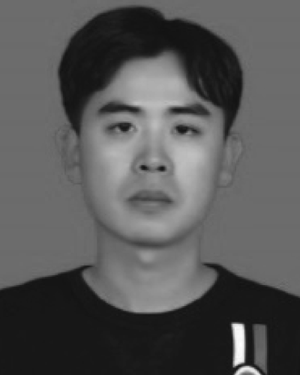 Hongtong Wu合作论文数Lanzhou Univ, Sch Informat Sci & Engn, Lanzhou 730000, Peoples R China7
 Dixin Wang合作论文数School of Information Science and Engineering, Lanzhou University7
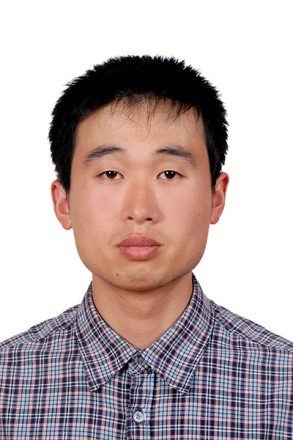 Hong Peng (彭宏)合作论文数School of Information Science and Engineering, Lanzhou University7
 Xuefeng Cui (崔学峰)合作论文数Institute for Interdisciplinary Information Sciences (IIIS),Tsinghua University6
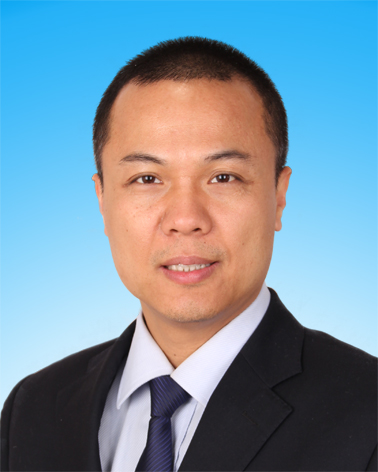 Ting Chen (陈挺)合作论文数Institute of Artificial Intelligence, Department of Computer Science and Technology, Tsinghua University6
 Chang Lei合作论文数Lanzhou University,Gansu Provincial Key Laboratory of Wearable Computing School of Information Science and Engineering,Lanzhou,China5
 JinLong Chao (钞锦龙)合作论文数5
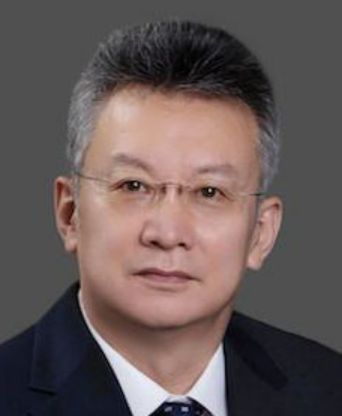 Bin Hu (胡斌)合作论文数School of Information Science & Engineering, Lanzhou University;School of Computer Science & Technology, Beijing Institute of Technology5
 Yushun Fan (范玉顺)合作论文数Department of Automation, Tsinghua University5
 Shuzhen Zheng合作论文数Lanzhou University,Gansu Provincial Key Laboratory of Wearable Computing School of Information Science and Engineering,Lanzhou,China4Zhaoxu Meng合作论文数3
 Cheng Chen合作论文数These authors contributed equally to this work.3Chunyu Wei (韦淳于)合作论文数3
 Haitao Jiang (姜海涛)合作论文数School of Computer Science and Technology, Shandong University3
 Guangyu Wang (王光宇)合作论文数School of Information and Communication Engineering, Beijing University of Posts and Telecommunications3
 Jitao Zhong合作论文数3Zhenghe Yang合作论文数2
 Tingdi Ren合作论文数2
 Guohui Wang (王国珲)合作论文数School of Optoelectronic Engineering, Xi’an Technological University2
 Haoying Han (韓昊英)合作论文数Urban Complexity and Management Lab, Institute of Urban and Sustainable Development, City University of Macau;Faculty of Innovation and Design, City University of Macau2Haiyong Xu (徐海勇)合作论文数School of Mathematics and Statistics, Ningbo University2
 Jia Zhang合作论文数Department of Computer Science, Lyle School of Engineering, Southern Methodist University2
 Wei Zhao合作论文数Dept Clin Pharm, Shandong Univ2Oulan Li合作论文数1Shiyu Li (李世玉)合作论文数1
 Michael Roberts合作论文数1Guiping Lin合作论文数1
 Ruyu Yan合作论文数1Jingwei Zhuang合作论文数1Ruiyun Deng合作论文数1Zehong Yang合作论文数1Huimin Cai合作论文数1Wenwei Zhang合作论文数1Ian Ziyar合作论文数1Andrea Olvera合作论文数1Yu Tao合作论文数1Lin Qiao合作论文数1Guoqiang Shen合作论文数1
 Xiaofeng Wang合作论文数1Ke Wang合作论文数1Winston Wang合作论文数1Kai Wang合作论文数1
 Ye Sang合作论文数1Charlotte Zhang合作论文数Bioland Lab, Guangzhou Regenerat Med & Hlth Guangdong Lab1Jiulong Shan合作论文数1
 Chengdi Wang (王成弟)合作论文数West China Hospital of Sichuan University1Ping Huang合作论文数1
 Su Yang合作论文数1Zhihuan Li合作论文数1




