The transformation of digested sludge into biochar-based catalysts exhibited great potential for PMS activation and pollutant degradation. However, the feasibility and environmental sustainability of the digested sludgebased biochar (DSB)/PMS system for pilot-scale applications remain unverified. In this work, granular DSB was prepared and filled in a columnar continuous flow reactor. DSB-800 enriched with defective structures, C--O, graphite N and Fe2 + sites had outstanding catalytic capability. The contributions of 1O2, center dot OH and SO4 center dot- for SMX degradation were 52.04%, 21.58% and 25.84% in the DSB-800/PMS system, respectively. The S-N and C-C bond breaking as well as the oxidation of the benzene ring amino group in SMX were mainly observed. A pilotscale column reactor (750 L) packed with granular DSB achieved efficient and stable removal of pollutants, including SMX, from municipal secondary effluent. Also, toxicity assays using Vibrio fischeri confirmed the environmental safety of the treated effluent after pilot-scale operation. This study proved the enormous promise of scalable production for DSB catalyst, advancing the application of the DSB/PMS system in AOPs.
The management of end-of-life polyamide reverse osmosis membranes (EPAROM) from industrial wastewater treatment and seawater desalination has become a critical environmental and energy challenge. The present study constitutes a systematic investigation of the physicochemical characteristics and thermal conversion mechanisms of EPAROM. The EPAROM possess a high heating value (HHV) of 32.20 MJ/kg at 500°C pyrolysis. However, the hydrogen loss caused by excessive high-temperature (>500°C) pyrolysis offsets the HHV gain brought about by carbon enrichment. The dense and agglomerated microstructure of the raw material gradually evolves into a loose and porous stable carbon-based framework. Higher pyrolysis temperatures enhance the release of small-molecule gases, and the LHV of pyrolysis gas increases from 2.13 MJ/kg at 500°C to 9.71 MJ/kg at 700°C. High-temperature conditions have been demonstrated to offer significant advantages in terms of combustible gas production and the optimal gas quality. However, it should be noted that this process can result in an increase in NO and NO2 emissions. TG analysis indicates that the pyrolysis of the EPAROM mainly includes three stages: the organic impurity degradation stage (250-330°C), the residual volatile matter release stage of EPAROM (330-450°C), and the slow decomposition stage of residual char (>450°C). In accordance with the aforementioned points, three primary gasification reaction stages can be distinguished: the initial light volatile oxidation stage (250-350°C), the subsequent rapid oxidation stage of residual volatile matter (350-470°C), and the oxidation stage of residual char (470-610°C). The present study provides a theoretical basis for the efficient and clean gasification disposal of reverse osmosis membranes.
Polyvinylidene fluoride (PVDF) composite membranes have been widely adopted in the water treatment industry, and the rapid increase in membrane waste has drawn growing attention. The aging process during service may alter material properties and influence subsequent disposal pathways. To investigate suitable thermochemical treatment and utilization methods for membranes, this study systematically compared the thermal decomposition behavior and three-phase product distribution characteristics of pristine and retired membranes through TG and pyrolysis experiments. Results indicate that the primary thermal decomposition range for both membrane types is concentrated between 370 and 510 degrees C, with a total mass loss of approximately 70 wt%. Service aging induces microcrack formation on the membrane surface and introduces oxygen-containing functional groups. This results in an overall decrease in solid yield and shifted the liquid yield upward to 500-600 degrees C. Analysis of the three-phase products revealed that pyrolysis oil primarily consists of esters, alcohols, and carboxylic acids. Retired membranes exhibited significantly increased oxygen-containing compounds like benzoic acid and substantially reduced biphenyls, making them suitable as oxygen-rich platform chemicals or partially upgraded fuel additives. The resulting char presents a BET surface area of approximately 500 m2 g-1 and is rich in hydroxyl/carboxyl groups, demonstrating potential for industrial and research applications. And the pyrolysis gas from the retired membrane yields a higher proportion of H2 and CO. This study demonstrates the potential for thermochemical treatment of membranes. With the expanding application of PVDF composite membranes, this method offers a potential pathway application value.
To rapidly and accurately predict the maturity and nutrient content of rural organic solid waste (ROSW) composts-while avoiding labor-intensive and costly experimental procedures and optimizing composting parameters for various applications-machine learning (ML) was identified as a promising and efficient solution. In this study, XGBoost, Random Forest and an integrated XGBoost-Random Forest model were developed and compared for predicting nutrient content and compost maturity. The results showed that the integrated model demonstrated superior predictive performance, with R2 values of 0.79 for total organic carbon, 0.67 for total nitrogen, 0.75 for the seed germination index, 0.81 for the humification index, and 0.83 for the E4/E6 ratio. Feature importance and SHAP analysis identified key parameters influencing each output, thereby simplifying the integration process and enhancing the model's interpretability. By adjusting the weighting of base learners within the integrated model, the study effectively minimized overfitting and improved the model's accuracy. Experimental validation confirmed the accuracy of the model, with prediction errors remaining below 10 %. This study presents a novel, efficient method for predicting compost nutrient content and maturity, offering valuable insights into optimizing ROSW composting processes.
This study optimized the Gompertz model with machine learning. The vital parameters of Gompertz were obtained by machine learning instead of experiment, and the accuracy and interpretability of the new model were compared to the traditional Gompertz model. The results showed that the prediction accuracy of the three machine learning algorithms was superior, with the maximum average R2 and Root Mean Square Error (RMSE) reaching 0.95 and 1.448, respectively. For all machine learning inputs, the inoculum and feedstock had significant impact on the output, with an average contribution rate of 36.5 % and 42.5 %, respectively. Compared to traditional Gompertz model, the accuracy of the machine learning model improved by 23.1 %. Furthermore, when a small amount of experimental data was incorporated into the machine learning model, the accuracy was further improved by 42.3 %. The Theil Inequality Coefficient (TIC) values of the four feedstocks in the new model reached 0.019, 0.011, 0.012, and 0.020 respectively. This study confirms the hypothesis that accurately predicting crucial intermediate parameters using machine learning models can enhance the performance of the Gompertz model.
Biochar's potential as a sustainable solution for agricultural and environmental management depends on its capacity to retain nutrients and sequester carbon. However, accurately predicting biochar yield and nutrient content, particularly nitrogen (N), phosphorus (P), and potassium (K), remains a significant challenge. This study addressed this issue by applying advanced machine learning models to predict biochar properties based on biomass characteristics and pyrolysis conditions. The models included Support Vector Regression (SVR), Random Forest (RF), Back Propagation Artificial Neural Network (BP-ANN), and Extreme Gradient Boosting (XGBoost). Analysis of 271 datasets, augmented with random noise injection for data augmentation, revealed that XGBoost was the most reliable model, achieving an average R2 of 0.97 for predicting biochar yield and elemental compositions. Key findings indicate that pyrolysis temperature is the primary determinant of biochar yield, while feedstock composition plays a critical role in nutrient retention. Additionally, a novel graphical user interface (GUI) was developed to translate these computational insights into practical applications, bridging the gap between complex data analysis and real-world agricultural and environmental management. This research offers a robust, data-driven framework for optimizing biochar production and enhancing its role in sustainable agriculture and environmental conservation.
This study developed a machine learning-based pyrolysis model to predict the product yields of polyvinylidene fluoride (PVDF). Among the evaluated algorithms, the Random Forest (RF) algorithm demonstrated superior performance and was selected as the optimal model. The developed RF model exhibited high predictive accuracy, achieving a coefficient of determination (R2) of 0.947, indicating that more than 94.7 % of the variance in product yield was explained. Feature importance analysis, employing both Pearson correlation and SHAP methods, revealed that the elemental composition of the feedstock provided the most significant contribution (45.76 %) to the pyrolysis product distribution. Experimental validation confirmed the model's robustness, with predicted yields for PVDF pyrolysis showing excellent agreement with actual experimental results, achieving an overall accuracy exceeding 92.6 %. This work provides valuable insights and a reliable predictive framework for modeling the pyrolysis behavior of PVDF and related fluoropolymers.
With rapid industrial development in rural areas of China, the streams of rural organic solid wastes (ROSW) significantly increased, and their managements are facing great environmental and economic challenges. It is urgent to explore more optimal scenarios for ROSW management. This study compared and evaluated three ROSW treatment scenarios [anaerobic digestion (AD), aerobic composting (AC), the integration of anaerobic digestion and aerobic composting (AD-AC)]. Emission factor methods, cost-benefit analysis, and energy balance were employed to evaluate greenhouse gas (GHGs) emissions, economic performance, and energy flow for each scenario. The results indicated that AD-AC scenario showed the lowest net GHGs emissions (1462.38 kg CO2-eq/ FU), comparing to AD scenario (3008.06 kg CO2-eq/FU) and AC scenario (2394.78 kg CO2-eq/FU). The AD-AC scenario also presented a promising economic advantage for ROSW treatment, achieving a net operation benefit of 1765.7 CNY per month. Moreover, Only the AD-AC system showed positive energy recovery of 588.3 kWh/ day, while the AD and AC systems exhibited the losses of-441.38 kWh/day and-171.12 kWh/day, respectively. These findings revealed that AD-AC scenario was recommended as the optimal strategy for ROSW management due to its low-carbon emissions, environmental friendliness, and high economic efficiency. This study provided valuable insights for the implementation of integrated waste treatment systems and contributed to advancing the ROSW management in China.
With the rapid development of modern society and the continuous increase in resource consumption in rural areas of China, the management of rural organic solid wastes has encountered substantial environmental and economic challenges. Although the integration of anaerobic digestion and aerobic composting offers promising potential for sustainable rural organic solid waste management, comprehensive environmental evaluations of this integrated system remain limited, representing a critical research gap. This study employed life cycle assessment to compare the integrated system with standalone anaerobic digestion and aerobic composting scenarios, assessing eighteen mid-point impact categories and three end-point indicators (human health, ecosystems, and resources). The results demonstrated that the integrated scenario achieved superior environmental performance, yielding a net reduction with significant benefits in human health (-0.027 DALY) and resource conservation (-14.44 USD2013). Notably, it outperformed standalone systems in fifteen of the eighteen impact categories, with pronounced advantages in global warming potential, ecotoxicity, and fossil resource scarcity. However, the integrated system exhibited relative limitations in water consumption, terrestrial acidification, and ozone depletion. Sensitivity analysis revealed that a 10 % reduction in electricity consumption shifted the ecosystem impact of the integrated system from a burden (6.57 x10⁻⁵ species center dot yr) to a net benefit (-2.3 x10⁻⁵ species center dot yr). This study addresses the identified research gap by providing a systematic environmental assessment, underscoring the importance of adopting integrated rural organic solid waste management strategies tailored to regional conditions in China.
This study employed machine learning models to simulate and optimize the integrated anaerobic digestion (AD) and aerobic composting (AC) process for treating rural organic solid waste. The M-ADM1 and Random Forest models were combined to provide a comprehensive prediction of the system dynamics, and the carbon offset was used as a key evaluation indicator. Both the models demonstrated high predictive accuracy. The R-2 and RMSE of the AD model reached 0.967 and 0.037, respectively. The R-2 and RMSE of the AC model reached 0.955 and 0.0037, respectively. Major carbon offsets were achieved by substituting methane for natural gas and converting solid digestate into compost to replace chemical fertilizers. The total carbon offset increased markedly between 6-16 days, reaching a peak of 39.73 g CO2-eq on Day 16 prior to AD stabilization. These results underscored the significant potential of the integrated AD-AC process in reducing carbon emissions and provided valuable insights for operational optimization.
Cold chain logistics is an emerging carbon emission source. The transportation section is estimated to generate more than 80
The characteristic of the spiked electrode electrostatic precipitator was numerically studied. Complicated electrohydrodynamic flow was observed and vortices were formed in the ESP with the maximum gas velocity 30.9 m/s in this study. The spiked electrode had significant effects on the distribution of electric field and charge density. The corona charge was confined to six semi-ellipsoidal regions around the tips of the spiked electrode, which was 1.04 x 10⁶ mu C/m3 at the tip surface. The particle trajectories were complicated due to the EHD flow. High working potential and low gas velocity were beneficial to the removal of particles.
Aqueous phase reforming (APR) of biomass-derived products has been widely applied for hydrogen generation, chemicals production, and wastewater treatment. Despite its widespread application, the complexity of the raw materials and reaction mechanisms significantly complicates the APR process, impeding its development. This study investigated the APR performance of biomass-derived products using Ni/alpha-MoO3 catalysts toward hydrogen production and pollutant control, conducted at a temperature of 225 degrees C and a residence time of 30 min, thus comprehensively understanding the effect of different functional groups. The results showed that the amide (R-HCON) exhibited superior hydrogen production potential during APR. In terms of total organic carbon (TOC) removal, ether showed a 98.10% removal efficiency without a catalyst, whereas the presence of catalyst greatly enhanced the TOC removal efficiency of acetaldehyde (-CHO) from 62.26% to 86.68%. The performed APR of biomass-derived products on Ni/alpha-MoO3 catalysts primary resulted in the presence of N, N-Dimethylformamide (HCON-(CH3)2), and aminobenzene (Ph-NH2) for Ni leaching with a lower concentration. The carbon deposition on the catalyst primarily resulted from the combined effects of various compounds and the oxygen vacancies within the catalysts. This study aims to provide novel insights into the APR process for both biomass and biomass-derived materials.
The characteristic of the spiked electrode electrostatic precipitator was numerically studied. The spiked electrode had significant effects on the distribution of electric field and charge density. The electric field and charge density were quite high in the area around the spiked electrode tips while decreased rapidly in other area far from the tips. Complicated electrohydrodynamic flow was observed and strong vortices were formed in the upstream and side areas of the spiked electrode. The gas velocity at the tip of the spiked electrode was as high as 28.1 m/s at the working potential of 45 kV. The working potential was more effective for the removal of large particle. The removal efficiency increased 42.4% for 10 mu m particle and 15.2% for 0.25 mu m particle as working potential increased from 22.5 kV to 45 kV. Low gas velocity was beneficial to the removal of all size particles. The removal efficiency increased by 10% to 15% for all size particles when the gas velocity decreased from 1.0 m/s to 0.6 m/s.
For the authentication of powdered spices, the possible impact of the natural variations of adulterants on classification or prediction models is always ignored, and research in this area is still quite scarce. This study takes the application of front-face synchronous fluorescence spectroscopy (FFSFS) to the rapid and non-destructive authentication of cumin powder adulterated with ground peanut shells and maize flour as an example to show that how the natural variations of adulterants affect model prediction. Using three samples of each adulterant, two modes of sample set were designed for comparison. Mode 1 used the first adulterant for calibration and the other two for external validation. Mode 2 employed two adulterants in training and the third for external validation. The classification of adulterants by principal component analysis coupled with linear discriminant analysis (PCA-LDA) showed that mode 2 had a higher prediction rate (82%) in external validation than mode 1 (63%). For quantification, prediction models were built by partial least square (PLS) regression, and were validated by both cross- and external validation. The result of mode 2 was better than that of mode 1, with the determination coefficients of prediction (Rp2) greater than 0.93, the root mean square error of prediction (RMSEP) < 4.2% and residual predictive deviation (RPD) at least 2.7. This study demonstrates the necessity of the consideration of the natural variations of adulterants when constructing a robust model for adulteration detection.
Anaerobic digestion is a promising approach to dispose of biodegradable waste and wastewater, generating biogas as an alternative energy resource. This work proposed a so-called M-CADM1 for continuous anaerobic digestion simulation, which combined the machine learning and anaerobic digestion model No.1 (ADM1). The detailed reaction path and intermediate products in different stages of anaerobic digestion are specified in ADM1. The kinetic parameters were modified by machine learning. The characteristics (elemental composition) of feedstocks were used to predict kinetic parameters. A total of 75 biomass samples were used to establish for machine learning models. Five element contents (C, H, O, N, S), feedstock feed rate, and anaerobic digestion temperature were used as the input. The kinetic parameters were set as output. The sensitivities of 17 kinetic parameters were evaluated. 7 kinetic parameters with the highest sensitivities were selected as ADM1 model inputs by sensitivity analysis. The R2 and RMSE were used as the index to evaluated the accuracy of machine learning model. The best R2 and RMSE reached 0.84 and 0.196. The TIC was used as the index to evaluated the accuracy of M-CADM1. By comparing the simulated value with the experimental value, the accuracy of the overall M-CADM1 expressed by TIC of kitchen waste was 0.036. The organic acid content and pH in the reactor were considered as indicators to study the accuracy and stability of the M-CADM1. Trends in organic acids, free ammonia or hydrogen inhibition, and pH were consistent with experimental continuous anaerobic digestion results.
Flue gas torrefaction (FGT) is a promising pretreatment to improve the fuel properties of municipal solid waste (MSW). Four torrefaction carrier gases (N2, flue gas, flue gas/air (1:1), and air) were employed for the comparative investigations. As expected, the higher heating value (HHV) of the oxygenated torrefied MSW was nearly twice as much as the raw MSW. In particular, the chlorine content in torrefied MSW decreased from 35.57 % in the N2 atmosphere to 14.50 %-9.37 % in oxidative torrefaction. Furthermore, the dominant form of chlorine was converted from organic to inorganic. TG-MS results envisaged that the thermodynamic properties of torrefied MSW were affected by the choice of carrier gases. Among them, oxygen carrier gas effectively improved the thermal stability and fuel properties of torrefied MSW. During pyrolysis, the release of H2 and CH4 was enhanced by flue gases (flue gas and flue gas/air). The release of H2O was reduced during combustion. The emissions of HCl and CH3Cl were inhibited. After FGT, 44 % of chlorine was present in torrefied MSW. Notably, torrefaction increased slagging and fouling inclination and was exacerbated with increasing oxygen content. This study provides a reference for further improving the theoretical system and application of flue gas torrefaction.
Renewable hydrogen sources from organic wastewater, which is increasingly recognized as one of the key strategies to achieve carbon peaking and carbon neutrality goals under the new development philosophy. Meanwhile, the treatment of biogas slurry (BS) has a serious impact on the environment, hindering the appli-cation of anaerobic digestion. In this study, a novel method that combined aqueous phase reforming (APR) over alpha-MoO3 nanosheets and activated carbon adsorption was presented, considering sustainable management and conservation of resources. This study examined the relationships between catalyst calcination temperature and catalytic performance of alpha-MoO3 nanosheets in the APR of BS. A series of catalysts synthesized by thermally hydrogenating and calcined from 400 to 700 degrees C were characterized and evaluated. Results indicated that hydrogen yield increased at first and then decreased with the increment of calcination temperature due to the change of van der Waals (vdW) heterostructures. The shrinkage of vdW heterostructures of alpha-MoO3 nanosheets can contribute to the generation of hydrogen because of the low oxygen vacancies and surface acidic property. As a result, the optimal removal efficiencies of the pollutants (non-purgeable organic carbon (NPOC), chemical oxygen demand (COD), total nitrogen (TN), and ammonia nitrogen (AN)) reached 79.45%, 87.82%, 49.78%, and 50.22%, respectively. The optimal hydrogen yield (4.91 mLHydrogen/mLBS) was also achieved using alpha-MoO3 nanosheets calcined at 600 degrees C. This work can provide an effective strategy to treat and utilize organic wastewater.
In the study, carbon layer decorated MOFs-derived alpha-MoO3 with the doping Ni species (Ni/MOFs-derived alpha-MoO3) catalyst was synthesized. The catalyst was used to simultaneously produce renewable hydrogen and treat biogas slurry (BS) by aqueous-phase reforming (APR). The water quality of BS including pH, inorganic, and organic compounds due to the effect of fermentation time was investigated for the APR. Characterization results confirmed that the van der Waals heterostructures, morphologies, acid-base, and redox properties of the catalyst were optimized, which significantly improved the specific surface area (3.68 times) and decreased the total acidity from 54.22 to 25.76 mu mol/g and thus facilitated the APR. Meanwhile, the pH, organic load, and salinity of BS changed with fermentation time, affecting hydrogen production and pollutant removal. This afforded the optimal catalytic performance of hydrogen production, reaching up to 0.38 mLhydrogen/mLBS when the BS ob-tained from fermentation at 21 days was treated. It is hoped that these findings could offer a viable technology to treat wastewater and realize the high added value of BS.
 Guanyi Chen (陈冠益)合作论文数School of Mechanical Engineering, Tianjin University of Commerce;School of Environmental Science and Engineering, Tianjin University20
 Beibei Yan (颜蓓蓓)合作论文数School of Environmental Science and Engineering, Tianjin University15
 Junyu Tao (陶俊宇)合作论文数College of Environmental Science and Engineering, Nankai University13
 Zhanjun Cheng (程占军)合作论文数School of Environmental Science & Engineering, Tianjin University10
 Jian Wang合作论文数6
 Yingjin Song (宋英今)合作论文数School of Environmental Science & Engineering, Tianjin University6
 Rundong Li (李润东)合作论文数School of Energy and Environment, Shenyang Aerospace University5Zibiao Liu合作论文数4Yuxuan Chen合作论文数3
 Biyu Wang合作论文数3Yunan Sun (孙昱楠)合作论文数2Donghao Hou合作论文数2Yadong Ge合作论文数2Xiaoshan Dong合作论文数2Yongjie Hu合作论文数2
 Shengquan Zhou (周生权)合作论文数School of Environmental Science & Engineering, Tianjin University2
 Rui Liang合作论文数2
 Akash Kumar合作论文数2
 Xiaochao Zhu (朱小超)合作论文数School of Environmental Science & Engineering, Tianjin University2
 Lan Mu合作论文数2
 Zeng Dan (旦增)合作论文数School of Ecology and Environment, Xizang University2Yincheng Wang合作论文数1Tingwu Zhao合作论文数1Songjiang Li合作论文数1Rui Zhang合作论文数1Fan Zhang合作论文数1
 Rodriguez Yakelin合作论文数Arbuscular Mycorrhizal Grp, Inst Nacl Ciencias Agr INCA1
 Wu Wenzhu合作论文数1Lingyu Sun合作论文数1Jinze Du合作论文数1
 Tianhua Yang (杨天华)合作论文数School of Energy and Environment, Shenyang Aerospace University1
 Weigao Zhao (赵伟高)合作论文数School of Environmental Science & Engineering, Tianjin University1
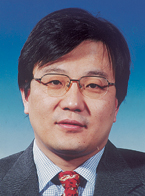 Wei Guo (郭伟)合作论文数School of Mechanical Engineering, Tianjin University1
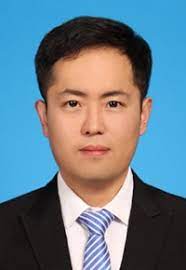 Ning Li (李宁)合作论文数School of Environmental Science and Engineering, Tianjin University1
 Zhi Wang (王志)合作论文数School of Chemical Engineering and Technology, Tianjin University;State Key Laboratory of Chemical Engineering and Low-Carbon Technology, Tianjin University1Zongsheng Zhu合作论文数1Jin Tan合作论文数1Yan Shi合作论文数1Chao Chen (陈超)合作论文数1Haihua Ruan (阮海华)合作论文数1
 Zuoxi Liu (刘祚希)合作论文数1
 Yanshan Wang合作论文数Department of Health Sciences Research,Mayo Clinic.1




