The complexity of attitude control for flexible satellites surpasses that of rigid satellites due to factors such as oscillations of flexible appendages, uncertainties in moment of inertia, and unmeasurable modal variables. This paper investigates the design of an observer-based multi-model predictive controller for the attitude control of a flexible satellite. In this context, the development of an appropriate observer capable of estimating the lumped impact of disturbances resulting from moment of inertia uncertainty, modal variables, and external perturbations in flexible satellites has been discussed, with a focus on ensuring its asymptotic convergence. Furthermore, to establish the optimal model bank within the multi-model control framework, a novel PSO-based automatic clustering approach has been employed. Subsequently, the design of the adaptive model predictive controller bank is presented, accompanied by a supervisor algorithm that enables seamless soft switching to uphold the asymptotic stability of the closed-loop system. Through simulation study, the efficacy of the proposed control system is assessed, demonstrating the attainment of high attitude control accuracy for flexible satellites. (c) 2025 Published by Elsevier B.V. on behalf of COSPAR.
This study presents a novel output feedback Q-learning algorithm specifically designed for fault-tolerant control in real-time applications, circumventing the necessity for explicit system models or detailed actuator and sensor fault information. A significant benefit of this algorithm is its capability to simultaneously achieve optimality and stabilize systems with both actuator and sensor faults. Unlike traditional methods, it learns online using input-output data from the faulty system, bypassing the need for full-state measurements. We develop a unique expression of the Fault-Tolerant Q-function (FTQF) in the input-output format and derive a model-free optimal output feedback fault-tolerant control (FTC) policy. Furthermore, the algorithm's real-time implementation process is detailed, showing its adaptability in acquiring optimal output feedback FTC policies without prior knowledge of system dynamics or faults. The proposed method remains unaffected by excitation noise bias, even without a discount factor, and guarantees closed-loop stability and convergence to optimal solutions. Validation through numerical simulations on an F-16 autopilot aircraft underscores its effectiveness.
This study explores an improved intermediate estimator-based fault estimation method for Lipschitz nonlinear systems. The proposed intermediate estimator offers notable advantages, including the elimination of the need for a matching condition, the ability to accommodate unbounded faults, and the removal of the necessity to identify the fault derivative bound. The primary focus is on improving the performance of the fault estimator by reducing overshoot, minimizing steady-state error, and accelerating the convergence rate. To achieve these improvements, a novel dynamic system with a PID structure is introduced into the intermediate estimator design. This design incorporates three adjustable parameters: proportional, integral, and derivative coefficients. Fine-tuning these parameters allows for optimized performance in both transient and steady-state conditions. Numerical simulations demonstrate that the improved intermediate estimator outperforms the nominal intermediate estimator. Theoretical analysis further reveals that the nominal intermediate estimator can be considered a subset of the proposed estimator. Utilizing Lyapunov stability theory and the linear matrix inequality (LMI) method, it is proven that the error system's states are uniformly ultimately bounded. Comparisons with the nominal intermediate estimator highlight the proposed method's superior capabilities and benefits.
The present paper attempts to design an adaptive multi-model predictive control strategy for strongly nonlinear or switched systems with various operating points. The proposed control system guarantees the feasibility and the asymptotic stability of the closed-loop system, considering various challenges such as inherent uncertainties in the local models constituting the model bank, limited prediction/control horizons, and set point changes. To this end, four fundamental challenges in this area, namely guaranteeing feasibility throughout the region assigned to each subspace, ensuring asymptotic stability in each subspace considering the inherent uncertainties of the local models, guaranteeing feasibility and asymptotic stability during changes in the set point and switching between the subspaces, are addressed. By introducing transferring mode concept, this paper presents a novel method for guaranteeing the feasibility and stability of the switched systems without the need for increasing the prediction/control horizons or decreasing the size of the feasibility region. The proposed control structure uses a supervisor algorithm along with a soft-switching technique. The supervisor algorithm is responsible for determining the suitable local model/controller pair, determining the operational mode of the control system, managing the soft switching, and specifying the control objectives in accordance with the defined set point. The efficiency of the proposed control strategy is demonstrated by simulating a Continuous Stirred Tank Reactor (CSTR) as the controlled system. Based on the results, the proposed controller is able to guarantee the feasibility and stability of highly nonlinear and switched systems in a wide operating region under set point changes and uncertainties in the local models.
The Multiple Model Control (MMC) structure comprises three main components: the model bank, controller bank, and supervisor algorithm. Precise design of these components is crucial for achieving high control performance within the MMC framework, albeit this effort is not without its challenges. These challenges involve optimizing the model and controller banks ensuring system stability when dealing with uncertainties in the local models and enabling smooth switching between model-controller pairs. This paper addresses these challenges by presenting a comprehensive approach. Firstly, the optimal model bank is designed using an automatic clustering approach. Then, the design of the adaptive multi-model predictive controller bank and a supervisor algorithm capable of performing soft switching are discussed. The proposed control system exhibits the capability to ensure closed-loop system stability within each individual subspace, as well as during the transitioning between distinct subspaces. This stability is preserved even in the face of inherent uncertainties associated with the local models comprising the model bank. To evaluate and validate the performance of the proposed control system, it is applied to a satellite attitude control system. The results confirm the effectiveness and performance of the control system. The proposed control system holds promise for controlling highly nonlinear, complex, or switched systems, ensuring closed-loop system stability, and achieving high control performance.
This paper investigates the stabilization problem with a fixed-time approach for a flexible spacecraft subject to vibrations of flexible modes, unknown bounded disturbance, and inherent uncertainty. To estimate the modal variables of a flexible spacecraft which are often unmeasurable in practice, an observer with guaranteed fixed-time convergence is designed. Using the estimated modal variables, a fixed-time non-singular sliding mode controller is designed so that the desired attitude can be reached before a pre-specified time threshold regardless of the spacecraft's initial attitude. By incorporating the estimated modal variables in the control design, significant reduction in the steady-state error of the system response is achieved. The proposed control system is further enhanced with an adaptive law to increase robustness against unknown external disturbances and uncertainties. Stability analysis based on Lyapunov theory guarantees the convergence of observer estimation error and spacecraft attitude error to a pre-determined set before a fixed threshold. Simulation results validate the promising performance of the proposed control system, highlighting its effectiveness in achieving accurate and robust attitude control for flexible spacecraft.
This paper presents a novel active fault-tolerant control (FTC) scheme based on reinforcement learning (RL) for rigid spacecraft operating in challenging conditions with simultaneous actuator faults and external disturbances. Initially, the paper outlines the dynamics of a rigid spacecraft afflicted by actuator faults and subject to external disturbances. Subsequently, an observer is designed to swiftly detect actuator faults, ensuring a timely response to fault occurrences. An indirect fault estimator is then employed to estimate the total faults affecting the system. Based on the estimated total faults, the proposed decision mechanism switches the controller from the nominal to the fault-tolerant controller. The proposed fault-tolerant controller is model-free and utilizes the Q-learning algorithm. This Q-learning-based fault-tolerant controller can be implemented online without relying on explicit system models or actuator fault details. Notably, this innovative controller operates independently from fault detection and identification (FDI), utilizing data extracted from system trajectories. The stability of the fault-tolerant controller is established using Lyapunov techniques, providing rigorous validation of its effectiveness in maintaining system stability and achieving satisfactory performance. The performance and adaptability of the proposed approach are assessed through comprehensive simulation studies, emphasizing its capacity to enhance spacecraft fault tolerance in demanding operational scenarios.
In the Multiple Model Control (MMC) strategies, a bank of simple local models is used to describe the behavior of complex systems with vast operation space. In this approach, the system operation space is divided into several subspaces, and in each subspace, a simple local model is assigned to describe the system behavior. This study addresses the two main challenges in this field which involve determining the optimal number of required local models to form the model bank and identifying the optimal distribution of the local models across the system operation space. Providing appropriate answers to these questions directly affects the performance of the MMC system. In this paper, GA-based automatic clustering method is suggested to form an optimal model bank. In this regard, an appropriate mapping is established between the concepts of MMC and automatic clustering, and a novel unsupervised algorithm is designed to determine the optimal model bank. Unlike the existing methods in the literature, the proposed method can form the global optimal model bank without entrapment into local optima regardless of the initial conditions of the used search algorithm. In this paper, the formation of the optimal model bank using the proposed method is investigated by considering the spacecraft attitude dynamics as a complex, MIMO, non-linear case study and its satisfactory and promising performance is demonstrated.
This paper presents an innovative output feedback fault-tolerant Q-learning algorithm that can be implemented online without relying on explicit system models or fault details. In the face of actuator faults, finding optimal Fault-Tolerant Control (FTC) solutions that can stabilize the faulty system poses significant challenges. The proposed approach is implemented online without the need for system dynamics and actuator fault information. Furthermore, it operates without relying on full state measurements, utilizing only the input-output data of the faulty system. An innovative representation of the output feedback Fault-Tolerant Q-function (FTQF) is established using input-output data. Subsequently, a model-free optimal output feedback FTC policy is obtained from the developed FTQF. Then, a fault-tolerant Q-learning algorithm is formulated to iteratively acquire the optimal FTC policy in real-time, eliminating the necessity for system dynamics and actuator fault information. The proposed algorithm exhibits immunity to excitation noise bias, even without considering a discounting factor. Furthermore, the proposed Q-learning approach is proven to be effective in stabilizing faulty closed-loop system. Finally, the proposed algorithm's efficiency is validated through numerical simulations of F-16 autopilot aircraft dynamics.
A finite-time observer-based attitude controller is designed for a flexible satellite in the paper titled "Finite-Time Control Algorithm Based on Modal State Observer for Flexible Satellite Attitude Tracking" which is referred to as the "original paper" hereafter. Through a comprehensive review of the article, it has become evident that the design of the observer in the original paper contains critical errors, rendering the results presented therein invalid. In this corrigendum, we meticulously discuss the identified flaws in the original paper and present the necessary amendments to rectify them. Furthermore, we enhance the finite-time observer proposed in the original paper to not only estimate the effects caused by modal variables but also account for the effects resulting from external disturbances and the inherent uncertainty associated with the moment of inertia of the flexible satellite. The finite-time convergence property of the proposed observer, presented within this corrigendum, is assured through the utilization of the Lyapunov approach. By employing the proposed observer outlined in this corrigendum, the validity of the remaining components highlighted in the original paper is preserved, providing an accurate framework for further research and practical applications.
This paper focused on fault estimation in Lipschitz nonlinear systems by providing an improved intermediate estimator (IIE). The core feature of an intermediate estimator is to simultaneously estimate the fault and states of the system without considering the matching condition. Since fault estimation is the first step of the process to compensate for its effect, the system performance can be further improved by making more accurate fault estimation. The structure of the nominal intermediate estimator (NIE) was modified by being inspired by the proportional-integral (PI) controller to improve the performance characteristics of the estimator, such as convergence rate, overshoot, and steady-state error. The estimation equation was assumed as such in the proposed estimator structure that the estimated fault would have a PI structure of the output estimation error. This has increased the number of design parameters, improving the estimator performance in transient and steady-state. The NIE can be indeed known as a particular case of the IIE since the proposed estimator benefits from all the advantages of an NIE while improving the estimation performance. The states of the error system were proven to be uniformly ultimately bounded according to Lyapunov stability theory and using the LMI method, as well as the appropriate selection of parameters. The analysis of the theory, simulation, and comparing the results of the proposed method with the NIE method reveal the capabilities and advantages of the proposed method.
This paper proposes a systematic approach for optimizing the distribution of local models in multi-model control systems (MMCS) to enhance overall robustness. While existing literature discusses this method for linear parameter varying (LPV) and uncertain linear time-invariant (LTI) systems, significant limitations persist in addressing nonlinear dynamic systems. Robust control tools like the gap metric and generalized stability margin (GSM) have limited effectiveness in analyzing the robustness of nonlinear feedback systems. To address these challenges, novel concepts of the gap metric and GSM are introduced to determine central operating points (COPs) within local operating areas (LOAs) across the total operating area (TOA). These COPs guide the extraction of affine disturbance local models (ADLMs). Additionally, an optimization problem based on the s-gap metric and GSM is presented to optimize COPs placement and LOAs boundaries. Challenges such as non-monotonic behavior of the cost function and complexity arising from the s-gap metric formulation necessitate novel solution methods. To address these, constraints are applied to the cost function, and a novel discrete optimization approach is introduced. Finally, theoretical findings are applied to the Duffing system, pH neutralization process, and continuous stirred tank reactor (CSTR) plant to evaluate the proposed method's effectiveness. This comprehensive validation across different systems underscores the versatility and practical utility of the proposed approach.
Abstract An adaptive Dynamic Surface Controller (DSC) is designed for a two‐axis gimbal system with actuator dynamics in the presence of parametric uncertainties in [1]. A Lyapunov stability analysis is used to guarantee the convergence of the tracking error to the origin and boundedness of all closed‐loop signals. The main objective of this corrigendum is to point out several errors that occurred throughout the paper, resulting in the inaccuracy of the used dynamic model and ineffectiveness of the proposed controller. It should be noted that taking into account the corrections stated in this corrigendum, the main result of the original paper is still valid.
An adaptive Dynamic Surface Controller (DSC) is designed for a two-axis gimbal system with actuator dynamics in the presence of parametric uncertainties in [1]. A Lyapunov stability analysis is used to guarantee the convergence of the tracking error to the origin and boundedness of all closed-loop signals. The main objective of this corrigendum is to point out several errors that occurred throughout the paper, resulting in the inaccuracy of the used dynamic model and ineffectiveness of the proposed controller. It should be noted that taking into account the corrections stated in this corrigendum, the main result of the original paper is still valid.
This paper presents a novel approach based on multi-agent reinforcement learning for spacecraft formation flying reconfiguration tracking problems. In this scheme, spacecrafts learn the control strategy via transfer learning. For this matter, a new generalized discounted value function is introduced for the tracking problems. Due to the digital nature of spacecraft computer systems, local optimal controllers are developed for the spacecrafts in discrete-time. The stability of the controller is proven. Two Q-learning algorithms are proposed, in each of which the optimal control solution is learned on-line without knowledge about the system dynamics. In the first algorithm, each agent learns the optimal control independently. In the second one, each agent shares the learned information with other agents. Next, the collision avoidance capability is provided. The effectiveness of the presented schemes is verified through simulations and compared with each other.
Due to the lightweight, inexpensive, and simplicity, coarse sun sensors (CSS) are an interesting part of the small satellites with low-earth orbit. However, the CSS drawbacks such as low accuracy and nonlinear distribution of the error contours through the sensor Field of View (FOV) apply a notable limitation in its application. This forces the literature to focus on laboratory or in-orbit calibration methods. The excellence of the in-orbit calibration in comparison with the laboratory cases is clear; however, the difficulty is to achieve enough data when the satellite is launched. To solve that, in this paper, a conical maneuver based on the Lyapunov theory is designed which causes the sunlight to cover the sensor FOV. After that, using the achieved rich data pack, the CSS calibration process, including the sensor misalignment, solar cells misalignment, and solar cells characteristic curve (Fresnel effect), is accomplished. Moreover, the results show that the combination of the new calibration methods with the iterative least square (ILS) algorithm leads to 0.89° accuracy through the FOV of 120°.
This paper develops a novel robust tracking model predictive control (MPC) without terminal constraint for discrete-time nonlinear systems capable to deal with changing setpoints and unknown non-additive bounded disturbances. The MPC scheme without terminal constraint avoids difficult computations for the terminal region and is thus simpler to design and implement. However, the existence of disturbances and/or sudden changes in a setpoint may lead to feasibility and stability issues in this method. In contrast to previous works that considered changing setpoints and/or additive slowly varying disturbance, the proposed method is able to deal with changing setpoints and non-additive non-slowly varying disturbance. The key idea is the addition of tightened input and state (tracking error) constraints as new constraints to the tracking MPC scheme without terminal constraints based on artificial references. In the proposed method, the optimal tracking error converges asymptotically to the invariant set for tracking, and the perturbed system tracking error remains in a variable size tube around the optimal tracking error. Closed-loop input-to-state stability and recursive feasibility of the optimization problem for any piece-wise constant setpoint and non-additive disturbance are guaranteed by tightening input and state constraints as well as weighting the terminal cost function by an appropriate stabilizing weighting factor. The simulation results of the satellite attitude control system are provided to demonstrate the efficiency of the proposed predictive controller.
This paper deals with the problem of guidance and control of formation flying satellites. A new controller based on Q-learning algorithm with obstacle avoidance capability is introduced. The designed adaptive controller is model-independent and has the capability of avoiding moving obstacles and other satellites present in the formation, and provides fuel saving criteria. The efficiency of the mentioned algorithm is investigated by numerical simulation, in which guidance and control of formation flying together with the capability of moving obstacles avoidance are suitably provided by the algorithm.
This paper develops a novel robust tracking predictive controller for continuous-time nonlinear systems capable to deal with changing setpoints and unknown non-additive bounded disturbance. The sudden changes in a setpoint and/or existence of disturbance may lead to feasibility and stability issues if a stabilizing terminal constraint-based predictive controller is used. The robust tracking MPC presented in this paper extends the artificial reference-based nonlinear MPC for continuous-time systems and disturbance rejection. Closed-loop input-to-state stability and recursive feasibility of the optimization problem are guaranteed by tightening the terminal region, input constraint, and appropriate terminal cost function. An explicit formula that specifies the bound of sampling time interval is also introduced. We show that the proposed controller can reach an offset-free tracking if the disturbance is slowly time varying. However, in the case of non-slowly varying disturbance, a specific bound on tracking error will be guaranteed using an appropriate disturbance observation error based Lyapunov function. The satellite attitude control system simulation results are provided to show the efficiency of the proposed controller.
In this paper, the problem of spacecraft formation attitude control in the presence of state constraints has been investigated. Multiple constraints such as a spacecraft's forbidden-attitude avoidance and also the maximum allowable spacecraft actuation limit have been considered during their reconfiguration maneuvers. Unlike previous papers, spacecraft formation keeping is also considered along with the station-keeping goal during the mission. This is critical when their relative attitudes with respect to each other become important due to implementation issues such as relative forbidden-attitude avoidance. Virtual structure approach with decentralized coordinated control scheme is utilized to perform both station-keeping and formation keeping for each spacecraft. The aforementioned goals achieved by the proposed proportianal-derivative (PD)-like global formation controller are incorporated with a local optimal controller in a close loop manner. Also, convergence and stability analysis based on continuous-time interior point method is presented to guaranty the proposed architecture performance. (C) 2021 American Society of Civil Engineers.
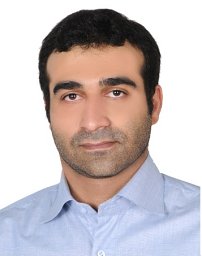 Mostafa Abedi合作论文数Corresponding author.9
 Mohammad Fathi合作论文数6mohammad rasoul kankashvar合作论文数Elect Engn Dept, Iran Univ Sci & Technol6
 Saman Saki合作论文数Corresponding author.6
 Hamed Jabbari Asl合作论文数Graduate School of Engineering, Toyota Technological Institute6Farhad Fani Saberi合作论文数6
 Saeed Ebadollahi合作论文数Dept Elect Engn, Iran Univ Sci & Technol4Amir F. Ehyaei合作论文数4
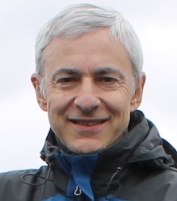 Giuseppe Oriolo合作论文数DIAG Robotics Lab, Dipartimento di Ingegneria Informatica, Automatica e Gestionale, Sapienza Universita di Roma4Abbas Zamani合作论文数3
 Bahman Ghorbani Vaghei合作论文数3s m smailzadeh合作论文数2Ali Rahdan合作论文数2Hossein Moradi Pari合作论文数2
 Vahid Izadi合作论文数2Seiied Saeed Nasrolahi合作论文数Dept Elect Engn, Amirkabir Univ Technol2
 Seyed kamal-e-ddin mousavi Mashhadi合作论文数2
 Seyed M. Esmaeilzadeh合作论文数Department of Electrical Eng. Daneshgah ave. Narmak, Iran University of Science and Technology2
 Jalal Arasi合作论文数1Mohammad Khayyeri合作论文数1
 nader jamali soufi amlashi合作论文数1
 Behrouz Kharabian合作论文数1
 m haghparast合作论文数Dept Control Engn, KN Toosi Univ Technol1Shahnaz Habibkhah合作论文数1
 Reza Omidi合作论文数Zanjan University1
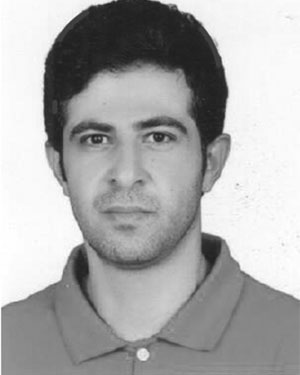 Reza Mohsenipour合作论文数1
 Hassan Golmohammad合作论文数1
 Ali Akbar Jalali合作论文数Department of Electrical Engineering, Iran University of Science and Technology1
 Hossein Mashad Nemati合作论文数Microwave Electronics Laboratory, Chalmers University of Technology1
 Ali Khaki-Sedigh合作论文数Department of Systems and Control, Faculty of Electrical and Computer Engineering, K. N. Toosi University of Technology1
 Farshad Bayat合作论文数Electrical Engineering Department, Iran University of Science and Technology1
 Nasser Mozayani合作论文数School of Computer Engineering, Iran University of Science and Technology1




