This paper presents AURORA-Q, a tiered-memory quantum circuit simulation framework designed to overcome the memory bottleneck and scalability limits of large-scale quantum circuit simulation on Perlmutter. Its primary strategy is to extend beyond GPU-centric designs bounded by VRAM and introduce a unified tiered-memory architecture that integrates GPU VRAM, DRAM, and storage into a simulation framework. With this design, AURORA-Q partitions the full state vector into subsets, manages their residency across memory tiers, overlaps computation with data movement through an async execution pipeline, and employs a dynamic two-level cache with adaptive resource control to exploit access locality under constrained resources. Our evaluation demonstrates that AURORA-Q executes up to 43 qubit simulations on 512 GPUs, a scale unattainable by existing state-of-the-art simulators due to limited memory resources. AURORA-Q achieves up to $2.91 \times$ speedup compared to baselines, while maintaining up to a 79.3% cache hit rate and reducing pipeline stalls by 73% to hide I/O latency.
Accurately modeling real-world systems requires scientific applications at exascale to generate massive amounts of data and manage data storage efficiently. However, parallel input and output (I/O) faces challenges due to new application workflows and the state-of-the-art memory, interconnect, and storage architectures considered in exascale designs. The storage hierarchy has expanded with node-local persistent memory, solid-state storage, and traditional disk and tape-based storage, thus requiring efficiency at each layer and much more efficient data movement among these layers. This paper discusses how the ExaHDF5 project improved the I/O performance and data management for exascale architectures by enhancing HDF5, a widely used parallel I/O library. The team developed an Asynchronous I/O Virtual Object Layer (VOL) connector that allowed overlapping I/O with computation. They also created a Cache VOL to complement asynchronous I/O by incorporating fast storage layers, such as burst buffer and node-local storage, into the parallel I/O workflow through caching and staging data. Additionally, the team enabled data aggregation and I/O at the node level by using a Subfiling Virtual File Driver (VFD). To demonstrate superior I/O performance with HDF5 at exascale, the ExaHDF5 team collaborated with several exascale applications. In this paper, we show I/O performance improvements for three applications: Cabana (a particle-based simulation library), EQSIM (a regional earthquake simulation software), and E3SM (a climate system modeling library).
Large-scale quantum circuit simulation on high-performance computing (HPC) systems is crucial for developing and verifying quantum algorithms to overcome the limitations of current noisy quantum computers. However, existing simulators face scalability bottlenecks due to memory limits and communication overhead. Many state-of-the-art approaches rely on static circuit partitioning, which makes it difficult to address the exponential growth in problem size as the number of qubits increases. To overcome these challenges, we present ScaleQsim, a highly scalable quantum circuit simulation framework for large-scale HPC systems. ScaleQsim focuses on providing a unified representation of the full qubit state, yet provides scalability through efficient synchronization and communication. ScaleQsim adopts a novel full state vector partitioning strategy that evenly distributes the full state vector across multiple nodes and GPUs. This distributed structure enables efficient parallel gate execution without costly synchronization, and ScaleQsim applies adaptive kernel configuration, which adjusts execution parameters based on GPU resources and task granularity to enhance simulation efficiency. Our evaluation on a leadership-scale supercomputer with up to 512 GPUs demonstrates that ScaleQsim simulates quantum circuits with up to 42 qubits and outperforms leading SOTA simulators by up to 77.40× across various quantum circuits.
Large-scale earthquake simulations produce massive, high-fidelity datasets essential for seismic risk analysis, however, their volume and complexity create a barrier for researchers from various backgrounds who lack specialized knowledge and programming skills. To address this challenge, we used Large Language Models (LLMs) to develop the EQSIM Agent, a conversational AI designed for the interactive exploration of large-scale earthquake simulation data. The agent allows users to query data using natural language, receiving results such as text, images, videos, and maps. Beyond standard querying and visualization, it introduces novel features like a vision-based waveform similarity search and a RetrievalAugmented Generation system that answers questions with facts from relevant publications. This paper details the agent's implementation and evaluates the challenges of using LLMs in a scientific context. We also provide a practical analysis of various LLMs, evaluating their performance, tool-calling reliability, and cost, to guide the development of future scientific AI agents.
This article proposes an object layout regenerator called Regen which regenerates and removes the object layout dynamically to improve the read performance of applications. Regen first detects frequent access patterns from the I/O requests of the applications. Second, Regen reorganizes the objects and regenerates or preallocates new object layouts according to the identified access patterns. Finally, Regen removes or reuses the obsolete or regenerated object layouts as necessary. As a result, Regen accelerates access to objects by providing a flexible object layout. We implement Regen as a framework on top of Proactive Data Container (PDC) and evaluate it on Cori supercomputer, a production-scale HPC system, by using realistic HPC I/O benchmarks. The experimental results show that Regen improves the I/O performance by up to 16.92x compared with an existing system.
Autonomous underwater vehicles (AUVs) are extensively utilized for underwater resource exploration, requiring inductive power transfer (IPT) systems with large output power to achieve quick charging. However, underwater positioning errors result in significant variations in the coupling coefficient of the IPT system. Moreover, AUVs employ diverse battery types and voltages, exacerbating the issue of decreased transferred power when the coupling coefficient and battery voltage are low, thereby prolonging the AUVs' charging time. To address this challenge, this article proposes an impedance transformation method based on a pi -network to improve power transfer capacity, which can also enhance the system efficiency under low battery voltage conditions. First, this article presents the proposed topology and analyzes its characteristics. Subsequently, the eddy current losses (ECLs), zero-voltage switching (ZVS) condition, the parameters design of the pi -network, and the power losses of the system are derived. Finally, a 5-kW prototype with a maximum dc-dc efficiency of 93.1% is built to validate the effectiveness of the proposed topology.
Various scientific applications with different I/O characteristics are executed in HPC systems. However, underlying parallel file systems are unaware of these characteristics of applications, and using a single fixed file layout for all applications can degrade the performance of HPC systems. In this paper, we propose A2FL, an autonomous and adaptive file layout adjustment scheme that optimizes parallel file system configurations by analyzing the access pattern of the applications. The key steps of A2FL are as follows: (1) A2FL initially intercepts the I/O operations of the application, recording their access patterns in real-time. (2) The access patterns are then transformed into a graphical representation used for predicting I/O performance and providing adjustment recommendations. (3) A2FL autonomously adjusts the file layout based on the prediction results, delivering an optimal file layout within the parallel file system. Moreover, we propose A2FL-Compound which analyzes an access pattern by dividing it into smaller components to optimize the file layout in a fine-grained manner. Our evaluations demonstrate that A2FL significantly enhances I/O performance, with improvements of up to 65.9x compared to the default file layout.
This paper introduces a distributed secondary control scheme for achieving current sharing and average voltage regulation objectives in a DC microgrid. The proposed scheme employs a dynamic diffusion algorithm (DDA) instead of the consensus algorithm to enable distributed communication among converters. To help understand DDA, the relation of DDA and other diffusion algorithms is discussed in detail and its superiority is shown by comparison with diffusion and consensus algorithms. Furthermore, considering the discrete nature and different sampling time of the digital controller and communication network, a z-domain model of the entire DC microgrid is established. The influence of communication and secondary control parameters on the system stability is investigated. Based on the established model, the tolerable communication rates are obtained. Real-time simulations conducted on the OPAL-RT platform validate the effectiveness of the proposed scheme, showcasing its advantages in terms of convergence speed and stability.
Affix-oriented metadata search is one of the essential fuzzy search capabilities that allow users to find data of interest in their voluminous data set with incomplete query conditions. With the recent transition towards object-centric data management systems in the science community, there is a paramount need for the support of such features in distributed settings. However, existing metadata search solutions either do not support efficient affix-oriented metadata search or do not suit well in a distributed setting of object-centric data management systems. To bridge this gap, we introduce IDIOMS, a metadata search solution underpinned by a distributed metadata index, meticulously designed to enable high-performance affix-oriented metadata search for parallel object-centric storage. One of the standout features of IDIOMS is its efficiency in supporting four distinct types of highly demanded metadata queries. Furthermore, IDIOMS is flexibly catering to both independent and collective metadata search operations. Our experimental comparisons with SoMeta, a state-of-the-art metadata query method, demonstrate more than 400x performance boost for independent queries and up to 300x performance improvements for collective queries, while keeping a small index management overhead.
SummaryParallel I/O is a critical technique for moving data between compute and storage subsystems of supercomputers. With massive amounts of data produced or consumed by compute nodes, high‐performant parallel I/O is essential. I/O benchmarks play an important role in this process; however, there is a scarcity of I/O benchmarks representative of current workloads on HPC systems. Toward creating representative I/O kernels from real‐world applications, we have created h5bench , a set of I/O kernels that exercise hierarchical data format version 5 (HDF5) I/O on parallel file systems in numerous dimensions. Our focus on HDF5 is due to the parallel I/O library's heavy usage in various scientific applications running on supercomputing systems. The various tests benchmarked in the h5bench suite include I/O operations (read and write), data locality (arrays of basic data types and arrays of structures), array dimensionality (one‐dimensional arrays, two‐dimensional meshes, three‐dimensional cubes), I/O modes (synchronous and asynchronous). In this paper, we present the observed performance of h5bench executed along several of these dimensions on existing supercomputers (Cori and Summit) and pre‐exascale platforms (Perlmutter, Theta, and Polaris). h5bench measurements can be used to identify performance bottlenecks and their root causes and evaluate I/O optimizations. As the I/O patterns of h5bench are diverse and capture the I/O behaviors of various HPC applications, this study will be helpful to the broader supercomputing and I/O community.
Earthquakes present world-wide risk to economic and human safety. The 2023 earthquakes in Turkey provided a reminder of the potential for catastrophic consequences with 50,700 deaths and 15.7 million people affected. The ability to predict ground motions and infrastructure damage for earthquakes continues to be a challenging problem for scientists and engineers. Until now, estimates of ground motions have been performed empirically by looking at sparse data from past earthquakes. This approach can provide statistical information on intensity amplitudes but cannot inform site-specific ground motions essential to developing the most effective resilience. Interest has grown in largescale computational models to simulate earthquakes at regional scale. The U.S. DOE EQSIM framework was developed for regional-scale earthquake simulations at unprecedented fidelity, taking advantage of emerging GPU-accelerated systems. This article describes the EQSIM workflow and demonstrates regional-scale simulations with the new computational capability available to scientists in their quest to mitigate future disasters.
In inductive power transfer (IPT) systems, load and mutual inductance identification are important to implement system control, which are difficult to measure directly in light electric vehicles (LEVs). To pursue low cost, the LEV usually applies an uncontrolled rectifier without communication. Aiming at this scenario, this paper presents a simple and effective online load and mutual inductance identification method in IPT systems with a rectifier load. By leveraging information from the DC input voltage and inverting current, which are readily available, communication between the primary and secondary sides is eliminated. Additionally, a low-computation burden decomposition method for ac variables is employed to handle the inverting current. The proposed method can be applied to both resonant and non-resonant IPT systems without limitations imposed by compensation networks. First, the characteristic of a dual-side LCC compensated IPT system with a rectifier load is analyzed. Then, an identification method for the load and mutual inductance is proposed. Finally, a 400-W IPT prototype is developed to verify the effectiveness of the proposed method. Both simulation and experimental results show that the load and mutual inductance can be identified with high accuracy.
Data provenance, or data lineage, describes the life cycle of data. In scientific workflows on HPC systems, scientists often seek diverse provenance (e.g., origins of data products, usage patterns of datasets). Unfortunately, existing provenance solutions cannot address the challenges due to their incompatible provenance models and/or system implementations. In this paper, we analyze four representative scientific workflows in collaboration with the domain scientists to identify concrete provenance needs. Based on the first-hand analysis, we propose a provenance framework called PROV-IO+, which includes an I/O-centric provenance model for describing scientific data and the associated I/O operations and environments precisely. Moreover, we build a prototype of PROV-IO+ to enable end-to-end provenance support on real HPC systems with little manual effort. The PROV-IO+ framework can support both containerized and non-containerized workflows on different HPC platforms with flexibility in selecting various classes of provenance. Our experiments with realistic workflows show that PROV-IO+ can address the provenance needs of the domain scientists effectively with reasonable performance (e.g., less than 3.5% tracking overhead for most experiments). Moreover, PROV-IO+ outperforms a state-of-the-art system (i.e., ProvLake) in our experiments.
HPC workflows consist of multiple phases and components executed collaboratively to reach the same goal. They perform necessary computations and exchange data, of-ten through system-wide POSIX-compliant parallel file systems. However, POSIX file systems pose challenges in performance and scalability, prompting the development of alternative storage systems like object stores. Despite their potential, object stores face adoption barriers in HPC workflows due to their lack of workflow awareness and the structured nature of HPC data. This work presents a case study using the Proactive Data Containers (PDC), a framework focusing on object-centric runtime data management, to support a real-world astronomy workflow that runs on HPC systems, called Montage. Due to its user-space deployment feature, PDC is flexible to be adopted transparently with existing I/O libraries. This study explores the use of PDC with Montage's existing FITS-based I/O methods and discusses workflow-oriented optimizations such as caching, prefetching, and write aggregation, and provides insights and lessons learned throughout the porting process.
Continuous advancements in scientific and engineering understanding of earthquake phenomena, combined with the associated development of representative physics-based models, is providing a foundation for high-performance, fault-to-structure earthquake simulations. However, regional-scale applications of high-performance models have been challenged by the computational requirements at the resolutions required for engineering risk assessments. The EarthQuake SIMulation (EQSIM) framework, a software application development under the US Department of Energy (DOE) Exascale Computing Project, is focused on overcoming the existing computational barriers and enabling routine regional-scale simulations at resolutions relevant to a breadth of engineered systems. This multidisciplinary software development—drawing upon expertise in geophysics, engineering, applied math and computer science—is preparing the advanced computational workflow necessary to fully exploit the DOE’s exaflop computer platforms coming online in the 2023 to 2024 timeframe. Achievement of the computational performance required for high-resolution regional models containing upward of hundreds of billions to trillions of model grid points requires numerical efficiency in every phase of a regional simulation. This includes run time start-up and regional model generation, effective distribution of the computational workload across thousands of computer nodes, efficient coupling of regional geophysics and local engineering models, and application-tailored highly efficient transfer, storage, and interrogation of very large volumes of simulation data. This article summarizes the most recent advancements and refinements incorporated in the workflow design for the EQSIM integrated fault-to-structure framework, which are based on extensive numerical testing across multiple graphics processing unit (GPU)-accelerated platforms, and demonstrates the computational performance achieved on the world’s first exaflop computer platform through representative regional-scale earthquake simulations for the San Francisco Bay Area in California, USA.
High-fidelity physics simulation codes, such as Flash-X, generate large amounts of simulation data. Much of the data written to files is sparse and can be compressed without significantly impacting the accuracy of the simulation or the quality of the visualizations. Reduced file sizes can significantly save storage space and bandwidth, and offer improved performance of visualization tools. Reduction in file size also allows the simulation to output more data for higher resolution/fidelity analysis. We introduced SZ3 and ZFP compression technologies into Flash-X as an effective data reduction strategy. We conducted experiments on the Frontier exascale supercomputer, evaluating both lossless and lossy compression techniques and quantifying their effects. We examined the impact of accuracy variations and chunk size variations for different Flash-X problems. Our study provides valuable insights and guidelines for simulation developers, helping them understand the best ways to adopt compression tailored to their specific problems.
Parallel I/O is an effective method to optimize data movement between memory and storage for many scientific applications. Poor performance of traditional disk-based file systems has led to the design of I/O libraries which take advantage of faster memory layers, such as on-node memory, present in high-performance computing (HPC) systems. By allowing caching and prefetching of data for applications alternating computation and I/O phases, a faster memory layer also provides opportunities for hiding the latency of I/O phases by overlapping them with computation phases, a technique called asynchronous I/O. Since asynchronous parallel I/O in HPC systems is still in the initial stages of development, there hasn't been a systematic study of the factors affecting its performance.In this paper, we perform a systematic study of various factors affecting the performance and efficacy of asynchronous I/O, we develop a performance model to estimate the aggregate I/O bandwidth achievable by iterative applications using synchronous and asynchronous I/O based on past observations, and we evaluate the performance of the recently developed asynchronous I/O feature of a parallel I/O library (HDF5) using benchmarks and real-world science applications. Our study covers parallel file systems on two large-scale HPC systems: Summit and Cori, the former with a GPFS storage and the latter with a Lustre parallel file system.
With the advancement of exascale computing, the amount of scientific data is increasing day by day. Efficient data access is necessary for scientific discoveries. Unfortunately, the I/O performance is not improved, like the CPU and network speed. So, I/O operations take longer time than data generation or analysis. Asynchronous I/O has been proposed to extenuate the I/O bottleneck by overlapping I/O and computation time. However, multiple small write operations can diminish the benefits of asynchronous I/O, as the I/O time becomes significantly longer than the compute time, with little time to overlap with. To overcome these issues, we present an optimization technique to merge small contiguous write operations. We integrated our solution into the HDF5 asynchronous I/O VOL connector and demonstrated the effectiveness of merging HDF5 write operations automatically and transparently without requiring any code change from the application.
As supercomputers advance towards exascale capabilities, computational intensity increases significantly, and the volume of data requiring storage and transmission experiences exponential growth. Adaptive Mesh Refinement (AMR) has emerged as an effective solution to address these two challenges. Concurrently, error-bounded lossy compression is recognized as one of the most efficient approaches to tackle the latter issue. Despite their respective advantages, few attempts have been made to investigate how AMR and error-bounded lossy compression can function together. To this end, this study presents a novel in-situ lossy compression framework that employs the HDF5 filter to improve both I/O costs and boost compression quality for AMR applications. We implement our solution into the AMReX framework and evaluate on two real-world AMR applications, Nyx and WarpX, on the Summit supercomputer. Experiments with 4096 CPU cores demonstrate that AMRIC improves the compression ratio by up to 81X and the I/O performance by up to 39X over AMReX's original compression solution.
A three-phase buck-type rectifier features a step-down ac-dc conversion function, which is considered as a prominent solution for electric vehicle chargers and telecommunication systems integrated to the grid above 380 V line to line. However, traditional solutions for those applications employ cascaded architectures with an ac-dc boost-type stage and a dc-dc buck-type stage, which may suffer from high switching losses and large dc-link capacitor volume. To relieve this issue, a straightforward carrier-based two-phase-clamped discontinuous pulsewidth modulation (DPWM) strategy with generalized zero-sequence voltage injection is proposed in this article for the commonly employed cascaded circuit. This method can stop the switching actions in the front-end stage during two-third of the grid period, which can yield to the best switching loss reduction. The operations of the front- and back-end converter stages become highly coupled to each other, which reduces the size requirement of the capacitor in the dc link. Therefore, the equivalent circuit behaves as a quasi-two-stage buck-type rectifier allowing an enhancement of the system power density by improving power conversion efficiency and by reducing the volume of passive components and heat sink. The proposed carrier-based two-phase-clamped DPWM strategy is described, analyzed, validated, and compared with different pulsewidth modulation methods on PLECS-based simulation and a 5-kW prototype.
 Surendra Byna合作论文数Lawrence Berkeley National Laboratory51
 Xijun Yang (杨喜军)合作论文数School of Electrical Engineering, Shanghai Jiao Tong University44
 Jin Nan合作论文数23
 Muhammad Mansoor Khan (曼苏乐)合作论文数Department of Electrical Engineering, School of Electronic Information and Electrical Engineering, Shanghai Jiao Tong University23
 Quincey Koziol合作论文数The HDF Group, Champaign, IL23
 Khurram Hashmi合作论文数Dept Elect Engn, Univ Engn & Technol20
 Bin Dong (董斌)合作论文数Scientific Data Division, Lawrence Berkeley National Laboratory18
 Dianguang Ma (马殿光)合作论文数Tianjin Research Institute for Water Transport Engineering.M.O.T.17
 Junzhong Xu (徐军忠)合作论文数School of Electrical Engineering, Shanghai Jiao Tong University16
 Bai Liangyu合作论文数15Jianyu Lan合作论文数14
 Fei Gao (高飞)合作论文数School of Electrical Engineering, Shanghai Jiao Tong University14
 Nagiza F. Samatova合作论文数North Carolina State University14Xiaoyang Lai合作论文数13
 Habib, Salman合作论文数13
 Talib Faiz合作论文数Dept Elect & Informat Engn, Hong Kong Polytech Univ11
 Muhammad Umair Shahid合作论文数Khawaja Fareed Univ Engn Informat Technol11Xiaocheng Zou合作论文数Oak Ridge National Laboratory, North Carolina State University11
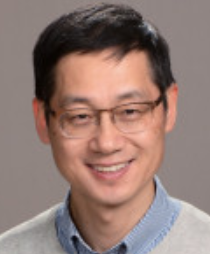 Kesheng Wu (John)合作论文数Berkeley Lab
One Cyclotron Road
MS50B-3238
Berkeley, CA 94720 US11
Kesheng Wu (John)合作论文数Berkeley Lab
One Cyclotron Road
MS50B-3238
Berkeley, CA 94720 US11 Zhengzhi Han (韩正之)合作论文数Department of Automation,Shanghai Jiao Tong University10
 Muhammad Ali合作论文数9
 Thiago Batista Soeiro合作论文数DC Systems, Energy Conversion & Storage, Electrical Sustainable Energy Department, Faculty of Electrical Engineering, Mathematics and Computer Science, Delft University of Technology9
 Pavol Bauer合作论文数Department of Electrical Sustainable Energy, Faculty of Electrical Engineering, Mathematics and Computer Science, Delft University of Technology;Politehnica University Timisoara9
 Scott Klasky合作论文数Scientific Computing Group within the National Center for Computational Sciences (NCCS)9
 Yingyi Zhang合作论文数8
 Chen Yao合作论文数8NingYun Zhang (张宁云)合作论文数8
 Jialin Liu合作论文数Lawrence Berkeley National Lab8Wei Liu合作论文数8
 Yong Wang (王勇)合作论文数School of Electrical Engineering, Shanghai Jiao Tong University8Weikun Cai合作论文数7Le Yuan合作论文数7
 Tianfeng Wang合作论文数7Yayun Dong (董娅韵)合作论文数7Richard Warren合作论文数HDF Grp, Champaign, IL USA7Wenzhao Zhang合作论文数Oka Ridge National Laboratory7Longzhao Sun合作论文数7EnCe Chen (陈恩策)合作论文数7Wenwen Li合作论文数7Xiangqun Meng (孟祥群)合作论文数7
 Jerome Soumagne合作论文数7steve harenberg合作论文数6
 Jianming Xu合作论文数6
 David Mccallen合作论文数6Wan Fang合作论文数6Jingqing Mu合作论文数HDF Grp, Champaign, IL 61820 USA6Zikun CAI (蔡子琨)合作论文数6
 Boshen Zhang合作论文数6Hao QU (渠浩)合作论文数6




