Interferometric line-integrated electron density is a primary real-time diagnostic for fusion plasma control and physics studies. Far-IR probing near $100-\mu \mathrm{m}$ boosts phase sensitivity, but optically pumped molecular gas lasers are bulky and alignment-intensive, and offer limited electronic agility for long-pulse, multi-chord operation [1], [2].
Broadband light sources with equidistant modes are critical for spectroscopy, imaging, and communications. Semiconductor lasers engineered for broadband coherent multimode operation frequently exhibit states that appear to have low coherence. These states, typically identified by a broad RF spectrum with a full width at half maximum in the MHz range, have therefore received substantially less attention. Here, for the first time, we demonstrate that these states, despite lacking long-term stability, exhibit high mutual coherence and preserve mode equidistance. We refer to these states as liquid combs. We introduce a frequency-resolved characterization technique that shows that the temporal phase differences between the modes of a liquid comb vary identically. Because liquid combs often exhibit broader bandwidths than conventional frequency combs, they are promising for spectroscopic applications and may enable more flexible broadband source designs.
Dispersion engineering is critical for the creation of integrated broadband laser frequency combs. In the long wavelength infrared range (LWIR, 8-13 µm), frequency combs based on quantum cascade lasers are attractive since they are monolithic, fundamental oscillators with high power levels and efficiencies. One effective approach for expanding quantum cascade laser gain bandwidth is by stacking multiple gain media with different center lasing frequencies, as this leads to flatter broadband gain spectra. However, as the gain bandwidth is increased, dispersion becomes the main limiting factor for comb bandwidth. Therefore, achieving broadband combs requires schemes that can flexibly engineer the dispersion over broad bandwidths. Here, we demonstrate the ultimate nanophotonic dispersion compensation scheme: an air-dielectric slab double-chirped mirror, which we fully integrate with the quantum cascade laser gain section. This scheme relies on the highest possible index contrast and therefore provides the maximum correction per unit length over a very broad bandwidth. With this approach, we report the successful demonstration of a broadband room-temperature LWIR laser frequency comb on a gain medium that normally does not form combs without deliberate dispersion compensations. Our air-dielectric mirrors are versatile and can be extended to other integrated laser frequency combs in different material platforms and frequency bands. Using an on-chip dispersion measurement platform, we designed an air–dielectric slab double-chirped mirror integrated into a quantum-cascade laser, achieving room-temperature LWIR combs spanning >100 cm−1 at 9.6 µm.
Broadband light sources with equidistant modes represent a key capability in advancing the fields of spectroscopy, imaging, and communications. Semiconductor lasers designed for broadband coherent multimode operation often exhibit states that appear to have low coherence. These states, identified by a broad RF spectrum with a full width at half maximum typically in the MHz range, have thus received considerably less attention. Here, for the first time, we show that these states, despite lacking long-term stability, possess high mutual coherence and maintain equidistance. We refer to these states as liquid combs. We develop a frequency-resolved characterization technique that proves that the temporal phase differences between the modes of a liquid comb vary identically. Since liquid combs often possess a wider bandwidth than typical frequency combs, they are attractive for spectroscopic applications and may enable more flexible designs of broadband sources.
On this special occasion as we celebrate the 30th anniversary of quantum cascade lasers (QCLs), the author would like to reflect his own journey from the previous research on far-infrared superconducting devices to the development of THz QCLs. The initial phase of this journey spanned over 12 years (1990–2002) till we finally reached the lasing threshold, and it involved three generations of graduate students (Jurgen Smet, Bin Xu, and Ben Williams). The journey was not totally smooth, but full of joy from learning new things that are quite different from the author’s previous background to the eventual witness of laser operation of the very first THz QCL developed in the author’s group. This article is mostly a memoir of the author’s own process in the development of THz QCLs with many unpublished episodes, and it is by no means intended as a review article of the overall field. As such, work from other groups working in the field will not be cited thoroughly.
The High-Resolution Receiver (HiRX) is one of two instruments of the Single Aperture Large Telescope for Universe Studies (SALTUS), a mission proposed to NASA's 2023 Astrophysics Probe Explorer. SALTUS employs a 14 m aperture, leading to a 16-fold increase in collecting area and a factor of 4 increase in the angular resolution with respect to the Herschel Space Telescope. It will be radiatively cooled to <= 45 K and has a planned duration of >5 years. HiRX consists of four bands of cryogenic heterodyne receivers with a high sensitivity and high spectral resolution, being able to observe the gaseous components of objects across the far-IR. HiRX is going to detect water, HD, and other relevant astrophysical lines while resolving them in velocity. HiRX covers the following frequency ranges: Band 1 from 455 to 575 GHz, Band 2 from 1.1 to 2.1 THz, Band 3 from 2.475 to 2.875 THz, and Band 4 for both 4.744 and 5.35 THz. Bands 1 to 3 contain single, high-performance mixers. Band 4 consists of an array of seven hexagonally packed pixels, where the central pixel operates as a heterodyne mixer. Band 1 utilizes superconducting-insulator-superconducting mixers (SIS), whereas Bands 2 to 4 use superconducting hot electron bolometers (HEB) mixers. The local oscillator (LO) system uses frequency-multiplier chains for Bands 1 and 2, and quantum cascade lasers for Bands 3 and 4. Autocorrelator spectrometers are used to process the intermediate frequency (IF) signals from each science band, providing instantaneous frequency coverage of 4 to 8 GHz for Band 1 and 0.5 to 4 GHz for Bands 2 to 4. SALTUS will also fly a chirp transform spectrometer system for high spectral resolution observations in Band 1.
The SALTUS Probe mission will provide a powerful far-infrared (far-IR) pointed space observatory to explore our cosmic origins and the possibility of life elsewhere. The observatory employs an innovative deployable 14-m aperture, with a sunshield that will radiatively cool the off-axis primary to <45K. This cooled primary reflector works in tandem with cryogenic coherent and incoherent instruments that span the 34 to 660 micron far-IR range at both high and moderate spectral resolutions.
Room temperature operation of terahertz quantum cascade lasers (THz QCLs) has been a long-pursued goal to realize compact semiconductor THz sources. In this paper, we report on improving the maximum operating temperature of THz QCLs to ∼ 261 K as a step toward the realization of this goal.
Room temperature operation of Terahertz Quantum Cascade Lasers (THz QCLs) has been a long-pursued goal to realize compact semiconductor THz sources. The progress toward high-temperature operation in THz QCLs has been relatively slow compared to infrared QCLs owing to more significant challenges at THz frequencies. Recently, the maximum operating temperature of THz QCLs was improved to 250 K, and the achievement revitalized hope in the THz community in pursuit of higher temperature operations. In this paper, we report on further improvement in operating temperature to ~261 K (-12 0C) by judiciously optimizing key parameters and discuss the challenges ahead in achieving room temperature operation.
Gal/Xgal U/LDB Spectroscopic/ Stratospheric THz Observatory (GUSTO) is a NASA Explorers Mission of Opportunity that will make large scale maps of the Milky Way and Large Magellanic Cloud in three important interstellar lines: [CII], [OI], and [NII] at 158, 63, and 205 µm, respectively. During its ~75 day stratospheric (~36 km) flight, GUSTO's 0.9-meter balloon-borne telescope and THz heterodyne array receivers will provide the spectral and spatial resolution needed to untangle the complexities of the interstellar medium by probing all phases of its Life Cycle. The GUSTO payload consists of (1) a telescope; (2) three 8-pixel heterodyne array receivers; (3) autocorrelator spectrometers; (4) instrument control electronics; and (5) a cryostat. The GUSTO gondola is derived from successful APL designs. Much of the GUSTO instrument architecture and hardware is based on the experience gained in developing and flying the Stratospheric Terahertz Observatory (STO). GUSTO is currently undergoing integration and test and will launch from the NASA Long Duration Balloon (LDB) Facility near McMurdo, Antarctica in December 2023.
The Galactic/Extra Ultra-Long-Duration Balloon Spectroscopic-Stratospheric Terahertz Observatory (GUSTO) is a NASA balloon-borne project and is scheduled for launch in late 2022. The balloon will carry a spectroscopic telescope that will detect three brightest emission lines from the interstellar medium. GUSTO measurements will shed light on the life cycle of the gases in the Milky Way and Large Magellanic Cloud. In this article, we will discuss the details of a quantum cascade laser used in the local oscillator for detecting the oxygen line at 4.74 THz.
Rationale: Preeclampsia is a major cause of maternal and perinatal morbidity and mortality. Growth discordance is associated with an increased risk of preeclampsia in twin pregnancies. The management of preeclampsia combined with discordant twins is difficult and controversial because of severe maternal conditions and severe growth restriction in 1 twin. Patient concerns: A 34-year-old woman with dichorionic diamniotic twin pregnancy complicated by preeclampsia at 29 weeks of gestation, and 1 twin with severe growth restriction and fetal intracranial hemorrhage. Diagnosis: The patient developed severe preeclampsia with high blood pressure (>160/100 mm Hg) and proteinuria, hydrothorax and leg edema. Ultrasound examination confirmed growth restriction (weight estimation: 915 g, <1st percentile) and abnormal umbilical flow in 1 twin (twin B), with a normal co-twin (estimated weight: 1693 g) (twin A). Magnetic resonance imaging revealed intracranial hemorrhage in the germinal matrix of twin B. Interventions: Selective termination of twin B by intracardiac injection of potassium chloride was performed at 31 weeks and 2 days’ gestation. Outcomes: Symptoms of preeclampsia resolved after selective termination, allowing the pregnancy to be prolonged for nearly 4 weeks. A healthy female infant was delivered at 35 weeks of gestation. Conclusion: Delivery of both fetus is not the only choice for the management for twin pregnancy with severe preeclampsia and discordant twins. Selective termination of the fetus with poor prognosis could be a reasonable treatment choice in carefully selected cases.
Terahertz technology has broad application prospects in biomedical detection. However, the mixed characteristics of actual samples make the terahertz spectrum complex and difficult to distinguish, and there is no practical terahertz detection method for clinical medicine. Here, we propose a three-step one-way terahertz model, presenting a detailed flow analysis of terahertz technology in the biomedical detection of renal fibrosis as an example: 1) biomarker determination: screening disease biomarkers and establishing the terahertz spectrum and concentration gradient; 2) mixture interference removal: clearing the interfering signals in the mixture for the biomarker in the animal model and evaluating and retaining the effective characteristic peaks; and 3) individual difference removal: excluding individual interference differences and confirming the final effective terahertz parameters in the human sample. The root mean square error of our model is three orders of magnitude lower than that of the gold standard, with profound implications for the rapid, accurate and early detection of diseases.
A full demonstration of the Fourier phase grating used as 4.7 THz local oscillator (LO) multiplexer for Galactic/Extragalactic ULDB Spectroscopic Terahertz Observatory (GUSTO) is presented in this paper, including its design, modeling, tolerance analysis, and experimental characterizations of the angular and intensity distributions among 2 × 4 output beams and the power efficiency. A quantum cascade laser (QCL) is used to generate the input beam for evaluation of the grating performance in its all relevant aspects with an accuracy level never reported before, where good agreements with modeling results are found. This is the first asymmetric-profile grating fully modelled and characterized at a THz frequency, that further confirms the versatility of this technology for providing an intermediate optical element for feeding multiple array detectors with a single radiation source at such a scientifically interesting frequency regime.
Terahertz laser frequency combs based on quantum cascade lasers provide coherent, broadband, electrically pumped, THz radiation sources for use in future spectroscopic applications. Here, we explor...
GUSTO (Galactic/ Extragalactic ULDB Spectroscopic Terahertz Observatory) equipped with three 8-pixel detection channels at 1.4, 1.9, and 4.7 THz will perform the largest single-flight mapping of the important lines of nitrogen [NII], carbon [CII], oxygen [OI] respectively, within the Milky Way and Large Magellanic Cloud.. Whilst the cutting edge technologies are applied in the mixer and local oscillator (LO) components, their proper coupling is crucial. Here we present the design, manufacturing and measurement results of a phase grating for multiplexing a single beam from a quantum cascade laser to 8 beams as the LO at 4.7 THz. We experimentally confirmed that the grating meets all the requirements. This is the first time that such a complete characterization of a THz phase grating is being reported. This accomplishment paves the way for future larger array receivers to apply this component for such a critical function.
Large heterodyne receiver arrays (∼100 pixel) allow astronomical instrumentations mapping more area within limited space mission lifetime. One challenge is to generate multiple local oscillator (LO) beams. Here, We succeeded in generating 81 beams at 3.86 THz by combining a reflective, metallic Fourier grating with an unidirectional antenna coupled 3rd-order distributed feedback (DFB) quantum cascade laser (QCL). We have measured the diffracted 81 beams by scanning a single pyroelectric detector at a plane, which is in the far field for the diffraction beams. The measured output beam pattern agrees well with a simulated result from COMSOL Multiphysics with respect to the angular distribution and power distribution among the 81 beams. We also derived the diffraction efficiency to be $94\pm 3\%$ , which is very close to what was simulated for a manufactured Fourier grating (97%). For an array of equal superconducting hot electron bolometer mixers, 64 out of 81 beams can pump the HEB mixers with similar power, resulting in receiver sensitivities within 10%. Such a combination of a Fourier grating and a QCL can create an LO with 100 beams or more, enabling a new generation of large heterodyne arrays for astronomical instrumentation. This paper is essentially a copy of our paper in Optics Express.
Modern scattering-type scanning near-field optical microscopy (s-SNOM) has become an indispensable tool in material research. However, as the s-SNOM technique marches into the far-infrared (IR) and terahertz (THz) regimes, emerging experiments sometimes produce puzzling results. For example, "anomalies" in the near-field optical contrast have been widely reported. In this Letter, we systematically investigate a series of extreme subwavelength metallic nanostructures via s-SNOM near-field imaging in the GHz to THz frequency range. We find that the near-field material contrast is greatly impacted by the lateral size of the nanostructure, while the spatial resolution is practically independent of it. The contrast is also strongly affected by the connectivity of the metallic structures to a larger metallic "ground plane". The observed effect can be largely explained by a quasi-electrostatic analysis. We also compare the THz s-SNOM results to those of the mid-IR regime, where the size-dependence becomes significant only for smaller structures. Our results reveal that the quantitative analysis of the near-field optical material contrasts in the long-wavelength regime requires a careful assessment of the size and configuration of metallic (optically conductive) structures.
 Benjamin S. Williams合作论文数Department of Electrical and Computer Engineering, University of California at Los Angeles86
 John L. Reno合作论文数Sandia Natl Labs, Ctr Integrated Nanotechnol, MS 1303, Albuquerque, NM 87185 USA77
 Sushil Kumar合作论文数Department of Electrical and Computer Engineering, P.C. Rossin College of Engineering & Applied Science, Lehigh University71J. L. Reno合作论文数63
 Jian-Rong Gao合作论文数Optics Research Group, Department of Imaging Physics, Faculty of Applied Sciences, Delft University of Technology;Cryo-U Section within Instrument Science Group, SRON-Utrecht53
 David Burghoff合作论文数Chandra Department of Electrical and Computer Engineering, Cockrell School of Engineering, The University of Texas at Austin43
 Tsungyu Kao合作论文数Massachusetts Institute of Technology,Massachusetts Inst. of Technology, MIT43
 Ruwen Peng (彭茹雯)合作论文数School of Physics, Nanjing University;National Laboratory of Solid State Microstructures, Nanjing University28
 J.N. Hovenier合作论文数24
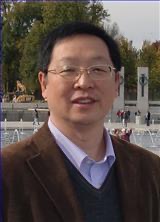 Mu Wang (王牧)合作论文数Department of Optical Science, School of Physics, Nanjing University;Department of Materials Science and Chemical Engineering, Stony Brook University24Lee Alan Wei Min合作论文数23Chun Wang Ivan Chan合作论文数Elect Res Lab, MIT21
 Darren J. Hayton合作论文数21
 Paul L. Richards合作论文数Department of Physics, University of California, Berkeley19
 Qi Qin合作论文数18
 Teun Klapwijk合作论文数Kavli Institute of Nanoscience, Faculty of Applied Sciences, Delft University of Technology;Triplepoint Research18
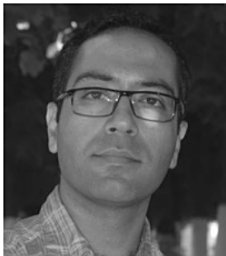 Behnam Mirzaei合作论文数17
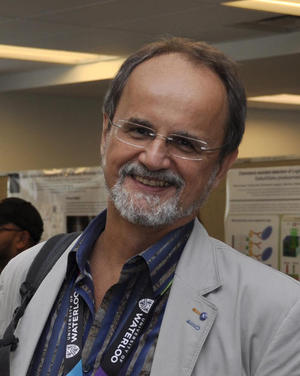 Zbigniew Wasilewski合作论文数Department of Physics and Astronomy, University of Waterloo16Michael Melloch合作论文数Purdue University School of Electrical and Computer Engineering15
 Ali Khalatpour合作论文数Amirkabir University of Technology14C. A. Mears合作论文数13
 Dayan Ban合作论文数Department of Electrical and Computer Engineering, The University of Waterloo;Waterloo Institute for Nanotechnology, The University of Waterloo13
 Simon Verghese合作论文数Waymo13hans callebaut合作论文数12
 Shengcai Shi (史生才)合作论文数Purple Mountain Observatory, Chinese Academy of Sciences12To Klaassen合作论文数11
 Ningren Han合作论文数11
 Christopher Groppi合作论文数Lowell, Research Foundation;,Department of Astronomy and Steward;Department of Astronomy and Steward, Research Foundation11
 Renhao Fan (范仁浩)合作论文数School of Physics, Nanjing University10
 Christian Jirauschek合作论文数Department of Electrical and Computer Engineering, Technische Universität München9
 Aurèle Adam合作论文数Department of Imaging Physics, Faculty of Applied Sciences, Delft University of Technology9
 Yu Zhou (周余)合作论文数School of Electronic Science and Engineering, Nanjing University9
 A.M. (Andrei) Barychev合作论文数Kapteyn Astronomical Institute, University of Groningen;Faculty of Science and Engineering, University of Groningen9
 christopher k walker合作论文数8
 Jose Silva合作论文数8Nathan Henry合作论文数Johns Hopkins Univ8R. Wyss合作论文数8
 Jacob Khurgin合作论文数Department of Electrical and Computer Engineering, Whiting School of Engineering, Johns Hopkins University8Dong-Xiang Qi合作论文数8
 Jesús A. Del Alamo合作论文数Department of Electrical Engineering and Computer Science, Massachusetts Institute of Technology8brian r jacobson合作论文数7n zamdmer合作论文数7Y Gan合作论文数7Wouter Laauwen合作论文数7
 Zhukuan Cheng (程祝宽)合作论文数Institute of Genetics and Developmental Biology, Chinese Academy of Sciences;University of Chinese Academy of Sciences7Xu Di-Hu合作论文数7
 Yi Shen合作论文数7
 Xianrong Huang合作论文数Argonne National Laboratory7
 Asaf Albo合作论文数7




