We combine standard persistent homology with image persistent homology to define a novel way of characterizing shapes and interactions between them. In particular, we introduce: (1) a mixup barcode, which captures geometric-topological interactions (mixup) between two point sets in arbitrary dimension; (2) simple summary statistics, total mixup and total percentage mixup, which quantify the complexity of the interactions as a single number; (3) a software tool for playing with the above. As a proof of concept, we apply this tool to a problem arising from machine learning. In particular, we study the disentanglement in embeddings of different classes. The results suggest that topological mixup is a useful method for characterizing interactions for low and high-dimensional data. Compared to the typical usage of persistent homology, the new tool is sensitive to the geometric locations of the topological features, which is often desirable.
The purpose of this paper is twofold. On a technical side, we propose an extension of the Hausdorff distance from metric spaces to spaces equipped with asymmetric distance measures. Specifically, we focus on extending it to the family of Bregman divergences, which includes the popular Kullback–Leibler divergence (also known as relative entropy). The resulting dissimilarity measure is called a Bregman–Hausdorff divergence and compares two collections of vectors—without assuming any pairing or alignment between their elements. We propose new algorithms for computing Bregman–Hausdorff divergences based on a recently developed Kd-tree data structure for nearest neighbor search with respect to Bregman divergences. The algorithms are surprisingly efficient even for large inputs with hundreds of dimensions. As a benchmark, we use the new divergence to compare two collections of probabilistic predictions produced by different machine learning models trained using the relative entropy loss. In addition to the introduction of this technical concept, we provide a survey. It outlines the basics of Bregman geometry, and motivated the Kullback–Leibler divergence using concepts from information theory. We also describe computational geometric algorithms that have been extended to this geometry, focusing on algorithms relevant for machine learning.
The contributions of the paper span theoretical and implementational results. First, we prove that Kd-trees can be extended to spaces in which the distance is measured with an arbitrary Bregman divergence. Perhaps surprisingly, this shows that the triangle inequality is not necessary for correct pruning in Kd-trees. Second, we offer an efficient algorithm and C++ implementation for nearest neighbour search for decomposable Bregman divergences. The implementation supports the Kullback–Leibler divergence (relative entropy) which is a popular distance between probability vectors and is commonly used in statistics and machine learning. This is a step toward broadening the usage of computational geometry algorithms. Our benchmarks show that our implementation efficiently handles both exact and approximate nearest neighbour queries. Compared to a naive approach, we achieve two orders of magnitude speedup for practical scenarios in dimension up to 100. Our solution is simpler and more efficient than competing methods.
Motivated by questions arising at the intersection of information theory and geometry, we compare two dissimilarity measures between finite categorical distributions. One is the well-known Jensen–Shannon divergence, which is easy to compute and whose square root is a proper metric. The other is what we call the minmax divergence, which is harder to compute. Just like the Jensen–Shannon divergence, it arises naturally from the Kullback–Leibler divergence. The main contribution of this paper is a proof showing that the minmax divergence can be tightly approximated by the Jensen–Shannon divergence. The bounds suggest that the square root of the minmax divergence is a metric, and we prove that this is indeed true in the one-dimensional case. The general case remains open. Finally, we consider analogous questions in the context of another Bregman divergence and the corresponding Burbea–Rao (Jensen–Bregman) divergence.
Methods used in topological data analysis naturally capture higher-order interactions in point cloud data embedded in a metric space. This methodology was recently extended to data living in an information space, by which we mean a space measured with an information theoretical distance. One such setting is a finite collection of discrete probability distributions embedded in the probability simplex measured with the relative entropy (Kullback-Leibler divergence). More generally, one can work with a Bregman divergence parameterized by a different notion of entropy. While theoretical algorithms exist for this setup, there is a paucity of implementations for exploring and comparing geometric-topological properties of various information spaces. The interest of this work is therefore twofold. First, we propose the first robust algorithms and software for geometric and topological data analysis in information space. Perhaps surprisingly, despite working with Bregman divergences, our design reuses robust libraries for the Euclidean case. Second, using the new software, we take the first steps towards understanding the geometric-topological structure of these spaces. In particular, we compare them with the more familiar spaces equipped with the Euclidean and Fisher metrics.
With the growing availability of efficient tools, persistent homology isbecoming a useful methodology in a variety of applications. Significant workhas been devoted to implementing tools for persistent homology diagrams;however, computing representative cycles corresponding to each point in thediagram can still be inefficient. To circumvent this problem, we extend thetwist algorithm of Chen and Kerber. Our extension is based on a new techniquewe call saving, which supplements their existing killing technique. Theresulting two-pass strategy can be realized using an existing matrix reductionimplementation as a black-box and improves the efficiency of computingrepresentatives of persistent homology generators. We prove the correctness ofthe new approach and experimentally show its performance.
We focus on efficient computations of topological descriptors for voxel data. This type of data includes 2D greyscale images, 3D medical scans, but also higher-dimensional scalar fields arising from physical simulations. In recent years we have seen an increase in applications of topological methods for such data. However, computational issues remain an obstacle. We therefore propose a streaming scheme which simplifies large 3-dimensional voxel data - while provably retaining its persistent homology. We combine this scheme with an efficient boundary matrix reduction implementation, obtaining an end-to-end tool for persistent homology of large data. Computational experiments show its state-of-the-art performance. In particular, we are now able to robustly handle complex datasets with several billions voxels on a regular laptop. A software implementation called Cubicle is available as open-source: https://bitbucket.org/hubwag/cubicle.
Biomolecular species such as proteins, DNAs, and RNA interact in cell to form reaction networks that regulate cellular functions. At small copy numbers, stochasticity arises from thermal fluctuations and plays important roles on cellular phenotypes. The underlying stochastic chemical kinetics (SCK) is governed by the discrete chemical master equation (dCME). Recent developments of the ACME algorithm enables the exact solution to dCME. With the constructions of exactly computed time-evolving and steady state probability landscapes, it is now possible to investigate the landscape properties of many stochastic networks, including where the probability basins are located, their significance, how they are connected, and where cycles of various dimensions appear.
Persistent homology is perhaps the most popular and useful tool offered by topological data analysis, with point-cloud data being the most common setup. Its older cousin, the Euler characteristic curve (ECC) is less expressive, but far easier to compute. It is particularly suitable for analyzing imaging data, and is commonly used in fields ranging from astrophysics to biomedical image analysis. These fields are embracing GPU computations to handle increasingly large datasets. We therefore propose an optimized GPU implementation of ECC computation for 2D and 3D grayscale images. The goal of this paper is twofold. First, we offer a practical tool, illustrating its performance with thorough experimentation, but also explain its inherent shortcomings. Second, this simple algorithm serves as a perfect backdrop for highlighting basic GPU programming techniques that make our implementation so efficient, and some common pitfalls we avoided. This is intended as a step towards a wider usage of GPU programming in computational geometry and topology software. We find this is particularly important as geometric and topological tools are used in conjunction with modern, GPU-accelerated machine learning frameworks.
Deep neural networks are known to have security issues. One particular threat is the Trojan attack. It occurs when the attackers stealthily manipulate the model's behavior through Trojaned training samples, which can later be exploited. Guided by basic neuroscientific principles we discover subtle -- yet critical -- structural deviation characterizing Trojaned models. In our analysis we use topological tools. They allow us to model high-order dependencies in the networks, robustly compare different networks, and localize structural abnormalities. One interesting observation is that Trojaned models develop short-cuts from input to output layers. Inspired by these observations, we devise a strategy for robust detection of Trojaned models. Compared to standard baselines it displays better performance on multiple benchmarks.
In this supplemental material, we provide additional details on the theory, the algorithms, and the experiments. In Section 1, we provide a formal description of persistent homology, as well as the bottleneck distance. In Section 2, we continue analyzing the population level difference between Trojaned and clean models, with a focus on the short-cuts. Section 3 includes the proof of the proposition and theorem on (1) the existence of a topological discrepancy between Trojaned and clean models; (2) the convergence of the estimation of persistent homology in terms of the bottleneck distance. In Section 4, we provide more technical details on the experiments, including our sampling method based on pixel-wise perturbation, used baselines, and experiment configuration.
We study the topology generated by the temperature fluctuations of the Cosmic Microwave Background (CMB) radiation, as quantified by the number of components and holes, formally given by the Betti numbers, in the growing excursion sets. We compare CMB maps observed by the Planck satellite with a thousand simulated maps generated according to the LCDM paradigm with Gaussian distributed fluctuations. The survey of the CMB over $\mathbb{S}^2$ is incomplete due to obfuscation effects by bright point sources and other extended foreground objects like our own galaxy. To deal with such situations, where analysis in the presence of "masks" is of importance, we introduce the concept of relative homology. The parametric $\chi^2$-test shows differences between observations and simulations, yielding $p$-values at per-cent to less than per-mil levels roughly between 2 to 7 degrees. The highest observed deviation for $b_0$ and $b_1$ is approximately between $3\sigma$-4$\sigma$ at scales of 3 to 7 degrees. There are reports of mildly unusual behaviour of the Euler characteristic at 3.66 degrees in the literature, computed from independent measurements of the CMB temperature fluctuations by Planck's predecessor WMAP satellite. The mildly anomalous behaviour of Euler characteristic is related to the strongly anomalous behaviour of components and holes. These are also the scales at which the observed maps exhibit low variance compared to the simulations. Non-parametric tests show even stronger differences at almost all scales. Regardless, beyond the trivial possibility that this may still be a manifestation of an extreme Gaussian case, these observations, along with the super-horizon scales involved, may motivate to look at primordial non-Gaussianity. Alternative scenarios worth exploring may be models with non-trivial topology.
We show that the framework of topological data analysis can be extended from metrics to Bregman divergences, widening the scope of possible applications. Examples are the Kullback-Leibler divergence, which is commonly used for comparing text and images, and the Itakura-Saito divergence, popular for speech and sound. In particular, we prove that appropriately generalized Cech and Delaunay (alpha) complexes capture the correct homotopy type, namely that of the corresponding union of Bregman balls. Consequently, their filtrations give the correct persistence diagram, namely the one generated by the uniformly growing Bregman balls. Moreover, we show that unlike the metric setting, the filtration of Vietoris-Rips complexes may fail to approximate the persistence diagram. We propose algorithms to compute the thus generalized Cech, Vietoris-Rips and Delaunay complexes, experimentally test their efficiency, and explain their surprisingly good performance by making a connection with discrete Morse theory.
Various kinds of data are routinely represented as discrete probability distributions. Examples include text documents summarized by histograms of word occurrences and images represented as histograms of oriented gradients. Viewing a discrete probability distribution as a point in the standard simplex of the appropriate dimension, we can understand collections of such objects in geometric and topological terms. Importantly, instead of using the standard Euclidean distance, we look into dissimilarity measures with information-theoretic justification, and we develop the theory needed for applying topological data analysis in this setting. In doing so, we emphasize constructions that enable the usage of existing computational topology software in this context.
We study the problem of detecting zeros of continuous functions that are known only up to an error bound, extending the earlier theoretical work with explicit algorithms and experiments with an implementation. More formally, the robustness of zero of a continuous map $f: X\to \mathbb{R}^n$ is the maximal $r>0$ such that each $g:X\to\mathbb{R}^n$ with $\|f-g\|_\infty\le r$ has a zero. We develop and implement an efficient algorithm approximating the robustness of zero. Further, we show how to use the algorithm for approximating worst-case optima in optimization problems in which the feasible domain is defined by equations that are only known approximately. An important ingredient is an algorithm for deciding the topological extension problem based on computing cohomological obstructions to extendability and their persistence. We describe an explicit algorithm for the primary and secondary obstruction, two stages of a sequence of algorithms with increasing complexity. We provide experimental evidence that for random Gaussian fields, the primary obstruction---a much less computationally demanding test than the secondary obstruction---is typically sufficient for approximating robustness of zero.
Smallest enclosing spheres of finite point sets are central to methods in topological data analysis. Focusing on Bregman divergences to measure dissimilarity, we prove bounds on the location of the center of a smallest enclosing sphere. These bounds depend on the range of radii for which Bregman balls are convex.
Smallest enclosing spheres of finite point sets are central to methods in topological data analysis. Focusing on Bregman divergences to measure dissimilarity, we prove bounds on the location of the center of a smallest enclosing sphere. These bounds depend on the range of radii for which Bregman balls are convex.
We present an efficient algorithm to compute Euler characteristic curves of gray scale images of arbitrary dimension. In various applications the Euler characteristic curve is used as a descriptor of an image. Our algorithm is the first streaming algorithm for Euler characteristic curves. The usage of streaming removes the necessity to store the entire image in RAM. Experiments show that our implementation handles terabyte scale images on commodity hardware. Due to lock-free parallelism, it scales well with the number of processor cores. Additionally, we put the concept of the Euler characteristic curve in the wider context of computational topology. In particular, we explain the connection with persistence diagrams.
Given a finite set in a metric space, the topological analysis generalizes hierarchical clustering using a 1-parameter family of homology groups to quantify connectivity in all dimensions. The connectivity is compactly described by the persistence diagram. One limitation of the current framework is the reliance on metric distances, whereas in many practical applications objects are compared by non-metric dissimilarity measures. Examples are the Kullback-Leibler divergence, which is commonly used for comparing text and images, and the Itakura-Saito divergence, popular for speech and sound. These are two members of the broad family of dissimilarities called Bregman divergences. We show that the framework of topological data analysis can be extended to general Bregman divergences, widening the scope of possible applications. In particular, we prove that appropriately generalized Cech and Delaunay (alpha) complexes capture the correct homotopy type, namely that of the corresponding union of Bregman balls. Consequently, their filtrations give the correct persistence diagram, namely the one generated by the uniformly growing Bregman balls. Moreover, we show that unlike the metric setting, the filtration of Vietoris-Rips complexes may fail to approximate the persistence diagram. We propose algorithms to compute the thus generalized Cech, Vietoris-Rips and Delaunay complexes and experimentally test their efficiency. Lastly, we explain their surprisingly good performance by making a connection with discrete Morse theory.
PHAT is a C++ library for the computation of persistent homology by matrix reduction. We aim for a simple generic design that decouples algorithms from data structures without sacrificing efficiency or user-friendliness. This makes PHAT a versatile platform for experimenting with algorithmic ideas and comparing them to state of the art implementations.
 Herbert Edelsbrunner合作论文数Institute of Science and Technology Austria8
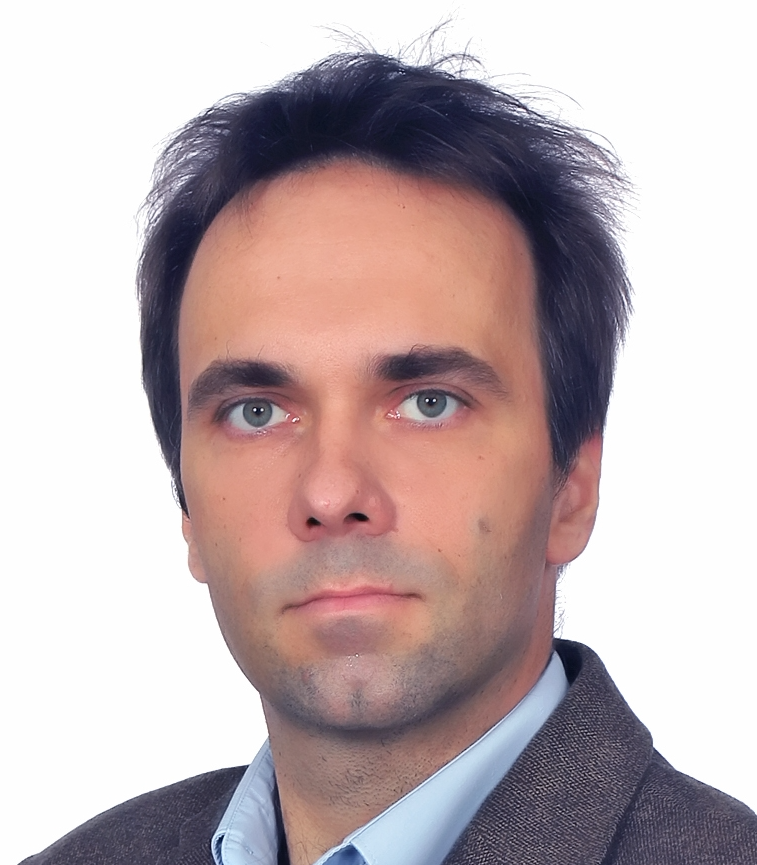 Pawel Dlotko合作论文数Dioscuri Centre in Topological Data Analysis, Mathematical Institute, Polish Academy of Sciences6
 Chao Chen合作论文数Department of Biomedical Informatics, Stony Brook University4
 Ziga Virk合作论文数Faculty of Mathematics and Physics, University of Ljubljana4
 Mayank Goswami合作论文数Graduate Center, City University of New York;Department of Computer Science, Queens College, City University of New York2
 Yikai Zhang合作论文数Rutgers University2
 Marian Mrozek合作论文数II UJ Institute of Computer Science
Jagiellonian University2
Marian Mrozek合作论文数II UJ Institute of Computer Science
Jagiellonian University2 Songzhu Zheng合作论文数Stony Brook University;Morgan Stanley2
 Jan Reininghaus合作论文数Siemens Digital Industries Software2
 Fan Wang合作论文数Stony Brook University1
 Teresa Heiss合作论文数IST Austria1
 Matthew Wheeler合作论文数1
 Ulrich Bauer合作论文数Department of Mathematics, Technische Universitat Munchen1
 Manuchehrfar, F.合作论文数Sharif Univ. of Technol.;c;Sharif Univ. of Technol.1
 Mateusz Juda合作论文数Division of Computational Mathematics, Jagiellonian University1
 Wei Tian合作论文数University of Illinois at Chicago, University of Illinois at Chicago1
 Thomas Buchert合作论文数Centre de Recherche Astrophysique de Lyon, Ecole Normale Superieure de Lyon;Physics Department, Université Claude Bernard Lyon 11
 Rien Van De Weygaert合作论文数Kapteyn Astronomical Institute;University of Groningen;Kapteyn Astronomical Institute, University of Groningen1
 Michael Kerber合作论文数Institute of Geometry, Graz University of Technology1
 Peter Franek合作论文数Mathematical institute, Sokolovská 83, 186 75 Prague, Czech Republik1
 Jie Liang合作论文数Richard and Loan Hill Department of Biomedical Engineering, Colleges of Engineering and Medicine, University of Illinois at Chicago;Center for Bioinformatics and Quantitative Biology, University of Illinois at Chicago1
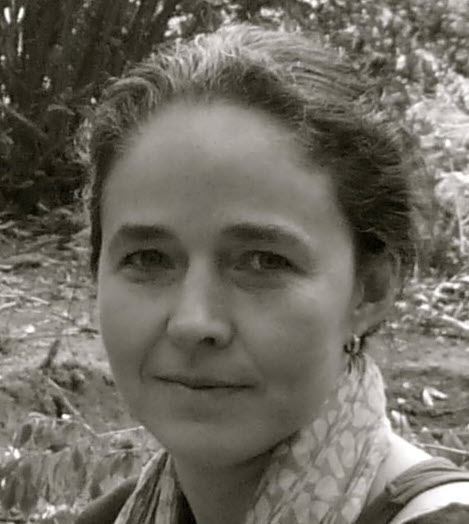 Ingrid Hotz合作论文数Linköping University, Linköping, Sweden1R. Kudłacik合作论文数1David Gunther合作论文数MPI Informatik, Saarland University1
 Konstantin Mischaikow合作论文数Department Mathematics and BioMaPS Institute
Rutgers Universit1
Konstantin Mischaikow合作论文数Department Mathematics and BioMaPS Institute
Rutgers Universit1 Peter Bubenik合作论文数Department of Mathematics, Cleveland State University1
 Vidit Nanda合作论文数Mathematical Institute, University of Oxford1Marek Krcál合作论文数1
 Bernard J. T. Jones合作论文数Kapteyn Astronomical Institute;University of Groningen;Kapteyn Astronomical Institute, University of Groningen1
 Shaun Harker合作论文数1
 Pratyush Pranav合作论文数Department of Physics;Indian Institute of Science;Department of Physics, Indian Institute of Science1
 Walter G. Kropatsch合作论文数Pattern Recognition and Image Processing Group, Institute of Visual Computing and Human-Centered Technology, Vienna University of Technology1
 Robert J. Adler合作论文数Israel Institute of Technology1
 Armin Schwartzman合作论文数Department of Statistics, Stanford University1




