Self-supervised learning plays an important role in current state-of-the-art semi-supervised learning (SSL) methods. These methods learn inter-class heterogeneity among data and generate pseudo-labels based on class level representations. However, they often neglect intra-class heterogeneity, resulting in the under-exploitation of finer-grained semantic relationships within classes. To address this limitation, we introduce PivotAlign, a novel SSL approach that aims to 1) learn hierarchical representations to detect both interclass and intra-class semantic relationships, and 2) refine pseudo-labels based on learned representations with a class-debiasing strategy. Specifically, we first learn a set of pivots as sub-prototypes of classes. We then train representations so that features align with the assigned pivot and are hierarchically grouped based on both inter-class and intra-class heterogeneity. This allows us to capture both inter-class and intra-class semantic relationships among data and leverage them to better assign and refine pseudo-labels. Additionally, since SSL methods are prone to bias toward classes that are easier to learn, we further re-balance class predictions to alleviate this class bias. We demonstrate the effectiveness of PivotAlign on various SSL benchmarks, where PivotAlign achieves state-of-the-art performances. The source code will be released upon publication of the work.
In this work, we study the weighted empirical risk minimization (weighted ERM) schema, in which an additional data-dependent weight function is incorporated when the empirical risk function is being minimized. We show that under a general ``balanceable" Bernstein condition, one can design a weighted ERM estimator to achieve superior performance in certain sub-regions over the one obtained from standard ERM, and the superiority manifests itself through a data-dependent constant term in the error bound. These sub-regions correspond to large-margin ones in classification settings and low-variance ones in heteroscedastic regression settings, respectively. Our findings are supported by evidence from synthetic data experiments.
Graphical models are widely used in diverse application domains to model the conditional dependencies amongst a collection of random variables. In this paper, we consider settings where the graph structure is covariate-dependent, and investigate a deep neural network-based approach to estimate it. The method allows for flexible functional dependency on the covariate, and fits the data reasonably well in the absence of a Gaussianity assumption. Theoretical results with PAC guarantees are established for the method, under assumptions commonly used in an Empirical Risk Minimization framework. The performance of the proposed method is evaluated on several synthetic data settings and benchmarked against existing approaches. The method is further illustrated on real datasets involving data from neuroscience and finance, respectively, and produces interpretable results.
Segmentation of curvilinear structures such as vasculature and road networks is challenging due to relatively weak signals and complex geometry/topology. To facilitate and accelerate large scale annotation, one has to adopt semi-automatic approaches such as proofreading by experts. In this work, we focus on uncertainty estimation for such tasks, so that highly uncertain, and thus error-prone structures can be identified for human annotators to verify. Unlike most existing works, which provide pixel-wise uncertainty maps, we stipulate it is crucial to estimate uncertainty in the units of topological structures, e.g., small pieces of connections and branches. To achieve this, we leverage tools from topological data analysis, specifically discrete Morse theory (DMT), to first capture the structures, and then reason about their uncertainties. To model the uncertainty, we (1) propose a joint prediction model that estimates the uncertainty of a structure while taking the neighboring structures into consideration (inter-structural uncertainty); (2) propose a novel Probabilistic DMT to model the inherent uncertainty within each structure (intra-structural uncertainty) by sampling its representations via a perturb-and-walk scheme. On various 2D and 3D datasets, our method produces better structure-wise uncertainty maps compared to existing works. Code available at https://github.com/Saumya-Gupta-26/struct-uncertainty
Learning and decision-making in domains with naturally high noise-to-signal ratio, such as Finance or Healthcare, is often challenging, while the stakes are very high. In this paper, we study the problem of learning and acting under a general noisy generative process. In this problem, the data distribution has a significant proportion of uninformative samples with high noise in the label, while part of the data contains useful information represented by low label noise. This dichotomy is present during both training and inference, which requires the proper handling of uninformative data during both training and testing. We propose a novel approach to learning under these conditions via a loss inspired by the selective learning theory. By minimizing this loss, the model is guaranteed to make a near-optimal decision by distinguishing informative data from uninformative data and making predictions. We build upon the strength of our theoretical guarantees by describing an iterative algorithm, which jointly optimizes both a predictor and a selector, and evaluates its empirical performance in a variety of settings.
Noisy labels can significantly affect the performance of deep neural networks (DNNs). In medical image segmentation tasks, annotations are error-prone due to the high demand in annotation time and in the annotators' expertise. Existing methods mostly assume noisy labels in different pixels are \textit{i.i.d}. However, segmentation label noise usually has strong spatial correlation and has prominent bias in distribution. In this paper, we propose a novel Markov model for segmentation noisy annotations that encodes both spatial correlation and bias. Further, to mitigate such label noise, we propose a label correction method to recover true label progressively. We provide theoretical guarantees of the correctness of the proposed method. Experiments show that our approach outperforms current state-of-the-art methods on both synthetic and real-world noisy annotations.
Quantifying aleatoric uncertainty is a challenging task in machine learning. It is important for decision making associated with data-dependent uncertainty in model outcomes. Recently, many empirical studies in modeling aleatoric uncertainty under regression settings primarily rely on either a Gaussian likelihood or moment matching. However, the performance of these methods varies for different datasets whereas discussions on their theoretical guarantees are lacking. In this work, we investigate the theoretical aspects of these approaches and establish risk bounds for their estimates. We provide conditions that are sufficient to guarantee the PAC-learnability of the aleatoric uncertainty. The study suggests that the likelihood- and moment matching-based methods enjoy different types of guarantee in their risk bounds, i.e., they calibrate different aspects of the uncertainty and thus exhibit distinct properties in different regimes of the parameter space. Finally, we conduct empirical study which shows promising results and supports our theorems.
We study the Trojan Attack problem, where malicious attackers sabotage deep neural network models with poisoned training data. In most existing works, the effectiveness of the attack is largely overlooked; many attacks can be ineffective or inefficient for certain training schemes, e.g., adversarial training. In this paper, we adopt a novel perspective and look into the quantitative relationship between a clean model and its Trojaned counterpart. We formulate a successful attack using classic machine learning language. Under mild assumptions, we show theoretically that there exists a Trojaned model, named Trojaned Twin, that is very close to the clean model. This attack can be achieved by simply using a universal Trojan trigger intrinsic to the data distribution. This has powerful implications in practice; the Trojaned twin model has enhanced attack efficacy and strong resiliency against detection. Empirically, we show that our method achieves consistent attack efficacy across different training schemes, including the challenging adversarial training scheme. Furthermore, this Trojaned twin model is robust against SoTA detection methods
The Schrödinger bridge problem (SBP) is gaining increasing attention in generative modeling and showing promising potential even in comparison with the score-based generative models (SGMs). SBP can be interpreted as an entropy-regularized optimal transport problem, which conducts projections onto every other marginal alternatingly. However, in practice, only approximated projections are accessible and their convergence is not well understood. To fill this gap, we present a first convergence analysis of the Schrödinger bridge algorithm based on approximated projections. As for its practical applications, we apply SBP to probabilistic time series imputation by generating missing values conditioned on observed data. We show that optimizing the transport cost improves the performance and the proposed algorithm achieves the state-of-the-art result in healthcare and environmental data while exhibiting the advantage of exploring both temporal and feature patterns in probabilistic time series imputation.
Topological loss based on persistent homology has shown promise in various applications. A topological loss enforces the model to achieve certain desired topological property. Despite its empirical success, less is known about the optimization behavior of the loss. In fact, the topological loss involves combinatorial configurations that may oscillate during optimization. In this paper, we introduce a general purpose regularized topology-aware loss. We propose a novel regularization term and also modify existing topological loss. These contributions lead to a new loss function that not only enforces the model to have desired topological behavior, but also achieves satisfying convergence behavior. Our main theoretical result guarantees that the loss can be optimized efficiently, under mild assumptions.
Learning and decision making in domains with naturally high noise-to-signal ratios – such as Finance or Public Health – can be challenging and yet extremely important. In this paper, we study a problem of learning on datasets in which a significant proportion of samples does not contain useful information. To analyze this setting, we introduce a noisy generative process with a clear distinction between uninformative/not learnable/purely random data and a structured/informative component. This dichotomy is present both during the training and in the inference phase. We propose a novel approach to learn under these conditions via a loss inspired by the selective learning theory. By minimizing the loss, our method is guaranteed to make a near-optimal decision by simultaneously distinguishing structured data from the non-learnable and making predictions, even in a highly imbalanced setting. We build upon the strength of our theoretical guarantees by describing an iterative algorithm, which jointly optimizes both a predictor and a selector, and evaluate its empirical performance under a variety of conditions.
The Convex Hull Membership (CHM) tests whether \( p \in conv(S) \), where p and the n points of S lie in \( \mathbb { R}^m \). CHM finds applications in Linear Programming, Computational Geometry, and Machine Learning. The Triangle Algorithm (TA), previously developed, in \( O(1/\varepsilon ^2) \) iterations computes \( p^{\prime } \in conv(S) \), either an \( \varepsilon \)- approximate solution , or a witness certifying \( p \not\in conv(S) \). We first prove the equivalence of exact and approximate versions of CHM and Spherical -CHM, where \( p=0 \) and \( \Vert v\Vert =1 \) for each v in S . If for some \( M \ge 1 \) every non-witness with \( \Vert p^{\prime }\Vert \gt \varepsilon \) admits \( v \in S \) satisfying \( \Vert p^{\prime } - v\Vert \ge \sqrt {1+\varepsilon /M} \), we prove the number of iterations improves to \( O(M/\varepsilon) \) and \( M \le 1/\varepsilon \) always holds. Equivalence of CHM and Spherical-CHM implies Minimum Enclosing Ball (MEB) algorithms can be modified to solve CHM. However, we prove \( (1+ \varepsilon) \)-approximation in MEB is \( \Omega (\sqrt {\varepsilon }) \)-approximation in Spherical-CHM. Thus, even \( O(1/\varepsilon) \) iteration MEB algorithms are not superior to Spherical-TA. Similar weakness is proved for MEB core sets. Spherical-TA also results a variant of the All Vertex Triangle Algorithm (AVTA) for computing all vertices of \( conv(S) \). Substantial computations on distinct problems demonstrate that TA and Spherical-TA generally achieve superior efficiency over algorithms such as Frank–Wolfe, MEB, and LP-Solver.
The adversarial risk of a machine learning model has been widely studied. Most previous works assume that the data lies in the whole ambient space. We propose to take a new angle and take the manifold assumption into consideration. Assuming data lies in a manifold, we investigate two new types of adversarial risk, the normal adversarial risk due to perturbation along normal direction, and the in-manifold adversarial risk due to perturbation within the manifold. We prove that the classic adversarial risk can be bounded from both sides using the normal and in-manifold adversarial risks. We also show with a surprisingly pessimistic case that the standard adversarial risk can be nonzero even when both normal and in-manifold risks are zero. We finalize the paper with empirical studies supporting our theoretical results. Our results suggest the possibility of improving the robustness of a classifier by only focusing on the normal adversarial risk.
Stochastic Gradient Descent (SGD) based methods have been widely used for training large-scale machine learning models that also generalize well in practice. Several explanations have been offered for this generalization performance, a prominent one being algorithmic stability [18]. However, there are no known examples of smooth loss functions for which the analysis can be shown to be tight. Furthermore, apart from the properties of the loss function, data distribution has also been shown to be an important factor in generalization performance. This raises the question: is the stability analysis of [18] tight for smooth functions, and if not, for what kind of loss functions and data distributions can the stability analysis be improved? In this paper we first settle open questions regarding tightness of bounds in the data-independent setting: we show that for general datasets, the existing analysis for convex and strongly-convex loss functions is tight, but it can be improved for non-convex loss functions. Next, we give a novel and improved data-dependent bounds: we show stability upper bounds for a large class of convex regularized loss functions, with negligible regularization parameters, and improve existing data-dependent bounds in the non-convex setting. We hope that our results will initiate further efforts to better understand the data-dependent setting under non-convex loss functions, leading to an improved understanding of the generalization abilities of deep networks.
Recently, Generative Adversarial Networks (GANs) have demonstrated their potential in federated learning, i.e., learning a centralized model from data privately hosted by multiple sites. A federatedGAN jointly trains a centralized generator and multiple private discriminators hosted at different sites. A major theoretical challenge for the federated GAN is the heterogeneity of the local data distributions. Traditional approaches cannot guarantee to learn the target distribution, which isa mixture of the highly different local distributions. This paper tackles this theoretical challenge, and for the first time, provides a provably correct framework for federated GAN. We propose a new approach called Universal Aggregation, which simulates a centralized discriminator via carefully aggregating the mixture of all private discriminators. We prove that a generator trained with this simulated centralized discriminator can learn the desired target distribution. Through synthetic and real datasets, we show that our method can learn the mixture of largely different distributions where existing federated GAN methods fail.
Deep neural networks are known to have security issues. One particular threat is the Trojan attack. It occurs when the attackers stealthily manipulate the model's behavior through Trojaned training samples, which can later be exploited. Guided by basic neuroscientific principles we discover subtle -- yet critical -- structural deviation characterizing Trojaned models. In our analysis we use topological tools. They allow us to model high-order dependencies in the networks, robustly compare different networks, and localize structural abnormalities. One interesting observation is that Trojaned models develop short-cuts from input to output layers. Inspired by these observations, we devise a strategy for robust detection of Trojaned models. Compared to standard baselines it displays better performance on multiple benchmarks.
Label noise is frequently observed in real-world large-scale datasets. The noise is introduced due to a variety of reasons; it is heterogeneous and feature-dependent. Most existing approaches to handling noisy labels fall into two categories: they either assume an ideal feature-independent noise, or remain heuristic without theoretical guarantees. In this paper, we propose to target a new family of feature-dependent label noise, which is much more general than commonly used i.i.d. label noise and encompasses a broad spectrum of noise patterns. Focusing on this general noise family, we propose a progressive label correction algorithm that iteratively corrects labels and refines the model. We provide theoretical guarantees showing that for a wide variety of (unknown) noise patterns, a classifier trained with this strategy converges to be consistent with the Bayes classifier. In experiments, our method outperforms SOTA baselines and is robust to various noise types and levels.
The technique of algorithmic stability has been used to capture the generalization power of several learning models, especially those trained with stochastic gradient descent (SGD). This paper investigates the tightness of the algorithmic stability bounds for SGD given by~\cite{hardt2016train}. We show that the analysis of~\cite{hardt2016train} is tight for convex objective functions, but loose for non-convex objective functions. In the non-convex case we provide a tighter upper bound on the stability (and hence generalization error), and provide evidence that it is asymptotically tight up to a constant factor. However, deep neural networks trained with SGD exhibit much better stability and generalization in practice than what is suggested by these (tight) bounds, namely, linear or exponential degradation with time for SGD with constant step size. We aim towards characterizing deep learning loss functions with good generalization guarantees, despite being trained using SGD with constant step size. We propose the Hessian Contractive (HC) condition, which specifies the contractivity of regions containing local minima in the neural network loss landscape. We provide empirical evidence that this condition holds for several loss functions, and provide theoretical evidence that the known tight SGD stability bounds for convex and non-convex loss functions can be circumvented by HC loss functions, thus partially explaining the generalization of deep neural networks.
In this supplemental material, we provide additional details on the theory, the algorithms, and the experiments. In Section 1, we provide a formal description of persistent homology, as well as the bottleneck distance. In Section 2, we continue analyzing the population level difference between Trojaned and clean models, with a focus on the short-cuts. Section 3 includes the proof of the proposition and theorem on (1) the existence of a topological discrepancy between Trojaned and clean models; (2) the convergence of the estimation of persistent homology in terms of the bottleneck distance. In Section 4, we provide more technical details on the experiments, including our sampling method based on pixel-wise perturbation, used baselines, and experiment configuration.
Regularization plays an important role in generalization of deep learning. In this paper, we study the generalization power of an unbiased regularizor for training algorithms in deep learning. We focus on training methods called Locally Regularized Stochastic Gradient Descent (LRSGD). An LRSGD leverages a proximal type penalty in gradient descent steps to regularize SGD in training. We show that by carefully choosing relevant parameters, LRSGD generalizes better than SGD. Our thorough theoretical analysis is supported by experimental evidence. It advances our theoretical understanding of deep learning and provides new perspectives on designing training algorithms. The code is available at https://github.com/huiqu18/LRSGD.
 Chao Chen合作论文数Department of Biomedical Informatics, Stony Brook University18
 Songzhu Zheng合作论文数Stony Brook University;Morgan Stanley9
 Mayank Goswami合作论文数Graduate Center, City University of New York;Department of Computer Science, Queens College, City University of New York8
 Dimitris N. Metaxas合作论文数Department of Computer Science, School of Arts and Sciences, Rutgers University7
 Yuriy Nevmyvaka合作论文数6
 Hui Qu合作论文数Adobe6Anderson Schneider合作论文数5
 Fengpei Li合作论文数Columbia University3
 Pengxiang Wu合作论文数Department of Computer Science, Rutgers University3
 Qi Chang合作论文数Department of Computer Science, Rutgers University3
 Bahman Kalantari合作论文数Department of Computer Science, School of Arts and Sciences, Rutgers University3Jiachen Yao合作论文数2
 Prateek Prasanna合作论文数2
 Weimin Lyu合作论文数Department of Computer Science, Stony Brook University;Amazon2Jiahe Lin合作论文数Dept Stat, Univ Michigan2
 Hubert Wagner合作论文数Department of Mathematics, College of Liberal Arts and Sciences, University of Florida2
 Wenjia Zhang合作论文数Columbia University in the City of New York, Columbia University2
 Tong Zhang (张潼)合作论文数Siebel School of Computing and Data Science, The Grainger College of Engineering, University of Illinois Urbana-Champaign2
 Kashif Rasul合作论文数Zalando Se2Vamsi Pritham Pingali合作论文数2
 Zhennan Yan合作论文数Helm.ai2
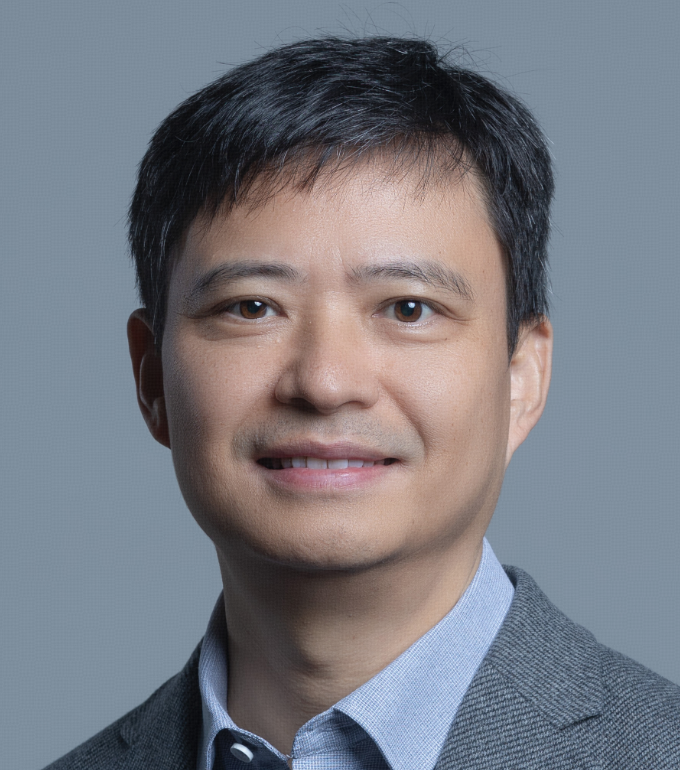 Haibin Ling (凌海滨)合作论文数Westlake Intelligent Computing and Application Lab, Department of Artificial Intelligence, School of Engineering, Westlake University2Chun Lau合作论文数1Tianjiao N Yang合作论文数1
 Tao Sun合作论文数Department of Computer Science, Stony Brook University1
 Mina Dalirrooyfard合作论文数Machine Learning Research Group, Morgan Stanley1Yeshaya Adler合作论文数1
 Anant Raj合作论文数SIERRA Project Team, Machine Learning Research Laboratory, Ecole Normale Supérieure, PSL Research University;Coordinated Science Laboratory, The Grainger College of Engineering, University of Illinois at Urbana-Champaign1
 Yu Chen合作论文数Morgan Stanley1Lohendran Baskaran合作论文数1
 Saumya Gupta合作论文数Stony Brook University1
 Mert Sabuncu合作论文数School of Electrical and Computer Engineering, Cornell University;Cornell Tech, Cornell University;Department of Radiology, Weill Cornell Medicine1
 Wei Deng合作论文数Morgan Stanley1
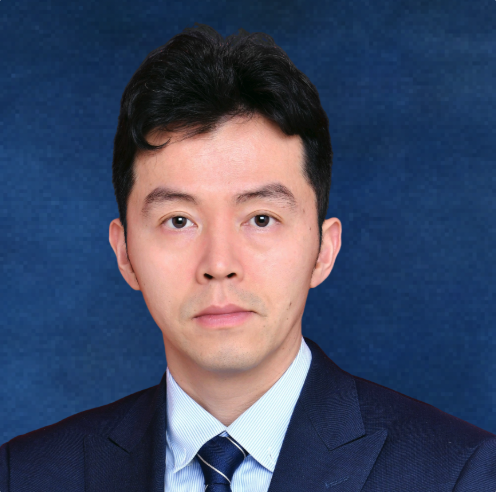 Shaoting Zhang (张少霆)合作论文数Qing Yuan Research Institute, School of Computer Science, Shanghai Jiao Tong University1
 Xiaolin Hu (胡晓林)合作论文数McGovern Institute for Brain Research, Tsinghua University;State Key Laboratory of Intelligent Technology and Systems, Department of Computer Science and Technology, Tsinghua University;Tsinghua Laboratory of Brain and Intelligence1
 Xiaoling Hu合作论文数Radiology Department, Harvard Medical School;Athinoula A. Martinos Center for Biomedical Imaging, Harvard Medical School;Massachusetts General Hospital1
 Shikai Fang (方榯楷)合作论文数College of Information Science and Electronic Engineering, Zhejiang University1Yusu Wang合作论文数1
 Shandian Zhe (折闪电)合作论文数School of Computing, University of Utah;Purdue University1
 Huidong Liu合作论文数Amazon1
 George Michailidis合作论文数Research Center for Group Dynamics BioSocial Methods Collaborative, Medical School, University of Michigan1
 Pranjal Awasthi合作论文数Google1




