We introduce fusion-based quantum computing (FBQC) - a model of universal quantum computation in which entangling measurements, called fusions, are performed on the qubits of small constant-sized entangled resource states. We introduce a stabilizer formalism for analyzing fault tolerance and computation in these schemes. This framework naturally captures the error structure that arises in certain physical systems for quantum computing, such as photonics. FBQC can offer significant architectural simplifications, enabling hardware made up of many identical modules, requiring an extremely low depth of operations on each physical qubit and reducing classical processing requirements. We present two pedagogical examples of fault-tolerant schemes constructed in this framework and numerically evaluate their threshold under a hardware agnostic fusion error model including both erasure and Pauli error. We also study an error model of linear optical quantum computing with probabilistic fusion and photon loss. In FBQC the non-determinism of fusion is directly dealt with by the quantum error correction protocol, along with other errors. We find that tailoring the fault-tolerance framework to the physical system allows the scheme to have a higher threshold than schemes reported in literature. We present a ballistic scheme which can tolerate a 10.4% probability of suffering photon loss in each fusion.
Fusion-based quantum computing (FBQC) offers a powerful approach to building a fault-tolerant universal quantum computer using photonic components — single-photon sources, linear-optical circuits, single-photon detectors, and optical switching with feedforward control. Both individual optical switches and sophisticated switch networks are needed where it is necessary to perform operations conditionally, using feedforward of previous photon-detection outcomes, within the lifetime of remaining photons. Most visibly, feedforward switching is required for fault-tolerant operations at the level of logical qubits, which are needed in turn for useful quantum algorithms. However, switch networks are also required for multiplexing (“muxing”) stages that are needed for generating specific small entangled resource states, where it is used to boost the probabilities for allocating quantum states to fusion gates and other operations — a task which dominates the footprint of photonic FBQC. Despite their importance, limited attention has been paid to exploring possible designs of switch networks in this setting. Here we present a wide range of new techniques and schemes which enable major improvements in terms of muxing efficiency and reductions in hardware requirements. Since the use of photonic switching heavily impacts qubit losses and errors, our schemes are constructed with low switch depth. They also exploit specific features of linear-optical circuits which are commonly used to generate entanglement in proposed quantum computing and quantum network schemes.
Optical absorption measurements characterize a wide variety of systems from atomic gases to in vivo diagnostics of living organisms. Here we study the potential of nonclassical techniques to reduce statistical noise below the shot-noise limit in absorption measurements with concomitant phase shifts imparted by a sample. We consider both cases where there is a known relationship between absorption and a phase shift, and where this relationship is unknown. For each case we derive the fundamental limit and provide a practical strategy to reduce statistical noise. Furthermore, we find an intuitive correspondence between measurements of absorption and of lossy phase shifts, which both show the same analytical form for precision enhancement for bright states. Our results demonstrate that nonclassical techniques can aid real-world tasks with present-day laboratory techniques.
We present a general method for finding loss-tolerant teleportation on large, entangled stabilizer states using only single-qubit measurements, known as stabilizer pathfinding (SPF). For heralded loss, SPF is shown to generate optimally loss-tolerant measurement patterns on any given stabilizer state. Furthermore, SPF also provides highly loss-tolerant teleportation strategies when qubit loss is unheralded. We provide a fast algorithm for SPF that updates continuously as a state is generated and measured, which is therefore suitable for real-time implementation on a quantum-computing device. When compared to simulations of previous heuristics for loss-tolerant teleportation on graph states, SPF provides considerable gains in tolerance to both heralded and unheralded loss, achieving a near-perfect teleportation rate (>95%) in the regime of low qubit loss (<10%) on various graph state lattices. Using these results we also present evidence that points towards the existence of loss-tolerant thresholds on such states, which in turn indicates that the loss-tolerant behaviour we have found also applies as the number of qubits tends to infinity. Our results represent a significant advance towards the realistic implementation of teleportation in both large-scale and near-future quantum architectures that are susceptible to qubit loss, such as linear optical quantum computation and quantum communication networks.
NOON states (states of the form |N >a |0 >b +|0 >a |N >b where a and b are single particle states) have been used for predicting violations of local realism (Greenberger-Horne-Zeilinger violations) and are valuable in metrology for precision measurements of phase at the Heisenberg limit. We show theoretically how the use of two Fock state Bose-Einstein condensates as sources in a modified Mach-Zehnder interferometer can lead to the creation of the NOON state in which a and b refer to arms of the interferometer and N is a subset of the total number of particles in the two condensates. The modification of the interferometer involves making “side” measurements of a few particles near the sources. These measurements put the remaining particles in a superposition of two phase states, which are converted into NOON states by a beam splitter if the phase states are orthogonal. When they are not orthogonal, a “feedforward” correction circuit is shown to convert them into proper form so a NOON results. We apply the NOON to the measurement of phase. Here the NOON experiment is equivalent to one in which a large molecule passes through two slits. The NOON components can be recombined in a final beam splitter to show interference.
Most leading proposals for linear-optical quantum computing (LOQC) use cluster states, which act as a universal resource for measurement-based (one-way) quantum computation. In ballistic approaches to LOQC, cluster states are generated passively from small entangled resource states using so-called fusion operations. Results from percolation theory have previously been used to argue that universal cluster states can be generated in the ballistic approach using schemes which exceed the critical threshold for percolation, but these results consider cluster states with unbounded size. Here we consider how successful percolation can be maintained using a physical architecture with fixed physical depth, assuming that the cluster state is continuously generated and measured, and therefore that only a finite portion of it is visible at any one point in time. We show that universal LOQC can be implemented using a constant-size device with modest physical depth, and that percolation can be exploited using simple pathfinding strategies without the need for high-complexity algorithms.
Absorption spectroscopy is routinely used to characterise chemical and biological samples. For the state-of-the-art in laser absorption spectroscopy, precision is theoretically limited by shot-noise due to the fundamental Poisson-distribution of photon number in laser radiation. In practice, the shot-noise limit can only be achieved when all other sources of noise are eliminated. Here, we use wavelength-correlated and tuneable photon pairs to demonstrate how absorption spectroscopy can be performed with precision beyond the shot-noise limit and near the ultimate quantum limit by using the optimal probe for absorption measurement—single photons. We present a practically realisable scheme, which we characterise both the precision and accuracy of by measuring the response of a control feature. We demonstrate that the technique can successfully probe liquid samples and using two spectrally similar types of haemoglobin we show that obtaining a given precision in resolution requires fewer heralded single probe photons compared to using an idealised laser.
Precise device characterisation is a fundamental requirement for a large range of applications using photonic hardware, and constitutes a multi-parameter estimation problem. Estimates based on measurements using single photons or classical light have precision which is limited by shot noise, while quantum resources can be used to achieve sub-shot-noise precision. However, there are many open questions with regard to the best quantum protocols for multi-parameter estimation, including the ultimate limits to achievable precision, as well as optimal choices for probe states and measurements. In this paper, we develop a formalism based on Fisher information to tackle these questions for setups based on linear-optical components and photon-counting measurements. A key ingredient of our analysis is a mapping for equivalent protocols defined for photonic and spin systems, which allows us to draw upon results in the literature for general finite-dimensional systems. Motivated by the protocol in Zhou, et al Optica 2, 510 (2015), we present new results for quantum-enhanced tomography of unitary processes, including a comparison of Holland-Burnett and NOON probe states.
Quantum metrology enables estimation of optical phase shifts with precision beyond the shot-noise limit. One way to exceed this limit is to use squeezed states, where the quantum noise of one observable is reduced at the expense of increased quantum noise for its complementary partner. Because shot-noise limits the phase sensitivity of all classical states, reduced noise in the average value for the observable being measured allows for improved phase sensitivity. However, additional phase sensitivity can be achieved using phase estimation strategies that account for the full distribution of measurement outcomes. Here we experimentally investigate a model of optical spin-squeezing, which uses post-selection and photon subtraction from the state generated using a parametric downconversion photon source, and we investigate the phase sensitivity of this model. The Fisher information for all photon-number outcomes shows it is possible to obtain a quantum advantage of 1.58 compared to the shot-noise value for five-photon events, even though due to experimental imperfection, the average noise for the relevant spin-observable does not achieve sub-shot-noise precision. Our demonstration implies improved performance of spin squeezing for applications to quantum metrology.
Received 5 October 2017DOI:https://doi.org/10.1103/PhysRevApplied.8.049902Published by the American Physical Society under the terms of the Creative Commons Attribution 4.0 International license. Further distribution of this work must maintain attribution to the author(s) and the published article’s title, journal citation, and DOI.© 2017 American Physical SocietyPhysics Subject Headings (PhySH)Research AreasOptical quantum information processingPhotonicsQuantum fluctuations & noiseQuantum measurementsQuantum metrologyQuantum opticsSingle photon sourcesAtomic, Molecular & Optical
Client-server models enable computations to be hosted remotely on quantum servers. We present a novel protocol for realizing this task, with practical advantages when using technology feasible in the near term. Client tasks are realized as linear combinations of operations implemented by the server, where the linear coefficients are hidden from the server. We report on an experimental demonstration of our protocol using linear optics, which realizes linear combination of two single-qubit operations by a remote single-qubit control. In addition, we explain when our protocol can remain efficient for larger computations, as well as some ways in which privacy can be maintained using our protocol.
Harnessing the unique properties of quantum mechanics offers the possibility of delivering alternative technologies that can fundamentally outperform their classical counterparts. These technologies deliver advantages only when components operate with performance beyond specific thresholds. For optical quantum metrology, the biggest challenge that impacts on performance thresholds is optical loss. Here, we demonstrate how including an optical delay and an optical switch in a feed-forward configuration with a stable and efficient correlated photon-pair source reduces the detector efficiency required to enable quantum-enhanced sensing down to the detection level of single photons and without postselection. When the switch is active, we observe a factor of improvement in precision of 1.27 for transmission measurement on a per-input-photon basis compared to the performance of a laser emitting an ideal coherent state and measured with the same detection efficiency as our setup. When the switch is inoperative, we observe no quantum advantage.
Many existing schemes for linear-optical quantum computing (LOQC) depend on multiplexing (MUX), which uses dynamic routing to enable near-deterministic gates and sources to be constructed using heralded, probabilistic primitives. MUXing accounts for the overwhelming majority of active switching demands in current LOQC architectures. In this manuscript we introduce relative multiplexing (RMUX), a general-purpose optimisation which can dramatically reduce the active switching requirements for MUX in LOQC, and thereby reduce hardware complexity and energy consumption, as well as relaxing demands on performance for various photonic components. We discuss the application ofRMUXto the generation of entangled states from probabilistic single-photon sources, and argue that an order of magnitude improvement in the rate of generation of Bell states can be achieved. In addition, we apply RMUX to the proposal for percolation of a 3Dcluster state by Gimeno-Segovia et al (2015 Phys. Rev. Lett. 115 020502), and we find that RMUX allows an 2.4x. increase in loss tolerance for this architecture.
Understanding the fundamental limits on the precision to which an optical phase can be estimated is of key interest for many investigative techniques utilized across science and technology. We study the estimation of a fixed optical phase shift due to a sample which has an associated optical loss, and compare phase estimation strategies using classical and nonclassical probe states. These comparisons are based on the attainable (quantum) Fisher information calculated per number of photons absorbed or scattered by the sample throughout the sensing process. We find that for a given number of incident photons upon the unknown phase, nonclassical techniques in principle provide less than a 20% reduction in root-mean-square error (RMSE) in comparison with ideal classical techniques in multipass optical setups. Using classical techniques in a different optical setup that we analyze, which incorporates additional stages of interference during the sensing process, the achievable reduction in RMSE afforded by nonclassical techniques falls to only similar or equal to 4%. We explain how these conclusions change when nonclassical techniques are compared to classical probe states in nonideal multipass optical setups, with additional photon losses due to the measurement apparatus.
We demonstrate sub-shot-noise spectroscopy, near to the ultimate quantum limit. We use heralded single photons as the optical probe and compare using single photon detectors and a CCD to demonstrate sub-shot-noise performance.
Understanding the fundamental limits on the precision to which an optical phase can be estimated is of key interest for many investigative techniques utilized across science and technology. We study the estimation of a fixed optical phase shift due to a sample which has an associated optical loss, and compare phase estimation strategies using classical and non-classical probe states. These comparisons are based on the attainable (quantum) Fisher information calculated per number of photons absorbed or scattered by the sample throughout the sensing process. We find that, for a given number of incident photons upon the unknown phase, non-classical techniques in principle provide less than a 20 comparison with ideal classical techniques in multi-pass optical setups. Using classical techniques in a new optical setup we analyze, which incorporates additional stages of interference during the sensing process, the achievable reduction in RMSE afforded by non-classical techniques falls to only 4 explain how these conclusions change when non-classical techniques are compared to classical probe states in non-ideal multi-pass optical setups, with additional photon losses due to the measurement apparatus.
We analyze the operation of a sensor based on atom interferometry, which can achieve supraclassical sensitivity by exploiting quantum correlations in mixed states of many qubits. The interferometer is based on quantum gates which use coherently controlled Rydberg interactions between a single atom (which acts as a control qubit) and an atomic ensemble (which provides register qubits). In principle, our scheme can achieve precision scaling with the size of the ensemble—which can extend to large numbers of atoms—while using only single-qubit operations on the control and bulk operations on the ensemble. We investigate realistic implementation of the interferometer, and our main aim is to develop an approach to quantum metrology that can achieve quantum-enhanced measurement precision by exploiting coherent operations on large impure quantum states. We propose an experiment to demonstrate the enhanced sensitivity of the protocol and to investigate a transition from classical to supraclassical sensitivity which occurs when using highly mixed probe states.
Quantum metrology enables estimation of optical phase shifts with precision beyond the shot-noise limit. One way to exceed this limit is to use squeezed states, where the quantum noise of one observable is reduced at the expense of increased quantum noise for its complementary partner. Because shot-noise limits the phase sensitivity of all classical states, reduced noise in the average value for the observable being measured allows for improved phase sensitivity. However, additional phase sensitivity can be achieved using phase estimation strategies that account for the full distribution of measurement outcomes. Here we experimentally investigate the phase sensitivity of a five-particle optical spin-squeezed state generated by photon subtraction from a parametric downconversion photon source. The Fisher information for all photon-number outcomes shows it is possible to obtain a quantum advantage of 1.58 compared to the shot-noise limit, even though due to experimental imperfection, the average noise for the relevant spin-observable does not achieve sub-shot-noise precision. Our demonstration implies improved performance of spin squeezing for applications to quantum metrology.
Quantum metrology promises high-precision measurements beyond the capability of any classical techniques, and has the potential to be integral to investigative techniques. However, all sensors must tolerate imperfections if they are to be practical. Here we show that photons with perfectly overlapped modes, which are therefore fully indistinguishable, are not required for quantum-enhanced measurement, and that partially-distinguishable photons do not have to be engineered to mitigate the adverse effects of distinguishability. We quantify the effect of distinguishability on quantum metrology experiments, and report results of an experiment to verify that two- and four-photon states containing partially-distinguishable photons can achieve quantum-enhanced sensitivity with low-visibility quantum interference. This demonstrates that sources producing photons with mixed spectral states can be readily utilized for quantum metrology.
Quantum metrology aims to realise new sensors operating at the ultimate limit of precision measurement. However, optical loss, the complexity of proposed metrology schemes and interferometric instability each prevent the realisation of practical quantum-enhanced sensors. To obtain a quantum advantage in interferometry using these capabilities, new schemes are required that tolerate realistic device loss and sample absorption. We show that loss-tolerant quantum metrology is achievable with photon-counting measurements of the generalised multi-photon singlet state, which is readily generated from spontaneous parametric downconversion without any further state engineering. The power of this scheme comes from coherent superpositions, which give rise to rapidly oscillating interference fringes that persist in realistic levels of loss. We have demonstrated the key enabling principles through the four-photon coincidence detection of outcomes that are dominated by the four-photon singlet term of the four-mode downconversion state. Combining state-of-the-art quantum photonics will enable a quantum advantage to be achieved without using post-selection and without any further changes to the approach studied here.
 Jeremy O'Brien合作论文数Department of Electrical & Electronic Engineering, School of Physics, University of Bristol17
 Jonathan C. F. Matthews合作论文数University of Bristol;PsiQuantum16
 Kavan Kishore Modi合作论文数Singapore University of Technology and Design11
 Patrick M. Birchall合作论文数PsiQuantum10
 Rebecca Whittaker合作论文数8Javier Sabines-Chesterking合作论文数Joint Quantum Inst, Univ Maryland7
 Terry Rudolph合作论文数Department of Physics, Imperial College London7
 Vlatko Vedral合作论文数Department of Physics, University of Oxford7
 Jonathan Dowling合作论文数Department of Physics & Astronomy, College of Science, Louisiana State University6
 Peter Knight合作论文数Department of Physics, Faculty of Natural Sciences, Imperial College London5
 Shadbolt, P.J.合作论文数Dept. of Electr. & Electron. Eng., Univ. of Bristol;c5
 Mark S. Williamson合作论文数Tyndall Centre for Climate Change Research5
 Mercedes Gimeno-Segovia合作论文数Departamento de F ´ õsica Teorica I;Universidad Complutense;Departamento de F ´ õsica Teorica I, Universidad Complutense5
 Gabriel A. Durkin合作论文数Quantum Laboratory;NASA Ames Research Center;Quantum Laboratory, NASA Ames Research Center5McMillan, A.R.合作论文数4
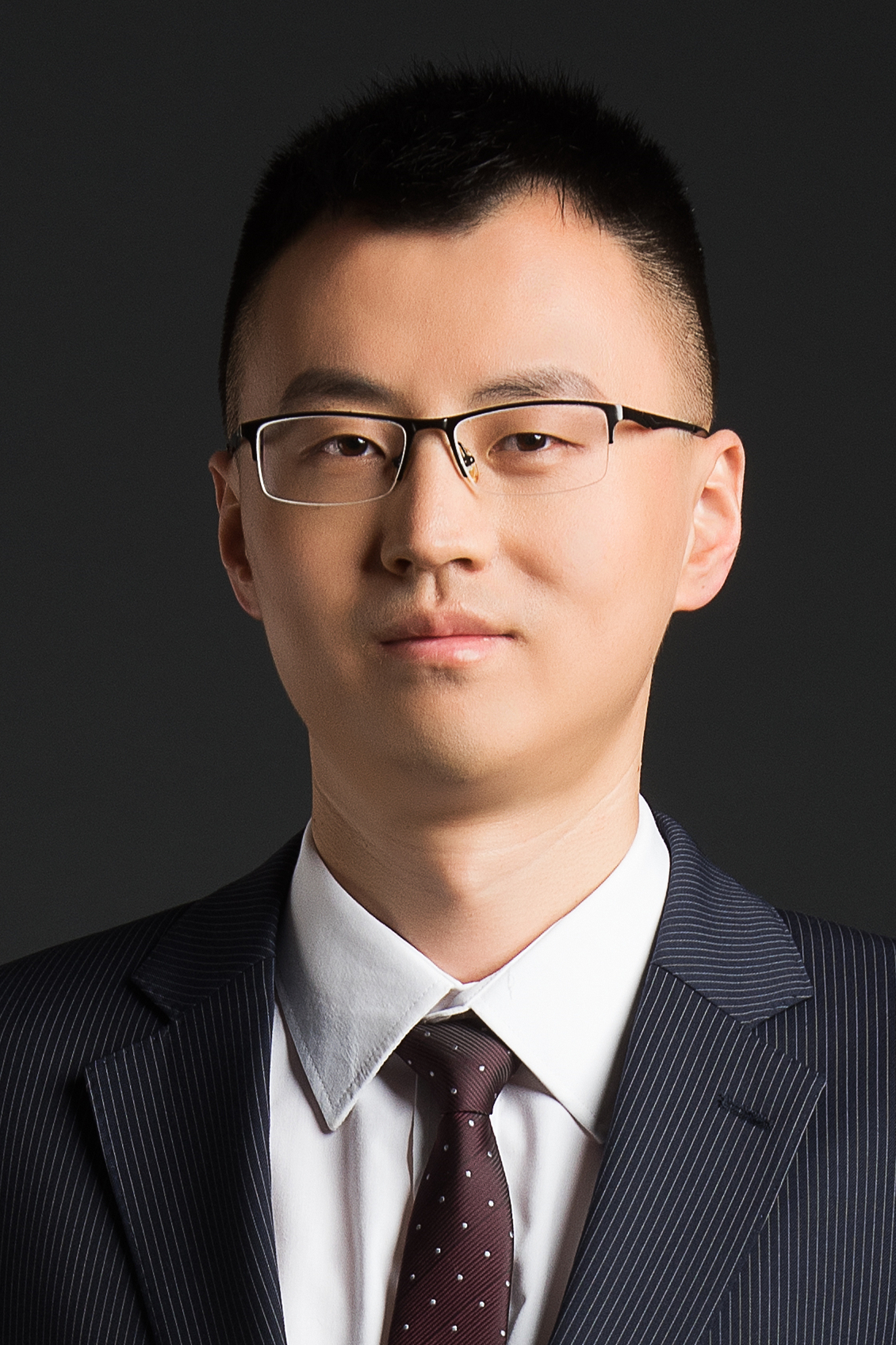 Xiaoqi Zhou (周晓祺)合作论文数State Key Laboratory of Optoelectronic Materials and Technologies, School of Physics, Sun Yat-sen University4
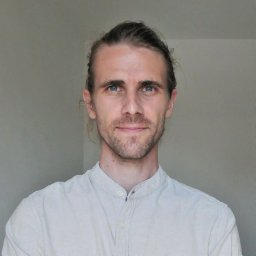 Paul-Antoine Moreau合作论文数Institut FEMTO-ST, Université de Franche-Comté4
 Joshi Siddarth K合作论文数4
 John Rarity合作论文数School of Electrical, Electronic and Mechanical Engineering, Faculty of Engineering, University of Bristol4
 Sara Bartolucci合作论文数PsiQuantum3
 Chris Erven合作论文数3Alex Neville合作论文数Dept. of Electr. & Electron. Eng., Univ. of Bristol;c;Dept. of Electr. & Electron. Eng., Univ. of Bristol3A. Beige合作论文数2Daniel E. Browne合作论文数2
 Monica Berry合作论文数2
 Sam Morley-Short合作论文数HH Wills Phys Lab, Quantum Engn Technol Labs2chris sparrow合作论文数Univ Bristol, HH Wills Phys Lab, Ctr Quantum Photon, Bristol BS8 1UB, Avon, England2
 XiaoGang Qiang合作论文数National Laboratory for Parallel and Distributed Processing, National University of Defense Technology2
 Nickerson Naomi H合作论文数Department of Physics, Imperial College London2
 Ryan T. Glasser合作论文数2
 Fabio Sciarrino合作论文数Quantum Lab, Dipartimento di Fisica, Sapienza Università di Roma;Scuola Superiore di Studi Avanzati, Sapienza Università di Roma;Scuola Normale Superiore2
 Carsten Marr合作论文数Inst Computat Biol, Helmholtz Zentrum Munchen2
 Aharon Brodutch合作论文数Department of Physics;Faculty of Science;Macquarie University;Faculty of Science, Macquarie University2Takafumi Ono合作论文数2
 Francesco De Martini合作论文数Dipartimento di Fisica, Sapienza Universita di Roma2Konrad Kieling合作论文数2
 Chiara Vitelli合作论文数Dipartimento di Fisica2
 Tomasz Paterek合作论文数Xiamen University Malaysia;Instytut Fizyki Teoretycznej i Astrofizyki, Wydział Matematyki, Fizyki i Informatyki, Uniwersytet Gdański2Franck Laloe合作论文数Laboratoire Kastler Brossel2Mark G. Thompson合作论文数1J. L. O'Brien合作论文数1f gerome合作论文数1Jessica Y. Cheung合作论文数1Gabriel Mendoza合作论文数1Leon Cohen合作论文数1Saikat Guha合作论文数1Fu-Guo Deng合作论文数1Calum MacCormick合作论文数1Yangjian Cai合作论文数1




