In a recent article [A. Kurcz et al., Phys. Rev. A 81, 063821 (2010)] we predicted an energy concentrating mechanism in composite quantum systems. Its result is a non-zero stationary state photon emission rate even in the absence of external driving. Here we discuss the possible origin of the predicted effect. We attribute it to the presence of a non-trivial interaction between different system components and to repeated environment-induced photon measurements.
Generating entanglement by simply cooling a system into a stationary state which is highly entangled has many advantages. Schemes based on this idea are robust against parameter fluctuations, tolerate relatively large spontaneous decay rates, and achieve high fidelities independent of their initial state. A possible implementation of this idea in atom-cavity systems has recently been proposed by Kastoryano et al., [Kastoryano et al., Phys. Rev. Lett. 106, 090502 (2011)]. Here we propose an improved entanglement cooling scheme for two atoms inside an optical cavity which achieves higher fidelities for comparable single-atom cooperativity parameters C. For example, we predict fidelities above 90% even for C as low as 20 without having to detect photons.
We present a mechanism of energy concentration in a system composed by an optical cavity and a large number of strongly confined atoms, which cannot be described in the rotating wave approximation. The mechanism consists in the emission of photons through the cavity mirrors even in the absence of external driving.
Recently we proposed a hybrid architecture for quantum computing based on stationary and flying qubits: the repeat-until-success (RUS) quantum computing scheme. The scheme is largely implementation independent. Despite the incompleteness theorem for optical Bell-state measurements in any linear optics set-up, it allows for the implementation of a deterministic entangling gate between distant qubits. Here we review this distributed quantum computation scheme, which is ideally suited for integrated quantum computation and communication purposes.
We report on recent developments in the integration of optical microresonators into atom chips and describe some fabrication and implementation challenges. We also review theoretical proposals for quantum computing with single atoms based on the observation of photons leaking through the cavity mirrors. The use of measurements to generate entanglement can result in simpler, more robust and scalable quantum computing architectures. Indeed, we show that quantum computing with atom–cavity systems is feasible even in the presence of relatively large spontaneous decay rates and finite photon detector efficiencies.
We introduce an architecture for robust and scalable quantum computation using both stationary qubits (e.g. single photon sources made out of trapped atoms, molecules, ions, quantum dots, or defect centers in solids) and flying qubits (e.g. photons). Our scheme solves some of the most pressing problems in existing non-hybrid proposals, which include the difficulty of scaling conventional stationary qubit approaches, and the lack of practical means for storing single photons in linear optics setups. We combine elements of two previous proposals for distributed quantum computing, namely the efficient photon-loss tolerant build up of cluster states by Barrett and Kok [Phys. Rev. A 71, 060310(R) (2005)] with the idea of Repeat-Until-Success (RUS) quantum computing by Lim et al. [Phys. Rev. Lett. 95, 030505 (2005)]. This idea can be used to perform eventually deterministic two-qubit logic gates on spatially separated stationary qubits via photon pair measurements. Under non-ideal conditions, where photon loss is a possibility, the resulting gates can still be used to build graph states for one-way quantum computing. In this paper, we describe the RUS method, present possible experimental realizations, and analyse the generation of graph states.
It is shown that entangling two-qubit phase gates for quantum computation with atoms inside a resonant optical cavity can be generated via common laser addressing, essentially, within one step. The obtained dynamical or geometrical phases are produced by an evolution that is robust against dissipation in form of spontaneous emission from the atoms and the cavity and demonstrates resilience against fluctuations of control parameters. This is achieved by using the setup introduced by Pachos and Walther [ Phys. Rev. Lett. 89, 187903 (2002) ] and employing entangling Raman- or STIRAP-like transitions that restrict the time evolution of the system onto stable ground states.
We propose a scheme for implementing a multipartite quantum filter that uses entangled photons as a resource. It is shown that the success probability for the 2-photon parity filter can be as high as 1/2, which is the highest that has so far been predicted without the help of universal two-qubit quantum gates. Furthermore, the required number of ancilla photons is the least of all current parity filter proposals. Remarkably, the quantum filter operates with probability 1/2 even in the N-photon case, irregardless of the number of photons in the input state.
Multiphoton entanglement is an important resource for linear optics quantum computing. Here we show that a wide range of highly entangled multiphoton states, including W-states, can be prepared by interfering single photons inside a Bell multiport beam splitter and using postselection. A successful state preparation is indicated by the collection of one photon per output port. An advantage of the Bell multiport beam splitter is that it redirects the photons without changing their inner degrees of freedom. The described setup can therefore be used to generate polarisation, time-bin and frequency multiphoton entanglement, even when using only a single photon source.
The Hong-Ou-Mandel (HOM) dip plays an important role in recent linear optics experiments. It is crucial for quantum computing with photons and can be used to characterise the quality of single photon sources and linear optics setups. In this paper, we consider generalised HOM experiments with $N$ bosons or fermions passing simultaneously through a symmetric Bell multiport beam splitter. It is shown that for even numbers of bosons, the HOM dip occurs naturally in the coincidence detection in the output ports. In contrast, fermions always leave the setup separately exhibiting perfect coincidence detection. Our results can be used to verify or employ the quantum statistics of particles experimentally.
In a recent paper [Beige, Knight, and Vitiello, quant-ph/0404160], we showed that a large number N of particles can be cooled very efficiently using a bichromatic interaction. The particles should be excited by red-detuned laser fields while coupling to the quantized field mode inside a resonant and leaky optical cavity. When the coupling constants are for all particles the same, a collective behavior can be generated and the cooling rate can be as large as square root of N times the single-particle coupling constants. Here we study the algebraic structure of the dynamics and the origin of the collective cooling process in more detail.
It is commonly believed that decoherence is the main obstacle to quantum information processing. In contrast to this, we show how decoherence in the form of dissipation can improve the performance of certain quantum gates. As an example we consider the realizations of a controlled-phase gate and a two-qubit SWAP operation with the help of a single laser pulse in atom-cavity systems. In the presence of spontaneous decay rates, the speed of the gates can be improved by a factor of two without sacrificing high fidelity and robustness against parameter fluctuations. Even though this leads to finite gate failure rates, the scheme is comparable with other quantum computing proposals.
This paper discusses ways to implement two-qubit gate operations for quantum computing with cold trapped ions within one step. The proposed scheme is widely robust against parameter fluctuations and its simplicity might help to increase the number of qubits in present experiments. The basic idea is to use the quantum Zeno effect originating from continuous measurements on a common vibrational mode to realize gate operations with very high fidelities. The gate success rate can, in principle, be arbitrarily high but operation times comparable to other schemes can only be obtained by accepting success rates below 80%.
Photon entanglement is an essential ingredient for linear optics quantum computing schemes, quantum cryptographic protocols and fundamental tests of quantum mechanics. Here we describe a setup that allows for the generation of polarisation-entangled N-photon states on demand. The photons are obtained by mapping the entangled state of N atoms, each of them trapped inside an optical cavity, onto the free radiation field. The required initial state can be prepared by performing postselective measurements on the collective emission from the cavities through a multiport beamsplitter.
It is shown that a two-qubit phase gate and SWAP operation between ground states of cold trapped ions can be realized in one step by simultaneously applying two laser fields. Cooling during gate operations is possible without perturbing the computation. On the contrary, the cooling lasers even stabilize the desired time evolution of the system. This affords gate operation times of nearly the same order of magnitude as the inverse coupling constant of the ions to a common vibrational mode.
The principal obstacle to quantum information processing with many qubits is decoherence. One source of decoherence is spontaneous emission which causes loss of energy and information. Inability to control system parameters with high precision is another possible source of error. As a solution we propose quantum computing experiments using dissipation based on an environment-induced quantum Zeno effect. As an example we present a simple scheme for quantum gate implementations with cold trapped ions in the presence of cooling.
The principal obstacle to quantum information processing with many qubits is decoherence. One source of decoherence is spontaneous emission which causes loss of energy and information. Inability to control system parameters with high precision is another possible source of error. Strategies aimed at overcoming one kind of error typically increase sensitivity to others. As a solution we propose quantum computing with dissipation-assisted quantum gates. These can be run relatively fast while achieving fidelities close to one. The success rate of each gate operation can, at least in principle, be arbitrary close to one.
Decoherence-free subspaces allow for the preparation of coherent and entangled qubits for quantum computing. Decoherence can be dramatically reduced, yet dissipation is an integral part of the scheme in generating stable qubits and manipulating them via one- and two-bit gate operations. How this works can be understood by comparing the system with a three-level atom exhibiting a macroscopic dark period. In addition, a dynamical explanation is given for a scheme based on atoms inside an optical cavity in the strong-coupling regime and we show how spontaneous emission by the atoms can be highly suppressed.
Motivated by a recent experiment [J. Eschner et al., Nature,(London) 413, 495 (2001)]; we now present a theoretical study on the fluorescence of an atom in front of a mirror. On the assumption that the presence of the distant mirror and a lens imposes boundary conditions on the electric field in a plane close to the atom, we derive the intensities of the emitted light as a function of an effective atom-mirror distance. The results obtained are in good agreement with the experimental findings.
We discuss an experimental setup where two laser-driven atoms spontaneously emit photons and every photon causes a ``click'' at a point on a screen. By deriving the probability density for an emission into a certain direction from basic quantum mechanical principles we predict a spatial interference pattern. Similarities and differences with the classical double-slit experiment are discussed.
 Peter Knight合作论文数Department of Physics, Faculty of Natural Sciences, Imperial College London11
 Gerhard C. Hegerfeldt合作论文数Institut fur Theoretische Physik, Universitat Gottingen6
 Yuan Liang Lim合作论文数5
 Susana Huelga合作论文数Institute of Theoretical Physics, Department of Physics, Ulm University4
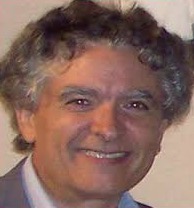 Giuseppe Vitiello合作论文数Università di Salerno;Pari Center3
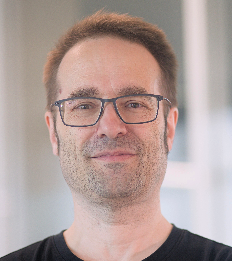 Martin B Plenio合作论文数Institut für Theoretische Physik, Universitat Ulm3
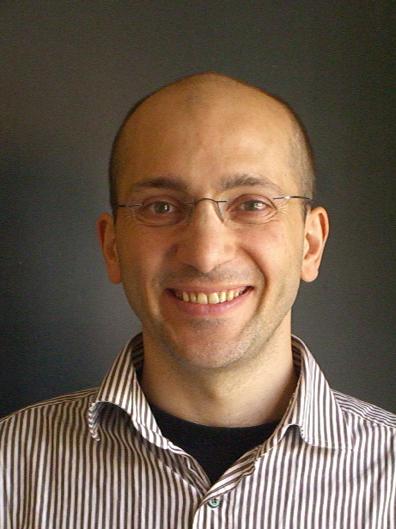 Jiannis K. Pachos合作论文数School of Physics and Astronomy, University of Leeds3
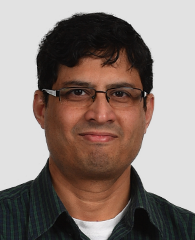 Sukanta Bose合作论文数Department of Physics & Astronomy, College of Arts & Sciences, Washington State University2
 Ennio Del Giudice合作论文数2
 Vlatko Vedral合作论文数Department of Physics, University of Oxford2
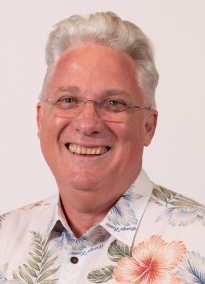 Bill Munro合作论文数Center for Quantum Technologies, Okinawa Institute of Science and Technology2
 Antonio Capolupo合作论文数Dipartimento di Fisica;Universita di Salerno;Dipartimento di Fisica, Universita di Salerno2
 Leong Chuan Kwek (郭龙泉)合作论文数Quantum Science and Engineering Centre, Nanyang Technological University;Center for Quantum Technologies, National University of Singapore2Hugo Cable合作论文数Blackett Laboratory;Imperial College London;Blackett Laboratory, Imperial College London2Andreas Kurcz合作论文数2Ben Tregenna合作论文数Blackett Laboratory;Imperial College2
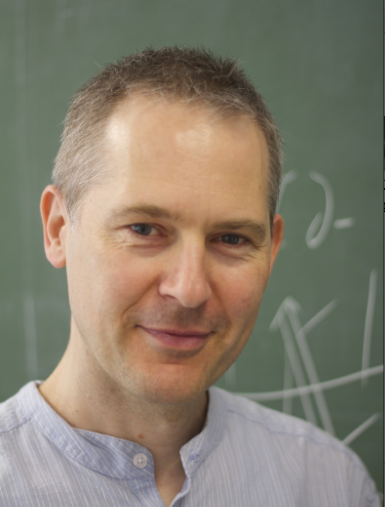 Daniel Braun合作论文数Institut Fur Theoretische Physik, Mathematisch-Naturwissenschaftliche Fakultat, Universitat Tubingen2Christian Schon合作论文数2Michael Trupke合作论文数1herbert walther合作论文数1
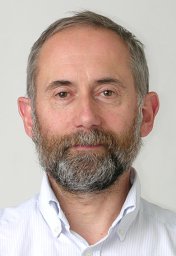 Richard C Thompson合作论文数Univ London Imperial Coll Sci Technol & Med, Blackett Lab, London SW7 2AZ, England1
 Shauvik De合作论文数1
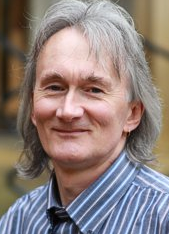 Tim Spiller合作论文数Department of Physics, University of York1
 Ivanov Svetoslav S合作论文数Department of Physics, Sofia University1
 Pieter Kok合作论文数Department of Physics and Astronomy, School of Mathematical and Physical Sciences, University of Sheffield1
 Carsten Marr合作论文数Inst Computat Biol, Helmholtz Zentrum Munchen1
 Dimitris G. Angelakis合作论文数Centre for Quantum Computation;Department of Applied Mathematics and Theoretical Physics;University of Cambridge;Centre for Quantum Computation, University of Cambridge1Soren U. Addicks合作论文数1
 Steve D Barrett合作论文数1
 Jonathan Busch合作论文数School of Physics and Astronomy, The;University of Leeds;The School of Physics and Astronomy, University of Leeds1Dirk G. Sondermann合作论文数1
 Boyan T. Torosov合作论文数Department of Physics;Sofia University;Department of Physics, Sofia University1
 Jeremy Metz合作论文数Blackett Laboratory;Imperial College London;Blackett Laboratory, Imperial College London1
 Edward Hinds合作论文数Department of Physics, Faculty of Natural Sciences, Imperial College London1
 Mohammed Dakna合作论文数1




