Objects and events are fundamental units of perception: Objects structure our experience of space, and events structure our experience of time. A striking and counterintuitive finding about object representation is that it can warp perceived space, such that stimuli within an object appear farther apart than stimuli in empty space. Might events influence perceived time in the same way objects influence perceived space? Here, five experiments (N = 500 adults) show that they do: Just as stimuli within an object are perceived as farther apart in space, stimuli within an event are perceived as further apart in time. Such "event-based warping" is elicited both by events characterized by sound (Experiment 1) and by events characterized by silence (Experiment 2). Moreover, these effects cannot be explained by surprise, distraction, or attentional cueing (Experiments 3 and 4) and also arise cross-modally (from audition to vision; Experiment 5). We suggest that object-based warping and event-based warping are both instances of a more general phenomenon in which representations of structure-whether in space or in time-generate powerful and analogous relative perceptual distortions. (PsycInfo Database Record (c) 2025 APA, all rights reserved).
How is it that individuals who deny experiencing visual imagery nonetheless perform normally on tasks which seem to require it? This puzzle of aphantasia has perplexed philosophers and scientists since the late nineteenth century. Contemporary responses include: (i) idiosyncratic reporting, (ii) faulty introspection, (iii) unconscious imagery, and (iv) complete lack of imagery combined with the use of alternative strategies. None offers a satisfying explanation of the full range of first‐person, behavioural and physiological data. Here, I diagnose the puzzle of aphantasia as arising from the mistaken assumption that variation in imagery is well‐captured by a single ‘vividness’ scale. Breaking with this assumption, I defend an alternative account which elegantly accommodates all the data. Crucial to this account is a fundamental distinction between visual‐object and spatial imagery. Armed with this distinction, I argue that subjective reports and objective measures only testify to the absence of visual‐object imagery, whereas imagery task performance is explained by preserved spatial imagery which goes unreported on standard ‘vividness’ questionnaires. More generally, I propose that aphantasia be thought of on analogy with agnosia, as a generic label for a range of imagery deficits with corresponding sparing.
The relation between attention, perception, and awareness is among the most fundamental problems in the science of the mind. One of the most striking and well-known phenomena bearing on this question is inattentional blindness (IB). In IB, naive observers fail to report clearly visible stimuli when their attention is otherwise engaged—famously missing a gorilla parading before their eyes. IB carries tremendous significance, both as evidence that awareness requires attention and as a tool in seeking the neural correlates of consciousness. However, such implications rest on a notoriously biased measure: asking participants whether they noticed anything unusual (and interpreting negative answers as reflecting a complete lack of perception). Here, in the largest ever set of IB studies, we show that, as a group, inattentionally blind participants can successfully report the location, color, and shape of stimuli they deny noticing, demonstrating that perceptual information remains accessible in IB. By introducing absent trials, we further show that observers are collectively biased to report not noticing in IB—essentially ‘playing it safe’ in reporting their sensitivity. These data provide the strongest evidence to date of significant residual visual sensitivity in IB. They also challenge the use of inattentional blindness to argue that awareness requires attention.
Feigning ignorance is crucial in contexts as diverse as diplomacy, warcraft and personal relationships, each demanding strategic concealment of information. Successful ‘epistemic pretense’ requires one to anticipate how one would behave without a given piece of knowledge, and act according to that counterfactual knowledge state. Here, two game-based experiments reveal a striking capacity to simulate decision-making under counterfactual knowledge. 1001 English-speaking adults saw the full solution to a game (all ship locations in Battleship, or the hidden word in Hangman) but then attempted to play as though they never had this information. Impressively, they mimicked broad and subtle patterns of ordinary play. While peers were completely unable to detect pretense, computational modeling uncovered traces of ‘over-acting’ in pretenders’ decisions, suggesting a schematic simulation of their minds. Opening up a new approach to studying self-simulation, our results reveal intricate metacognitive knowledge about decision-making, drawn from a rich—but simplified—internal model of cognition.
Inattentional blindness (IB) – the failure to notice perfectly visible stimuli when attention is otherwise engaged – has fascinated vision scientists for nearly half a century. A key reason is that IB is thought to illuminate the relationship between attention and awareness, seemingly revealing that visual consciousness requires attention. In drawing such conclusions, a crucial assumption is that subjects who report not noticing an unexpected stimulus are truly unaware of it. In four experiments, involving >10,000 participants, we found that subjects who report not noticing an unexpected stimulus can still answer questions about it at above-chance levels, casting doubt on this assumption. Exps.1-3 tested brief-duration IB: On trials 1-3, a cross briefly appeared, and subjects reported which arm was longer. On trial 4, some subjects were shown an unexpected colored line on one side of the display; others were shown nothing additional. Exp.4 tested sustained IB: Subjects counted how often squares of one color bounced off the display’s perimeter, while ignoring squares of another color. During this task, some subjects were shown either a circle or triangle traversing the display for 5s. In all experiments, regardless of whether something unexpected appeared, each subject answered the traditional IB question (“Did you notice anything unusual?” yes/no), followed by other discrimination questions (e.g., “Was the extra line red or blue?”). Exps.1-4 revealed significant sensitivity to location (Exps.1&3), color (Exps.2&4) and shape (Exps.2&4), even amongst non-noticing subjects. Moreover, subjects were biased to report not noticing, suggesting greater awareness than is revealed by yes/no questioning. Indeed, Exp.3 found (a) that even highly confident non-noticers performed above chance on location discrimination, and (b) that yes/no confidence predicted discrimination accuracy, suggesting that subjects have graded access to information about unexpected stimuli. Together, these data are consistent with the hypothesis that inattention degrades but does not abolish awareness.
Auditory perception is traditionally conceived as the perception of sounds-a friend's voice, a clap of thunder, a minor chord. However, daily life also seems to present us with experiences characterized by the absence of sound-a moment of silence, a gap between thunderclaps, the hush after a musical performance. In these cases, do we positively hear silence? Or do we just fail to hear, and merely judge or infer that it is silent? This longstanding question remains controversial in both the philosophy and science of perception, with prominent theories holding that sounds are the only objects of auditory experience and thus that our encounter with silence is cognitive, not perceptual. However, this debate has largely remained theoretical, without a key empirical test. Here, we introduce an empirical approach to this theoretical dispute, presenting experimental evidence that silence can be genuinely perceived (not just cognitively inferred). We ask whether silences can "substitute" for sounds in event-based auditory illusions-empirical signatures of auditory event representation in which auditory events distort perceived duration. Seven experiments introduce three "silence illusions"-the one-silence-is-more illusion, silence-based warping, and the oddball-silence illusion-each adapted from a prominent perceptual illusion previously thought to arise only from sounds. Subjects were immersed in ambient noise interrupted by silences structurally identical to the sounds in the original illusions. In all cases, silences elicited temporal distortions perfectly analogous to the illusions produced by sounds. Our results suggest that silence is truly heard, not merely inferred, introducing a general approach for studying the perception of absence.
Sometimes we look but fail to see: our car keys on a cluttered desk, a repeated word in a carefully proofread email, or a motorcycle at an intersection. Wolfe and colleagues present a unifying, mechanistic framework for understanding these “Looked But Failed to See” errors, explaining how such misses arise from natural constraints on human visual processing. Here, we offer a conceptual taxonomy of six distinct ways we might be said to fail to see, and explore: how these relate to processes in Wolfe et al.’s model; how they can be distinguished experimentally; and, why the differences matter.
We investigated temporal properties of visual perception as a function of eccentricity, that is, spatial position relative to the fovea. Our experiments were motivated by well-characterized non-uniformities in neuron distribution in the human eye and early visual pathways. These non-uniformities have been extensively studied in the context of spatial perception, while largely neglected in relation to temporal perception. In Experiment 1, participants fixated the rapid serial visual presentation letter stream and were instructed to report the letter which appeared simultaneously with a brief cue presented at different locations along the horizontal meridian. Participants exhibited a tendency to report earlier letters with more peripheral as compared to central cues, indicating that they misperceived differently located stimuli as simultaneous even though they were never presented together. Experiment 2 conceptually replicated the findings of Experiment 1. Experiment 3 further demonstrated that the effect is specifically due to eccentricity, and not the relative distance between the stimuli. We argue that such location-based misperceptions of simultaneity arise because transient stimuli at more eccentric locations advance to perception faster than stimuli at or near the fovea. Collectively, these experiments show, for the first time, how processing speed differences across the visual field translate into differences in perceived simultaneity. They also demonstrate, for the first time, location-based misperceptions of simultaneity for stimuli never presented together. Finally, Experiment 4 showed that greater eccentricity also increased the perceived duration of a stimulus compared to fovea. These results reveal the breadth of perceptual effects driven by temporal processing differences across the visual field. (PsycInfo Database Record (c) 2023 APA, all rights reserved).
A philosopher explores perception and cognition.
A writer seeks connections between consciousness and fundamental physics.
Objects are fundamental units of perception which structure our experience of space. A striking finding about object representation is that objecthood warps our perception of spatial distance, such that two dots perceived within an object appear farther apart than two dots perceived in empty space — an illusion known as “Object-based Warping” (Vickery & Chun, 2010). However, just as objects are fundamental to our experience of space, events are fundamental to our experience of time. Does spatial object-based warping have a temporal event-based counterpart? Here, we show that it does: Just as two dots in an *object* are perceived as farther apart in *space*, we show that two probes within an *event* are perceived as further apart in *time* — introducing “Event-based Warping” to the literature. In our first experiment, subjects judged the duration between two auditory probes (i.e., two tones) with respect to a standard reference duration. There were two types of trials: In event trials, probes were presented during an auditory event (a brief period of noise during an otherwise-silent soundtrack). In non-event trials, probes were not presented during any auditory event but simply played in silence. Subjects judged probes within an event to be further apart than probes not within an event, showing that event representations warp perceived duration. Crucially, we further demonstrate that this temporal warping phenomenon also arises in vision. In a second, cross-modal experiment, observers judged the duration between two visual probes (i.e., two flashes) presented either within or not within an auditory event. Again, subjects judged probes on event trials as further apart in time than probes on non-event trials, showing that event-based warping occurs cross-modally. We suggest that object-based warping and event-based warping are instances of a more general phenomenon in which structural representations give rise to perceptual distortions.
Journal Article Visual adaptation and the purpose of perception Get access Ian Phillips, Ian Phillips Johns Hopkins University, USA ianbphillips@jhu.edu Search for other works by this author on: Oxford Academic Google Scholar Chaz Firestone Chaz Firestone Department of Psychological and Brain Sciences, Johns Hopkins University, USA Search for other works by this author on: Oxford Academic Google Scholar Analysis, Volume 83, Issue 3, July 2023, Pages 555–575, https://doi.org/10.1093/analys/anac060 Published: 22 November 2023
What we do depends on what we know. But what if we wish to decouple our behavior from our knowledge, by appearing not to know something that we really do? Such pretense behavior relies on counterfactual self-simulation — an understanding of how we would behave if our knowledge were different — and so provides an opportunity to investigate how well people can emulate a hypothetical knowledge state. Here, we examined the ability to both produce and visually detect pretense behaviour, using the game "Battleships". Normally, "Battleships" is played by searching for ships hidden behind cells in a grid. In our studies, we instead showed subjects where all the ships were but asked them to play as if they didn’t see our hints and were ignorant of the ships' locations. Analyzing non-pretend (regular) games of the same subjects, we identify robust behavioural patterns in the location and timing of cell selections, including serial dependencies in hit probability and decision time, and an association between decision time and the entropy of the posterior distribution over candidate actions. Critically, we show that pretend games demonstrate similar, but exaggerated, behavioural patterns. By comparing pretend and non-pretend games to the modeled behaviour of a near-optimal Bayesian agent, we find that pretend behaviour is markedly less optimal than non-pretend behaviour. This is because pretenders often play in ways that don’t make sense given the limited knowledge they pretend to have. However, despite these striking differences, independent "judge" participants were completely unable to discriminate the games of pretenders from non-pretenders. Thus, while pretenders behave in ways that could reveal their pretense to a keen eye, these subtle patterns are not detected by naïve observers. We conclude by discussing the implications of our findings for simulation accounts of theory of mind and metacognition.
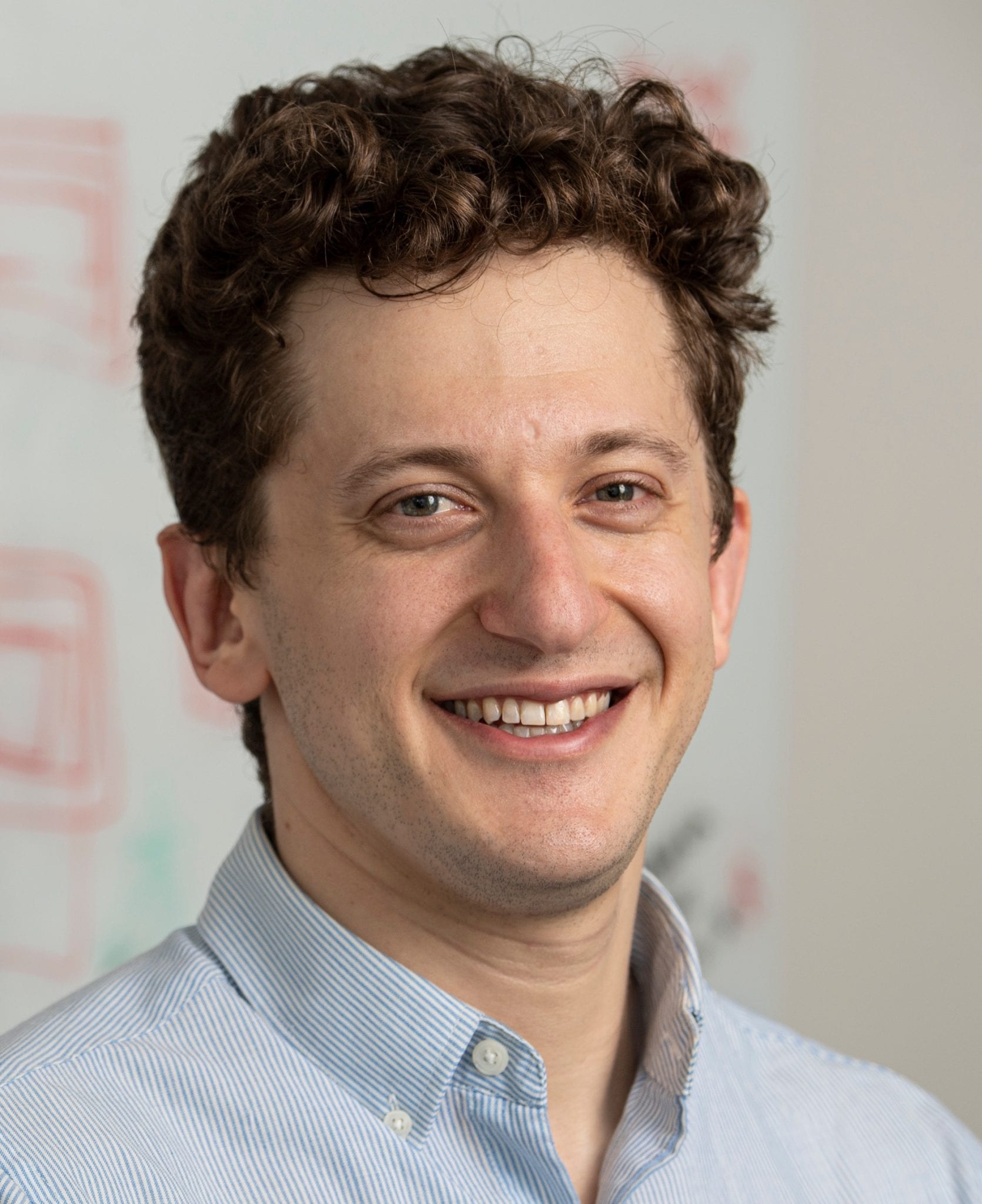 Chaz Firestone合作论文数Department of Psychological & Brain Sciences, Krieger School of Arts & Sciences, Johns Hopkins University20
 Makaela Nartker合作论文数Johns Hopkins Univ6
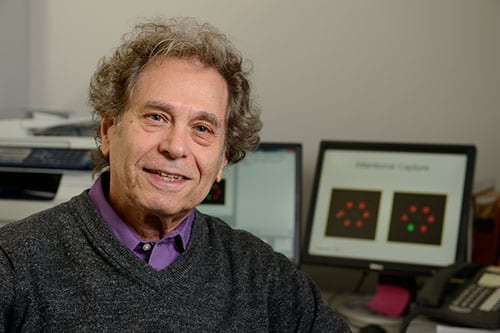 Howard E. Egeth合作论文数Department of Psychological & Brain Sciences, Krieger School of Arts & Sciences, Johns Hopkins University5
 Rui Zhe Goh合作论文数4
 Robert Kentridge合作论文数Department of Psychology, Faculty of Science, Durham University3Aditya Upadhyayula合作论文数Johns Hopkins University3
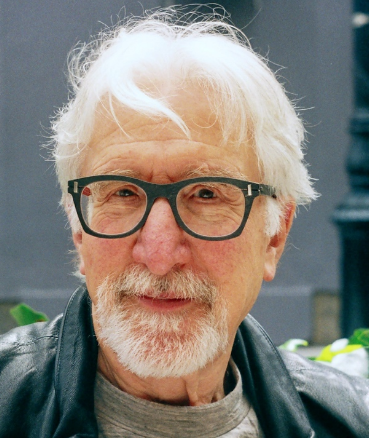 Ned Block合作论文数Department of Philosophy, College of Arts & Science, New York University3
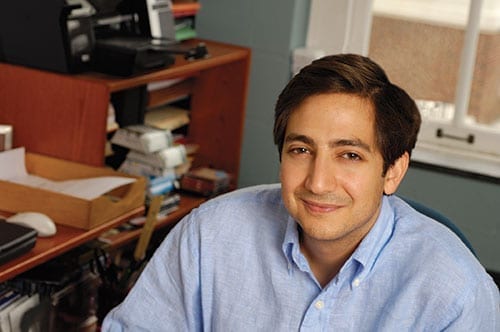 Jonathan Flombaum合作论文数Department of Psychological & Brain Sciences, Krieger School of Arts & Sciences, Johns Hopkins University3
 Megan A. K. Peters合作论文数Department of Psychology, University of California Los Angeles3
 Matan Mazor合作论文数Centre for Human Neuroimaging, University College London2Jorge Morales合作论文数1




