This article reviews the concept of “closure” in the context of death investigations. It focuses on the experiences of bereaved families and justice system professionals, and on inquests undertaken by coroners under the Anglo-Canadian-Australasian model. The article shows the promise of closure figures prominently in coronial rhetoric: that the function of an inquest in facilitating closure has become an orthodox aspect of the promotion of the therapeutic advantages of coronial investigations. It then outlines the problem of closure as a concept, most particularly as an emotional expectation. There is a widely held view that the justice system can help provide closure for people who have suffered violent loss. Yet closure as a construct is amorphously defined: there is no agreement among researchers about what it is, whether it exists or, if it does exist, how it can be achieved. This article suggests that closure language should be avoided in the context of death investigations. Such language carries with it the counter-therapeutic potential to create unrealistic expectations regarding what inquests can accomplish, including through coroners’ findings and recommendations.
This editorial contextualises by reference to prior appellate case law the important decision of the Australian High Court in Lang v The Queen (2023) 278 CLR 323; [2023] HCA 29 in relation to the admissibility of expert opinion evidence. It chronicles the convergence of statutory and common law requirements for the reception of evidence by experts and analyses the requirement for clear delineation of the bases of expert evidence, assumptions made and reasoning utilised. This approach prioritises presentation of expert opinions in such a way that they can be evaluated effectively by the trier of fact. However, it does not incorporate the yardstick of reliability of expert opinions as a precondition for expert evidence to be admitted, in spite of international precedents for not just requiring such a precondition but providing useful indicia for evaluating reliability. There are good reasons for following precedents such as those existing in the United States, England and Wales and Canada. However, it appears that such a reform to Australian evidence law is only likely after a clear miscarriage of justice that provides an irresistible fillip to statutory amendment to admissibility criteria.
The integration of artificial intelligence (AI) into health care presents significant challenges for traditional informed consent practices. This review examines the legal and ethical implications of using AI in clinical decision-making, with a focus on maintaining transparency and respecting patient autonomy. While the legal framework for informed consent remains clear - requiring clinicians to provide sufficient information on material risks and likely outcomes - the complexity of AI introduces nuances that demand adaptation. Unlike surgical consent, where decisions are directly tied to human judgment, AI systems analyse vast datasets and identify patterns beyond human comprehension, complicating clinicians' ability to provide clear explanations. However, this does not necessitate a complete overhaul of informed consent but, rather, careful reassessment. Practical approaches include tiered consent protocols tailored to AI complexity and enhanced clinician education to bridge the communication gap. By addressing these challenges, informed consent can evolve to support ethical AI integration while preserving patient trust and decision-making.
This article considers the role of coroners as a porthole into the content and operation of voluntary assisted dying (VAD) regimes. In their role as investigators of unexplained, unnatural, violent and accidental deaths, coroners are uniquely positioned by legislation to identify abuses and anomalies in VAD deaths. They also have an informed perspective enabling them to identify issues and patterns of deaths among persons who cannot avail themselves of VAD because of how eligibility criteria have been framed. Coroners have an ability too to chronicle the human toll of such ineligibility for persons determined not to satisfy qualifying requirements for access to VAD. This article reviews an important set of findings and comments by the Victorian Coroners Court late in 2024 which addressed the issues and identified other such findings in an attempt to assist reform processes for VAD legislation to be informed by coronial experience. It also notes safety issues highlighted by a strongly worded 2024 decision by the Queensland Coroners Court which is likely also to prompt discussion about VAD processes and the need for controls over unintended access to VAD and other euthanasia medications.
This editorial reviews the important decision by the European Court of Human Rights in Pindo Mulla v Spain (17 September 2024) (Pindo Mulla). It identifies the reasoning process of the Grand Chamber in adopting an analysis consistent with the 1990 decision of the Ontario Court of Appeal in Malette v Shulman (1990) 67 DLR (4th) 321 that, when an adult is competent, they are entitled to make autonomous decisions, including by an advance care directive, about matters such as administration of blood products, even though their decision will foreseeably have highly adverse consequences for their health and even for their survival. The emphasis placed by the Grand Chamber on the entitlement to autonomous decision-making by adult patients as entitlement to the right to respect for private life, viewed in light of the right to freedom of religions is likely to have significant ramifications in reducing the potential for paternalist decision-making in a variety of cases where patients indicate that they reject certain forms of treatment. The editorial reviews practical clinical and administrative challenges raised by the Pindo Mulla case and recommendations made by a 2025 New South Wales coronial decision directed toward addressing some of the issues.
This editorial reviews the state of clinical knowledge about acute rheumatic fever (ARF) and rheumatic heart disease (RHD). It uses the lenses of public health and coronial law to consider the pathology which is significantly over-represented in the First Nations Peoples of Australia, Aotearoa New Zealand and the Pacific. Noting that it is comparatively rare for deaths from natural illness to be scrutinised by coroners, it identifies the importance of a series of inquests, heard in New South Wales, the Northern Territory, Western Australia and Queensland between 2012 and 2022, that scrutinised deficits in health care that contributed to deaths from ARF and RHD, including in custody and within remote Indigenous communities. It argues that it is important that further inquests into RHD deaths be held to evaluate whether there have been suitable responses to the lessons that have needed to be learned for the diagnosis and treatment of ARF and RHD, including as to implementation of previous coroners' recommendations, especially within First Nations communities.
Until the discovery of the gene for cystic fibrosis (CF) in 1989, diagnostic developments were limited, and treatment focused on symptom alleviation. However, following the genetic breakthrough, some 2,000 mutations of the gene have been identified. More recently CF transmembrane conductance regulator modulator triple therapy (CFTRm) has been introduced in the form of triple therapy with ivacaftor, lumacaftor and tezacaftor (ETI), in the United States from 2019, Europe from 2020 and then Australia from 2021. The new treatment option has revolutionised both the quality of life and life expectancy of many persons diagnosed with CF. This editorial reviews major developments in the clinical care that can now be provided to patients, and reflects on the legal and ethical ramifications of the improved situation for many patients in the contexts of medical negligence, damages assessment, family law and criminal law. It also considers the difficult issues of access and equity caused by the limited availability of the triple therapy in low- and middle-income countries.
ADHD has long been recognised as disproportionately present in both juvenile and adult prison populations. This is so for a number of reasons, including the potential for persons with ADHD to be disinhibited, impulsive, impaired in executive functioning and chaotic in their lifestyle. A major challenge exists, though, to assist courts to understand better how ADHD may have played a role in criminal offending and thus to be relevant to evaluations of criminal culpability or even responsibility. Another issue that arises for expert assessment is how ADHD may make the experience of custodial detention especially burdensome and be relevant in this respect also for sentencing. This article considers the overall forensic context of ADHD in criminal litigation and reviews a selection of illustrative decisions from Canada, Australia, New Zealand and the United Kingdom to identify principles on the basis of which courts can make nuanced decisions that are suitably informed by expert mental health evidence about the forensic ramifications of ADHD.
BACKGROUND:Autism spectrum disorder (hereafter referred to as autism) is characterised by difficulties with (i) social communication, social interaction, and (ii) restricted and repetitive interests and behaviours. Estimates of autism prevalence within the criminal justice system (CJS) vary considerably, but there is evidence to suggest that the condition can be missed or misidentified within this population. Autism has implications for an individual's journey through the CJS, from police questioning and engagement in court proceedings through to risk assessment, formulation, therapeutic approaches, engagement with support services, and long-term social and legal outcomes. METHODS:This consensus based on professional opinion with input from lived experience aims to provide general principles for consideration by United Kingdom (UK) CJS personnel when working with autistic individuals, focusing on autistic offenders and those suspected of offences. Principles may be transferable to countries beyond the UK. Multidisciplinary professionals and two service users were approached for their input to address the effective identification and support strategies for autistic individuals within the CJS. RESULTS:The authors provide a consensus statement including recommendations on the general principles of effective identification, and support strategies for autistic individuals across different levels of the CJS. CONCLUSION:Greater attention needs to be given to this population as they navigate the CJS.
The term 'vicarious trauma' refers to a range of cumulative and harmful effects from exposure to the trauma of others and is now recognised as a category of causation in the diagnostic criteria of post-traumatic stress disorder. Legal practitioners may be exposed to the risk of harm from vicarious trauma in a number of occupational contexts. This article reviews recent case authority, including a 2023 prosecution of Court Services Victoria for failing to provide a safe workplace in the Coroners Court of Victoria and the High Court decision in Kozarov v Victoria (2022) and the Victoria Court of Appeal decision in Bersee v Victoria (2022). It considers measures that should be taken to provide a workplace for both legal practitioners and judicial officers that is as safe and without risks to health as is reasonably practicable.
This editorial reviews the changes over two decades in the United States and Australia in relation to the law governing access to drugs enabling medical termination of pregnancy. It also scrutinises three contentious decisions by the United States Supreme Court between 2022 and 2024 in relation to abortion. It argues that the receptive environment in the United States Supreme Court, as it is currently constituted, to challenges to the lawfulness of terminations of pregnancy and abortion medications is likely to inspire comparable challenges as part of the "Abortion Wars" in other countries, including Australia. However, a combination of factors is likely to protect access to terminations, particularly first trimester medical terminations. These include the clinical trajectory of changes made gradually over two decades by the Food and Drug Administration in the United States, the Therapeutic Goods Administration in Australia and Medsafe in New Zealand; evolving attitudes in the community; and the subversive accessibility of "mere pills".
 Bennett Belinda合作论文数19
 Gabrielle Wolf合作论文数15Magda Karagiannakis合作论文数8Scott Russ合作论文数5Terese Henning合作论文数4Faisal Al Menaiya合作论文数3
 Steven Kleinman合作论文数3Dale Jobson合作论文数3
 Jessica Rioux-Turcotte合作论文数3
 Mme Mireille Cyr合作论文数Department of Psychology, Faculty of Arts and Science, Université de Montréal3
 Simon Knyvett McGregor合作论文数3
 Louise Jupe合作论文数Dept Psychol, Univ Portsmouth3
 David Leo Ranson合作论文数Forensic Pathologist, Victorian Institute of Forensic Medicine;Department of Forensic Medicine, Monash University;Law School, La Trobe University;Monash University, La Trobe University3
 Victoria Talwar合作论文数Department of Psychology, McGill University;Department of Educational and Counselling Psychology, McGill University3
 David Keatley合作论文数3
 Alfred Allan合作论文数Forensic Psychology Programme, Edith Cowan University3
 Leanne ten Brinke合作论文数Department of Psychology, Irving K. Barber Faculty of Arts and Social Sciences, The University of British Columbia3Jean-Pierre Guay合作论文数Faculté des Arts et des Sciences, École de Criminologie, Université de Montréal3
 Zarah Vernham合作论文数University of Surrey3
 Remi Boivin合作论文数3
 Stephanie Jane Bennett合作论文数University of Portsmouth3
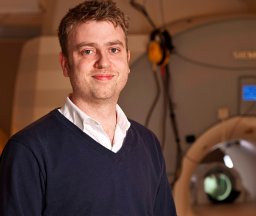 Gordon R.T. Wright合作论文数Birkbeck College, University of London London3
 Ray Bull合作论文数College of Business, Law and Social Sciences, University of Derby3
 Judee K Burgoon合作论文数Discern Science International;Center for the Management of Information, Eller College of Management, University of Arizona3
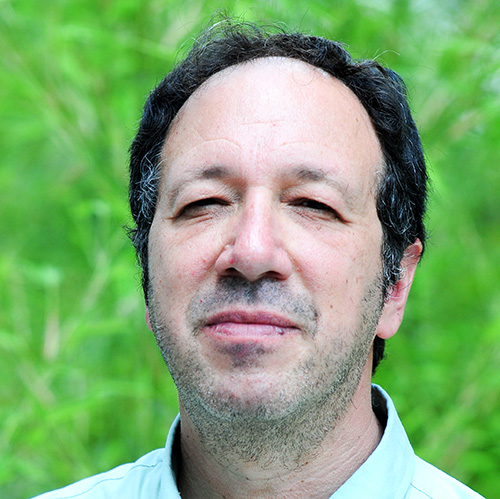 Scott O. Lilienfeld合作论文数Department of Psychology, College of Arts and Sciences, Emory University3
 Maria Hartwig合作论文数John Jay Coll Criminal Justice, CUNY3
 Richard A. Leo合作论文数School of Law, University of San Francisco/Institute for Legal Research Criminal, School of Law, University of California, Berkeley3
 Samantha Mann合作论文数3
 Leif A Stromwall合作论文数3
 Jeffrey Hancock合作论文数Department of Communication, Stanford University3
 Henry Otgaar合作论文数Faculty of Psychology and Neuroscience, Maastricht University3
 Dave Walsh合作论文数School of Law and Criminology, University of Derby3
 Annelies Vredeveldt合作论文数Department of Psychology, University of York3Marty Laforest合作论文数3
 Sara Landstrom合作论文数Department of Psychology, University of Gothenburg3
 Michel St-Yves合作论文数3
 Nadine Deslauriers-Varin合作论文数3
 Norah Dunbar合作论文数Department of Communication, University of California Santa Barbara3
 Pierrich Plusquellec合作论文数Public Health Research Unit, CHUQ Research Center (CHUL),3
 Pär Anders Granhag合作论文数Göteborgs universitet3
 Iris Blandon-Gitlin合作论文数California State University3
 Peter J. van Koppen合作论文数3
 Antonio L. Manzanero合作论文数Facultad de Psicologa3
 Charles R. Honts合作论文数Department of Psychology;Boise State University;Department of Psychology, Boise State University3Alexandre Coutant合作论文数3
 Jaume Masip合作论文数University of Salamanca, University of Salamanca3
 Igor Areh合作论文数3
 Valerie Manusov合作论文数Department of Communication, University of Washington3
 Fiona Gabbert合作论文数School of Psychology;University of Abertay;School of Psychology, University of Abertay3




