Animals use adhesive secretions in highly diverse ways, such as for settlement, egg anchorage, mating, active or passive defence, etc. One of the most interesting functions is the use of bioadhesives to capture prey, as the bonding has to be performed within milliseconds and often under unfavourable conditions. While much is understood about the adhesive and biomechanical properties of the threads of other hunters such as spiders, barely anything is documented about those of the New Zealand glowworm Arachnocampa luminosa. We analysed tensile properties of the fishing lines of the New Zealand glowworm Arachnocampa luminosa under natural and dry conditions and measured their adhesion energy to different surfaces. The capture system of A. luminosa is highly adapted to the prevailing conditions (13–15 °C, relative humidity of 98%) whereby the wet fishing lines only show a bonding ability at high relative humidity (>80%) with a mean adhesive energy from 20–45 N/m and a stronger adhesion to polar surfaces. Wet threads show a slightly higher breaking strain value than dried threads, whereas the tensile strength of wet threads was much lower. The analyses show that breaking stress and strain values in Arachnocampa luminosa were very low in comparison to related Arachnocampa species and spider silk threads but exhibit much higher adhesion energy values. While the mechanical differences between the threads of various Arachnocampa species might be consequence of the different sampling and handling of the threads prior to the tests, differences to spiders could be explained by habitat differences and differences in the material ultrastructure. Orb web spiders produce viscid silk consisting of β-pleated sheets, whereas Arachnocampa has cross-β–sheet crystallites within its silk. As a functional explanation, the low tear strength for A. luminosa comprises a safety mechanism and ensures the entire nest is not pulled down by prey which is too heavy.
Between 1997 and 2003 mortality and yearly movements including homing (philopatry) of long-lived Placostylus ambagiosus and P. hongii land snails were studied when left in situ or exchanged between nearby sites in New Zealand. Harmonic radar transponders, attached to shells, increased recapture rates but might have increased emigration. Manipulation (translocation exchanges vs. control) caused no detectable changes but sample sizes were small. At Cape Maria van Diemen, 20% of P. ambagiosus homed after translocation although 90% died during widespread mortality. No P. ambagiosus snails homed at Surville Cliffs where 2.4% died and 26% emigrated. At Whareana Bay, 23% homed, 19% died, 8%-15% stayed where released and 58% emigrated. Mortality of P. hongii on Tawhiti Rahi Island, Poor Knights Islands, was 2% after 1 year. When transferred 10-84 m, 78% homed within a year, 2% went elsewhere and 20% were not found. However, 24% of those transferred 30-84 m returned to their release sites after homing. When left in situ, 60% remained nearby, 8% moved elsewhere and 30% were not found. There was an indication that habitat quality might influence emigration. Results are briefly discussed in relation to possible future translocations to conserve genetic variability and restore faunas.
Translocating populations of endangered animals to predator-free offshore islands is an extreme, and potentially risky, conservation management strategy. There are many examples of failures and successes, however relatively little work has been done to formally quantify the required numbers of translocated individuals to increase the chance of successful establishment. Cook Strait giant weta, Deinacrida rugosa Buller 1870 (Orthoptera: Anostostomatidae), of New Zealand are an example of an at-risk species where extreme conservation measures are needed, due to their ground-dwelling lifestyle making them particularly prone to habitat loss and predation by alien species following human settlement. Here, we have used microsatellite markers to characterise genetic diversity within and between two parental populations (Mana and Stephens Islands), and two translocated populations (Maud and Matiu/Somes Islands), and estimate probabilities of genetic bottlenecks. We have modelled various demographic scenarios to quantify the severity of effective population size fluctuations resulting from translocations using DIYABC, and explored the number of founders needed to retain rare alleles using ALLELERETAIN. Our results suggest that populations have expanded on both Maud Island and Matiu/Somes Island from effective population sizes at time of translocation of 36 and 47 respectively, but provide evidence for a genetic bottleneck on Maud Island. We also show that translocations have had minimal impact on parental effective population sizes. The impact of our results on future conservation management efforts is discussed.
Indicator taxa are increasingly being used to evaluate the natural environment because they provide both quantified and simplified information about complex phenomena and because they result in huge cost savings compared with monitoring entire biotas. In this paper, we examine the suitability of an iconic New Zealand invertebrate, the tree wētā (Orthoptera: Anostostomatidae: Hemideina species), as a bioindicator for invertebrates under a national biodiversity monitoring scheme in New Zealand. Tree wētā are common and widespread in New Zealand, comprising a distinctive component of the native invertebrate fauna, being large-bodied (up to 40 mm in length), relatively long-lived, flightless, and nocturnal. Arboreal tree wētā species are commonly monitored in conservation areas containing scrub or forest, particularly after mammal control, because they can be easily monitored using artificial roosts without harming them and they are readily identified by field workers. We evaluated whether data supported the use of tree wētā as a range of bioindicators for such monitoring and conclude that the arboreal species are good indicators for monitoring the effects of controlling the abundance of insectivorous mammals and that they are likely to be reliable population indicators of taxa sensitive to mammalian predation pressure, especially by rodents. However, it is unlikely that arboreal tree wētā are useful population indicators of habitat change (e.g. degradation and fragmentation) as they commonly survive in exotic vegetation and urban gardens throughout New Zealand. Although poorly studied for indicator value, tree wētā may not be good biodiversity indicators although there are insufficient data to establish this. We recommend further research be undertaken to develop standardised methods for monitoring so that conservation managers and researchers produce results that are consistent and comparable across different locations.
Purpose - The purpose of this paper is to explore the different clinical features of pathological demand avoidance (PDA) and antisocial personality disorder (ASPD) presented in the form of a single case study. The study highlights the potential of misdiagnosis and conceptual confusions to practitioners in forensic settings between the two conditions when working with offenders with personality disorders. Design/methodology/approach - A case formulation using the "five Ps" method based on the personal history of an incarcerated male is presented and the clinical similarities and differences between PDA and ASPD are delineated. These differences and similarities are evaluated and applied to offender management including intervention options. Findings - There are considerable similarities between ASPD and PDA making the two conditions difficult to separate. Both diagnostic criteria identify childhood behavioural problems, aggression, destructiveness, conduct disorder (CD), manipulation and non-compliance as indications of the disorder. For example, the criteria for later adult ASPD are the presence of childhood antisocial behaviour and CD. However, these behaviours may also be suggestive of the attention deficit hyperactivity disorder and non-compliance that are part of PDA. Violent behaviours and aggression can also be perceived in a similar way. Misdiagnosis of PDA as ASPD reduces the efficiency of treatment programmes. Originality/value - The implications of these findings could prove useful in the successful risk management of offenders with PDA. Given the similar behavioural characteristics between PDA and ASPD, the prevalence of PDA among offenders may be higher than observed. The aim of this study is to raise awareness of potential conceptual complications and clinical confusions between the two conditions with a view to aid offender management through case formulation. A large scale study into offenders with PDA would draw attention to the prevalence of the condition as well as its association with offending behaviour.
Wētā, large wingless anostostomatid orthopterans, have been the most frequently translocated insects in New Zealand. Until recently, such translocations were only monitored intermittently to confirm presence. We investigate the spread of Cook Strait giant wētā (Deinacrida rugosa Buller, 1871) after its release on Matiu/Somes Island, Wellington, New Zealand, in 1996. Adult wētā were surveyed from 2008 to 2016 using footprint tracking tunnels and/or searching with spotlights at night. The population underwent a reversal in distributional abundance after 2008. In 2008, they were abundant in the north and rare in the south but by 2013 and 2015 they were relatively less abundant in the north and common in the south. Why they diminished in the north remains unknown but possible causes are predation on juvenile wētā by nocturnal geckos (detected in the north and east but not in the south), by some habitat change (mostly reduction of some lawn), or by a combination of these together with removal of wētā from the north for translocation elsewhere. Further research is required to confirm which of these factors affect wētā abundance, if there are other causes, and if any further change in distributional abundance occurs.
Animals use adhesive secretions in a plethora of ways, either for attachment, egg anchorage, mating or as either active or passive defence. The most interesting function, however, is the use of adhesive threads to capture prey, as the bonding must be performed within milliseconds and under unsuitable conditions (movement of prey, variable environmental conditions, unfavourable attack angle, etc.) to be nonetheless successful. In the following study a detailed characterization of the prey capture system of the world-renowned glowworm group Arachnocampa from the macroscopic to the ultrastructural level is performed. The data reveal that the adhesive droplets consist mostly of water and display hygroscopic properties at varying humidity levels. The droplet core of Arachnocampa luminosa includes a certain amount of the elements sodium, sulphur and potassium (beside carbon, oxygen and nitrogen), while a different element composition is found in the two related species A. richardsae and A. tasmaniensis. Evidence for lipids, carbohydrates and proteins was negative on the histochemical level, however X-ray photoelectron spectroscopy confirm the presence of peptides within the droplet content. Different to earlier assumptions, the present study indicates that rather than oxalic acid, urea or uric acid are present in the adhesive droplets, presumably originating from the gut. Comparing the capture system in Arachnocampa with those of orb-spiders, large differences appear not only regarding the silky threads, but also, in the composition, hygroscopic properties and size of the mucous droplets.
A successful translocation involves many complex factors, including a genetically appropriate source population that can sustain harvest, social and governmental support, assessment of disease transmission risk and a release site with appropriately secure habitat that can support population establishment and persistence. This information is typically discussed during statutory approval processes and can take considerable time. However, following approval, for translocations of most fauna, the initial critical step involves the inherently stressful process of capture, holding, transportation and release. This process is unpredictable and novel, and is especially challenging for wild animals when they are confined in close proximity to conspecifics and humans. In contrast, captive-reared animals have to cope with the unfamiliar challenges of finding food and shelter, along with coping with competition and predation. Little has been written in the scientific literature about the translocation process. This is unsurprising because this process has usually been the realm of skilled practitioners, often with animal husbandry backgrounds, rather than research scientists. Highly skilled intuition, observation and the translocation practitioner's equivalent of a 'green thumb' often guides the way. However, theory and experimentation, particularly on the effects of stress, is available and this work is invaluable for a successful translocation. Here, we provide a brief description of the translocation process, and discussion of what stress is and how it can be managed. We then provide practical guidelines for the successful translocation of invertebrates, lizards, turtles, passerine birds, marsupials and bats, using examples from Australia and New Zealand.
The Mercury Islands tusked weta, Motuweta isolata (Orthoptera: Anostostomatidae), survived only on 13 ha Ahu or Middle Island, a mammal-free island in the Mercury Group, New Zealand. Between 2000 and 2009, 567 individuals were translocated in nine releases to six nearby islands from which mammals had been removed. These translocations occurred to reduce the chance of accidental extinction of the Middle Island population of only a few hundred adults and to contribute to the restoration of the other islands. All translocated insects originated from the captive-bred progeny of one male and two females collected from Middle Island between 1998 and 2001. Their establishment on Double and Red Mercury Islands, after their releases in 2000 and 2001 respectively, was confirmed by searching plots, and by using footprint tracking tunnels on Red Mercury Island between 2008 and 2012. Tracking tunnels provided better data and proved more cost effective than searching plots for detecting large tusked weta. Tracking tunnels demonstrated that the population on Red Mercury expanded outwards from the release sites by 50–100 m each year between 2009 and 2012. These weta are now estimated to be present over more than half the Island. Tusked weta have also survived on Stanley, Korapuki and Ohinau Islands after releases in 2007, but they remain within 100 m of the release sites. No confirmed progeny of the weta released on Cuvier Island in 2008 and 2011 were detected. No tusked weta were detected on Middle Island using tracking tunnels on eight occasions between 2009 and 2012, suggesting this species is likely to be locally extinct. Despite possible failure on one island, these translocations have resulted in a significant conservation success outcome.
The large land snail Placostylus ambagiosus (Pulmonata: Bulimulidae) was studied in northernmost New Zealand from 1988 to 2004. At Cape Maria van Diemen (CMvD), more juveniles than adults were found, although estimates showed adults as the most abundant. A cohort, hatched after rodent control commenced in 1990, began maturing in 1995, but 89% died by 1997 (partly through competition with garden snails, Cornu aspersum), before numbers partially recovered by 2003. At Surville Cliffs, adults were estimated to be more abundant than juveniles but few juveniles were observed. Numbers under 12 food plants fluctuated between 425 and 657. Many snails dispersed after horses (Equus caballus) partially defoliated their food plants but returned once these recovered. A translocated population increased after rodent control commenced in 1999, but declined when rodent control ceased in 2002. Another translocated population declined when rodents were present and never recovered even after rodent control commenced in 2002. Snails took 2.8-11.7 years to mature from half-grown juveniles depending on location. Estimated adult life expectancies were 5.2 years at CMvD and 10.0 years at Surville Cliffs. Small juvenile snails experienced the highest mortality, and snails that moved between food plants experienced increased mortality. These results are discussed in relation to conservation management.
The large land snail Placostylus ambagiosus (Pulmonata: Bulimulidae) was investigated during a long-term study in northernmost New Zealand. The snails fed at night on fallen leaves from a variety of broadleaf trees and bushes. During the day, most snails in shrubland rested under plants close to their food sources at densities of up to 53 snails per m(2) and mean live biomasses of 47-72 g/m(2). Individual snails stayed close to their food plants for up to 12 years, seldom moving away. Resting behaviour and site fidelity in forest was not investigated in detail, but some adult snails in forest returned to their original sites after being moved up to 60 m into a fenced area built to protect them from feral domestic animals. The ovoid eggs (mean 7.0 mm long x 5.6 mm wide; ranges 5.5-7.7 mm long; 5.1-6.7 mm wide) were laid in clutches averaging 43 eggs (range 1-113 eggs) in shallow cavities covered with soil. More than one snail may contribute to a clutch. Adult shell height ranged from 43 mm to 97 mm and varied with habitat quality. Where snail abundance was high adults were small. Implications of these results for conservation management are discussed.
There are few suitable monitoring tools for assessing the effectiveness of management for threatened insect taxa. This is especially true for cryptic arboreal species of nocturnal flightless orthopterans in the genus Deinacrida from New Zealand. Systematic searching of habitat during the day was compared with footprint tracking tunnels baited with peanut butter as methods for monitoring the arboreal giant weta Deinacrida heteracantha and Deinacrida mahoenui (Orthoptera: Anostostomatidae). Searching by day required more time (3h per transect) than operating tracking tunnels (1.4h). Lines of 30–35 tracking tunnels spaced 30 m apart could be quickly set to sample large areas. Searching may provide additional information including the species, age class, and sex, whereas tracking tunnels yield presence/absence data for giant weta that were larger than other anostostomatid present. Both methods provide indices of relative abundance: it is impractical in tall forest to accurately estimate absolute density whereas tracking tunnel results are related to the activity of weta. Weta activity may depend on vapour pressure deficit modulated by the temperature. For conservation and monitoring purposes, we recommend that tracking tunnels be used first to detect giant weta and only then search for them if further data is required.
PurposeThis study summarises the results of a cognitive‐behavioural treatment group for sexual offenders (n=14) with intellectual limitations in the community.Design/methodology/approachAll participants were convicted sex offenders serving probation orders or prison licences who attended a 14‐month treatment programme designed for sex offenders with intellectual limitations. The programme comprised of five main components: sex education; cognitive distortions; offending cycle; victim empathy; and relapse prevention. All participants completed psychometric measures specifically designed for people with intellectual limitations before and immediately after completing the treatment programme. The four core measures include: Victim Empathy; Sexual Attitudes and Knowledge Assessment (SAK); Questionnaire on Attitudes Consistent with Sexual Offenders (QACSO); and Sex Offences Self‐Appraisal Scale (SOSAS).FindingsPost assessment results reveal significant improvements in sexual offence related attitudes; reductions in attitudes relating to cognitive distortions and pro‐sexual assault beliefs; and significant improvements in victim empathy.Research limitations/implicationsAlthough none of the participants have been reconvicted for committing new sexual offences during the follow‐up period, given that the follow‐up was restricted to 12 months post‐treatment, it is not possible to conclude this intervention was successful in reducing risk of sexual recidivism.Originality/valueThe results from this study support the use of cognitive‐behavioural approaches in demonstrating positive cognitive shift (reconstructing cognitive distortions and attitudes to victim empathy) for sexual offenders with intellectual limitations.
A total of 27 taxa from taxonomic groups with few species, or that are less well known, are listed as Threatened, 50 taxa are At Risk, 110 taxa are Data Deficient and three taxa are Extinct. Thirteen taxa are Nationally Critical: Aceria clianthi; Eriophyoidea incertae (Acari); Cryptops sp.; Haasiella sp. (Chilopoda); Burmjapyx sp. (Diplura); Hirudobdella antipodum (Hirudinea); Antiponemertes allisonae (Nemertini); Prasmiola unica (Opiliones); and Tepakiphasma ngatikuri (Phasmatodea) are freeliving whereas the lice Apterygon okarito, Coloceras harrisoni, Rallicola takahe and Saemundssonia chathamensis (Phthiraptera) have the same threat status as their bird hosts. No taxa were considered Nationally Endangered but 14 ectoparasites are Nationally Vulnerable, including six Acari and eight Phthiraptera. The At Risk taxa comprise two that are Declining, four that are Recovering, one that is Relict and 45 taxa that are Naturally Uncommon. Earthworms (Oligochaeta) also make up 101 of the 110 Data Deficient taxa. All of the Extinct species were host-specific feather lice: two were on extinct birds and one became extinct when its host was transferred to predator-free islands. Thirty-six earthworm species that were previously Data Deficient are now ranked Not Threatened, as are five Phthiraptera that were previously ranked either Nationally Critical or Nationally Endangered and one Phasmatodea that was previously ranked Nationally Endangered.
The objectives of the New Zealand Threat Classification System (NZTCS) are summarised together with the methods used to classify taxa as THREATENED, AT RISK, DATA DEFICIENT and EXTINCT. An analysis is provided of the threat rankings of 3838 New Zealand terrestrial invertebrate taxa that were assessed between 2009 and 2011. Overall, 193 taxa were THREATENED with 106 NATIONALLY CRITICAL, 30 NATIONALLY ENDANGERED and 57 NATIONALLY VULNERABLE. A further 1055 invertebrates were AT RISK comprising 35 DECLINING, six RECOVERING, 102 RELICT and 912 that were NATURALLY UNCOMMON. Another 1208 were DATA DEFICIENT, seven were EXTINCT and 1175 were NOT THREATENED. The remaining taxa examined were classified as either INTRODUCED AND NATURALISED (190) or VAGRANT (11). Factors and attributes that affect the threat status of New Zealand terrestrial invertebrates are discussed.
Forty-five New Zealand beetles (Coleoptera) in 37 families are classified as THREATENED: 35 taxa in 10 families are NATIONALLY CRITICAL, seven taxa in five families are NATIONALLY ENDANGERED and three taxa in separate families are NATIONALLY VULNERABLE. A further 267 taxa in 31 families are AT RISK, consisting mostly (91%) of NATURALLY UNCOMMON taxa. Fifty-two taxa in 13 families are DATA DEFICIENT and four taxa in three families are EXTINCT. The largest proportions of THREATENED and AT RISK species comprise Carabidae (respectively 42.2% and 6.7%) and Tenebrionidae (respectively 29.3% and 22.2%). Many of the threatened Coleoptera are large and flightless which may contribute towards their decline.
 Leam A. Craig合作论文数12
 Corinne Watts合作论文数11
 Kevin Browne合作论文数School of Medicine, Faculty of Medicine and Health Sciences, The University of Nottingham8Danny Thornburrow合作论文数7
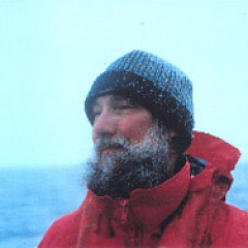 Victor Benno Meyer-Rochow合作论文数Department of Ecology & Genetics, University of Oulu7Greg Sherley合作论文数7Hitchmough Rodney A合作论文数5G. Richard Parrish合作论文数4
 Anthony R. Beech合作论文数School of Psychology, University of Birmingham4
 Jay Mccartney合作论文数Ecology Group;Institute of Natural Resources;Massey University;Institute of Natural Resources, Massey University4
 Rachel J. Standish合作论文数Ecology Group;Institute of Natural Resources;Massey University;Institute of Natural Resources, Massey University3Shaun J. Bennett合作论文数3
 Thomas R Buckley合作论文数2P. M. Johns合作论文数2
 Victoria Dorrer合作论文数2Tania Moss合作论文数2
 Murray Alan Potter合作论文数Dept Pathol & Mol Med, McMaster Univ2
 David Merritt合作论文数School of Biological Sciences, Faculty of Science, The University of Queensland2
 Martina Marchetti-Deschmann合作论文数Inst Chem Technol & Analyt, Vienna Univ Technol2
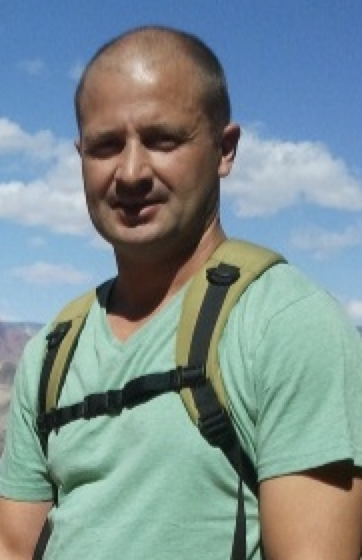 Darryl MacKenzie合作论文数Otago Rugby Football Union;University of Otago;Proteus;Center For Wildlife Studies2
 Janek Von Byern合作论文数2Vanessa Cave合作论文数2Elizabeth A. Grant合作论文数2Duncan Hedderley合作论文数2George W. Gibbs合作论文数2
 Steven A. Trewick (Steven Trewick)合作论文数Wildlife & Ecology Group, School of Agriculture and Environment, Massey University2
 Dianne Margaret Gleeson合作论文数Landcare Research Ecological Genetics Laboratory Private Bag 92170 Auckland New Zealand2Richard K. Parrish合作论文数2M. Rohan合作论文数1A Beech合作论文数1Mark I. Stevens合作论文数1Roger B. Hutchinson合作论文数1
 Leah Kemp合作论文数1Jm Desmarchelier合作论文数1
 Chris J Green合作论文数1richard a b leschen合作论文数1yonglin ren合作论文数1lynn adams合作论文数1Hamish J. Mack合作论文数1
 Grace Trundle合作论文数1
 Karsten Thiel合作论文数1
 Diana Prada合作论文数1
 P.-L. Michael Noeske合作论文数1A. C. G. Heath合作论文数1
 Simone Dimartino合作论文数Chemical Engineering, School of Engineering, The University of Edinburgh1Norbert Cyran合作论文数1
 Paul Barrett合作论文数Department of Earth Sciences, Natural History Museum, London1
 Daniel White合作论文数1Howitt Robyn L J合作论文数1




