We have recorded the responses of single units in the superior olivary complex (SOC) of the guinea pig to simple and complex stimuli. We can readily identify the responses of the four principal ascending nuclei as described in other species and we are therefore confident that the guinea pig is a suitable model for studying this region. We found single units in the medial superior olive that represent both diotic iterated rippled noise and dichotic repetition pitch in their temporal discharge patterns. Our data demonstrate a use of the SOC beyond sound-source localisation. (C) 2018 The Author(s). Published by S. Hirzel Verlag.EAA.
The presence of 'giant' synapses in the auditory brainstem is thought to be a specialization designed to encode temporal information to support perception of pitch, frequency, and sound-source localisation. These 'giant' synapses have been found in the ventral cochlear nucleus, the medial nucleus of the trapezoid body and the ventral nucleus of the lateral lemniscus. An interpretation of these synapses as simple relays has, however, been challenged by the observation in the gerbil that the action potential frequently fails in the ventral cochlear nucleus. Given the prominence of these synapses it is important to establish whether this phenomenon is unique to the gerbil or can be observed in other species. Here we examine the responses of units, thought to be the output of neurons in receipt of 'giant' synaptic endings, in the ventral cochlear nucleus and the medial nucleus of the trapezoid body in the guinea pig. We found that failure of the action-potential component, recorded from cells in the ventral cochlear nucleus, occurred in ~60% of spike waveforms when recording spontaneous activity. In the medial nucleus of the trapezoid body, we did not find evidence for action-potential failure. In the ventral cochlear nucleus action-potential failures transform the receptive field between input and output of bushy cells. Additionally, the action-potential failures result in "non-primary-like" temporal-adaptation patterns. This is important for computational models of the auditory system, which commonly assume the responses of ventral cochlear nucleus bushy cells are very similar to their "primary like" auditory-nerve-fibre inputs.
Frequency modulation (FM) is a common acoustic feature of natural sounds and is known to play a role in robust sound source recognition. Auditory neurons show precise stimulus-synchronized discharge patterns that may be used for the representation of low-rate FM. However, it remains unclear whether this representation is based on synchronization to slow temporal envelope (ENV) cues resulting from cochlear filtering or phase locking to faster temporal fine structure (TFS) cues. To investigate the plausibility of those encoding schemes, single units of the ventral cochlear nucleus of guinea pigs of either sex were recorded in response to sine FM tones centered at the unit's best frequency (BF). The results show that, in contrast to high-BF units, for modulation depths within the receptive field, low-BF units (<4 kHz) demonstrate good phase locking to TFS. For modulation depths extending beyond the receptive field, the discharge patterns follow the ENV and fluctuate at the modulation rate. The receptive field proved to be a good predictor of the ENV responses for most primary-like and chopper units. The current in vivo data also reveal a high level of diversity in responses across unit types. TFS cues are mainly conveyed by low-frequency and primary-like units and ENV cues by chopper and onset units. The diversity of responses exhibited by cochlear nucleus neurons provides a neural basis for a dual-coding scheme of FM in the brainstem based on both ENV and TFS cues. SIGNIFICANCE STATEMENT Natural sounds, including speech, convey informative temporal modulations in frequency. Understanding how the auditory system represents those frequency modulations (FM) has important implications as robust sound source recognition depends crucially on the reception of low-rate FM cues. Here, we recorded 115 single-unit responses from the ventral cochlear nucleus in response to FM and provide the first physiological evidence of a dual-coding mechanism of FM via synchronization to temporal envelope cues and phase locking to temporal fine structure cues. We also demonstrate a diversity of neural responses with different coding specializations. These results support the dual-coding scheme proposed by psychophysicists to account for FM sensitivity in humans and provide new insights on how this might be implemented in the early stages of the auditory pathway.
The auditory system processes temporal information at multiple scales, and disruptions to this temporal processing may lead to deficits in auditory tasks such as detecting and discriminating sounds in a noisy environment. Here, a modelling approach is used to study the temporal regularity of firing by chopper cells in the ventral cochlear nucleus, in both the normal and impaired auditory system. Chopper cells, which have a strikingly regular firing response, divide into two classes, sustained and transient, based on the time course of this regularity. Several hypotheses have been proposed to explain the behaviour of chopper cells, and the difference between sustained and transient cells in particular. However, there is no conclusive evidence so far. Here, a reduced mathematical model is developed and used to compare and test a wide range of hypotheses with a limited number of parameters. Simulation results show a continuum of cell types and behaviours: chopper-like behaviour arises for a wide range of parameters, suggesting that multiple mechanisms may underlie this behaviour. The model accounts for systematic trends in regularity as a function of stimulus level that have previously only been reported anecdotally. Finally, the model is used to predict the effects of a reduction in the number of auditory nerve fibres (deafferentation due to, for example, cochlear synaptopathy). An interactive version of this paper in which all the model parameters can be changed is available online.
Concurrent complex sounds (e.g., two voices speaking at once) are perceptually disentangled into separate “auditory objects”. This neural processing often occurs in the presence of acoustic-signal distortions from noise and reverberation (e.g., in a busy restaurant). A difference in periodicity between sounds is a strong segregation cue under quiet, anechoic conditions. However, noise and reverberation exert differential effects on speech intelligibility under “cocktail-party” listening conditions. Previous neurophysiological studies have concentrated on understanding auditory scene analysis under ideal listening conditions. Here, we examine the effects of noise and reverberation on periodicity-based neural segregation of concurrent vowels /a/ and /i/, in the responses of single units in the guinea-pig ventral cochlear nucleus (VCN): the first processing station of the auditory brain stem. In line with human psychoacoustic data, we find reverberation significantly impairs segregation when vowels have an intonated pitch contour, but not when they are spoken on a monotone. In contrast, noise impairs segregation independent of intonation pattern. These results are informative for models of speech processing under ecologically valid listening conditions, where noise and reverberation abound.
A neuron׳s response to a sound can be suppressed by the presentation of a preceding sound. It has been suggested that this suppression is a direct correlate of the psychophysical phenomenon of forward masking, however, forward suppression, as measured in the responses of the auditory nerve, was insufficient to account for behavioural performance. In contrast the neural suppression seen in the inferior colliculus and auditory cortex was much closer to psychophysical performance. In anaesthetised guinea-pigs, using a physiological two-interval forced-choice threshold tracking algorithm to estimate suppressed (masked) thresholds, we examine whether the enhancement of suppression can occur at an earlier stage of the auditory pathway, the ventral cochlear nucleus (VCN). We also compare these responses with the responses from the central nucleus of the inferior colliculus (ICc) using the same preparation. In both nuclei, onset-type neurons showed the greatest amounts of suppression (16.9-33.5dB) and, in the VCN, these recovered with the fastest time constants (14.1-19.9ms). Neurons with sustained discharge demonstrated reduced masking (8.9-12.1dB) and recovery time constants of 27.2-55.6ms. In the VCN the decrease in growth of suppression with increasing suppressor level was largest for chopper units and smallest for onset-type units. The threshold elevations recorded for most unit types are insufficient to account for the magnitude of forward masking as measured behaviourally, however, onset responders, in both the cochlear nucleus and inferior colliculus demonstrate a wide dynamic range of suppression, similar to that observed in human psychophysics.
We demonstrate how an abstract mathematical model that approximates a wide range of more detailed models can be used to make predictions about hearing loss-related changes in neural behaviour. One consequence of neurosensory hearing loss (noise-induced and aging-related) is a reduced ability to understand speech, particularly in noisy environments, and sometimes beyond what would be predicted from reduced audibility. Indeed, this type of speech deficit can occur in listeners with near-normal hearing thresholds [1]. A promising avenue of investigation to explain this comes from experimental results in mice showing that there can be a permanent loss of auditory nerve fibres (ANFs) following temporary noise-induced hearing loss (i.e. when thresholds return to normal after a few weeks) [2]. The downstream consequences of this loss of fibres has not yet been systematically investigated (although see [3]). We predict, using a theoretical analysis that applies to a wide range of neural models, that the regularity of the spike trains of many neurons in the cochlear nucleus (the next structure after the auditory nerve) will decrease following a reduction in the number of input cells. We present a mathematical analysis of the stationary behaviour of cells in the ventral cochlear nucleus, approximating them by a stochastic process that is entirely characterised by its mean, standard deviation and time constants. Furthermore, these constants can be straightforwardly related to physiologically significant parameters including the number of inputs and their average firing rates. From this approximation, we can compute the regularity of the chopper cell spike trains measured as the coefficient of variation of their interspike intervals (CV). One simple prediction of this model is that when the intensity of a stimulus changes, leading to a change in the average firing rate of the ANF inputs, there will be a corresponding change in the regularity of the chopper cell spike train. This prediction poses problems for the widely used scheme for classifying chopper cells as sustained or transient based on their ongoing CVs as it implies that the classification could be level-dependent. We present a re-analysis of an existing experimental data set that demonstrates that ongoing CV is indeed level-dependent in the majority of chopper cells, and that in some cells (>7%) this leads to a level-dependence in their classification. Assuming a homeostatic regulation of long term firing rates, a loss of ANFs will lead to an increase in the standard deviation of the stochastic process and a consequent increase in the CV of the chopper cell. Some choppers that were previously classified as sustained will become transient, a substantial change in their behaviour that is highly likely to disrupt auditory processing. While the function of chopper cells is still debated, one suggested role is in the coding of temporal envelope [4], which is widely agreed to be essential for understanding speech. Loss of ANFs could therefore lead to a disruption of the processing of temporal envelope, and consequently degrade speech intelligibility. We briefly conclude by discussing the challenges of testing this hypothesis experimentally.
The auditory system typically processes information from concurrently active sound sources (e.g., two voices speaking at once), in the presence of multiple delayed, attenuated and distorted sound-wave reflections (reverberation). Brainstem circuits help segregate these complex acoustic mixtures into "auditory objects." Psychophysical studies demonstrate a strong interaction between reverberation and fundamental-frequency (F0) modulation, leading to impaired segregation of competing vowels when segregation is on the basis of F0 differences. Neurophysiological studies of complex-sound segregation have concentrated on sounds with steady F0s, in anechoic environments. However, F0 modulation and reverberation are quasi-ubiquitous. We examine the ability of 129 single units in the ventral cochlear nucleus (VCN) of the anesthetized guinea pig to segregate the concurrent synthetic vowel sounds /a/ and /i/, based on temporal discharge patterns under closed-field conditions. We address the effects of added real-room reverberation, F0 modulation, and the interaction of these two factors, on brainstem neural segregation of voiced speech sounds. A firing-rate representation of single-vowels' spectral envelopes is robust to the combination of F0 modulation and reverberation: local firing-rate maxima and minima across the tonotopic array code vowel-formant structure. However, single-vowel F0-related periodicity information in shuffled inter-spike interval distributions is significantly degraded in the combined presence of reverberation and F0 modulation. Hence, segregation of double-vowels' spectral energy into two streams (corresponding to the two vowels), on the basis of temporal discharge patterns, is impaired by reverberation; specifically when F0 is modulated. All unit types (primary-like, chopper, onset) are similarly affected. These results offer neurophysiological insights to perceptual organization of complex acoustic scenes under realistically challenging listening conditions.
Amplitude modulation (AM) is a pervasive feature of natural sounds. Neural detection and processing of modulation cues is behaviourally important across species. Although most ecologically relevant sounds are not fully modulated, physiological studies have usually concentrated on fully modulated (100% modulation depth) signals. Psychoacoustic experiments mainly operate at low modulation depths, around detection threshold (∼5% AM). We presented sinusoidal amplitude-modulated tones, systematically varying modulation depth between zero and 100%, at a range of modulation frequencies, to anaesthetised guinea-pigs while recording spikes from neurons in the ventral cochlear nucleus (VCN). The cochlear nucleus is the site of the first synapse in the central auditory system. At this locus significant signal processing occurs with respect to representation of AM signals. Spike trains were analysed in terms of the vector strength of spike synchrony to the amplitude envelope. Neurons showed either low-pass or band-pass temporal modulation transfer functions, with the proportion of band-pass responses increasing with increasing sound level. The proportion of units showing a band-pass response varies with unit type: sustained chopper (CS) > transient chopper (CT) > primary-like (PL). Spike synchrony increased with increasing modulation depth. At the lowest modulation depth (6%), significant spike synchrony was only observed near to the unit's best modulation frequency for all unit types tested. Modulation tuning therefore became sharper with decreasing modulation depth. AM detection threshold was calculated for each individual unit as a function of modulation frequency. Chopper units have significantly better AM detection thresholds than do primary-like units. AM detection threshold is significantly worse at 40 dB vs. 10 dB above pure-tone spike rate threshold. Mean modulation detection thresholds for sounds 10 dB above pure-tone spike rate threshold at best modulation frequency are (95% CI) 11.6% (10.0-13.1) for PL units, 9.8% (8.2-11.5) for CT units, and 10.8% (8.4-13.2) for CS units. The most sensitive guinea-pig VCN single unit AM detection thresholds are similar to human psychophysical performance (∼3% AM), while the mean neurometric thresholds approach whole animal behavioural performance (∼10% AM).
A common characteristic of natural sounds is that the level fluctuations in different frequency regions are coherent. The ability of the auditory system to use this comodulation is shown when a sinusoidal signal is masked by a masker centred at the signal frequency (on-frequency masker, OFM) and one or more off-frequency components, commonly referred to as flanking bands (FBs). In general, the threshold of the signal masked by comodulated masker components is lower than when masked by masker components with uncorrelated envelopes or in the presence of the OFM only. This effect is commonly referred to as comodulation masking release (CMR). The present study investigates if CMR is also observed for a sinusoidal signal embedded in the OFM when the centre frequencies of the FBs are swept over time with a sweep rate of one octave per second. Both a common change of different frequencies and comodulation could serve as cues to indicate which of the stimulus components originate from one source. If the common fate of frequency components is the stronger binding cue, the sweeping FBs and the OFM with a fixed centre frequency should no longer form one auditory object and the CMR should be abolished. However, psychoacoustical results with normal-hearing listeners show that a CMR is also observed with sweeping components. The results are consistent with the hypothesis of wideband inhibition as the underlying physiological mechanism, as the CMR should only depend on the spectral position of the flanking bands relative to the inhibitory areas (as seen in physiological recordings using stationary flanking bands). Preliminary physiological results in the cochlear nucleus of the Guinea pig show that a correlate of CMR can also be found at this level of the auditory pathway with sweeping flanking bands.
• Interspike Intervals statistics are useful • They offer a good description for the whole response • They contain the information to recreate every spike train, not just the PSTH • They allow to reconstruct the PSTH simple and exact. • Intervals are independent to all intents and purposes. A spike erases the memory of the previous interval. This is different from the LSO (Johnson, 1986)! • Neurons are counters (not clocks): adaptive behaviour depends more on the number of spikes than on the time since tone onset. • Class distinctions are nebulous when observed in the context of ISI statistics. A small change in one of the statistics can move a response from one class to another. • ISI description provides the means to describe (‘model’) responses very simply and compactly (3n parameter, can be modelled with fewer) • First spikes are different from subsequent intervals. • We are now in a position to examine: • To what extent are the classes truly distinct? • Why do choppers chop? • What rules allow us to go from ISI statistics to response types? (automatic classification) • How does response depend on different stimulus attributes (amplitude, etc) The VCN is the first sound processing station in the mammalian brain Understand sound coding in the VCN would allow a better understanding of all aspects of hearing VCN neurons show various different physiological and morphological aspects.
 Stefan Bleeck合作论文数School of Engineering, Faculty of Engineering and Physical Sciences, University of Southampton32
 Mark Sayles合作论文数Centre for the Neural Basis of Hearing, The Physiological Laboratory, Downing Street, Cambridge, CB2 3EG, UK17
 Ingham Neil J合作论文数10Stasiak Arkadiusz合作论文数9
 Jesko Verhey合作论文数9Daniel Pressnitzer合作论文数Equipe Audition;Ecole Normale Sup;Equipe Audition, Ecole Normale Sup6
 Alain de Cheveigné合作论文数Perception et Cognition Musicale, Centre National de la Recherche Scientifique/Perception et Cognition Musicale, Institut de Recherche et Coordination Acoustique/Musique5Palmer Alan R合作论文数5
 Jessica J. Monaghan合作论文数5M. C. M. Wright合作论文数4Christopher J. Long合作论文数3
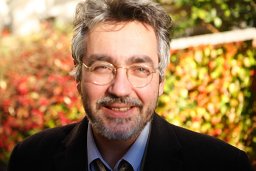 Christian Lorenzi合作论文数Univ Paris 12, CNRS, FRE 2929, Lab Psychol Percept, 71,Av E Vaillant, F-92774 Boulogne, France3
 Thomas Blumensath合作论文数University of Southampton3
 Roy D. Patterson合作论文数Department of Physiology, Development and Neuroscience, University of Cambridge3Veronika Neuert合作论文数3
 Bob Carlyon合作论文数MRC Cognition and Brain Sciences Unit, University of Cambridge3
 Koen Mertens合作论文数2
 David Baguley合作论文数School of Medicine, Faculty of Medicine and Health Sciences, The University of Nottingham2
 Bastian Epp合作论文数Carl von Ossietzky Univ Oldenburg, Inst Phys, D-26111 Oldenburg, Germany2Robertson Donald合作论文数2Mahendran S M合作论文数2
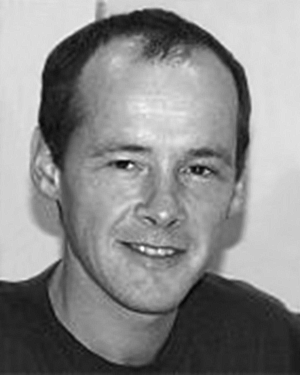 Reindl, Christian合作论文数2
 Ray Meddis合作论文数University of Essex2
 Christophe Micheyl合作论文数Starkey France2
 Marc Tiebout合作论文数Intel Austria GmbH2Zisan Zhang合作论文数2
 Christoph Sandner合作论文数Infineon Technologies Austria2
 Stefano Marsili合作论文数Dipartimento di Scienze della Terra, Università di Pisa2
 Andreas Wiesbauer合作论文数2Patrick R. Axon合作论文数2
 John M. Deeks合作论文数MRC Cognition and Brain Sciences Unit, University of Cambridge2
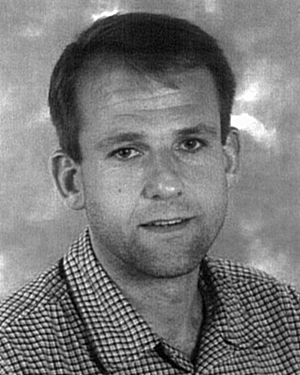 Florian Michl合作论文数2
 Dan F. M. Goodman合作论文数Laboratoire Psychologie de la Perception, Université Paris Descartes2
 Staffan Ek合作论文数2
 Hermann Paule合作论文数2
 Graham Leach合作论文数2
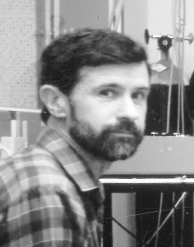 Graeme K. Yates合作论文数Department of Physiology, University of Western Australia;Auditory Laboratory, University of Western Australia2v filimon合作论文数1Bert Schouten合作论文数1Matthew C.M. Wright合作论文数1Derksen, S.合作论文数1DA MOFFAT合作论文数1
 Jinqiu Sang (桑晋秋)合作论文数Institute of AI Education, Shanghai, East China Normal University1Sami Alsindi合作论文数Dept Physiol Dev & Neurosci, Univ Cambridge1
 Nihaad Paraouty合作论文数Ctr Neural Sci, NYU1Stephen D. Holmes合作论文数1Léger Agnès C合作论文数1Draxelmayr, D.合作论文数1Naoya Itatani合作论文数1




