A series of 4-bicyclic heteroaryl 1,2,3,4-tetrahydroisoquinoline inhibitors of the serotonin transporter (SERT), norepinephrine transporter (NET), and dopamine transporter (DAT) was discovered.The synthesis and structure-activity relationship (SAR) of these triple reuptake inhibitors (TRIs) will be discussed.Compound 10i (AMR-2), a very potent inhibitor of SERT, NET, and DAT, showed efficacy in the rat forcedswim and mouse tail suspension models with minimum effective doses of 0.3 and 1 mg/ kg (po), respectively.At efficacious doses in these assays, 10i exhibited substantial occupancy levels at the three transporters in both rat and mouse brain.The study of the metabolism of 10i revealed the formation of a significant active metabolite, compound 13.
The structures of the two predominant metabolites (M4 and M5) of RVX-208, observed both in in vitro human and animal liver microsomal incubations, as well as in plasma from animal in vivo studies, were determined. A panel of biocatalytic systems was tested to identify biocatalysts suitable for milligram scale production of metabolite M4 from RVX-208. Rabbit liver S9 fraction was selected as the most suitable system, primarily based on pragmatic metrics such as catalyst cost and estimated yield of M4 (∼55%). Glucuronidation of RVX-208 catalyzed by rabbit liver S9 fraction was optimized to produce M4 in amounts sufficient for structural characterization. Structural studies using LC/MS/MS analysis and (1)H NMR spectroscopy showed the formation of a glycosidic bond between the primary hydroxyl group of RVX-208 and glucuronic acid. NMR results suggested that the glycosidic bond has the β-anomeric configuration. A synthetic sample of M4 confirmed the proposed structure. Metabolite M5, hypothesized to be the carboxylate of RVX-208, was prepared using human liver microsomes, purified by HPLC, and characterized by LC/MS/MS and (1)H NMR. The structure was confirmed by comparison to a synthetic sample. Both samples confirmed M5 as a product of oxidation of primary hydroxyl group of RVX-208 to carboxylic acid.
A practical synthesis targeting the C16–C20 segment of the endogenous metabolite Resolvin E1 (RvE1) is described. The original route was revised to avoid the use of source-constrained raw materials and chemistries that were problematic on larger scale. The revised route utilizes commercially available (E)-1-chloropent-1-en-3-one as the key raw material to replace (S)-glycidol. The (E)-vinyl iodide functionality was installed by an addition/elimination sequence to prepare the segment required for a subsequent Sonogashira coupling. The chiral secondary hydroxyl group at C18 was established by Corey–Bakshi–Shibata (CBS) reduction followed by lipase-catalyzed acetylation to achieve chiral purity in excess of 98% ee. The revised route offered a viable multikilogram process to support early clinical production of this pro-resolution therapeutic agent.
A simple and efficient process has been developed to effect the kinetic resolution of the racemic alcohol 2 using immobilized lipase to afford the desired optically pure (R)-bis-tetrahydrofuran (bis-THF) alcohol 3, to facilitate the rapid progression of a clinical candidate. Rapid optimization and development of reproducible and scalable processes are essential to meet aggressive timeframes for preclinical, safety, and early clinical drug development. Process parameters were initially scoped and optimized using a combination of a rational bioprocess screening design and parallel microscale empirical studies, specifically accounting for scale-up and downstream processing considerations. The choices of reaction solvent, acyl donor, and immobilized biocatalyst proved to be critical factors in the design of a conveniently scalable and enantioselective enzymatic resolution process. The improved process was initially validated on 3-g and then 90-g scale in simple impeller-stirred reactors, exhibiting excellent reproducibility. This methodology was successfully implemented on a multikilogram scale to give the target alcohol 3 with >99% ee.
Combinatorial biocatalysis was applied to generate a diverse set of dihydroxymethylzearalenone analogs with modified ring structure. In one representative chemoenzymatic reaction sequence, dihydroxymethylzearalenone was first subjected to a unique enzyme-catalyzed oxidative ring opening reaction that creates two new carboxylic groups on the molecule. These groups served as reaction sites for further derivatization involving biocatalytic ring closure reactions with structurally diverse bifunctional reagents, including different diols and diamines. As a result, a library of cyclic bislactones and bislactams was created, with modified ring structures covering chemical space and structure activity relationships unattainable by conventional synthetic means.
An efficient three-step, chemoenzymatic synthesis of unprotected doxorubicin-14-O-esters from doxorubicin hydrochloride salt is described. The key step is a lipase-catalyzed regioselective transesterification/esterification using commercially available acyl donors and doxorubicin reversibly derivatized with N-alloc to improve substrate loadings. The overall yield is ca. 60% and chromatographic purification is not required, thereby making the process more amenable to scale-up.
Codeinone (3) was efficiently and directly converted to 14-hydroxycodeinone (1) by catalytic air oxidation in aqueous solution. A number of simple manganese and copper salts were identified to be effective catalysts, including MnSO4, KMnO4, and CuSO4. An appropriate reducing agent, such as sodium thiosulfate, is required in the reaction mixture presumably for the reduction of a detrimental peroxide intermediate. This discovery allows the more abundant codeine to be employed as the starting material for the synthesis of 14-hydroxylated opiate drugs without recourse to a thebaine-like intermediate. These discoveries were inspired from our study of microbial transformation of codeine to 14-hydroxycodeine by Mycobacterium neoaurum, where we found the actual 14-hydroxylation step is a chemical reaction rather than an enzymatic reaction, as previously believed.
An efficient two-step, chemoenzymatic synthesis of N-trifluoroacetyl doxorubicin-14-valerate (Valrubicin) from doxorubicin hydrochloride salt is reported. The key step is a lipase-catalyzed regioselective esterification of N-trifluoroacetyl doxorubicin using commercially available valeric acid as the acyl donor. The overall yield for the process is 79%.
AbstractChemInform is a weekly Abstracting Service, delivering concise information at a glance that was extracted from about 100 leading journals. To access a ChemInform Abstract of an article which was published elsewhere, please select a “Full Text” option. The original article is trackable via the “References” option.
We describe the isolation and purification of KDPGal aldolase from two sources. To facilitate this isolation, a facile five-step chemical synthesis of 2-keto-3-deoxy-6-phosphogalactonate (KDPGal) (1) from commercially available d-galactono-1,4-lactone (3) is described. The key steps are the β-elimination of the protected aldonolactone 4 to furnish the desired 2,3-unsaturated ketone 5 and selective phosphorylation of the primary hydroxyl moiety of the diol 7. The purity of the KDPGal sample was >95% as determined by enzymatic assay using crude KDPGal aldolase from Pseudomonas saccharophila. An initial substrate specificity and pH–activity profile of KDPGal aldolase are described.
D-Glyceraldehyde is accepted as an electrophile by 2-keto-3-deoxy-6-phosphogluconate (KDPG) aldolase (EC 4.1.2.14) at 1% the rate of natural substrate, D-glyceraldehyde 3-phosphate. Accordingly, it was expected that addition of a phosphate moiety at C3 or C4 of unnatural aldehydes would enhance their activity as electrophilic substrates. Furthermore, phosphate would act as a useful protecting group during synthetic manipulations of the aldol adduct. A variety of phosphorylated and non-phosphorylated aldehydes were synthesized and evaluated as substrates for KDPG aldolase. Although small variations in reaction rate were observed, phosphorylation failed to provide a universal rate enhancement. Evaluation of substrate kinetic parameters revealed that the high rate of reaction of D-glyceraldehyde 3-phosphate compared to related electrophiles is entirely due to the efficiency of turnover with little change in binding exhibited among various substrates.
A new highly efficient MICROCOS technology (Microwave-assisted Combinatorial Synthesis) for generating combinatorial libraries is described. The technology is applied to the high throughput, automated, one-step, parallel synthesis of diverse substituted pyridines using the Hantzsch synthesis. The advantages of microwave-assisted chemistry for combinatorial synthesis include a broad range of available chemistries, simple reaction setup and product recovery readily amenable to automation, extremely short reaction times, and high product yields.
AbstractChemInform is a weekly Abstracting Service, delivering concise information at a glance that was extracted from about 100 leading journals. To access a ChemInform Abstract of an article which was published elsewhere, please select a “Full Text” option. The original article is trackable via the “References” option.
Abstract Discussion Points Give reasons for the stereoselectivity of epoxidation step e. What is the mechanism of the fluorination step n? Further Reading For a review on selectivity in enzymatic reactions, see: J.B. Jones, Aldrichimica Acta,1993, 26,105. For other studies on active site model for lipases, see: K. Naemurz, R. Fukuda, M. Murata, M. Konishi, K. Hirose and Y. Tobe, Tetrahedron: Asymm.,1995, 6,2385. For a review on the fluorination of organic compounds, see: 0. A. Mascaretti, Aldrichimica Acta,1993, 26,47.
The pyruvate aldolases use pyruvate as the nucleophilic component in stereoselective aldol condensations, producing a 4-hydroxy-2-ketobutyrate framework. We have examined the 2-keto-3-deoxy-6-phosphogluconate (KDPG) aldolases from Pseudomonas putida, Escherichia coli, and Zymomonas mobilis for utility as synthetic reagents. Unlike other pyruvate aldolases examined to date, the KDPG aldolases accept short-chain, non-carbohydrate electrophilic aldehydes as substrates, providing a general methodology for the construction of the 4-hydroxy-2-ketobutyrate skeleton. The three aldolases differ markedly with respect to enzyme stability, pH optima, stability in organic cosolvent mixtures, substrate specificity, and diastereoselectivity during aldol condensation. All three enzymes show broad substrate specificity with regard to the electrophilic component. The primary requirements for substrate activity appear to be minimal steric hindrance and the presence of electron-withdrawing substituents at C2. The aldolases from Pseudomonas and Escherichia are also specific for the D-stereochemical configuration at C2, while the enzyme from Zymomonas displays no stereochemical discrimination with regard to the electrophilic substrate. Nucleophiles other than pyruvate are accepted as nucleophilic substrates by all three enzymes, provided the electrophile is sufficiently reactive, In preparative scale reactions with three unnatural electrophiles, the three enzymes show varying degrees of stereochemical fidelity, In most cases, a single diastereomer of the aldol adduct was produced, although in one case, a diastereomeric excess of 50% was observed. In all cases, the diastereoselectivity is exclusively kinetic in origin, despite the reversibility of some reactions. The enzymes are remarkably tolerant of added cosolvent: all three showed >60% of native activity in 30% DMSO and DMF. By appropriate choice of enzyme, the KDPG aldolases offer exceptional utility for stereocontrolled carbon-carbon bond formation under a wide range of experimental conditions.
The anti-herpes agent carbocyclic oxetanocin-A (-)-2 has been prepared from the bicyclic ketone 3 via resolution of the bromohydrin 4 (using an enzyme-catalysed trans-esterification reaction) and a photocatalysed rearrangement of the epoxide (+)-6 to the lactone (+)-7.
The acetate (±)-4 was resolved by an enantioselective hydrolysis catalysed by porcine pancreatic lipase. The resultant alcohol (–)-3 and the optically active ester (+)-4 were converted into the ketones (+)-2 and (–)-2 respectively. The ketone (+)-2 was elaborated to produce the diester 9 while the ketone (–)-2 was transformed into the phosphonium salt 21. A Wittig reaction between 9 and 21, followed by deprotection and chromatography furnished leukotriene-B4.
AbstractChemInform is a weekly Abstracting Service, delivering concise information at a glance that was extracted from about 100 leading journals. To access a ChemInform Abstract of an article which was published elsewhere, please select a “Full Text” option. The original article is trackable via the “References” option.
 Stanley M. Roberts合作论文数8
 Peter C Michels合作论文数6Yuri Khmelnitsky合作论文数6Michael C. Shelton合作论文数5
 Eric John Toone合作论文数Department of Chemistry, Duke University4Vladimir Šik合作论文数4Vadim V. Mozhaev合作论文数Chemistry Department, Moscow State University4Roger B. Pettman合作论文数3K. M. SHORT合作论文数3george ryback合作论文数3Philip B. Cox合作论文数3Pc Michels合作论文数3Darla Henderson合作论文数3Robert J. Pryce合作论文数3
 Harry Finch合作论文数3Joseph O. Rich合作论文数2JO Rich合作论文数2Yl Khmelnitsky合作论文数2D. M. LE GRAND合作论文数2
 Gyorgy Dorman合作论文数2J. G. MORRIS合作论文数2
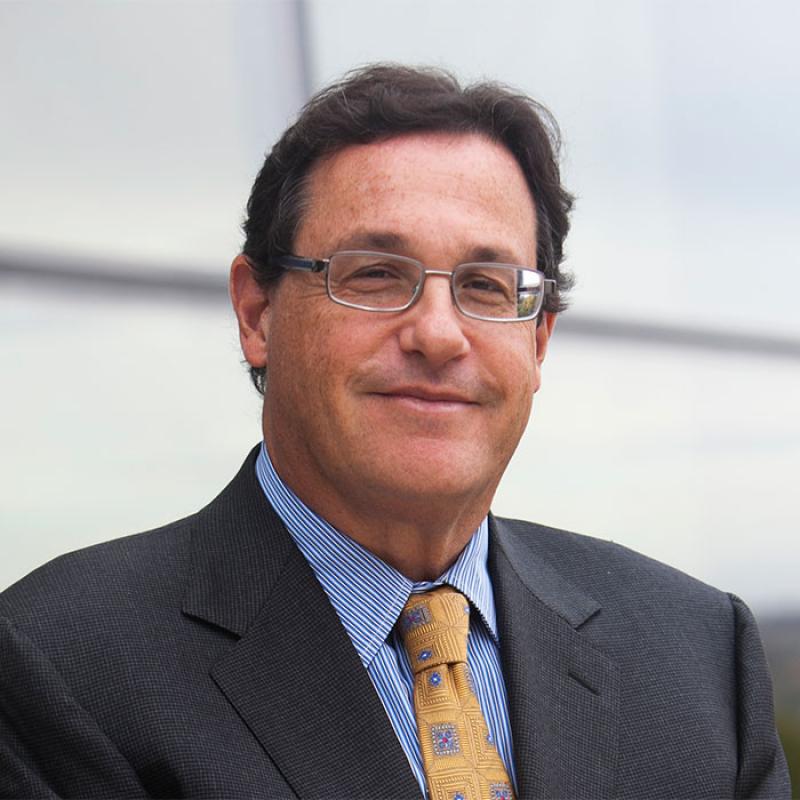 Jonathan Dordick合作论文数Center for Engineering and Precision Medicine, Rensselaer Polytechnic Institute;Department of Chemical and Biological Engineering, Rensselaer Polytechnic Institute2
 Douglas Clark合作论文数Department of Chemical and Biomolecular Engineering, College of Chemistry, University of California, Berkeley;Molecular Biophysics and Integrated Bioimaging Division, Lawrence Berkeley National Laboratory2Alex F. Drake合作论文数2
 Kieran C. Molloy合作论文数Department of Chemistry, University of Bath2Basil J. Wakefield合作论文数2John M. Arnold合作论文数2Alan G. Sutherland合作论文数2Josef Spreitz合作论文数2
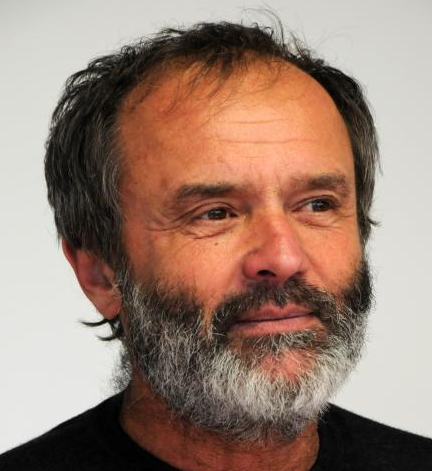 Kurt Faber合作论文数University of Graz2Henrik C. Hansen合作论文数2Julian O. Williams合作论文数2Rona M. Highcock合作论文数2Gregory S. Wagner合作论文数2Alexander Ya. Usyatinsky合作论文数2Feodor Scheinmann合作论文数2
 Robert Holt合作论文数Canada's Michael Smith Genome Sciences Centre, BC Cancer Research Institute;Simon Fraser University;University of British Columbia2Wenge Cui合作论文数1Aruna Sambandam合作论文数1Jonathan O'Connell合作论文数1Yuh-Lin Yang合作论文数1Vladimir Khlebnikov合作论文数1Regine Latouche合作论文数1Edward J. Hutchinson合作论文数1Rabih Jaouhari合作论文数1e j hutchinson合作论文数1Dennis Milanowski合作论文数1Matthew Isherwood合作论文数1




