Sensors are integrated into collaborative robot systems to ensure the safety of human workers by allowing them to perceive their environments, detect human presence, and adjust their actions accordingly. This preferred reporting items for systematic reviews and meta-analyses extension for scoping review (PRISMA-ScR) focuses on current sensor-enabled safety systems for human-robot collaboration (HRC) in the manufacturing industry based on both scientific papers and patents. From the initial search of 6669 references, 281 underwent full-text review and segmentation based on the sensor technology, installation location, and safety operating mode according to the ISO/TS 15066 standard. In the last decade, there has been a clear trend of increasing sensor-enabled safety systems. The dominant sensors used are infrared (IR)-structured light, capacitive, light detection and ranging (LiDAR), resistive, stereo/depth camera, RaDAR, and laser scanners. The primary safety operating mode identified was speed and separation monitoring (SSM). Some systems integrate multiple sensor types, with the most common combinations being LiDAR with stereo cameras or LiDAR with capacitive sensors, and laser scanners with RaDAR. We suggest multisensor integration and standardized benchmarks for future development. This review is among the few that employ the PRISMA-P protocol to study sensor technologies and contribute to a more systematic understanding of the current state of the art in this area.
An important bottleneck in present-day neuromorphic hardware is its reliance on synaptic addition, which limits the achievable degree of parallelization and thus processing throughput. We present a network of monostable multivibrator timers, whose synaptic inputs are simply OR-ed together, thus mitigating the synaptic addition bottleneck. Monostable multivibrators are simple timers which are easily implemented using counters in digital hardware and can be interpreted as non biologically-inspired spiking neurons. We show how fully binarized event-driven recurrent networks of monostable multivibrators can be trained to solve classification tasks. Our training algorithm resolves temporally overlapping input events. We demonstrate our approach on the MNIST handwritten digits, Google Soli radar gestures, IBM DVS128 gestures and Yin-Yang classification tasks. The estimated energy consumption for the MNIST handwritten digits task, excluding the final linear readout layer, is 855pJ per inference for a test accuracy of 98.61% for a reconfigurable network of 500 units, when mapped to the TSMC HPC+ 28nm process.
Despite the significant number of studies published on the measurements of complex permittivity of biological tissues in the last thirty years, implementing a successful measurement program for dielectric measurements can still present a challenge for researchers. Most problems are not theoretical but of methodological or practical nature. In this article, lessons learned from experiences with goal-oriented measurements are presented by structuring them into practical guidelines for efficient and useful measurements of dielectric properties of biological tissues, aimed at addressing gaps in knowledge. Issues related to calibration, validation of the measurement system and data collection procedures are addressed from a practical perspective. This will help support reproducibility of measurements. In addition, guidelines for data analysis and data reporting are provided. The latter is also supported by a data analysis tool developed in MATLAB, made available as open source. This facilitates the harmonisation and merging of different datasets, ease of interpreting and re-using of data and comparison of data across studies. Additionally, a data repository is presented for uploading of dielectric data of biological tissues, along with the corresponding meta-data describing the experiments. These guidelines are the result of the work carried out by a dedicated working group in the project COST Action MyWAVE.
This correspondence paper provides, to the best of our knowledge, a first analysis of how biologically-plausible spiking neural networks (SNNs) equipped with Spike-Timing-Dependent Plasticity (STDP) can learn to detect people on the fly from non-independent and identically distributed (non-i.i.d) streams of retina-inspired, event camera data. Our system works as follows. First, a short sequence of event data capturing a walking human from a flying drone is forwarded in its natural order to an SNN-STDP system, which also receives teacher spiking signals from the neural activity readout block. Then, when the end of the learning sequence is reached, the learned system is assessed on testing sequences. In addition, we also present a new interpretation of anti-Hebbian plasticity as an over-fitting control mechanism, and provide experimental demonstrations of our findings. This work contributes to the study of attention-based development and perception in bio-inspired systems.
Monostable multivibrators are simple timers which are easily implemented using counters in digital hardware and can be interpreted as non-biologically inspired spiking neurons. We show how fully binarized event-driven recurrent networks of monostable multivibrators can be trained to solve classification tasks. We mitigate an important bottleneck in neuromorphic hardware concepts by circumventing synaptic addition within the network. Here rather, input signals to a neuron are simply OR-ed together. Temporally overlapping input events are resolved at the neuron level. We demonstrate our approach on the MNIST handwritten digits, Google Soli radar gestures, IBM DVS128 gestures and Yin-Yang classification tasks, all with excellent results. The estimated energy consumption for the MNIST handwritten digits task, excluding the final readout layer, is 855pJ per inference for a test accuracy of 98.61% for a reconfigurable network of 500 units that was mapped to a 28nm process.
We report $D$ -band air-filled substrate integrated waveguides (AFSIWs) with solid copper sidewalls fabricated inside a multi-layer printed circuit board (PCB) with broad wall width of 1.6 mm and cavity height of $300~\mu \text{m}$ . Measurements show a loss of 0.07–0.08 dB/mm across 115–155 GHz. This result is the first demonstration of an AFSIW above 100 GHz in a low-cost mass manufacturable PCB and has the lowest loss compared to reported planar PCB lines or substrate integrated waveguides (SIWs) in PCBs and Interposers. We also introduce a broadband stripline to the AFSIW launcher using a broad wall transverse slot which offers ease of manufacturability over existing transitions having a measured insertion loss of 1.1 dB and 27% bandwidth. The combination of a low-loss AFSIW and wideband launcher allows both striplines and AFSIWs to coexist in the same multi-layer PCB.
To accommodate the ever-growing data requirements in densely populated areas and address the need for high-resolution sensing in diverse next-generation applications, there is a noticeable trend towards utilizing large unallocated frequency bands above 100 GHz. To overcome the harsh propagation conditions, large-scale antenna arrays are crucial and urge the need for cost-effective, mass-manufacturable technologies. A dedicated Any-Layer High Density Interconnect PCB technology for highly efficient wireless D-band (110-170 GHz) systems is proposed. Specifically, the adapted stack accommodates broadband air-filled substrate-integrated-waveguide components for efficient long-range signal distribution and low-loss passives. The viability of the suggested technology platform is demonstrated by designing, fabricating and measuring several essential low-loss air-filled substrate-integrated-waveguide components, such as a dual rectangular filter, with a minimal insertion loss of 0.87 dB and 10 dB-matching within the (132.8-139.2 GHz) frequency band, and an air-filled waveguide with a routing loss of only 0.08 dB/mm and a flat amplitude variation within 0.01 dB/mm over the (115-155 GHz) frequency range. A broadband transition towards stripline, with a limited loss of 1.1 dB, is described to interface these waveguides with compactly integrated chips. A tolerance analysis is included as well as a comparison to the state of the art.
This work proposes a first-of-its-kind SLAM architecture fusing an event-based camera and a Frequency Modulated Continuous Wave (FMCW) radar for drone navigation. Each sensor is processed by a bio-inspired Spiking Neural Network (SNN) with continual Spike-Timing-Dependent Plasticity (STDP) learning, as observed in the brain. In contrast to most learning-based SLAM systems, our method does not require any offline training phase, but rather the SNN continuously learns features from the input data on the fly via STDP. At the same time, the SNN outputs are used as feature descriptors for loop closure detection and map correction. We conduct numerous experiments to benchmark our system against state-of-the-art RGB methods and we demonstrate the robustness of our DVS-Radar SLAM approach under strong lighting variations.
In this paper we demonstrate how the use of frequencies ranging from 50 kHz to 5 GHz in the analysis of cells by electrorotation can open the path to the identification of differences not detectable by conventional set-ups. Earlier works usually reported electrorotation devices operating below 20 MHz, limiting the response obtained to properties associated with the cell membrane. Those devices are thus unable to resolve the physiological properties in the cytoplasm. We used microwave-based technology to extend the frequency operation to 5 GHz. At high frequencies (from tens of MHz to GHz), the electromagnetic signal passes through the membrane and allows probing the cytoplasm. This enables several applications, such as cell classification, and viability analysis. Additionally, the use of conventional microfabrication techniques reduces the cost and complexity of analysis, compared to other non-invasive methods. We demonstrated the potential of this set-up by identifying two different populations of T-lymphocytes not distinguishable through visual assessment. We also assessed the effect of calcein on cell cytoplasmic properties and used it as a controlled experiment to demonstrate the possibility of this method to detect changes happening predominantly in the cytoplasm.
This work studies how brain-inspired neural ensembles equipped with local Hebbian plasticity can perform active inference (AIF) in order to control dynamical agents. A generative model capturing the environment dynamics is learned by a network composed of two distinct Hebbian ensembles: a posterior network, which infers latent states given the observations, and a state transition network, which predicts the next expected latent state given current state-action pairs. Experimental studies are conducted using the Mountain Car environment from the OpenAI gym suite, to study the effect of the various Hebbian network parameters on the task performance. It is shown that the proposed Hebbian AIF approach outperforms the use of Q-learning, while not requiring any replay buffer, as in typical reinforcement learning systems. These results motivate further investigations of Hebbian learning for the design of AIF networks that can learn environment dynamics without the need for revisiting past buffered experiences.
Only a limited amount of research has been performed on the implementation of air-filled substrate-integrated-waveguide (AFSIW) systems in multi-layer PCB stacks at subterahertz frequencies. In this paper, we investigate the manufacturing reliability and the measurement repeatability based on several measurements of AFSIW transmission lines and three different filters on three separate PCB panels at D-band frequencies (110 GHz-170 GHz). A promising dual-cavity AFSIW filter with a steep roll-off on both sides of the passband is designed, fabricated and measured. The measured insertion loss is around 3 dB, while the out-of-band suppression is better than 30 dB.
Hyperdimensional Computing (HDC) is an emerging brain-inspired machine learning method that is recently gaining much attention for performing tasks such as pattern recognition and bio-signal classification with ultra-low energy and area overheads when implemented in hardware. HDC relies on the encoding of input signals into binary or few-bit Hypervectors (HVs) and performs low-complexity manipulations on HVs in order to classify the input signals. In this context, the sparsity of HVs directly impacts energy consumption, since the sparser the HVs, the more zero-valued computations can be skipped. This short paper introduces SupportHDC, a novel HDC design framework that can jointly optimize system accuracy and sparsity in an automated manner, in order to trade off classification performance and hardware implementation overheads. We illustrate the inner working of the framework on two bio-signal classification tasks: cancer detection and arrhythmia detection. We show that SupportHDC can reach a higher accuracy compared to the conventional splatter-code architectures used in many works, while enabling the system designer to choose the final design solution from the accuracy-sparsity trade-off curve produced by the framework. We release the source code for reproducing our experiments with the hope of being beneficial to future research.
The steadily increasing demand for higher data transmission rates leads to higher frequencies with greater bandwidth and at the same time reduced losses. The size of air-filled waveguides are frequency dependent, therefore an integration into a PCB is possible above 100 GHz in the D and G band region making them an interesting technology for 6G communication and radar application. Usually, substrate integrated waveguides (SIW) are manufactured in mass production with sidewalls made of Copper filled laser micro via fences. However, with these copper laser micro via fences used as sidewalls, losses can become excessive due to parallel plate mode excitation. Additionally, roughness of waveguide top and bottom walls must be minimized to reduce conductor losses. In order to meet the increased requirements of ultra-low loss, broadband signal transfer at D band we present an air-filled substrate integrated waveguide (AFSIW) technology with solid sidewalls and smooth top and bottom walls, which is suitable for mass production. In this paper, the AFSIW technology is proposed for ultra-low loss connections 140 GHz radar to connect IC's to antennas.
Radar processing via spiking neural networks (SNNs) has recently emerged as a solution in the field of ultralow-power wireless human–computer interaction. Compared to traditional energy- and area-hungry deep learning methods, SNNs are significantly more energy-efficient and can be deployed in the growing number of compact SNN accelerator chips, making them a better solution for ubiquitous IoT applications. We propose a novel SNN strategy for radar gesture recognition, achieving more than 91% of accuracy on two different radar datasets. Our work significantly differs from previous approaches as: 1) we use a novel radar-SNN training strategy; 2) we use quantized weights, enabling power-efficient implementation in real-world SNN hardware; and 3) we report the SNN energy consumption per classification, clearly demonstrating the real-world feasibility and power savings induced by SNN-based radar processing. We release an evaluation code to help future research.
This paper presents a microstrip antenna operating at 94 GHz. This design integrates a primary patch radiator surrounded by an array of small parasitic square patches to improve the bandwidth (BW). The low profile of this design allows the integration and fabrication of antenna arrays with an inter-element isolation of less than -15 dB. The design is fabricated on a high resistivity silicon (HR-Si) substrate with a thickness of 130 µm and the interconnection between the probe Ground-Signal-Ground (GSG) pads and ground plane is performed by two Through-Silicon-Vias (TSVs). The impedance BW enhancement is verified by the -10 dB experimental return loss from 90 GHz to 100 GHz. On the other hand, simulation results of the radiation pattern show a gain higher than 5.8 dBi from 88 GHz to 98 GHz. Finally, the inter-element coupling is less than -19.5 dB for antennas disposed on E and H-plane alignment.
We present an optimization-based theory describing spiking cortical ensembles equipped with Spike-Timing-Dependent Plasticity (STDP) learning, as empirically observed in the visual cortex. Using this generic framework, we build a class of global and action-based feature descriptors for event-based cameras that we assess on the N-MNIST and the IBM DVS128 Gesture datasets. We report significant accuracy improvements compared to state-of-the-art STDP-based systems (+9.3% on N-MNIST, +7.74% on IBM DVS128 Gesture). In addition to ultralow-power learning in neuromorphic edge devices, our work contributes towards a biologically-plausible, optimization-based theory of cortical vision.
A fully automated electrically controlled tunable interference-based microwave sensor is demonstrated with broadband complex permittivity measurements of aqueous solutions within the frequency range of 12–18 GHz. To construct deep destructive interference over the above-mentioned bandwidth, two quadrature hybrids (QHs or 90° coupler) split and combine the signals of material-under-test (MUT) channel and reference liquid (REF) channel with 180° phase shift. Together with voltage variable phase shifters (PSs) and attenuators in both channels, the destructive interference nulls of the desired frequency can be easily tuned having a $Q$ -factor of $2.67\times {10}^{3}$ . A coplanar waveguide (CPW) sensor design was used as the microwave sensing structure and closed microfluidic channel was designed and manufactured with polydimethylsiloxane (PDMS) to facilitate the alteration of MUT, REF, and calibration liquids. Benefiting from electrically controlled PS and attenuator, the measurement system is fully automated for accurate and fast broadband microwave liquid characterization. Measurement of 2-propanol-water solutions (isopropyl alcohol (IPA) solutions) with volume concentration of 1% is performed to illustrate automation processes and its high sensitivity. A mathematical model improved from those in the literature by taking conductor loss and mismatch effects into consideration was applied to extract MUT permittivity, generalizing the calibration procedure with the air and deionized (DI) water as calibration materials, which results in improvements in accuracy, sensitivity, and effective MUT volume. Comparing to state-of-the-art sensors, the proposed setup has an average relative error (ARE) of 1.443% for the effective volume of 5.18 $\mu \text{L}$ . The complex permittivity of 2-propanol-water solutions with different mole fractions were obtained and confirmed with current literature data.
A highly sensitive microwave interferometric sensor system for on-chip measurement of biogenic materials is presented in this paper. Based on the proposed wave-tracing method for signal analysis, we provided suggestions on optimization of the system and sensitivity improvement. The validation measurements on the collagen gel show that the proposed tapered CPW sensor has relatively smaller electrical double layer effects than the dielectric probe, which enables it to monitor the permittivity change caused by collagen gel polymerization.
Learning to safely navigate in unknown environ-ments is an important task for autonomous drones used in surveillance and rescue operations. In recent years, a number of learning-based Simultaneous Localisation and Mapping (SLAM) systems relying on deep neural networks (DNNs) have been proposed for applications where conventional feature descriptors do not perform well. However, such learning-based SLAM systems rely on DNN feature encoders trained offline in typical deep learning settings. This makes them less suited for drones deployed in environments unseen during training, where continual adaptation is paramount. In this paper, we present a new method for learning to SLAM on the fly in unknown environments, by modulating a low-complexity Dictionary Learning and Sparse Coding (DLSC) pipeline with a newly proposed Quadratic Bayesian Surprise (QBS) factor. We experimentally validate our approach with data collected by a drone in a challenging warehouse scenario, where the high number of ambiguous scenes makes visual disambiguation hard.
Drones are currently being explored for safety-critical applications where human agents are expected to evolve in their vicinity. In such applications, robust people avoidance must be provided by fusing a number of sensing modalities in order to avoid collisions. Currently however, people detection systems used on drones are solely based on standard cameras besides an emerging number of works discussing the fusion of imaging and event-based cameras. On the other hand, radar-based systems provide up-most robustness towards environmental conditions but do not provide complete information on their own and have mainly been investigated in automotive contexts, not for drones. In order to enable the fusion of radars with both event-based and standard cameras, we present KUL-UAVSAFE, a first-of-its-kind dataset for the study of safety-critical people detection by drones. In addition, we propose a baseline CNN architecture with cross-fusion highways and introduce a curriculum learning strategy for multi-modal data termed SAUL, which greatly enhances the robustness of the system towards hard RGB failures and provides a significant gain of 15% in peak F-1 score compared to the use of BlackIn, previously proposed for cross-fusion networks. We demonstrate the real-time performance and feasibility of the approach by implementing the system in an edge-computing unit. We release our dataset and additional material in the project home page.
 Bart Nauwelaers合作论文数Prof. Bart Nauwelaers
ESAT-TELEMIC94
Bart Nauwelaers合作论文数Prof. Bart Nauwelaers
ESAT-TELEMIC94 Dominique Schreurs合作论文数Faculty of Engineering Science, KU Leuven;Urban Studies Institute, KU Leuven55
 Juncheng Bao合作论文数32
 Tomislav Markovic合作论文数30
 Xiue Bao合作论文数School of Electronics and Information Engineering, Xi’an Jiaotong University20
 Song Liu合作论文数Div. ESAT-TELEMIC, Univ. of Leuven;c;Div. ESAT-TELEMIC, Univ. of Leuven20
 André Bourdoux合作论文数Interuniversity Microelectronics Centre18
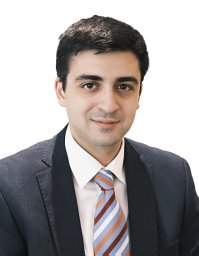 Ali Safa合作论文数Imec and KU Leuven, Leuven, Belgium17Vahid Tavakol合作论文数17
 Georges Gielen合作论文数Department of Electrical Engineering, Faculty of Engineering Science, Katholieke Universiteit Leuven15
 Francky Catthoor合作论文数Assiocated Division ESAT-INSYS, Integrated Systems, Department of Electrical Engineering, Catholic University of Leuven;IMEC15
 Pawel Barmuta合作论文数Department of Electrical Engineering, KU Leuven;c;Department of Electrical Engineering, KU Leuven14
 W. De Raedt合作论文数IMEC14
 Guy A E Vandenbosch合作论文数Faculty of Engineering Science, KU Leuven14
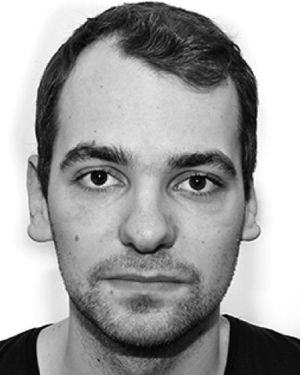 Dries Kil合作论文数13
 Meng Zhang合作论文数13
 Mohammad Mosalanejad合作论文数Inter-University Microelectronics Center11
 Charlotte Soens合作论文数IMEC10
 Gertjan Maenhout合作论文数KU Leuven9
 Siddhartha Sinha合作论文数9
 Robert Puers合作论文数Departement Elektrotechniek, KU Leuven7
 Hichem Sahli合作论文数Department of Electronics and Informatics, Faculty of Applied Sciences, Vrije Universiteit Brussel7
 Steven Brebels合作论文数7
 Zhuangzhuang Liu合作论文数Dept Mat Engn, Katholieke Univ Leuven6Lars Keuninckx合作论文数6
 Arkadiusz Lewandowski合作论文数National Institute of Standards and Technology6
 Bob Puers合作论文数5
 Johan Stiens合作论文数5
 Maarten Cauwe合作论文数5
 Tim Verbelen合作论文数VERSES AI Research Lab5Heinrich Trischler合作论文数4Feng Qi (祁峰)合作论文数4
 Luigi Brancato合作论文数4
 Piet Wambacq合作论文数Imec4
 Miguel Glassee合作论文数4
 Akshay Visweswaran合作论文数IMEC, Leuven, Belgium3
 Matthias Hartmann合作论文数3Schlaffer, E.合作论文数3
 G. Carchon合作论文数3Irina Jäger合作论文数3
 Amin Enayati合作论文数ARC Research3
 Giovanni Crupi合作论文数Dipartimento di Fisica della Materia e Ingegneria Elettronica, University of Messina3
 Harrie A. C. Tilmans合作论文数Interuniversity Micro-Electronics Center3
 Kristof Vaesen合作论文数RFCDM-SSET, IMEC3G. Koers合作论文数2J. B. Mills合作论文数2qingwen feng合作论文数2Daniel Schlick合作论文数2




