We argue that the Cold War contributed to the inclusive growth of the post-war decades. On the labor-demand side, we isolate exogenous shifts in military procurement across states and firms. We show that military procurement increases manufacturing employment and reduces inequality. Overall, the 1950s-to-1990s decline in defense production explains roughly one-quarter of the decline in manufacturing employment and nearly one-tenth of the rise of top-ten income share. On the labor-supply side, the Cold-War-era draft removed millions of young men from the labor force, significantly reducing young male civilian unemployment. Military procurement also increased voter support for hawkish foreign policy. Institutional subscribers to the NBER working paper series, and residents of developing countries may download this paper without additional charge at www.nber.org.
We argue that the Democratic Party's evolution on economic policy helps explain partisan realignment by education. First, we document that educated Americans differentially oppose "predistribution" (e.g., job guarantees, higher minimum wages, protectionism, and stronger unions), while the educational gradient for redistribution (taxes and transfers) is close to zero. These relationships have been largely unchanged since the 1940s. Second, focusing on politicians and donors as key party actors, we show that the Democratic Party has moved away from predistribution since the 1970s. The number of predistribution bills introduced by Democratic House Speakers has declined by half since the 1970s. Unions-the traditional lobbying force for predistribution-see their share of Democratic Party PAC donations decline from 90% to 40% from 1968 to 1980, following 1970s legislation that facilitated corporate PAC donations. From 1980 onward, the Democrats rely increasingly on individual contributions from educated donors relative to the Republicans. We show the increased reliance on corporate PACs and educated donors is driven by the rise of a self-described "New Democrat'' faction particularly conservative on predistribution and social issues. Finally, we trace the reaction of voters to these changes in the Democratic Party. Less-educated Americans begin to leave the party in the 1970s, after decades of serving as its base. We also show that in the crucial transition period of the 1970s through 1990s, New Democrat candidates outperform other Democrats among more-educated voters in both survey questions and actual Congressional elections. As the New Democrats are more socially conservative than other Democrats, their success with educated voters suggests that social issues alone cannot explain educational realignment.
We present the first estimates of long-run trends in intergenerational relative mobility for samples that are representative of the full U.S.-born population. Harmonizing all surveys that ask about father's occupation and own family income, we develop a mobility measure that allows for the inclusion of non-whites and women for the 1910s–1970s birth cohorts. We show a robust increase in mobility between the 1910s and 1940s cohorts, about half of which is driven by absolute convergence in racial income gaps. We also find that excluding Black Americans, particularly Black women, considerably overstates mobility throughout the 20th century.
Why have white, less educated voters left the Democratic Party over the past few decades? Scholars have proposed ethnocentrism, social issues and deindustrialization as potential answers. We highlight the role played by the 1994 North American Free Trade Agreement (NAFTA). In event-study analysis, we demonstrate that counties whose 1990 employment depended on industries vulnerable to NAFTA suffered large and persistent employment losses relative to other counties. These losses begin in the mid-1990s and are only modestly offset by transfer programs. While exposed counties historically voted Democratic, in the mid-1990s they turn away from the party of the president (Bill Clinton) who ushered in the agreement and by 2000 vote majority Republican in House elections. Employing a variety of micro-data sources, including 1992-1994 respondent-level panel data, we show that protectionist views predict movement toward the GOP in the years that NAFTA is debated and implemented. This shift among protectionist respondents is larger for whites (especially men and those without a college degree) and those with conservative social views, suggesting an interactive effect whereby racial identity and social-issue positions mediate reactions to economic policies.
Ilyana Kuziemko of Princeton University and Suresh Naidu of Columbia University review “The Rise and Fall of the Neoliberal Order: America and the World in the Free Market Era” by Gary Gerstle. The Econlit abstract of this book begins: “Examines the history of the political order that took shape under Ronald Reagan and achieved dominance under Bill Clinton in the 1990s and early 2000s, highlighting the sharp distinction of this political order from those that preceded it.”
If individuals evaluate outcomes relative to the status quo, then a social planner may limit redistribution from rich to poor even in the absence of moral hazard.We present two experiments suggesting that individuals, placed in the position of a social planner, do in fact respect the reference points of others.First, subjects are given the opportunity to redistribute unequal, unearned initial endowments between two anonymous recipients.They redistribute significantly less when the recipients know the initial endowments (and thus may have formed corresponding reference points) than when the recipients do not know (when we observe near-complete redistribution).Subjects who are themselves risk-seeking over losses drive the effect, suggesting they project their own loss-aversion onto the recipients.In a separate experiment, respondents are asked to choose a tax rate for someone who (due to luck) became rich either five or one year(s) ago.Subjects faced with the five-year scenario choose a lower tax rate, indicating respect for the more deeply embedded (five-year) reference point.Our results thus suggest that respect for reference points of the wealthy may help explain why voters demand less redistribution than standard models predict.
We study distributional preferences in larger “societies”. We conduct experiments via Mechanical Turk, in which subjects choose between two income distributions, each with seven (or more) individuals, with hypothetical incomes that aim to approximate the actual distribution of income in the United States. In contrast to prior work, our design allows us to flexibly capture the particular distributional concerns of subjects. Consistent with standard maximin (Rawlsian) preferences, subjects select distributions in which the bottom individual’s income is higher (but show little regard for lower incomes above the bottom ranking). In contrast to standard models, however, we find that subjects select distributions that lower the top individual’s income, but not other high incomes. Finally, we provide evidence of “locally competitive” preferences—in most experimental sessions, subjects select distributions that lower the income of the individual directly above them, whereas the income of the individual two positions above has little effect on subjects’ decisions. Our findings suggest that theories of inequality aversion should be adapted to account for individuals’ aversion to “topmost” and “local” disadvantageous inequality.
A vast theoretical literature in public finance has studied the desirability of capital taxation. This discussion largely ignores the political feasibility of taxing wealth. We provide, to our knowledge, the first investigation of individuals' preferences over jointly taxing income and wealth. We provide subjects with a set of hypothetical individuals' incomes and wealth and elicit subjects' preferred (absolute) tax bill for each individual. Our method allows us to unobtrusively map both income earned and accumulated wealth into desired tax levels. Our regression results yield roughly linear desired tax rates on income of about 14%. Respondents' suggested tax rates indicate positive desired wealth taxation. When we distinguish between sources of wealth we find that, in line with recent theoretical arguments, subjects' implied tax rate on wealth is 3% when the source of wealth is inheritance, far higher than the 0.8% rate when wealth is from savings. Textual analysis of respondents' justifications for their tax rates imply limited concern for the elasticity of tax bases with respect to net-of-tax rates.
View help for Summary We analyze randomized online survey experiments providing interactive, customized information on US income inequality, the link between top income tax rates and economic growth, and the estate tax. The treatment has large effects on views about inequality but only slightly moves tax and transfer policy preferences. An exception is the estate tax—informing respondents of the small share of decedents who pay it doubles support for it. The small effects for all other policies can be partially explained by respondents' low trust in government and a disconnect between concerns about social issues and the public policies meant to address them.(JEL D31, D72, H23, H24)
A long-standing debate in political economy is whether voters are driven primarily by economic self-interest or by less pecuniary motives like ethnocentrism. Using newly available data, we reexamine one of the largest partisan shifts in a modern democracy: Southern whites' exodus from the Democratic Party. We show that defection among racially conservative whites explains the entire decline from 1958 to 1980. Racial attitudes also predict whites' earlier partisan shifts. Relative to recent work, we find a much larger role for racial views and essentially no role for income growth or (non-race-related) policy preferences in explaining why Democrats “lost” the South. (JEL D72, J15, N42)
The birth of a first child is a major life transition, particularly for women, and recent work documents it still leads to large declines in female labor supply.We make three related arguments about women's ability to predict the effects of motherhood on their employment.First, we present a variety of evidence from the US and UK that modern cohorts of women underestimate these effects.This underestimate is largest for those with college degrees and who themselves had working mothers.We show that this optimism about post-baby working life is new; earlier cohorts of mothers underestimated their post-baby labor supply.Second, an important implication of this finding is that, at the time they are making decisions over post-secondary education, young women underestimate the probability they will be stay-at-home mothers.This underestimation thus provides a potential resolution to the puzzle of why, despite plateauing labor-force attachment since 1990, women in the US continue to increase human-capital investment.Third, we explain why women today underestimate maternal employment costs using a two-generation model alongside evidence that the costs have recently increased after decades of decline.In our model, women, especially those who saw their own mothers work, invest in human capital under the assumption that the employment costs of motherhood would continue to fall.We show that roughly in the 1980s, however, key costs begin to rise.
Medicaid programs increasingly finance competing, capitated managed care plans rather than administering fee-for-service (FFS) programs. We study how the transition from FFS to managed care affects high- and low-cost infants (blacks and Hispanics, respectively). We find that black-Hispanic disparities widen—e.g., black mortality and preterm birth rates increase by 15 percent and 7 percent, respectively, while Hispanic mortality and preterm birth rates decrease by 22 percent and 7 percent, respectively. Our results are consistent with a risk-selection model whereby capitation incentivizes competing plans to offer better (worse) care to low- (high-) cost clients to retain (avoid) them in the future. (JEL H75, I12, I18, I38, J13, J15)
After decades of convergence, the gender gap in employment outcomes has recently plateaued in many rich countries, despite the fact that women have increased their investment in human capital over this period. We propose a hypothesis to reconcile these two trends: that when they are making key human capital decisions, women in modern cohorts underestimate the impact of motherhood on their future labor supply. Using an event-study framework, we show substantial and persistent employment e ffects of motherhood in U.K. and U.S. data. We then provide evidence that women do not anticipate these e ffects. Upon becoming parents, women (and especially more educated women) adopt more negative views toward female employment (e.g., they are more likely to say that women working hurts family life), suggesting that motherhood serves as an information shock to their beliefs. Women on average (and, again, more educated women in particular) report that parenthood is harder than they expected.We then look at longer horizons|are young women’s expectations about future labor supply correct when they make their key educational decisions? In fact, female high school seniors are increasingly and substantially overestimating the likelihood they will be in the labor market in their thirties, a sharp reversal from previous cohorts who substantially underestimated their future labor supply. Finally, we specify a model of women’s choice of educational investment in the face of uncertain employment costs of motherhood, which demonstrates that our results can be reconciled only if these costs increased unexpectedly across generations. We end by documenting a collage of empirical evidence consistent with such a trend.
After generations of loyalty, Southern whites left the Democratic party en masse in the second half of the twentieth century. To what extent did Democrats' 1960s Civil Rights initiatives trigger this exodus, versus Southern economic development, rising political polarization or other trends that made the party unattractive to Southern whites? The lack of data on racial attitudes and political preferences spanning the 1960s Civil Rights era has hampered research on this central question of American political economy. We uncover and employ such data, drawn from Gallup surveys dating back to 1958. From 1958 to 1961, conservative racial views strongly predict Democratic identification among Southern whites, a correlation that disappears after President Kennedy introduces sweeping Civil Rights legislation in 1963. We find that defection among racially conservative whites explains all (three-fourths) of the decline in relative white Southern Democratic identification between 1958 and 1980 (2000). We offer corroborating quantitative analysis—drawn from sources such as Gallup questions on presidential approval and hypothetical presidential match-ups as well as textual analysis of newspapers—for the central role of racial views in explaining white Southern dealignment from the Democrats as far back as the 1940s.
Despite the large increases in economic inequality since 1970, American survey respondents exhibit no increase in support for redistribution, contrary to the predictions from standard theories of redistributive preferences. We replicate these results but further demonstrate substantial heterogeneity by demographic group. In particular, the two groups that have most moved against income redistribution are the elderly and African Americans. We find little evidence that these subgroup trends are explained by relative economic gains or growing cultural conservatism, two common explanations. We further show that the trend among the elderly is uniquely American, at least relative to other developed countries with comparable survey data. While we are unable to provide definitive evidence on the cause of these two groups' declining redistributive support, we provide additional correlations that may offer fruitful directions for future research on the topic. One story consistent with the data on elderly trends is that older Americans worry that redistribution will come at their expense, in particular through cuts to Medicare. We find that the elderly have grown increasingly opposed to government provision of health insurance and that controlling for this tendency explains about 40 percent of their declining support for redistribution. For blacks, controlling for their declining support for race-targeted aid explains nearly 45 percent of their differential decline in redistributive preferences, which raises a further question: Why has support for race-targeted aid fallen during a period when black economic catch-up to whites has stalled?
We analyze randomized online survey experiments providing interactive, customized information on US income inequality, the link between top income tax rates and economic growth, and the estate tax. The treatment has large effects on views about inequality but only slightly moves tax and transfer policy preferences. An exception is the estate tax—informing respondents of the small share of decedents who pay it doubles support for it. The small effects for all other policies can be partially explained by respondents' low trust in government and a disconnect between concerns about social issues and the public policies meant to address them. (JEL D31, D72, H23, H24)
If individuals—even the wealthy—are loss-averse relative to their reference point, then redistribution could reduce welfare even in the absence of moral hazard. We test whether this consideration affects the redistributive decisions of individuals acting as social planners. Subjects redistribute exogenous, unequal endowments between two strangers significantly less when the strangers know the initial endowments than when they do not (when in fact we observe near complete redistribution). Subjects who are themselves more loss-averse drive this effect. In a separate experiment, respondents choose a tax rate for someone who (due to luck) became rich five years (one year) ago. Respondents reward the more deeply embedded reference point in the five-year scenario with a lower tax rate. Our results offer a new explanation for why voters prefer lower levels of redistribution than standard models predict. JEL Classification Numbers: C9, D63, H21, H23.
The presence of children in immigrant households can influence the assimilation of their parents, through either human capital transfers from children to parents (parents learning from their children) or the assistance children can provide in navigating economic life in the destination country (parents leaning on their children). We examine the relationship between the presence of children in U.S. immigrant households and the human capital acquisition of their immigrant from 1850 to 2010. We first show that immigrants who arrived in the Great Migration of the late nineteenth and early twentieth centuries were substantially less likely to arrive with children than more recent immigrants. We then show that assimilation appears slower for most recent cohorts than those that arrived during the Great Migration, though in both eras cohort quality declines over time. Finally, we show that the immigrant children of the earlier immigrants were associated with more assimilation (less “leaning” and more “learning”) than were the children of post-1960 immigrants.
Page 1. No. 517 THE QUAR T E RLY JO U RNAL OF EC ONO MICS February 2014 THE QUARTERLY JOURNAL OF ECONOMICS FOUNDED 1886 ARTICLES GABRIEL CHODOROW-REICH The Employment Effects of Credit Market Disruptions: Firm-level Evidence from the 2008–9 Financial Crisis 1 LOUKAS KARABARBOUNIS AND BRENT NEIMAN The Global Decline of the Labor Share 61 ILYANA KUZIEMKO, RYAN W. BUELL, TALY REICH, AND MICHAEL I. NORTON ''Last-Place Aversion'': Evidence and Redistributive Implications 105 STELIOS MICHALOPOULOS AND ELIAS PAPAIOANNOU National Institutions and Subnational Development in Africa 151 JOSEPH VAVRA Inflation Dynamics and Time-Varying Volatility: New Evidence and an SS Interpretation 215 NEIL WALLACE Optimal Money Creation in ''Pure Currency'' Economies: A Conjecture 259 …
 Ebonya L. Washington合作论文数Columbia Population Research Center, Columbia University in the City of New York5
 Suresh Naidu合作论文数School of International and Public Affairs, Columbia University;Department of Economics, Columbia University4
 Michael I. Norton合作论文数Harvard Business School, Harvard University4
 Raymond Fisman合作论文数Department of Economics, Boston University4
 Katherine Meckel合作论文数Department of Economics, Division of Social Sciences, University of California, San Diego3
 Joseph Ferrie合作论文数Department of Economics, Weinberg College of Arts and Sciences, Northwestern University3
 Emmanuel Saez合作论文数Department of Economics, University of California, Berkeley3
 Ryan W. Buell合作论文数Harvard Business School, Harvard University3
 Taly Reich合作论文数Yale School of Management, Yale University2
 Rossin-Slater Maya合作论文数Health Research & Policy Department, Stanford University2
 Jessica Pan合作论文数Department of Economics, Faculty of Arts and Social Sciences, National University of Singapore2
 Claudia Goldin (克劳迪娅·戈尔丁)合作论文数Department of Economics, Faculty of Arts and Sciences, Harvard University2
 Lawrence Katz合作论文数Department of Economics, Faculty of Arts and Sciences, Harvard University;National Bureau of Economic Research2
 Stefanie Stantcheva合作论文数Department of Economics, Harvard University/Harvard Kennedy School, Harvard University2
 Eric Werker合作论文数Research and Advocacy;Refugee Law Project;Research and Advocacy|Refugee Law Project2
 Jimmy Charité合作论文数1Jimmy Charite合作论文数1Stephen B. Billings合作论文数1Jiwon Choi合作论文数1vivekinan ashok合作论文数1j g brown合作论文数1
 Silvia Vannutelli合作论文数Northwestern University1
 Elisa Jacome合作论文数Stanford Institute for Economic Policy Research, Stanford University1
 Kewei Zhang (张珂玮)合作论文数School of Economics, Renmin University of China1
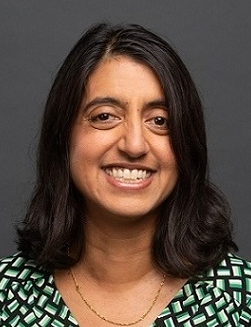 Seema Jayachandran合作论文数Department of Economics, Princeton University;School of Public and International Affairs, Princeton University;National Bureau of Economic Research;Abdul Latif Jameel Poverty Action Laboratory1
 Patrick Kline合作论文数Department of Economics, University of California, Berkeley1
 Enrico Moretti合作论文数Haas School of Business, University of California, Berkeley/Department of Economics, University of California, Berkeley1
 Henrik Kleven合作论文数Princeton School of Public and International Affairs, Princeton University1
 Joseph Vavra合作论文数Booth School of Business, The University of Chicago;National Bureau of Economic Research1
 Brent Neiman合作论文数Booth School of Business, The University of Chicago1
 Neil Wallace合作论文数Department of Economics, College of the Liberal Arts, The Pennsylvania State University1
 Mark Duggan合作论文数Department of Economics, School of Humanities and Sciences, Stanford University;Institute for Economic Policy Research, Stanford University1
 Gavin Wright合作论文数The UCL Institute of Hepatology, University College London1
 Loukas Karabarbounis合作论文数Department of Economics, College of Liberal Arts, University of Minnesota;Federal Reserve Bank of Minneapolis;National Bureau of Economic Research;Centre for Economic Policy Research1
 Stelios Michalopoulos合作论文数Department of Economics, Brown University1
 Camille Landais合作论文数Department of Economics, London School of Economics and Political Science/International Inequalities Institute, London School of Economics and Political Science/School of Public Policy, London School of Economics and Political Science 1
 Caroline Hoxby合作论文数Department of Economics, Stanford University1
 Gabriel Chodorow-Reich合作论文数Department of Economics, Faculty of Arts and Sciences, Harvard University1
 Elias Papaioannou合作论文数Dartmouth College1Esben Anton Schultz合作论文数1
 Alan Krueger合作论文数Survey Research Center, Princeton University1William Gui Woolston合作论文数1




