Suppressing errors is the central challenge for useful quantum computing, requiring quantum error correction for large-scale processing. However, the overhead in the realization of error-corrected “logical” qubits, where information is encoded across many physical qubits for redundancy, poses significant challenges to large-scale logical quantum computing. Here we report the realization of a programmable quantum processor based on encoded logical qubits operating with up to 280 physical qubits. Utilizing logical-level control and a zoned architecture in reconfigurable neutral atom arrays, our system combines high two-qubit gate fidelities, arbitrary connectivity, as well as fully programmable single-qubit rotations and mid-circuit readout. Operating this logical processor with various types of encodings, we demonstrate improvement of a two-qubit logic gate by scaling surface code distance from d=3 to d=7, preparation of color code qubits with break-even fidelities, fault-tolerant creation of logical GHZ states and feedforward entanglement teleportation, as well as operation of 40 color code qubits. Finally, using three-dimensional [[8,3,2]] code blocks, we realize computationally complex sampling circuits with up to 48 logical qubits entangled with hypercube connectivity with 228 logical two-qubit gates and 48 logical CCZ gates. We find that this logical encoding substantially improves algorithmic performance with error detection, outperforming physical qubit fidelities at both cross-entropy benchmarking and quantum simulations of fast scrambling. These results herald the advent of early error-corrected quantum computation and chart a path toward large-scale logical processors.
The exploration of topologically-ordered states of matter is a long-standing goal at the interface of several subfields of the physical sciences. Such states feature intriguing physical properties such as long-range entanglement, emergent gauge fields and non-local correlations, and can aid in realization of scalable fault-tolerant quantum computation. However, these same features also make creation, detection, and characterization of topologically-ordered states particularly challenging. Motivated by recent experimental demonstrations, we introduce a paradigm for quantifying topological states-locally error-corrected decoration (LED)-by combining methods of error correction with ideas of renormalization-group flow. Our approach allows for efficient and robust identification of topological order, and is applicable in the presence of incoherent noise sources, making it particularly suitable for realistic experiments. We demonstrate the power of LED using numerical simulations of the toric code under a variety of perturbations. We subsequently apply it to an experimental realization, providing new insights into a quantum spin liquid created on a Rydberg-atom simulator. Finally, we extend LED to generic topological phases, including those with non-abelian order.
Neutral atom arrays have recently emerged as a promising platform for quantum information processing. One important remaining roadblock for the large-scale application of these systems is the ability to perform error-corrected quantum operations. To entangle the qubits in these systems, atoms are typically excited to Rydberg states, which could decay or give rise to various correlated errors that cannot be addressed directly through traditional methods of fault-tolerant quantum computation. In this work, we provide the first complete characterization of these sources of error in a neutral-atom quantum computer and propose hardware-efficient, fault-tolerant quantum computation schemes that mitigate them. Notably, we develop a novel and distinctly efficient method to address the most important errors associated with the decay of atomic qubits to states outside of the computational subspace. These advances allow us to significantly reduce the resource cost for fault-tolerant quantum computation compared to existing, general-purpose schemes. Our protocols can be implemented in the near-term using state-of-the-art neutral atom platforms with qubits encoded in both alkali and alkaline-earth atoms.
By leveraging shared entanglement between a pair of qubits, one can teleport a quantum state from one particle to another. Recent advances have uncovered an intrinsically many-body generalization of quantum teleportation, with an elegant and surprising connection to gravity. In particular, the teleportation of quantum information relies on many-body dynamics, which originate from strongly interacting systems that are holographically dual to gravity; from the gravitational perspective, such quantum teleportation can be understood as the transmission of information through a traversable wormhole. Here, we propose and analyze a new mechanism for many-body quantum teleportation???dubbed peaked-size teleportation. Intriguingly, peaked-size teleportation utilizes precisely the same type of quantum circuit as traversable wormhole teleportation yet has a completely distinct microscopic origin: It relies upon the spreading of local operators under generic thermalizing dynamics and not gravitational physics. We demonstrate the ubiquity of peaked-size teleportation, both analytically and numerically, across a diverse landscape of physical systems, including random unitary circuits, the Sachdev-Ye-Kitaev model (at high temperatures), one-dimensional spin chains, and a bulk theory of gravity with stringy corrections. Our results pave the way toward using many-body quantum teleportation as a powerful experimental tool for (i) characterizing the size distributions of operators in strongly correlated systems and (ii) distinguishing between generic and intrinsically gravitational scrambling dynamics. To this end, we provide a detailed experimental blueprint for realizing many-body quantum teleportation in both trapped ions and Rydberg atom arrays; effects of decoherence and experimental imperfections are analyzed.
We survey some recent work on topological quantum computation with gapped boundaries and boundary defects and list some open problems.
Neural network-based machine learning has recently proven successful for many complex applications ranging from image recognition to precision medicine. However, its direct application to problems in quantum physics is challenging due to the exponential complexity of many-body systems. Motivated by recent advances in realizing quantum information processors, we introduce and analyse a quantum circuit-based algorithm inspired by convolutional neural networks, a highly effective model in machine learning. Our quantum convolutional neural network (QCNN) uses only O (log( N )) variational parameters for input sizes of N qubits, allowing for its efficient training and implementation on realistic, near-term quantum devices. To explicitly illustrate its capabilities, we show that QCNNs can accurately recognize quantum states associated with a one-dimensional symmetry-protected topological phase, with performance surpassing existing approaches. We further demonstrate that QCNNs can be used to devise a quantum error correction scheme optimized for a given, unknown error model that substantially outperforms known quantum codes of comparable complexity. The potential experimental realizations and generalizations of QCNNs are also discussed.
We present an exactly solvable lattice Hamiltonian to realize gapped boundaries of Kitaev's quantum double models for Dijkgraaf-Witten theories. We classify the elementary excitations on the boundary, and systematically describe the bulk-to-boundary condensation procedure. We also present the parallel algebraic/categorical structure of gapped boundaries.
Defects between gapped boundaries provide a possible physical realization of projective non-abelian braid statistics. A notable example is the projective Majorana/parafermion braid statistics of boundary defects in fractional quantum Hall/topological insulator and superconductor heterostructures. In this paper, we develop general theories to analyze the topological properties and projective braiding of boundary defects of topological phases of matter in two spatial dimensions. We present commuting Hamiltonians to realize defects between gapped boundaries in any $(2+1)D$ untwisted Dijkgraaf-Witten theory, and use these to describe their topological properties such as their quantum dimension. By modeling the algebraic structure of boundary defects through multi-fusion categories, we establish a bulk-edge correspondence between certain boundary defects and symmetry defects in the bulk. Even though it is not clear how to physically braid the defects, this correspondence elucidates the projective braid statistics for many classes of boundary defects, both amongst themselves and with bulk anyons. Specifically, three such classes of importance to condensed matter physics/topological quantum computation are studied in detail: (1) A boundary defect version of Majorana and parafermion zero modes, (2) a similar version of genons in bilayer theories, and (3) boundary defects in $\mathfrak{D}(S_3)$.
This Letter discusses topological quantum computation with gapped boundaries of two-dimensional topological phases. Systematic methods are presented to encode quantum information topologically using gapped boundaries, and to perform topologically protected operations on this encoding. In particular, we introduce a new and general computational primitive of topological charge measurement and present a symmetry-protected implementation of this primitive. Throughout the Letter, a concrete physical example, the Z_{3} toric code [D(Z_{3})], is discussed. For this example, we have a qutrit encoding and an abstract universal gate set. Physically, gapped boundaries of D(Z_{3}) can be realized in bilayer fractional quantum Hall 1/3 systems. If a practical implementation is found for the required topological charge measurement, these boundaries will give rise to a direct physical realization of a universal quantum computer based on a purely Abelian topological phase.
We present quantum algorithms to efficiently perform discriminant analysis for dimensionality reduction and classification over an exponentially large input data set. Compared with the best-known classical algorithms, the quantum algorithms show an exponential speedup in both the number of training vectors M and the feature space dimension N. We generalize the previous quantum algorithm for solving systems of linear equations (2009 Phys. Rev. Lett. 103 150502) to efficiently implement a Hermitian chain product of k trace-normalized N x N Hermitian positive-semidefinite matrices with time complexity of O(log(N)). Using this result, we perform linear as well as nonlinear Fisher discriminant analysis for dimensionality reduction over M vectors, each in an N-dimensional feature space, in time O(p polylog(MN)/is an element of(3)), where is an element of denotes the tolerance error, and p is the number of principal projection directions desired. We also present a quantum discriminant analysis algorithm for data classification with time complexity O(log(MN)/is an element of(3)).
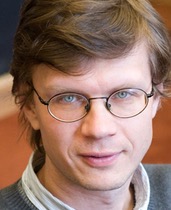 Mikhail Lukin合作论文数Lyman Laboratory, Department of Physics, Harvard University7
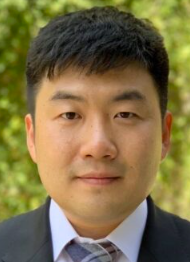 Soonwon Choi合作论文数Department of Physics, Massachusetts Institute of Technology;Center for Theoretical Physics, Massachusetts Institute of Technology4
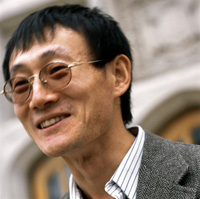 Zhenghan Wang合作论文数Department of Mathematics, College of Letters and Science, University of California, Santa Barbara;Microsoft Corporation;Perimeter Institute4
 Nishad Maskara合作论文数Div Phys Math & Astron, Calif Inst Technol Pasadena3
 Meng Cheng (程蒙)合作论文数Department of Physics, Yale University3Hengyun Zhou合作论文数Harvard University3Nathaniel Leitao合作论文数2
 Giulia Semeghini合作论文数Harvard John A. Paulson School of Engineering and Applied Sciences, Harvard University2
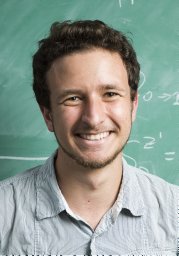 Dolev Bluvstein合作论文数Harvard Univ, Dept Phys, Cambridge, MA 02138 USA2
 Leigh S. Martin合作论文数2Sepehr Ebadi合作论文数1
 Alexandra Geim合作论文数Department of Physics, Harvard University;Quantum Optics Laboratory, Harvard University1Sophie H Li合作论文数1Thomas Schuster合作论文数1
 Juan Pablo Bonilla Ataides合作论文数1
 Simon J. Evered合作论文数1
 Bryce Kobrin合作论文数1
 Xun Gao (高珣)合作论文数School of Medicine, Southeast University;Zhongda Hospital Southeast University1Matthew Tyler合作论文数1Oksana Makarova合作论文数Harvard University (United States)1
 Emil T. Khabiboulline合作论文数Dept Phys, Harvard Univ1
 Minh C. Tran合作论文数Nuffield Division of Anaesthetics, University of Oxford1
 Madelyn Cain合作论文数Dept Phys, MIT1
 Alexander Keesling合作论文数QuEra Computing Inc.1
 Norbert M. Linke合作论文数College Pk, Univ Maryland1
 Ping Gao (高苹)合作论文数Kavli Institute for Theoretical Sciences, University of Chinese Academy of Sciences1
 Marcin Kalinowski合作论文数College Pk, Univ Maryland1
 Tom Manovitz合作论文数Dept Phys Complex Syst, Weizmann Inst Sci1
 Dominik Hangleiter合作论文数College Pk, NIST1
 Christopher Monroe合作论文数Department of Physics, University of Maryland1
 Hannes Pichler合作论文数Institute for Quantum Optics and Quantum Information, Austrian Academy of Sciences;Institute for Theoretical Physics, University of Innsbruck1
 Joonhee Choi合作论文数Department of Electrical Engineering, Stanford University1
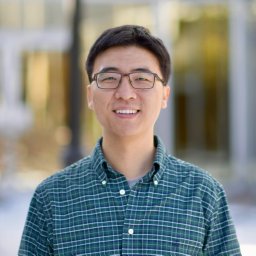 Shengtao Wang合作论文数University of Michigan, Tsinghua University1
 Luming Duan (段路明)合作论文数Institute for Interdisciplinary Information Sciences, Tsinghua University1
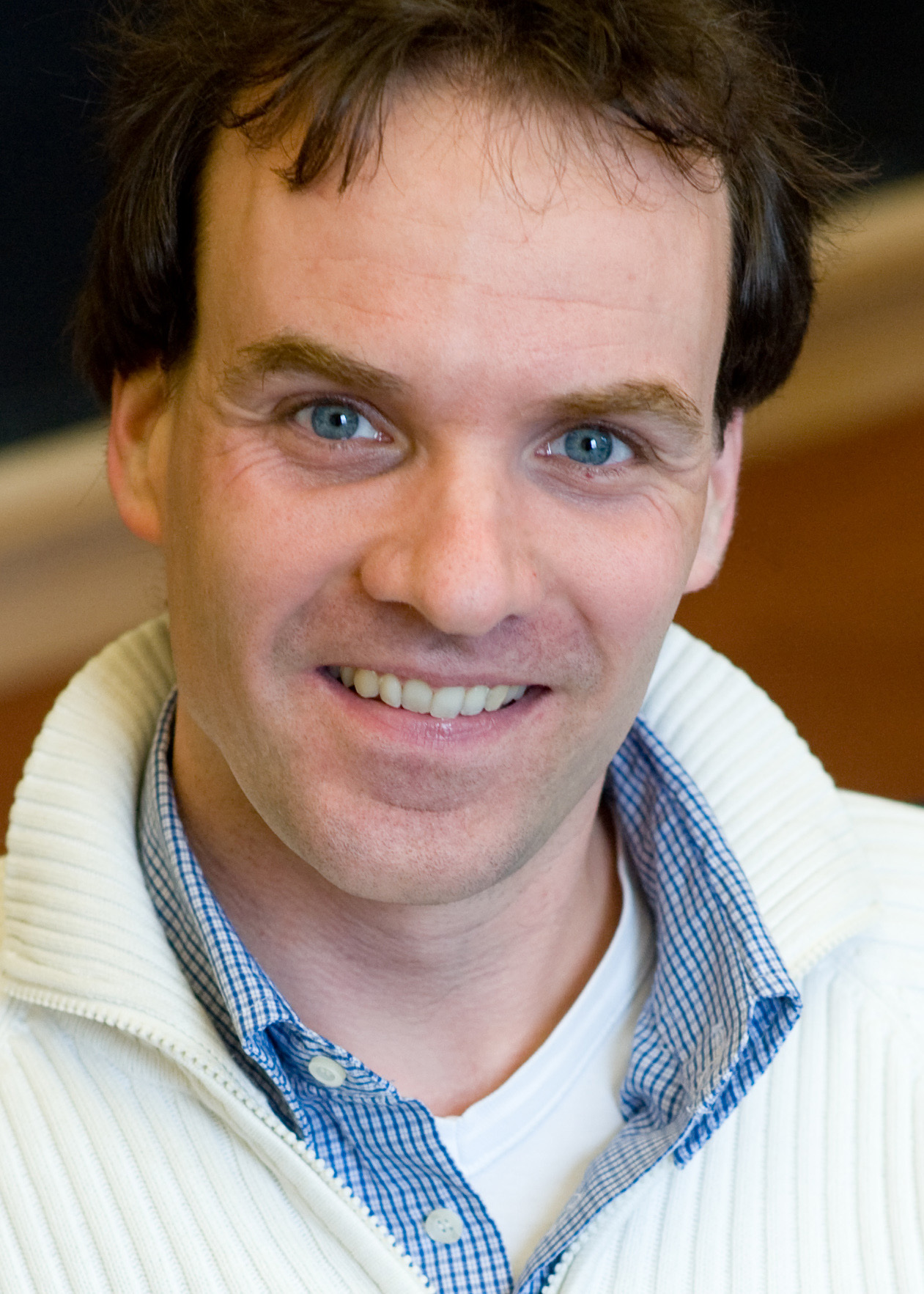 Markus Greiner合作论文数Department of Physics, Harvard University;Max Planck-Harvard Research Center for Quantum Optics, Harvard University;Center for Ultracold Atoms, Harvard University1
 Harry Levine合作论文数Department of Molecular Biology, Wellcome Research Laboratories1
 Vladan Vuletić合作论文数Department of Physics, Massachusetts Institute of Technology;Research Laboratory of Electronics, Massachusetts Institute of Technology;QuEra Computing Inc.1
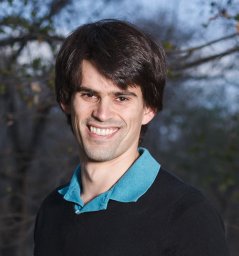 Michael Gullans合作论文数Nanoscale Device Characterization Division, National Institute of Standards and Technology;Joint Center for Quantum Information and Computer Science1
 Norman Y. Yao合作论文数Department of Physics, Harvard University1
 Susanne Yelin合作论文数Department of Physics, Harvard University;Department of Physics, College of Liberal Arts and Sciences, University of Connecticut;Institute for Theoretical Atomic, Molecular, and Optical Physics, Harvard-Smithsonian Center for Astrophysics1
 Beni Yoshida合作论文数Department of Physics;Massachusetts Institute of Technology;Department of Physics, Massachusetts Institute of Technology1




