Artificial intelligence (AI) is transforming assessment practices in engineering education, challenging educators to determine when and how AI should be integrated into learning and evaluation. Debates often centre on fears of misconduct and data privacy versus the uncritical embrace of AI tools. Since assessment not only certifies performance but also shapes learning and professional identity, these polarized views risk obscuring a key question: how assessment design can meaningfully foster ethical leadership through AI. This paper presents ongoing work on a didactic decision-making framework that supports educators in critically reflecting on AI’s role in assessment and making context-sensitive choices aligned with ethical and pedagogical principles. The framework builds on constructive alignment and established assessment quality criteria, while addressing the particular demands of engineering education. Using a mixed-methods approach—combining questionnaires and semi-structured interviews—the study explores educators’ perceptions of the framework’s relevance and practicality. Preliminary findings suggest it enhances systematic reflection, transparency, and confidence in assessment planning. The paper concludes that AI should be viewed not as a universal risk or solution, but as a pedagogical factor requiring critical, context-aware integration to promote responsible innovation and ethical leadership in engineering education. This ongoing study contributes to the development of an authentic assessment culture that prepares future engineers for responsible innovation through AI in engineering education.
Universities are key actors in the implementation, testing, and further development of Future Skills. Ehlers Triple Helix-Model provides a compelling conceptual framework for this endeavor. The study examines an integrative approach of competence development grounded in a tailored didactic approach. Conducted as an empirical Scholarship of Teaching and Learning (SoTL) project, the mixed-methods study is situated within an engineering science project-based course. Data were collected through expert interviews, student focus groups, and a structured questionnaire exploring how didactic approaches in higher education can promote the integrative development of Future Skills and assessing the relevance of selected competences to the course. Finally, the course is evaluated with a Teaching Analysis Poll (TAP). The study shows that the course fosters professional and transversal skills which partially match Ehlers Future Skills. Teachers and students have a rather similar view of the competences promoted by the chosen didactic approach. The results confirm the initial hypothesis while also highlighting areas for further development of Future Skills in alignment with discipline-specific needs. The study aims to develop and evaluate a didactic best practice example to be derived for development of Future Skills in an integrative approach. Despite its exploratory nature and limitation to a single course, the study reinforces the broader discourse on the necessity of curricular reform in higher education − shifting from content transmission to competence-oriented didactic approaches in higher education.
The design-related behaviour of structural dynamics for electric-assisted bicycle (e-bike) drive units significantly influences the mechanical system—e.g., vibrations and durability, stresses and loads, or functionality and comfort. Identifying the underlying mechanical principles opens up optimisation possibilities, such as improved e-bike design and user experience. Despite its potential to enhance the system, the structural dynamics of the drive unit have received little research attention to date. To improve the current situation, this paper uses a flexible multibody modelling approach, enabling new insights through virtual trials and analyses that are not feasible solely from measurements. The incorporation of the drive unit’s system-level topology regarding mass, moment of inertia, stiffness, and damping enables the analysis of critical system states. Experiments accompany the analysis and validate the model by demonstrating a load-dependent shift of the first torsional mode around 35 Hz to 60 Hz, capturing comparable resonance frequency ranges up to 6 kHz, and yielding qualitatively consistent peak positions in both steady-state and ramp-up analyses (mean deviations of 0.03% and 0.06%, respectively). Theoretical considerations of the multibody system highlight the effects, and the stated modelling restrictions make the method’s limitations transparent. The key findings are that the drive unit’s structural dynamic behaviour exhibits solely one structural mode until 0.5 kHz, and further 27 modes up to 10 kHz, solely originating due to the multibody arrangement of the drivetrain. These modes are also load-dependent and lead to resonances during operation. In summary, the approach enables engineers, for the first time, to significantly improve the structural dynamics of the e-bike drive unit using a full-scale system model.
We present both design and a mixed method evaluation scheme of a semester-long course for scientific literature work. Focus of this contribution lies on the implementation for an e-learning environment with a clearly structured overview as key requirement, reflecting teaching concepts used, that is designed to reduce complexity of usage. Teaching concepts are derived from Self-Determination Theory and are assumed to provide learning conditions to support an optimal motivation profile by focusing on autonomy support, involvement, and structure. Demand-driven student-teacher communication is possible through hybrid communication structures. Approaches to flexibility are reflected by students’ own choice of research focus. Situated in 5th semester within a bachelor curriculum, Artificial Neural Networks are used as a thematical framework which easily can be adapted to other subjects. Teaching analysis poll is conducted to obtain timely feedback by students to identify helping and hindering factors for learning, followed by a questionnaire reflecting the acquisition of competences.
The engineering department of the Hochschule Bonn Rhein Sieg (University of Applied Sciences) wished to significantly increase the number of English-language courses offered for incoming students, since this would be the basis for participating in international student exchange and build up partnerships with universities abroad. But for lecturers it is a high effort besides their daily work, to shift the scripts and presentation to English; using the correct technical terms. Hence, skilled student assistants were recruited to translate the learning material for more than 20 courses with the help of the artificial intelligence-based translation tool “deep L”, to support the lecturers. The aim was to either switch a full course into English or to offer a mixed language teaching course, where international students have access to the complete material in English and join in exercises in English, while the lecture itself will be held in German. Besides enabling international exchange, switching the language to English in a greater number of modules shall help to promote technical language competencies of the German students. The resulting teaching materials already have been used in international cooperations.
This paper presents a novel approach to address noise, vibration, and harshness (NVH) issues in electrically assisted bicycles (e-bikes) caused by the drive unit. By investigating and optimising the structural dynamics during early product development, NVH can decisively be improved and valuable resources can be saved, emphasising its significance for enhancing riding performance. The paper offers a comprehensive analysis of the e-bike drive unit’s mechanical interactions among relevant components, culminating—to the best of our knowledge—in the development of the first high-fidelity model of an entire e-bike drive unit. The proposed model uses the principles of elastic multi body dynamics (eMBD) to elucidate the structural dynamics in dynamic-transient calculations. Comparing power spectra between measured and simulated motion variables validates the chosen model assumptions. The measurements of physical samples utilise accelerometers, contactless laser Doppler vibrometry (LDV) and various test arrangements, which are replicated in simulations and provide accessibility to measure vibrations onto rotating shafts and stationary structures. In summary, this integrated system-level approach can serve as a viable starting point for comprehending and managing the NVH behaviour of e-bikes.
This contribution presents a competency orientated teaching course and its applicated assessment approach for advanced students in mechanical engineering. Focus lies on the course assessment to explain how the acquired competencies can be evaluated and grading conducted. Assessment of the course consists of a written test and a group presentation of practical results. Grading is done by weighted scoring after evaluating a set of requirements that reflect the intended competencies. The course will be evaluated by Teaching Analysis Poll (TAP) and a questionnaire; the aim is to evaluate how the assessment format affects the acquisition of competencies. As work in progress one anticipated outcome is a subjectively perceived adequate preparation for professional life due to the applicated assessment format. Second, a successful grading method for learning objectives. Based on theoretical background and former course evaluations, it is already known that active discussions among students importantly influences the learning outcome. As conclusion we expect using competency-orientated assessment methods resembling future working situations to increase grading and competence level of students.
This contribution shows, how a practically oriented lab experience can be realized even under pandemic conditions by offering low cost "take home labs", which allow real, practical, and hands-on experience by bringing the lab home and letting students work on experiments. To ensure success, the lab material was well prepared, and the students were tutored via conference tools. The authors present solutions and experiences for two different skill levels. Freshmen in electrical engineering learned to set up electrical circuits on individual bread boards with low-cost equipment, while experienced students in mechanical engineering, had to design, build, and put into practice a "handheld test rig", based on strain gauges, a cheap amplifier, and Arduino, for a freely chosen research task.
To successfully teach students utilizing a project-based learning approach, lecturers need deep technical expertise and experience, soft skills, and didactic competencies, usually obtained over years of a professional career path. In this paper, we show how advanced high potential senior students that participate intensively in international engineering competitions can successfully act as self-reliant peer teachers for first-year students after receiving training in teaching and leadership skills. We explain how such high potential peers can set up a tailor-made project teaching approach based on their content-wise semi-professional expertise. We also highlight their preparation for this task and their own benefits from this activity. In particular, computer-aided design and electronic circuit board design were taught by the peer lecturers based on examples from their expertise in semi-professional formula race car design. At the same time, professors acted solely as mentors and course organizers. Performance analysis showed that not only did the course participants achieve excellent learning outcomes, but also that the peer teachers benefited enormously: In focus groups and interviews we learned that the high potential students obtained a much deeper understanding of the topics they taught self-reliantly. The experience of successfully teaching complex technical knowledge also resulted in increased self-confidence and prepared them to take over responsibility in future leadership positions. Furthermore, various prerequisites for a successful peer teaching approach were identified, e.g., the motivation to teach innovative content required in professional environments and a close long-term connection between student groups and the faculty. In conclusion, our faculty views the participation of expert students in the teaching process as a greatly beneficial addition to the overall course program. It gives student teachers and learners desirable opportunities for new learning experiences and professors the possibility to concentrate on personal mentoring activities.
Motivation to learn is a cornerstone for learning success. It can be promoted through active participation, reference to the topic, and a good learning atmosphere. One way to ensure an active role for the learner is through project-based learning approaches, which offer the opportunity to work on complex tasks that go far beyond classic theoretical modules. A rarely tried approach in an academic context to foster a good learning atmosphere and students' connection to the topic would be to use highly qualified peers as instructors.As we strive to increase the level of understanding, we explore how peer teaching by specially trained senior student teachers can be set up in application-oriented project modules to augment learning outcomes for engineering university learners. To do so, the modules "Applied Computer-Aided Design" and "Applied Electronic Circuit Design" were chosen. We investigate in which respect the learning process is altered if advanced peers act as teachers. We also discuss what abilities are prerequisites for the students to act as peer teachers. They include experience in team leadership and project management, accompanied by strong technical skills.A survey-based analysis shows that participants significantly improved their technical skills compared to their level before the project. Furthermore, the data clearly indicates that learners felt more comfortable participating actively in the course if it was taught by a peer familiar with specific real-world applications compared to when it was led by professors. In addition, students were motivated because they were able to choose their own project as well as being encouraged and assisted in working on their own. In conclusion, we show that course modules taught by specifically trained and selected peer teachers can be a valuable addition to an overall engineering curriculum.
AbstractAn der Hochschule Bonn‐Rhein‐Sieg setzten sich Chemiestudenten freiwillig parallel zum eigentlichen Fachstudium und fachübergreifend mit dem Begriff Nachhaltigkeit auseinander. Die Lehrveranstaltungen zeigen ihnen die gesellschaftlichen Bezüge naturwissenschaftlicher Inhalte und bringen sie dazu, ihr Selbstverständnis als Chemiker zu überdenken.
A traditional way to teach bachelor students in electrical engineering is organized such that theoretical knowledge is predominant in the first year while applications and practical experiences are reserved for later stages of their education. In this contribution, we want to introduce a reverse approach: In a freshmen course at Bonn-Rhein-Sieg University of Applied Science, students gain hands-on experience with resistances, condensers and other active parts, like transistors or relays from the very first day. We present how the combination of practical experience directly linked with theoretical knowledge enhances students’ learning. It promotes deeper understanding of the theory and a better transfer between theory and practice. This teaching approach is adapted to address two main goals: First, to give practical experience to first-semester students as a basis for further laboratory and working situations. Second, to create a deeper and more sustainable understanding of physics by directly observing the effects that are described in formulas. The key to success is to find an efficient solution to carry out this approach with the given spatial and financial resources - which means, to do it in the lecture hall with very few material resources. To show that this innovative teaching concept really enhances the competencies of the students, an innovative evaluation approach was used where the students have to reflect upon their competencies before and after the course.
In this contribution we briefly recap the general concept of the BRSU Race Academy. We then concentrate on and demonstrate how practical projects can be set up and executed within this framework. We discuss what is needed to train the members of the Race Academy properly and how the faculty advisor could change his course of action during the projects. The feedback and the results of such projects have been extremely positive so far: The Race Academy members have been perceived as role models to their peers, and an efficient peer-group atmosphere could be set up that facilitated learning. With their experience, solid user knowledge and the close contact to several industrial partners, a productive, authentic and practical working atmosphere has been established. We will give examples of how to use our new teaching approach to surpass the qualities of classes held in the traditional way. Furthermore, it is shown that the technical understanding is improved, as well as the personal experience to work with and integrate into a professional team.
Formula Student is known worldwide as a design contest for engineering students, in which they train technical skills and engineering thinking by developing and manufacturing a single-seated race car every year. The efficient transfer of highly specialized and professional knowledge about physics and manufacturing has to be ensured every year, as the members turn into alumni. This requires much more than only technical skills. In this contribution, we want to present how the Bonn-Rhine-Sieg University of Applied Sciences supports its Formula Student team in order to foster and exploit its great potentials with a systematic approach, under the supervision of its team faculty advisor. We show how senior students learn how to teach their fellow students in their highly specialized skills in a so called “Race Academy”. This aims at the evolution of teaching content, and the art of teaching itself, by systematically involving peers in the teaching process.
At the Bonn-Rhein-Sieg University of Applied Sciences (BRSU), Germany, students of engineering sciences are trained in thinking and acting like an engineer right from the start -by creating a Rube Goldberg machine in an introductory project, organized with SCRUM techniques
At the Bonn-Rhein-Sieg University of Applied Sciences (BRSU), Germany, students of engineering sciences are trained in thinking and acting like an engineer right from the start - by creating a Rube Goldberg machine in an introductory project, organized with SCRUM techniques
At the Bonn-Rhine-Sieg University of Applied Science, Germany, students now learn about sustainability in each semester.Climate change and limitations of fossil resources are demanding problems engineers have to solve today and much more in future. They will be asked to find solutions for providing energy from renewable sources, reducing consumption of resources and enhancing efficiency of energy and material input.To prepare the students for this challenging work, the department of Mechanical Engineering, Electrical Engineering and Technical Journalism (EMT) has decided to educate their students of electrical and mechanical engineering in every semester in topics of sustainability and the students of Technical Journalism in ecology and environmental sciences. This continuous sequence of topics in the curriculum is called the "Blue Track". Contents are e.g. E-Mobility, Smart Grids, sustainable product development and renewable energies.
 Dirk Reith合作论文数Max-Planck-Institut fur Polymerforschung10
 Michael M. Malschutzky合作论文数Mechanical Engineering and Technical Journalism & Centre for Teaching Development and Innovation (ZIEL),, Bonn-Rhein-Sieg University of Applied Sciences3
 Martina Grein合作论文数3Tobias Haedecke合作论文数2Lutz Langel合作论文数2Lukas Gemein合作论文数2Tobias Held合作论文数2Jan Behrendt合作论文数2Daniel Röthgen合作论文数2Ingo Gross合作论文数2
 Elena Schulz合作论文数Fraunhofer IAIS2Claus Bachmeier合作论文数2
 Peter Kraemer合作论文数OB/GYN, University Hospital Erlangen2
 Jamie Gurganus合作论文数1Yarazeth Medina合作论文数1
 jusmeidy zambrano合作论文数Univ Nacl Chilecito1
 Luis Alberto Cruz Salazar合作论文数1
 Katharina Seuser合作论文数1Franke, D.合作论文数1
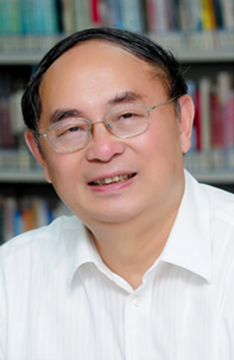 Sunyu Wang (王孙禺)合作论文数International Centre For Engineering Education under the Auspices of UNESCO, School of Education, Tsinghua University1
 Jose Texier合作论文数1
 Stefanie K. Meilinger合作论文数Institute for Chemistry1




