Latent diffusion has become the default paradigm for visual generation, yet we observe a persistent reconstruction–generation trade-off as latent dimensionality increases: higher-capacity autoencoders improve reconstruction fidelity but generation quality eventually declines. We trace this gap to the different behaviors in high-frequency tokenization and detokenization. Through controlled perturbations in both RGB and latent domains, we analyze encoder/decoder behaviors and find that decoders depend strongly on high-frequency latent components to recover details, whereas encoders under-represent high-frequency contents, yielding insufficient exposure and underfitting in high-frequency bands for diffusion model training. To address this issue, we introduce FreqWarm, a plug-and-play frequency warm-up curriculum that increases early-stage exposure to high-frequency latent signals during diffusion or flow-matching training -- without modifying or retraining the autoencoder. Applied across several high-dimensional tokenizers, FreqWarm consistently improves generation quality: decreasing gFID by 14.11 on Wan2.2-VAE, 6.14 on LTX-VAE, and 4.42 on DC-AE-f32, while remaining architecture-agnostic and compatible with diverse backbones. Our study shows that explicitly managing frequency exposure can successfully turn high-dimensional latent spaces into more diffusible targets.
Video generation models have recently achieved impressive visual fidelity and temporal coherence. Yet, they continue to struggle with complex, non-rigid motions, especially when synthesizing humans performing dynamic actions such as sports, dance, etc. Generated videos often exhibit missing or extra limbs, distorted poses, or physically implausible actions. In this work, we propose a remarkably simple reward model, HuDA, to quantify and improve the human motion in generated videos. HuDA integrates human detection confidence for appearance quality, and a temporal prompt alignment score to capture motion realism. We show this simple reward function that leverages off-the-shelf models without any additional training, outperforms specialized models finetuned with manually annotated data. Using HuDA for Group Reward Policy Optimization (GRPO) post-training of video models, we significantly enhance video generation, especially when generating complex human motions, outperforming state-of-the-art models like Wan 2.1, with win-rate of 73
The recent breakthroughs in natural language processing for model pretraining on large quantities of data have opened the way for similar foundation models in computer vision. These models could greatly simplify the use of images in any system by producing all-purpose visual features, i.e., features that work across image distributions and tasks without finetuning. This work shows that existing pretraining methods, especially self-supervised methods, can produce such features if trained on enough curated data from diverse sources. We revisit existing approaches and combine different techniques to scale our pretraining in terms of data and model size. Most of the technical contributions aim at accelerating and stabilizing the training at scale. In terms of data, we propose an automatic pipeline to build a dedicated, diverse, and curated image dataset instead of uncurated data, as typically done in the self-supervised literature. In terms of models, we train a ViT model (Dosovitskiy et al., 2020) with 1B parameters and distill it into a series of smaller models that surpass the best available all-purpose features, OpenCLIP (Ilharco et al., 2021) on most of the benchmarks at image and pixel levels.
Customization of text-to-image models enables users to insert new concepts or objects and generate them in unseen settings. Existing methods either rely on comparatively expensive test-time optimization or train encoders on single-image datasets without multi-image supervision, which can limit image quality. We propose a simple approach to address these challenges. We first leverage existing text-to-image models and 3D datasets to create a high-quality Synthetic Customization Dataset (SynCD) consisting of multiple images of the same object in different lighting, backgrounds, and poses. Using this dataset, we train an encoder-based model that incorporates fine-grained visual details from reference images via a shared attention mechanism. Finally, we propose an inference technique that normalizes text and image guidance vectors to mitigate overexposure issues in sampled images. Through extensive experiments, we show that our encoder-based model, trained on SynCD, and with the proposed inference algorithm, improves upon existing encoder-based methods on standard customization benchmarks.
We present MILS: Multimodal Iterative LLM Solver, a surprisingly simple, training-free approach, to imbue multimodal capabilities into your favorite LLM. Leveraging their innate ability to perform multi-step reasoning, MILS prompts the LLM to generate candidate outputs, each of which are scored and fed back iteratively, eventually generating a solution to the task. This enables various applications that typically require training specialized models on task-specific data. In particular, we establish a new state-of-the-art on emergent zero-shot image, video and audio captioning. MILS seamlessly applies to media generation as well, discovering prompt rewrites to improve text-to-image generation, and even edit prompts for style transfer! Finally, being a gradient-free optimization approach, MILS can invert multimodal embeddings into text, enabling applications like cross-modal arithmetic.
Tokenizing images into compact visual representations is a key step in learning efficient and high-quality image generative models. We present a simple diffusion tokenizer (DiTo) that learns compact visual representations for image generation models. Our key insight is that a single learning objective, diffusion L2 loss, can be used for training scalable image tokenizers. Since diffusion is already widely used for image generation, our insight greatly simplifies training such tokenizers. In contrast, current state-of-the-art tokenizers rely on an empirically found combination of heuristics and losses, thus requiring a complex training recipe that relies on non-trivially balancing different losses and pretrained supervised models. We show design decisions, along with theoretical grounding, that enable us to scale DiTo for learning competitive image representations. Our results show that DiTo is a simpler, scalable, and self-supervised alternative to the current state-of-the-art image tokenizer which is supervised. DiTo achieves competitive or better quality than state-of-the-art in image reconstruction and downstream image generation tasks.
Diffusion models have transformed the image-to-image (I2I) synthesis and are now permeating into videos. However, the advancement of video-to-video (V2V) synthesis has been hampered by the challenge of maintaining temporal consistency across video frames. This paper proposes a consistent V2V synthesis framework by jointly leveraging spatial conditions and temporal optical flow clues within the source video. Contrary to prior methods that strictly adhere to optical flow, our approach harnesses its benefits while handling the imperfection in flow estimation. We encode the optical flow via warping from the first frame and serve it as a supplementary reference in the diffusion model. This enables our model for video synthesis by editing the first frame with any prevalent I2I models and then propagating edits to successive frames. Our V2V model, FlowVid, demonstrates remarkable properties: (1) Flexibility: FlowVid works seamlessly with existing I2I models, facilitating various modifications, including stylization, object swaps, and local edits. (2) Efficiency: Generation of a 4-second video with 30 FPS and 512x512 resolution takes only 1.5 minutes, which is 3.1x, 7.2x, and 10.5x faster than CoDeF, Rerender, and TokenFlow, respectively. (3) High-quality: In user studies, our FlowVid is preferred 45.7% of the time, outperforming CoDeF (3.5%), Rerender (10.2%), and TokenFlow (40.4%).
Existing approaches to unsupervised video instance segmentation typically rely on motion estimates and experience difficulties tracking small or divergent motions. We present VideoCutLER, a simple method for unsupervised multi-instance video segmentation without using motion-based learning signals like optical flow or training on natural videos. Our key insight is that using high-quality pseudo masks and a simple video synthesis method for model training is surprisingly sufficient to enable the resulting video model to effectively segment and track multiple instances across video frames. We show the first competitive unsupervised learning results on the challenging YouTubeVIS-2019 benchmark, achieving 50.7% APvideo^50 , surpassing the previous state-of-the-art by a large margin. VideoCutLER can also serve as a strong pretrained model for supervised video instance segmentation tasks, exceeding DINO by 15.9% on YouTubeVIS-2019 in terms of APvideo.
We present Emu Video, a text-to-video generation model that factorizes the generation into two steps: first generating an image conditioned on the text, and then generating a video conditioned on the text and the generated image. We identify critical design decisions--adjusted noise schedules for diffusion, and multi-stage training--that enable us to directly generate high quality and high resolution videos, without requiring a deep cascade of models as in prior work. In human evaluations, our generated videos are strongly preferred in quality compared to all prior work--81% vs. Google's Imagen Video, 90% vs. Nvidia's PYOCO, and 96% vs. Meta's Make-A-Video. Our model outperforms commercial solutions such as RunwayML's Gen2 and Pika Labs. Finally, our factorizing approach naturally lends itself to animating images based on a user's text prompt, where our generations are preferred 96% over prior work.
We present Movie Gen, a cast of foundation models that generates high-quality, 1080p HD videos with different aspect ratios and synchronized audio. We also show additional capabilities such as precise instruction-based video editing and generation of personalized videos based on a user's image. Our models set a new state-of-the-art on multiple tasks: text-to-video synthesis, video personalization, video editing, video-to-audio generation, and text-to-audio generation. Our largest video generation model is a 30B parameter transformer trained with a maximum context length of 73K video tokens, corresponding to a generated video of 16 seconds at 16 frames-per-second. We show multiple technical innovations and simplifications on the architecture, latent spaces, training objectives and recipes, data curation, evaluation protocols, parallelization techniques, and inference optimizations that allow us to reap the benefits of scaling pre-training data, model size, and training compute for training large scale media generation models. We hope this paper helps the research community to accelerate progress and innovation in media generation models. All videos from this paper are available at https://go.fb.me/MovieGenResearchVideos.
We introduce a new task of generating "Illustrated Instructions", i.e. visual instructions customized to a user's needs. We identify desiderata unique to this task, and formalize it through a suite of automatic and human evalua-tion metrics, designed to measure the validity, consistency, and efficacy of the generations. We combine the power of large language models (LLMs) together with strong text-to-image generation diffusion models to propose a simple approach called StackedDiffusion, which generates such il-lustrated instructions given text as input. The resulting model strongly outperforms baseline approaches and state-of-the-art multimodal LLMs; and in 30% of cases, users even prefer it to human- generated articles. Most notably, it enables various new and exciting applications far beyond what static articles on the web can provide, such as personalized instructions complete with intermediate steps and pictures in response to a user's individual situation.
Modern artificial intelligence (AI) systems are powered by foundation models. This paper presents a new set of foundation models, called Llama 3. It is a herd of language models that natively support multilinguality, coding, reasoning, and tool usage. Our largest model is a dense Transformer with 405B parameters and a context window of up to 128K tokens. This paper presents an extensive empirical evaluation of Llama 3. We find that Llama 3 delivers comparable quality to leading language models such as GPT-4 on a plethora of tasks. We publicly release Llama 3, including pre-trained and post-trained versions of the 405B parameter language model and our Llama Guard 3 model for input and output safety. The paper also presents the results of experiments in which we integrate image, video, and speech capabilities into Llama 3 via a compositional approach. We observe this approach performs competitively with the state-of-the-art on image, video, and speech recognition tasks. The resulting models are not yet being broadly released as they are still under development.
Text-to-image diffusion models produce high quality images but do not offer control over individual instances in the image. We introduce InstanceDiffusion that adds precise instance-level control to text-to-image diffusion models. InstanceDiffusion supports free-form language conditions per instance and allows flexible ways to specify instance locations such as simple single points, scribbles, bounding boxes or intricate instance segmentation masks, and combinations thereof. We propose three major changes to text-to-image models that enable precise instance-level control. Our UniFusion block enables instance-level conditions for text-to-image models, the ScaleU block improves image fidelity, and our Multi-instance Sampler improves generations for multiple instances. InstanceDiffusion significantly surpasses specialized state-of-the-art models for each location condition. Notably, on the COCO dataset, we out perform previous state-of-the-art by 20.4% AP(50)(box) for box inputs, and 25.4% IoU for mask inputs.
We present an automated way to evaluate the text alignment of text-to-image generative diffusion models using standard image-text recognition datasets. Our method, called SelfEval, uses the generative model to compute the likelihood of real images given text prompts, and the likelihood can be used to perform recognition tasks with the generative model. We evaluate generative models on standard datasets created for multimodal text-image discriminative learning and assess fine-grained aspects of their performance: attribute binding, color recognition, counting, shape recognition, spatial understanding. Existing automated metrics rely on an external pretrained model like CLIP (VLMs) or LLMs, and are sensitive to the exact pretrained model and its limitations. SelfEval sidesteps these issues, and to the best of our knowledge, is the first automated metric to show a high degree of agreement for measuring text-faithfulness with the gold-standard human evaluations across multiple generative models, benchmarks and evaluation metrics. SelfEval also reveals that generative models showcase competitive recognition performance on challenging tasks such as Winoground image-score compared to discriminative models. We hope SelfEval enables easy and reliable automated evaluation for diffusion models.
In this work, we show that text-to-image generative models can be 'inverted' to assess their own text-image understanding capabilities in a completely automated manner. Our method, called SelfEval, uses the generative model to compute the likelihood of real images given text prompts, making the generative model directly applicable to discriminative tasks. Using SelfEval, we repurpose standard datasets created for evaluating multimodal text-image discriminative models to evaluate generative models in a fine-grained manner: assessing their performance on attribute binding, color recognition, counting, shape recognition, spatial understanding. To the best of our knowledge SelfEval is the first automated metric to show a high degree of agreement for measuring text-faithfulness with the gold-standard human evaluations across multiple models and benchmarks. Moreover, SelfEval enables us to evaluate generative models on challenging tasks such as Winoground image-score where they demonstrate competitive performance to discriminative models. We also show severe drawbacks of standard automated metrics such as CLIP-score to measure text faithfulness on benchmarks such as DrawBench, and how SelfEval sidesteps these issues. We hope SelfEval enables easy and reliable automated evaluation for diffusion models.
Semi-supervised learning aims to train a model using limited labels. State-of-the-art semi-supervised methods for image classification such as PAWS rely on self-supervised representations learned with large-scale unlabeled but curated data. However, PAWS is often less effective when using real-world unlabeled data that is uncurated, e.g., contains out-of-class data. We propose RoPAWS, a robust extension of PAWS that can work with real-world unlabeled data. We first reinterpret PAWS as a generative classifier that models densities using kernel density estimation. From this probabilistic perspective, we calibrate its prediction based on the densities of labeled and unlabeled data, which leads to a simple closed-form solution from the Bayes' rule. We demonstrate that RoPAWS significantly improves PAWS for uncurated Semi-iNat by +5.3% and curated ImageNet by +0.4%.
We propose Cut-and-LEaRn (CutLER), a simple approach for training unsupervised object detection and seg-mentation models. We leverage the property of self-supervised models to ‘discover’ objects without supervision and amplify it to train a state-of-the-art localization model without any human labels. CutLER first uses our proposed MaskCut approach to generate coarse masks for multiple objects in an image, and then learns a detector on these masks using our robust loss function. We further improve performance by self-training the model on its predictions. Compared to prior work, CutLER is simpler, compatible with different detection architectures, and detects multiple objects. CutLER is also a zero-shot unsupervised detector and improves detection performance AP 50 by over 2.7× on 11 benchmarks across domains like video frames, paintings, sketches, etc. With finetuning, CutLER serves as a low-shot detector surpassing MoCo-v2 by 7.3% Ap box and 6.6% Ap mask on COCO when training with 5% labels.
A successful paradigm in representation learning is to perform self-supervised pretraining using tasks based on mini-batch statistics (e.g., SimCLR, VICReg, SwAV, MSN). We show that in the formulation of all these methods is an overlooked prior to learn features that enable uniform clustering of the data. While this prior has led to remarkably semantic representations when pretraining on class-balanced data, such as ImageNet, we demonstrate that it can hamper performance when pretraining on class-imbalanced data. By moving away from conventional uniformity priors and instead preferring power-law distributed feature clusters, we show that one can improve the quality of the learned representations on real-world class-imbalanced datasets. To demonstrate this, we develop an extension of the Masked Siamese Networks (MSN) method to support the use of arbitrary features priors.
This paper revisits the standard pretrain-then-finetune paradigm used in computer vision for visual recognition tasks. Typically, state-of-the-art foundation models are pretrained using large scale (weakly) supervised datasets with billions of images. We introduce an additional pre-pretraining stage that is simple and uses the self-supervised MAE technique to initialize the model. While MAE has only been shown to scale with the size of models, we find that it scales with the size of the training dataset as well. Thus, our MAE-based pre-pretraining scales with both model and data size making it applicable for training foundation models. Pre-pretraining consistently improves both the model convergence and the downstream transfer performance across a range of model scales (millions to billions of parameters), and dataset sizes (millions to billions of images). We measure the effectiveness of pre-pretraining on 10 different visual recognition tasks spanning image classification, video recognition, object detection, low-shot classification and zero-shot recognition. Our largest model achieves new state-of-the-art results on iNaturalist-18 (91.3%), 1-shot ImageNet-1k (62.1%), and zero-shot transfer on Food-101 (96.2%). Our study reveals that model initialization plays a significant role, even for web-scale pretraining with billions of images.
Transformer-based architectures have become competitive across a variety of visual domains, most notably images and videos. While prior work studies these modalities in isolation, having a common architecture suggests that one can train a single unified model for multiple visual modalities. Prior attempts at unified modeling typically use architectures tailored for vision tasks, or obtain worse performance compared to single modality models. In this work, we show that masked autoencoding can be used to train a simple Vision Transformer on images and videos, without requiring any labeled data. This single model learns visual representations that are comparable to or better than single-modality representations on both image and video benchmarks, while using a much simpler architecture. Furthermore, this model can be learned by dropping 90% of the image and 95% of the video patches, enabling extremely fast training of huge model architectures. In particular, we show that our single ViT-Huge model can be finetuned to achieve 86.6% on ImageNet and 75.5% on the challenging Something Something-v2 video benchmark, setting a new state-of-the-art.
 Rohit Girdhar合作论文数GenAI Research Group, Meta22
 Armand Joulin合作论文数Google DeepMind14
 Piotr Bojanowski合作论文数Meta AI10
 Martial Hebert合作论文数Robotics Institute, Carnegie Mellon University;School of Computer Science, Carnegie Mellon University10
 Mannat Singh合作论文数Meta9
 Saketh Rambhatla合作论文数Meta AI8
 Abhinav Gupta合作论文数The Robotics Institute, School of Computer Science, Carnegie Mellon University;Skild AI8
 Mathilde Caron合作论文数Google7
 Margaret Mitchell合作论文数Hugging Face7
 Laurens Van Der Maaten合作论文数Meta AI;Facebook AI Research7
 Larry Zitnick合作论文数Fundamental AI Research Team, Meta AI7
 Nicolas Ballas合作论文数Meta AI Research6
 Quentin Duval合作论文数6
 Abhinav Shrivastava合作论文数Department of Computer Science, Brendan Iribe Center for Computer Science and Engineering, University of Maryland, College Park6
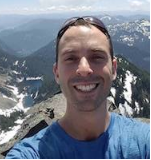 Ross Girshick合作论文数Anthropic6
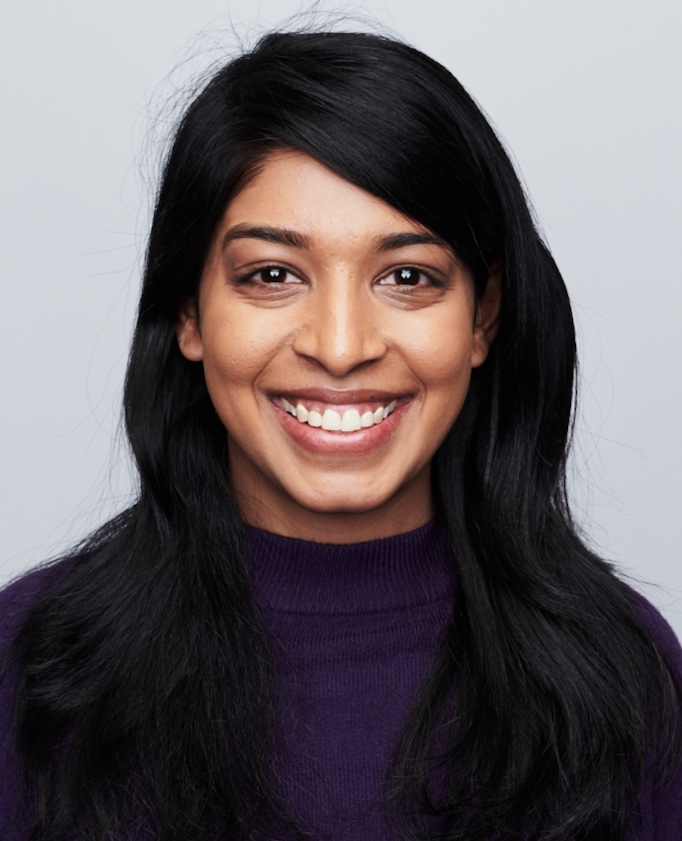 Priya Goyal合作论文数DatologyAI5
 Devi Parikh合作论文数Yutori5
 Yann LeCun合作论文数Department of Electrical and Computer Engineering, Tandon School of Engineering, New York University;AMI Labs5
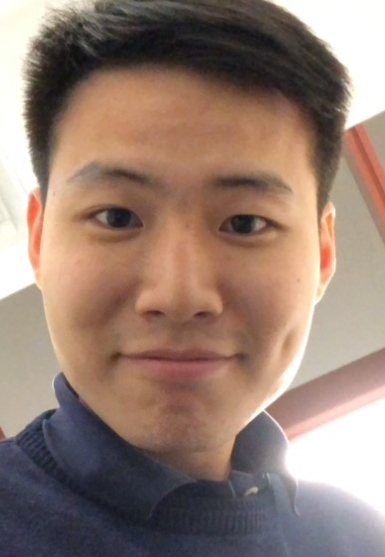 Xudong Frank Wang (王旭东)合作论文数Berkeley Artificial Intelligence Research Lab, University of California, Berkeley;Department of Electrical Engineering and Computer Sciences, University of California, Berkeley;Google DeepMind4
 Mahmoud Assran (Mido)合作论文数Meta;Youth Engagement Through Engineering4
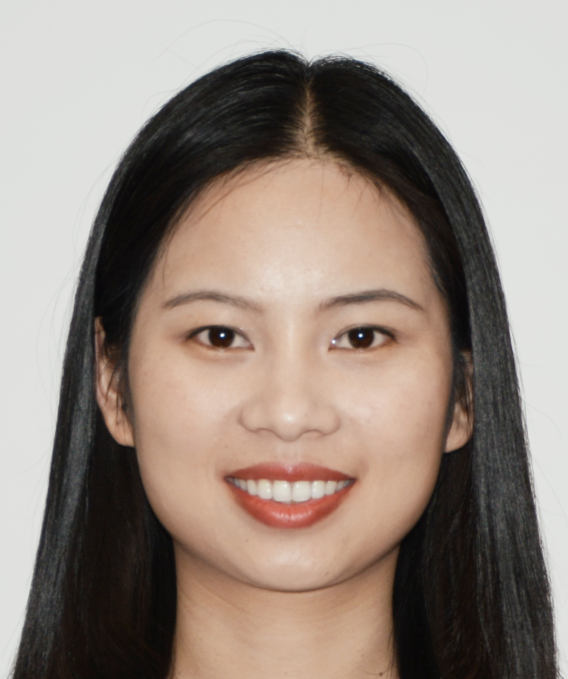 Xi Yin (殷希)合作论文数Meta4
 Julien Mairal合作论文数Inria4
 Michael Rabbat合作论文数AMI Labs4
 Jacob Devlin合作论文数Google4
 Nasrin Mostafazadeh合作论文数Verneek4
 Samaneh Azadi合作论文数Meta Research3
 Aishwarya Agrawal合作论文数Department of Computer Science and Operations Research, University of Montreal;Mila - Quebec AI Institute;Google DeepMind3
 Kalyan Vasudev Alwala合作论文数Meta3
 Gabriel Synnaeve合作论文数Meta3
 Randall Balestriero合作论文数Citadel3
 Licheng Yu (虞立成)合作论文数Facebook AI3
 Pascal Vincent合作论文数Montreal Institute for Learning Algorithms, Department d'Informatique et Recherche Operationnelle, Universite de Montreal;Facebook A.I. Research3
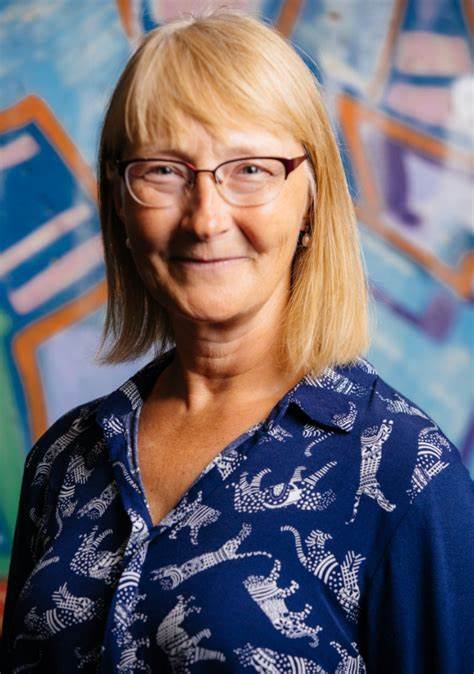 Lucy Vanderwende合作论文数Microsoft Research;Department of Biomedical Health Informatics, University of Washington3
 Alexander Schwing合作论文数Coordinated Science Laboratory, Computer Science Department, University of Illinois in Urbana-Champaign;Department of Electrical and Computer Engineering, The Grainger College of Engineering, University of Illinois in Urbana-Champaign3
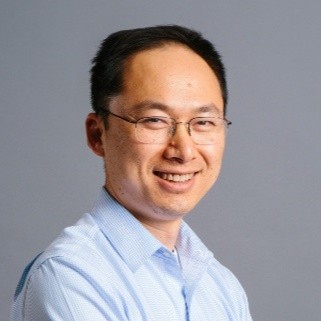 Xiaodong He (何晓冬)合作论文数JD.COM Group;Department of Electrical & Computer Engineering, University of Washington3
 Dhruv Mahajan合作论文数Meta3
 Sean Bell合作论文数Meta3
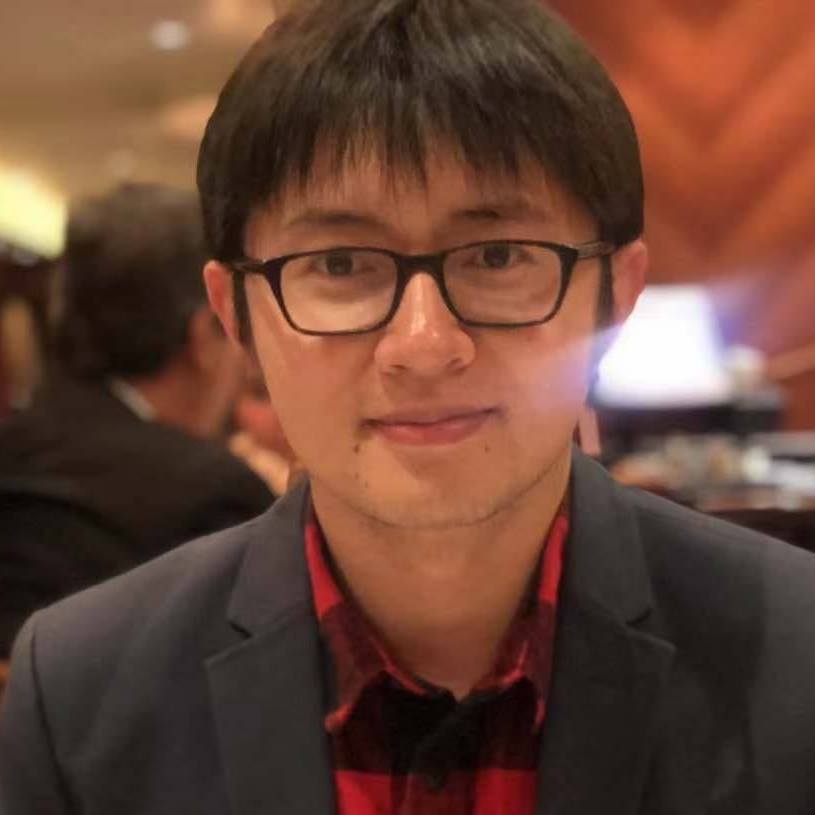 Xinlei Chen (陈鑫磊)合作论文数XAI3
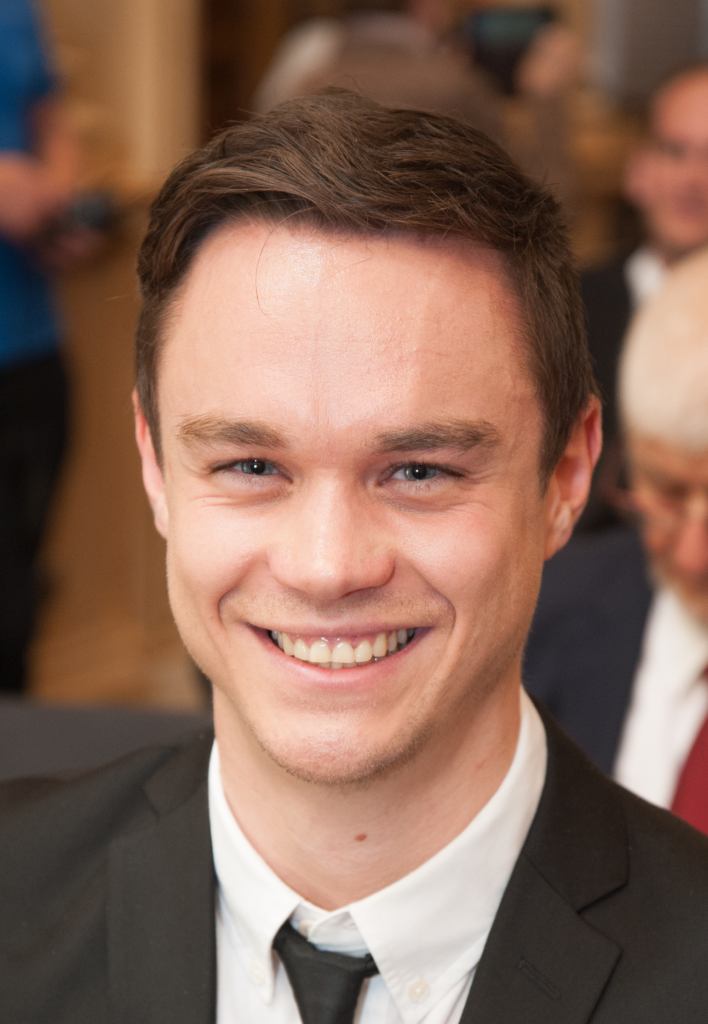 Christoph Feichtenhofer合作论文数Meta3
 Dhruv Batra合作论文数Yutori3Ce Liu合作论文数2Dingkang Wang合作论文数2Tianhe Li合作论文数2Kiran Jagadeesh合作论文数2Mido Assran合作论文数2Lawrence Chen合作论文数2
 Alaaeldin El-Nouby合作论文数Apple Machine Learning Research2Mitesh Kumar Singh合作论文数2
 Philipp Krähenbühl合作论文数Department of Computer Science, College of Natural Sciences, University of Texas at Austin;Apple2




