Critical thinking is a fundamental skill that helps learners move beyond simple memorization. One way to develop this skill is through high-order questioning. However, crafting such questions remains a challenge for educators, and classroom practices tend to rely on low-order questions. Large Language Models have demonstrated strong capabilities in generating high-order questions, especially when guided by prompts based on Bloom's Taxonomy. Yet, existing research has largely centered on this framework and focused only on English. This study addresses these gaps by introducing prompts grounded in two alternative frameworks: Claim-Evidence-Reasoning and Divergent Questioning within a multilingual context using Basque, Spanish, and English. Results indicate that while both an open-source and a proprietary model rather effectively generate questions in all three languages, only about half of the answerable questions are recognized by teachers as high-order. A positive finding is that the alternative frameworks produce structurally and conceptually varied questions, suggesting they could complement each other and provide viable alternatives to Bloom's Taxonomy.
Instructing language models with user intent requires large instruction datasets, which are only available for a limited set of languages. In this paper, we explore alternatives to conventional instruction adaptation pipelines in low-resource scenarios. We assume a realistic scenario for low-resource languages, where only the following are available: corpora in the target language, existing open-weight multilingual base and instructed backbone LLMs, and synthetically generated instructions sampled from the instructed backbone. We present a comprehensive set of experiments for Basque that systematically study different combinations of these components evaluated on benchmarks and human preferences from 1,680 participants. Our conclusions show that target language corpora are essential, with synthetic instructions yielding robust models, and, most importantly, that using as backbone an instruction-tuned model outperforms using a base non-instructed model. Scaling up to Llama 3.1 Instruct 70B as backbone, our model comes near frontier models of much larger sizes for Basque, without using any Basque instructions. We release code, models, instruction datasets, and human preferences to support full reproducibility in future research on low-resource language adaptation.
Current student-centred, multilingual, active teaching methodologies require that teachers have continuous access to texts that are adequate in terms of topic and language competence. However, the task of finding appropriate materials is arduous and time consuming for teachers. To build on automatic readability assessment research that could help to assist teachers, we explore the performance of natural language processing approaches when dealing with educational science documents for secondary education. Currently, readability assessment is mainly explored in English. In this work we extend our research to Basque and Spanish together with English by compiling context-specific corpora and then testing the performance of feature-based machine-learning and deep learning models. Based on the evaluation of our results, we find that our models do not generalize well although deep learning models obtain better accuracy and F1 in all configurations. Further research in this area is still necessary to determine reliable characteristics of training corpora and model parameters to ensure generalizability.
Artikulu honetan Latxa hizkuntza-ereduak (HE) aurkeztuko ditugu, egun euskararako garatu diren HE handienak. Latxa HEek 7.000 miloi parametrotik 70.000 milioira bitartean dituzte, eta ingeleseko LLama 2 ereduetatik eratorriak dira. Horretarako, LLama 2 gainean aurreikasketa jarraitua izeneko prozesua gauzatu da, 4.3 milioi dokumentu eta 4.200 milioi token duen euskarazko corpusa erabiliz. Euskararentzat kalitate handiko ebaluazio multzoen urritasunari aurre egiteko, lau ebaluazio multzo berri bildu ditugu: EusProficiency, EGA azterketaren atariko frogako 5.169 galdera biltzen dituena; EusReading, irakurketaren ulermeneko 352 galdera biltzen dituena; EusTrivia, 5 arlotako ezagutza orokorreko 1.715 galdera biltzen dituena; eta EusExams, oposizioetako 16.774 galdera biltzen dituena. Datu-multzo berri hauek erabiliz, Latxa eta beste euskarazko HEak ebaluatu ditugu (elebakar zein eleanitzak), eta esperimentuek erakusten dute Latxak aurreko eredu ireki guztiak gainditzen dituela. Halaber, GPT-4 Turbo HE komertzialarekiko emaitza konpetitiboak lortzen ditu Latxak, hizkuntza-ezagutzan eta ulermenean, testu-irakurmenean zein ezagutza intentsiboa eskatzen duten atazetan atzeratuta egon arren. Bai Latxa ereduen familia, baita gure corpus eta ebaluazio-datu berriak ere lizentzia irekien pean daude publiko https://github.com/hitz-zentroa/latxa helbidean.
We introduce Latxa, a family of large language models for Basque ranging from 7 to 70 billion parameters. Latxa is based on Llama 2, which we continue pretraining on a new Basque corpus comprising 4.3M documents and 4.2B tokens. Addressing the scarcity of high-quality benchmarks for Basque, we further introduce 4 multiple choice evaluation datasets: EusProficiency, comprising 5,169 questions from official language proficiency exams; EusReading, comprising 352 reading comprehension questions; EusTrivia, comprising 1,715 trivia questions from 5 knowledge areas; and EusExams, comprising 16,774 questions from public examinations. In our extensive evaluation, Latxa outperforms all previous open models we compare to by a large margin. In addition, it is competitive with GPT-4 Turbo in language proficiency and understanding, despite lagging behind in reading comprehension and knowledge-intensive tasks. Both the Latxa family of models, as well as our new pretraining corpora and evaluation datasets, are publicly available under open licenses at https://github.com/hitz-zentroa/latxa. Our suite enables reproducible research on methods to build LLMs for low-resource languages.
AbstractThis chapter on existing strategic plans and projects in Language Technology and Artificial Intelligence is based on an analysis of around 200 documents and is divided into three sections. The first provides a synopsis of international and European reports on Language Technology. The second constitutes a review of existing European Strategic Research Agendas, initiatives, and national plans related to Language Technology. The third contains a SWOT analysis designed to identify the factors that will need to be addressed to help solve the challenge of digital language inequality in Europe. Among the principal conclusions presented is the contention that our continent requires sophisticated multilingual, cross-lingual and monolingual LT for all European languages: LT for Europe that is made in Europe.
AbstractThis deep dive on data, knowledge graphs (KGs) and language resources (LRs) is the final of the four technology deep dives, as data as well as related models are the basis for technologies and solutions in the area of Language Technology (LT) for European digital language equality (DLE). This chapter focuses on the data and LRs required to achieve full DLE in Europe by 2030. The main components identified – data, KGs, LRs – are explained, and used to analyse the state-of-the-art as well as identify gaps. All of these components need to be tackled in the future, for the widest range of languages possible, from official EU languages to dialects to non- EU languages used in Europe. For all these languages, efficient data collection and sustainable data provision to be facilitated with fair conditions and costs. Specific technologies, methodologies and tools have been identified to enable the implementation of the vision of DLE by 2030. In addition, data-related business models and data-governance models are discussed, as they are considered a prerequisite for a working data economy that stimulates a vibrant LT landscape that can bring about European DLE.
Automatic Short Answer Grading aims to automatically grade short answers authored by students. Recent work has shown that this task can be effectively reformulated as a Natural Language Inference problem. State-of-the-art is defined by the use of large pretrained language models fine-tuned in the domain dataset. But how to quantify the effectiveness of the models in small data regimes still remains an open issue. In this work we present a set of experiments to analyse the impact of different annotation strategies when not enough training examples for fine-tuning the model are available. We find that when annotating few examples, it is preferable to have more question variability than more answers per question. With this annotation strategy, our model outperforms state-of-the-art systems utilizing only 10% of the full-training set. Finally, experiments show that the use of out-of-domain annotated question-answer examples can be harmful when fine-tuning the models.
AbstractSince 1968 Basque has been immersed in a process of revitalisation that has faced formidable obstacles. Nonetheless, significant progress has been made in numerous areas. The Language Technology community widely accepts the standardised language and constructs efficacious LT tools. After thirty years of collaborative work, research has resulted in state-of-the-art technology and robust, broad-coverage NLP for Basque. However, a dramatic difference remains between Basque and other European languages in terms of both the maturity of research and the state of readiness with respect to language technology solutions.
AbstractThis chapter landscapes the field of Language Technology (LT) and language- centric AI by assembling a comprehensive state-of-the-art of basic and applied research in the area. It sketches all recent advances in AI, including the most recent deep learning neural technologies. The chapter brings to light not only where language-centric AI as a whole stands, but also where the required resources should be allocated to place European LT at the forefront of the AI revolution. We identify key research areas and gaps that need to be addressed to ensure LT can overcome the current inequalities.
This paper provides an overview of the European Language Equality (ELE) project. The main objective of ELE is to pre-pare the European Language Equality program in the form of a strategic research and innovation agenda that may be utilized as a road map for achieving full digital language equality in Europe by 2030. The desk research phase of ELE concentrated on the systematic collection and analysis of the existing international, national, and regional strategic research agendas, studies, reports, and initiatives related to language technology and LT-related artificial intelligence. A brief survey of the findings is presented here, with a special focus on the Spanish ecosystem.
In a concept learning scenario, any technology-supported learning system must provide students with mechanisms that help them with the acquisition of the concepts to be learned. For the technology-supported learning systems to be successful in this task, the development of didactic material is crucial-a hard task that could be alleviated by means of an automation process. In this proposal, two systems which have been previously developed, ArikIturri and DOM-Sortze, are combined to automatically generate multiple-choice questions, based on pedagogically relevant information gathered in textbooks. Originally, the former was able to generate multiple-choice questions from plain texts; and the latter was able to elicit learning objects based on didactic material explicitly represented in electronic textbooks, i.e., definitions, examples, and exercises. This article presents an approach for the automatic generation of multiple-choice questions from learning objects extracted from textbooks. Specifically, ArikIturri uses as input the texts gathered in the learning objects elicited by DOM-Sortze and, using natural language processing techniques, generates multiple-choice questions. This way, considering domain-relevant information from the textbooks, test-type exercises which were not previously elicited by DOM-Sortze are created. In summary, this new approach is able to enrich domain modules of technology-supported learning systems. The proposal has been tested with a textbook which is written in the Basque language and the results show that the generated exercises are suitable to be used in science learning scenarios at secondary school.
The vast majority of non-English corpora are derived from automatically filtered versions of CommonCrawl. While prior work has identified major issues on the quality of these datasets (Kreutzer et al., 2021), it is not clear how this impacts downstream performance. Taking representation learning in Basque as a case study, we explore tailored crawling (manually identifying and scraping websites with high-quality content) as an alternative to filtering CommonCrawl. Our new corpus, called EusCrawl, is similar in size to the Basque portion of popular multilingual corpora like CC100 and mC4, yet it has a much higher quality according to native annotators. For instance, 66% of documents are rated as high-quality for EusCrawl, in contrast with <33% for both mC4 and CC100. Nevertheless, we obtain similar results on downstream NLU tasks regardless of the corpus used for pre-training. Our work suggests that NLU performance in low-resource languages is not primarily constrained by the quality of the data, and other factors like corpus size and domain coverage can play a more important role.
This paper provides an overview of the ongoing European Language Equality(ELE) project, an 18-month action funded by the European Commission which involves 52 partners. The primary goal of ELE is to prepare the European Language Equality Programme, in the form of a strategic research, innovation and implementation agenda and a roadmap for achieving full digital language equality (DLE) in Europe by 2030.
In this paper we present a relation extraction system that given a text extracts pedagogically motivated relation types, as a previous step to obtaining a semantic representation of the text which will make possible to automatically generate questions for reading comprehension. The system maps pedagogically motivated relations with relations from ConceptNet and deploys Distant Supervision for relation extraction. We run a study on a subset of those relationships in order to analyse the viability of our approach. For that, we build a domain-specific relation extraction system and explore two relation extraction models: a state-of-the-art model based on transfer learning and a discrete feature based machine learning model. Experiments show that the neural model obtains better results in terms of F-score and we yield promising results on the subset of relations suitable for pedagogical purposes. We thus consider that distant supervision for relation extraction is a valid approach in our target domain, i.e. biology.
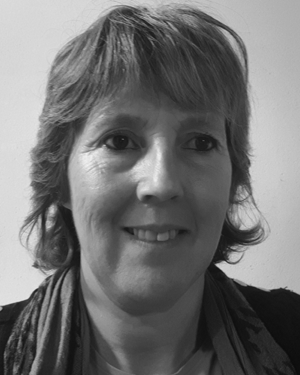 Montse Maritxalar合作论文数24
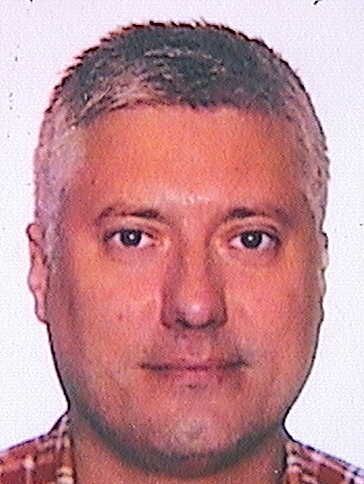 German Rigau i Claramunt合作论文数Departamento de LSI, Facultad de Informática de San Sebastián, Universidad del País Vasco/Euskal Herriko Unibertsitatea;HiTZ Basque Center for Language Technologies, Universidad del País Vasco/Euskal Herriko Unibertsitatea24
 Egoitz Laparra合作论文数Basque Country University;Universitat Pompeu Fabra;Open University of Catalonia;Universitat Pompeu Fabra, Open University of Catalonia12
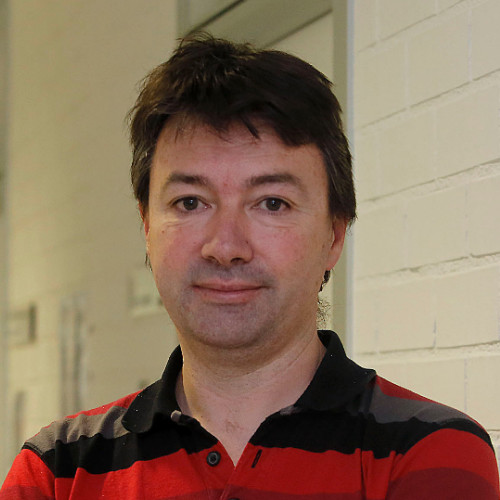 Eneko Agirre合作论文数Faculty of Computer Science, University of the Basque Country;HiTZ Centre on Language Technology10
 Aitor Soroa合作论文数Computer Science Faculty, University of the Basque Country10
 Rodrigo Agerri合作论文数HiTZ Centre, Universidad del Pais Vasco/Euskal Herriko Unibertsitatea;LSI Department, Faculty of Informatics, University of the Basque Country9Larraitz Uria合作论文数Basque Country University8
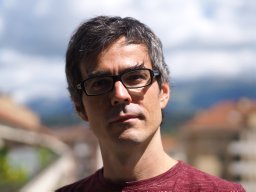 Oier Lopez De Lacalle合作论文数University of the Basque Country8Aritz Farwell合作论文数7
 Piek Vossen合作论文数Vrije Universiteit Amsterdam7Maddalen Lopez De Lacalle合作论文数7
 Marieke Van Erp合作论文数Vrije Univ Amsterdam6
 Oscar Sainz合作论文数HiTZ Center - Ixa, University of the Basque Country5
 Antske Fokkens合作论文数Faculty of Social Sciences and Humanities, Language, Vrije Universiteit Amsterdam;Network Institute, Vrije Universiteit Amsterdam5
 Mikel Artetxe合作论文数Reka AI;University of the Basque Country5
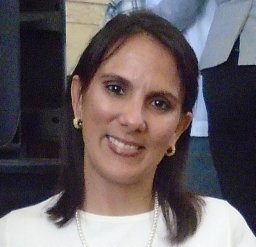 Arantza Díaz De Ilarraza合作论文数University of the Basque Country;Faculty of Computer Science;Faculty of Computer Science, University of the Basque Country5Maite Oronoz合作论文数5
 Nora Aranberri合作论文数5
 Bertol Arrieta合作论文数University of the Basque Country;Faculty of Computer Science;Faculty of Computer Science, University of the Basque Country5Anne-Lyse Minard合作论文数IBISC5Aure Séguier合作论文数4Itziar Cortes Etxabe合作论文数Eleka Ingn Linguistikoa SL4
 Naiara Pérez合作论文数Vicomtech IK4 Res Ctr, HSLT Dept, San Sebastian, Spain4Eva Navas合作论文数Univ Basque Country, UPV EHU, AHOLAB, Bilbao, Spain4
 Kepa Sarasola合作论文数IXA Group;University of the Basque Country;IXA Group, University of the Basque Country4
 Gorka Labaka合作论文数University of the Basque Country4
 Edurne Martinez合作论文数4
 Myriam Bras合作论文数Université de Toulouse4
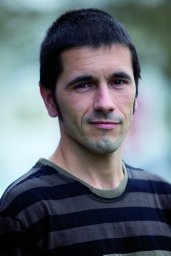 Igor Leturia合作论文数Elhuyar Fundazioa R&D4
 Ruben Urizar合作论文数4
 Inma Hernáez合作论文数Dept . of Electronics and Telecommunications;University of the Basque Country;Dept . of Electronics and Telecommunications, University of the Basque Country4
 Marco Rospocher合作论文数Department of Foreign Languages and Literatures, University of Verona4Jean Sibille合作论文数3Julen Etxaniz合作论文数3Josu Aztiria合作论文数3Benaset Dazeas合作论文数3Louise Esher合作论文数3Klara Ceberio合作论文数University of the Basque Country3
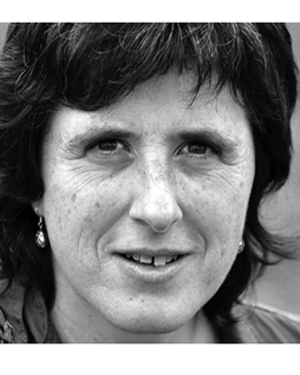 Ana Arruarte合作论文数3Olatz Perez-de-Vinaspre合作论文数3
 Ainara Estarrona合作论文数Languages and Information Systems, University of the Basque Country3
 Aitor Ormazabal合作论文数HiTZ Center, University of the Basque Country3
 Iñigo Lopez-Gazpio合作论文数3Katrin Marheinecke合作论文数DFKI GmbH2Tessel Bogaard合作论文数Centrum Wiskunde & Informatica2
 Georg Rehm合作论文数2
 Jon A. Elorriaga合作论文数University of the Basque Country2
 Bernardo Magnini合作论文数Natural Language Processing Research Unit, Fondazione Bruno Kessler2
 Jon Sánchez合作论文数University of the Basque Country2




