The interactions between the worlds of science and of diplomacy have increased in scope and significance over recent decades, leading to a focus on understanding the emerging field of science diplomacy1-4. Just over ten years ago, the United Kingdom’s Royal Society and the American Association for the Advancement of Science met to clarify what is meant by this term, science diplomacy, and to stimulate further study and analysis. They proposed a schema identifying three aspects of science diplomacy. Despite being criticised by scholars in Europe through the recent European Union project on science diplomacy4, the taxonomy proposed by the Royal Society and AAAS is widely used. The three aspects are science in diplomacy, science for diplomacy, and diplomacy for science. This classification into three separate types of science diplomacy is inevitably imperfect since many activities in science diplomacy are complex and stretch across these three classifications.
This is a guest editorial by Tom Spurling, president of the Federation of Asian Chemical Societies (FACS) from 1989 to 1991; John Webb, codirector of one of the FACS's early network projects; and David Winkler, president of the FACS from 2017 to 2019. Spurling and Webb are professors at the Centre for Transformative Innovation at Swinburne University of Technology. Winkler is a professor at both Monash and La Trobe Universities. This editorial is adapted from Spurling and Webb's presentation "The Federation of Asian Chemical Societies: Forty Years On," given at the 18th Asian Chemical Congress and 20th General Assembly of the FACS in December 2019. Two and a half thousand chemists from around the world gathered in Taipei, Taiwan, in December for a feast of chemistry to celebrate the 40th anniversary of the Federation of Asian Chemical Societies (FACS). In the 1970s, the United Nations Educational, Scientific and Cultural Organization
In the 1970s UNESCO and many national aid agencies understood the important role that the application of chemistry had in developing the social, economic, and environmental wellbeing of nations. UNESCO also understood the vital role that professional societies play in fostering chemical capability and helped organize the formation of the Federation of Asian Chemical Societies (FACS).
Abstract Australia’s professional chemical society, the Royal Australian Chemical Institute, is celebrating its centenary in 2017. It is therefore timely to review the involvement of Australian chemistry with IUPAC and its predecessors.
Australia’s path to innovation began with the very early use of tools and cultivation by aboriginal communities. With the arrival of Europeans from 1788, innovation focused on supporting agricultural production and mineral extraction. More recently, Australian innovation has extended to include high technology products such as the Cochlea Ear and the production of plastic bank notes, developed through a strong foundation in fundamental science. Looking to the future, Australia has greatly expanded its international cooperation. Bibliometric data show strong growth in collaborative chemical research papers between chemists in Australia and those in China, greatly exceeding those with Japan and India, the next strongest partners in collaboration. The most productive areas of chemistry for international collaboration are physical chemistry and chemical engineering. Concerning Pakistan, bibliometric data show a dramatic growth in collaboration between Australian and Pakistani scientists. Data analysis support the benefits of international collaboration.
India with a fast growing demand for electricity and increasing consideration to emissions reduction is investing strongly in renewable electricity generation. Among renewables, the Central and State Governments have set aspirational targets for on-grid solar electricity and legislated several supporting policies to realise these targets. As a result of the favourable political environment, the development of on-grid solar, in terms of the rate of growth in installed capacity, has been increasing in the recent years, and it is expected to continue in the future. This paper aims to investigate the impact of historical transitions of India's electricity sector on the ongoing development of on-grid solar electricity and to explore the prospect of solar sector development in the future. First of all, we investigate how the historical transformation of governmental intervention's approach intertwined with the gradual shift of the source of generation has paved the way for the current achievements in on-grid solar electricity. Second, we envision the future challenges and opportunities for the development of solar sector by looking ahead and discussing the continuity of government's support and the prospective competitions between different sources. We conclude the paper with some required steps to be taken in order to secure the achievement of the targets in solar electricity in the future.
The sustainability transition of electricity sectors is a matter of competition between multiple emerging renewable systems and dominant, established conventional systems. These transitions are multi-dimensional and are featured with non-linear and causal interactions between social, technical, economic and political components. Understanding the dynamic of transitions, i.e. how transitions unfold, can inform effective policy interventions. This paper aims to present a narrative-modelling approach to improve the understanding and description of transition dynamics in electricity sectors. The central ideas of the paper are: (1) the use of qualitative transition narratives helps to capture the co-evolving nature of society and technology which are simplified in modelling approaches; (2) narratives, with concepts from the sustainability transitions field, also guide the development of a model structure; and (3) computational models, in return, reproduce the complexity of transition dynamics, i.e. feedback loops, non-linearity, and time delays—the features which are impracticable to analyse with transition narratives alone. We use the historical transition of India's electricity sector to demonstrate the implementation of our proposed approach. First, an overview of the transition narratives is presented and the model structure, developed based on the narratives, is explained. Then, it is argued how the coupling of the narratives and model improves our understating of the positive impacts as well as the side-effects of stable feed-in tariffs and accelerated depreciation on the penetration levels of wind and solar electricity.
India experiences transitional changes in its electricity sector from fossil fuels towards renewable sources. An electricity sector with 0% wind and solar (of 16 GW total installed capacity) in 1974 has been transformed and reached a status with 11% wind and solar (of 302 GW total installed capacity) in 2016. The observed changes have complex dynamics, shaped by the decisions of public and private actors in a semi-liberalised market condition, while profoundly influenced by government's supporting policies. It is called a state-influenced empowerment of the renewable niches in the electricity sector. This paper presents an empirically-underpinned theoretical framework to explain the specific dynamics of this context. Understanding of the dynamics provides strategic insights on how government's policies have driven the niche empowerment to date and what should be done to further promote this transition in future. The core concepts of the framework are developed through an iterative process between theoretical deduction from the existing theories in the sustainability transitions field and empirical grounding in the Indian on-grid solar electricity as a case study. Four strategic insights for the further empowerment of solar electricity in future are identified based on the implementation of the framework in the case study.
Energy transitions are a matter of competitions between multiple emerging systems and a dominant, established system. Understanding the complex dynamics of these interactions can assist betterinformed decision making and policy interventions. This paper presents a coupled modelling-narrative approach, consisting of a System Dynamics (SD) model interlinked with a narrative transitions-theoretical framework. The approach is geared at understanding the dynamics of emerging on-grid electricity sources, such as renewables, in power sector transitions.The value of implementing such a coupled approach is twofold. Firstly, it empowers the SD modelling process. As SD modelling itself is agnostic to the conceptualisation of the (societal) system under study, it is left to the modeller to design an appropriate SD structure - i. e. Causal Loop Diagram. The approach presented in this paper provides a narrative theoretical framework based on the state-of-the-art of Sustainability Transitions literature and a generic SD model (applicable to similar energy transition cases) which directly translates the key concepts and dynamical hypotheses. The theoretical framework enables the creation of highly structured narratives that not only provide a clear overview of the case, but also assist the identification of case specific boundary conditions, parameters, feedback loops and therefore in setting up and validating the SD model. Secondly, the close connection between the narrative theoretical framework and the SD model enables considerable explanatory power that cannot be obtained from simply using a model or a narrative. Where the narrative case description, for example, outlines the developments following a certain policy intervention, the SD model allows interrogating the detailed interactions of the chain of causes and consequences following the intervention. SD models are able to represent and reproduce complex causal relations including feedbacks, non-linearity, threshold effects and time delays - dynamics which are impracticable to analyse with human mental models alone.This paper presents how the SD model is structured based on the core concepts of the narrative theoretical framework. Examples from an existing application by the authors of the framework on the case of the emergence of on-grid solar electricity in India are used to illustrate how the coupling of the SD model with the narrative theory helps addressing questions going beyond modelling or narrative analysis in isolation.
Chemists around the globe had more than the usual reasons to celebrate the Nobel Prizes in 2013. In addition to the annual Nobel Prize in Chemistry, our scientific field appeared also in the Nobel Peace Prize with the award going to the Organisation for the Prohibition of Chemical Weapons (OPCW). The OPCW, based in The Hague, was established in 1997 to administer the Chemical Weapons Convention (CWC), the negotiation of which was concluded in the UN Conference on Disarmament in Geneva in 1992.
The tragedy that was World War I led to substantial transformations in the way innovation occurred in Australia.
Programs of international collaboration with India in science and technology are growing rapidly, involving many countries. Australia has its largest bilateral collaborative research and development program with India (not China). The first grants funded under this Fund have been completed and the Fund is expanding to include multimillion dollar projects, so-called 'grand challenge' projects. Experience in this collaboration between Australia and India will be relevant to the initiatives of other international partners as they seek to establish collaboration with India in the fields of science, technology and innovation
In popular imagination, India is an exotic destination for tourists. What is missing from such stereotypes is the very real opportunity for collaboration in research, development and innovation.
Drug-induced spoliation of hydrogels as contact lenses or as implants in the anterior eye is a frequent occurrence in clinical practice. This study explores the capacity of three commercial multipurpose solutions for contact lens care to reduce the spoliation of poly(2-hydroxyethyl methacrylate) (PHEMA) specimens exposed to a simulated aqueous humour formulation and to three topical drugs commonly administered after insertion of artificial corneas (Predsol, Optimol and Depo-Ralovera). ReNu MultiPlus® (Bausch & Lomb), Complete® Blink-N-Clean™ Lens Drops (Allergan) and Complete Protein Remover Tablets dissolved in Complete® ComfortPLUS™ (both from Allergan) were evaluated. All multipurpose solutions were able to dislodge passively the deposits formed on hydrogels in the simulated aqueous and in the presence of Predsol and Optimol, but none were effective against the deposits induced by Depo-Ralovera. A reduction of the calcium content in deposits caused by Predsol and Optimol was confirmed after treatment with the protein remover preparation, while the other multipurpose solutions caused the complete removal of the deposits. In experiments designed to evaluate the preventive action of the multipurpose solutions, no such effects were observed regardless of the drug involved. The prospect of using multipurpose solutions as eye drops following implantation of a hydrogel artificial cornea is a valid alternative for reducing device spoliation, however it appears to depend on the nature of the postoperative medication.
 David J Macey合作论文数59
 Tim St Pierre合作论文数School of Physics Mathematics and Computing, The University of Western Australia;Mirandex Consulting Pty Ltd38W Chua-anusorn合作论文数23TG STPIERRE合作论文数20
 Lesley Rita Brooker合作论文数13
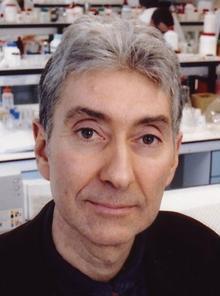 Stephen Mann合作论文数School of Chemistry, University of Bristol;Centre for Organized Matter Chemistry, University of Bristol;Centre for Protolife Research, University of Bristol12David J. Macey合作论文数12Pensri Pootrakul合作论文数12L. A. Evans合作论文数11K.-S. Kim合作论文数10Kim Tran合作论文数10William Niedermeier合作论文数9James H. Griggs合作论文数9Malcolm E. Turner合作论文数8A. P. Lee合作论文数8Katharine A. Kirk合作论文数8
 Glenn Hefter合作论文数Department of Chemistry, Murdoch University7W. Van Bronswijk合作论文数7Tn James合作论文数6
 Enayat A. Moallemi合作论文数School of Life and Environmental Sciences, Deakin University5
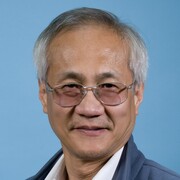 Lu Aye合作论文数Department of Infrastructure Engineering, School of Electrical, Mechanical and Infrastructure Engineering, Faculty of Engineering and Information Technology, The University of Melbourne5P. Chan合作论文数5R.J.P. Williams合作论文数5
 Mario Vitolo合作论文数5
 Thomas H. Spurling合作论文数CSIRO Division of Applied Organic Chemistry, G.P.O. Melbourne, Victoria 3001, Australia5
 Pál Sipos合作论文数Department of Inorganic and Analytical Chemistry, University of Szeged5b w clare合作论文数4
 de Haan Fjalar J合作论文数School of Geography and Environmental Science, Monash University4
 Diana Anderson合作论文数Faculty of Life Sciences, University of Bradford;School of Chemistry and Bioscience, University of Bradford4
 Harry B. Gray合作论文数Department of Applied Physics and Materials Science, Division of Engineering and Applied Science, California Institute of Technology;Beckman Institute Laser Resource Center, California Institute of Technology4
 Peter M. May合作论文数School of Chemical and Mathematical Sciences, Murdoch University4Wanida Chua-Anusorn合作论文数4Emmanuel Delhaize合作论文数4A Yardley-Jones合作论文数3DA BUCKINGHAM合作论文数3B. F. Anderson合作论文数3E Baker合作论文数3D. Cohen合作论文数3
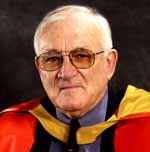 Ian Potter合作论文数Centre for Fish and Fisheries Research, Murdoch University3Glen B Robertson合作论文数3Prapin Wilairat合作论文数3J. F. Loneragan合作论文数3K.R. Bauchspieß合作论文数3Wilhelm Van Bronswijk合作论文数3D.P.E. Dickson合作论文数3
 Biju George合作论文数Department of Haematology, Christian Medical College3G. Charmaine De Witt合作论文数3James G. Hockridge合作论文数3L. Morandeau合作论文数2




